Best Hammams in Turkey: Istanbul and Beyond
The oldest hammam in this guide has been taking customers since 1584. It has outlasted the Ottoman Empire, two world wars, and every guidebook ever printed about it. You can walk in tomorrow morning at six, pay €57 ($65), and wash yourself under a dome designed by the architect who built half of imperial Istanbul.
Istanbul’s historic bathhouses run from that €57 ($65) self-service entry all the way to a €400 ($455) package that takes two and a half hours. The gap between them is not really about the building, since all four of the hammams below are genuine Ottoman monuments. It is about how much scrubbing, foam, massage and tea you want attached to the experience. This is where the hammam tradition is still practiced in its original rooms rather than reconstructed in a hotel basement, and the difference is obvious the moment you look up.
The four hammams worth your time
Istanbul has dozens of working bathhouses. Four of them combine architectural significance, reliable service for visitors who do not speak Turkish, and published prices you can check before you arrive.
| Hammam | Built | District | Entry-level price | Best for |
|---|---|---|---|---|
| Çemberlitaş Hamamı | 1584 | Çemberlitaş, Fatih (beside the Grand Bazaar) | €57 ($65) self-service / €72 ($82) traditional | History, the dome, the lowest price |
| Cağaloğlu Hamamı | 1741 | Sultanahmet | €95 ($110) | Ottoman Baroque and a long guest list |
| Kılıç Ali Paşa Hamamı | 1578 to 1583 | Tophane, Beyoğlu | 4,300 TL ($86) | The best balance of authentic and accessible |
| Hürrem Sultan Hamamı | 1556 to 1557 | Sultanahmet, between Hagia Sophia and the Blue Mosque | €110 ($125) | Luxury packages and serious marble |
Three of the four were designed by or attributed to Mimar Sinan, the chief imperial architect. If you visit two of them you are not repeating yourself: the buildings differ in scale, light and atmosphere far more than the service menus do.
Çemberlitaş Hamamı: the most history and the most tourists
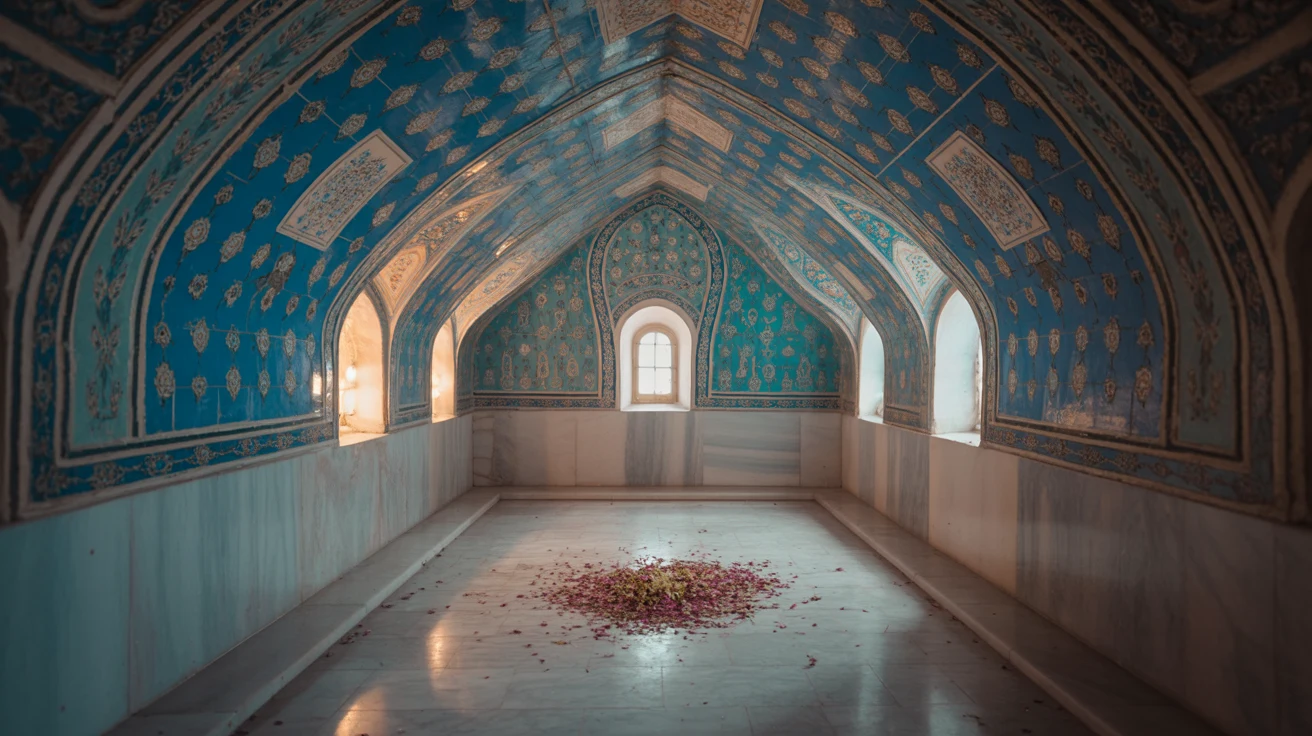
Built in 1584 and attributed to Mimar Sinan’s team, Çemberlitaş was commissioned by Nurbanu Sultan, mother of Sultan Murad III, as a charitable endowment generating income for the Atik Valide Mosque complex across the water in Üsküdar. That is the Ottoman model in miniature: a bathhouse as a revenue stream for a mosque.
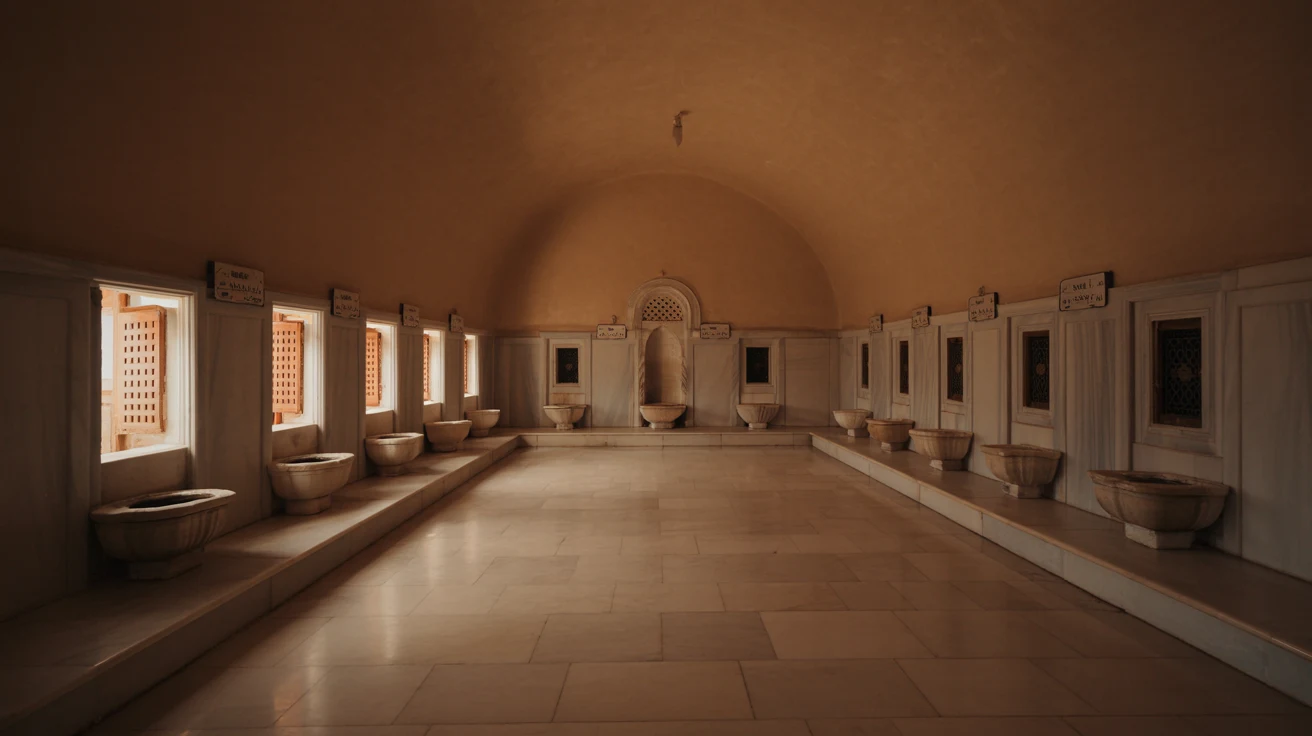
It is a double hammam, meaning separate but identical wings for men and women, with 38 washing basins between them. The hot room sits under a large dome carried on high arches and columns with baklava-shaped capitals, pierced by glass globes that drop shafts of light through the steam. Architecturally it is the most photographed hammam interior in the city, and for good reason.
It is also the busiest. Çemberlitaş sits directly on the T1 tram line next to the Grand Bazaar, opens daily from 06:00 to 23:30, and processes a very high volume of visitors. At peak times the service can feel efficient in a way that is not entirely flattering. The building still justifies the visit.
Prices are the lowest of the four: €57 ($65) for entrance and self-service including soap, shampoo and towel, €72 ($82) for the scrub and bubble wash (30 minutes in the hot room, a 15-minute scrub, then the foam wash), and €92 ($105) for the Luxury Package, which adds an aromatherapy oil massage. Standalone massages – full body, Indian head or foot – are €82 ($93) each with entrance included.
Cağaloğlu Hamamı: the last of the great Ottoman baths
Cağaloğlu was commissioned by Sultan Mahmud I in 1741, begun by Suleyman Ağa and finished by Abdullah Ağa, to raise money for the sultan’s library inside the Ayasofya Mosque. It is one of the last major hammams built in Istanbul during the Ottoman period, and it looks it: the style is Ottoman Baroque, later and more decorative than Sinan’s austere sixteenth-century geometry. Ottoman builders of that century also left domed baths in Buda, and Budapest’s Ottoman-era baths still include Rudas, with an octagonal pool under a 10 m dome.
The historical guest list includes Atatürk, King Edward VIII, Kaiser Wilhelm II, Florence Nightingale, Rudolf Nureyev, Omar Sharif, Kate Moss, Harrison Ford and Cameron Diaz. It reads like a dinner party seating chart that nobody has ever managed to explain.
Today the clientele is almost entirely visitors, and the pricing reflects a business that knows exactly who is walking through the door. The entry-level Istanbul Dream ritual is €95 ($110). Tip to Toe is €135 ($155), the Cağaloğlu Hammam package €170 ($195), the Ottoman Luxury service €240 ($275) for 90 minutes, the Sultan Mahmud the First €300 ($340), and the Elixir of Cağaloğlu €400 ($455) for 150 minutes total with 120 minutes of net service – the only package on the list that has not risen this year. Add-ons – foot massage, aromatherapy massage, a full-body clay mask – are priced separately and listed on the hammam’s own site; they were the one part of the price list I could not re-read this September. Winter hours run 11:00 to 21:00, and like the other three it offers no mixed-gender service. You can check the current package list on the hammam’s own services page before booking.
Kılıç Ali Paşa Hamamı: the one I would book
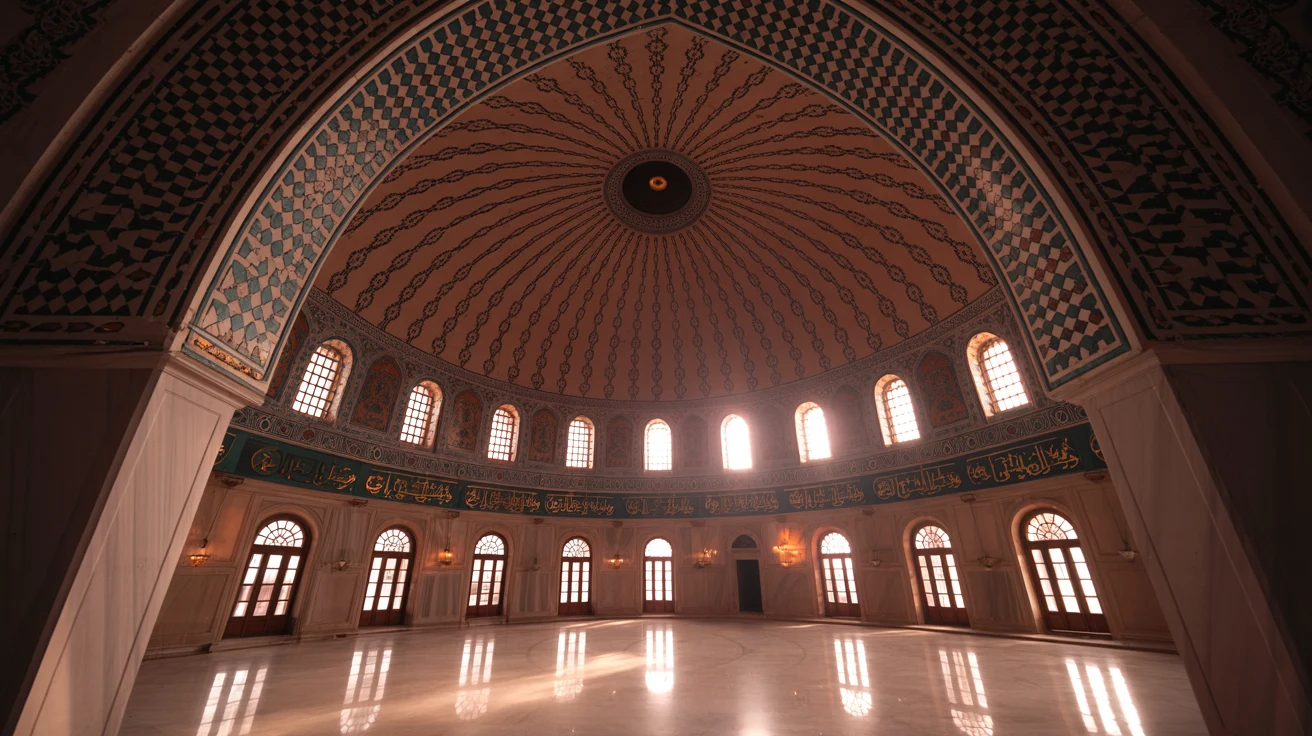
Sinan built this one between 1578 and 1583 for Kılıç Ali Pasha, the Ottoman chief admiral, as part of a larger mosque-and-school complex in Tophane. It was meant to serve the naval crews working the harbor below. The admiral himself was born Giovanni Dionigi Galeni in Calabria, was captured by Ottoman corsairs, converted, rose to command the imperial fleet, and turns up in Cervantes’ Don Quixote as “Uchali.” The main dome is 14 m wide and 17 m high, the second largest hammam dome in Istanbul.
What makes it the pick is the restoration. Cafer Bozkurt Architecture spent seven years on the building before it reopened in 2012, stripping later interventions back to Sinan’s original design and adding modern systems that stay out of the way. The work took the Europa Nostra Prize in 2017 and the Turkish Chamber of Architects’ National Architecture Award in 2016. The Europa Nostra citation calls out the recovered Sinan elements and the non-obtrusive modern solutions specifically.
Practically, that translates into a hammam in Tophane rather than the crush of Sultanahmet, with English-speaking staff, proper lockers, a clear reservation system, and a mid-range price: the Traditional Hamam Ritual is 4,300 TL ($86). Adding the 50-minute full body massage at 4,600 TL ($92) brings the total to 8,900 TL ($180). It is the one of the four that prices in lira rather than euros, and because the lira has fallen further than the hammam has raised its rates, a visit costs less in euros now than it did a year ago. It reopened as a functioning public bathhouse, not a museum with a gift shop.
Hürrem Sultan Hamamı: the luxury end
Sinan built this in 1556 to 1557 for Hürrem Sultan, better known in English as Roxelana, wife of Suleiman the Magnificent. The site had been in the bathing business for a while already: it sits on the ruins of the Roman Baths of Zeuxippus, dated roughly 100 to 200 AD, on ground that earlier held a Temple of Zeus. The address is the strip between Hagia Sophia and the Blue Mosque, which is about as central as Istanbul gets.
The design was an Ottoman first: men’s and women’s sections laid out on the same axis as mirror images of each other, running 75 m end to end, every dome sheathed in lead. The cold room dome reaches 24 m. The heated marble slab at the center of the hot room sits at 42°C (108°F).
The building closed in 1910, spent decades as a carpet exhibition hall from 1957 to 2007, and before that served as overflow space for the nearby Sultanahmet Prison. Restoration by Kocaeli University’s Faculty of Architecture began in 2008 and used 1,300 m² of Marmara marble. It now runs 08:00 to 22:00 with the most luxury-oriented package list of any historic hammam in the city: Pir-u Pak at €110 ($125) for 45 minutes (entry, scrub, foam wash), Keyf-i Hammam at €155 ($175) for 60 minutes, Zevk-i Sefa at €220 ($250) for 80 minutes, and Ab-ı Hayat at €300 ($340) for 110 minutes. Current prices are published on the hammam’s official site.
What the money actually buys
The confusing part of hammam pricing is that the cheapest traditional package and the most expensive one contain the same core service. Everything above the basic tier is additional massage time and comfort extras.
| Tier | Price | What’s included | Where |
|---|---|---|---|
| Self-service | €57 ($65) | Entrance, cotton wrap, soap, shampoo, towel. You wash yourself. | Çemberlitaş |
| Basic traditional | €72 to €95 ($82–110) | Hot room time, exfoliating scrub, foam wash by an attendant | Çemberlitaş €72 ($82), Cağaloğlu €95 ($110), Kılıç Ali Paşa 4,300 TL ($86) |
| Mid-range with massage | €135 to €158 ($155–180) | Basic traditional plus a 30 to 50 minute oil or aromatherapy massage | Cağaloğlu Tip to Toe €135 ($155), Kılıç Ali Paşa 8,900 TL ($180) |
| Luxury full ritual | €170 to €240 ($195–275) | Extended service, extras such as face mask or reflexology, tea and sweets in the resting room | Cağaloğlu Hammam €170 ($195) and Ottoman Luxury €240 ($275), Hürrem Sultan €155 to €220 ($175–250) |
| Ultra luxury | €300 to €400 ($340–455) | 90 to 150 minutes, full extras package | Cağaloğlu Sultan Mahmud €300 ($340) and Elixir €400 ($455), Hürrem Sultan Ab-ı Hayat €300 ($340) |
Two things to know about these numbers. They are unit prices and do not include tips. And most hammams serving visitors quote in euros rather than lira precisely because the lira price moves with the exchange rate, so the euro figure is the more stable one to budget against. Every package price on this page was read off the hammam’s own booking page in September 2026. Kılıç Ali Paşa is the exception: it publishes in lira, so its prices here are in lira.
The services, explained
A traditional hammam session has a fixed sequence, and knowing it removes most first-timer anxiety. You change in the entrance hall, wrap yourself in a peştemal (a thin cotton bath wrap), and go through to the hot room.
Hot room
You lie on the heated marble platform at the center of the room, called the göbek taşı or navel stone, for roughly 20 to 30 minutes. Nothing happens. That is the point: the heat opens your pores before the scrub. At Çemberlitaş this stage is 30 minutes of the €72 ($82) package.
The kese scrub
An attendant, male in the men’s section and female in the women’s, works over your whole body with a kese, a coarse silk or cotton mitt, while you lie on the marble. Typical duration as part of a package is about 15 minutes. It removes dead skin, stimulates circulation and opens pores. It is more vigorous than most spa treatments in Western Europe, and the results are visible on the marble beside you, which people find either satisfying or alarming.
Foam wash
The attendant works a cloth bag into a thick lather and covers you in scented foam, then performs a gentle foam massage. This is a cleansing wash rather than deep tissue work, with far less pressure than a conventional massage. Scrub and foam together usually run 15 to 30 minutes.
Optional massage and extras
Everything beyond this point is an upgrade: a 30 to 50 minute oil massage on the marble or in a private room, aromatherapy, Indian head massage, foot reflexology, clay or face masks, hair wash and scalp massage. Higher-tier packages include Turkish tea, sherbet and sweets in the resting hall afterwards. If you are comparing this format against sauna destinations elsewhere, the key difference is that a hammam is fundamentally a washing ritual performed on you, not a heat session you manage yourself.
Practical notes for a first visit
None of the four hammams here offer mixed-gender or couples service. Traditional bathhouses either have entirely separate wings or split the day by time slot, and all four follow that rule without exception. Plan accordingly.
Reserve in advance. All four require or strongly recommend booking, particularly on weekends and evenings, and a deposit is often taken. Book through the official website rather than a street tout in Sultanahmet. Arrive 10 to 15 minutes before your slot to change and settle, and budget 1.5 to 2 hours in the building even for a basic package, since the resting time afterwards is part of the design.
Drink plenty of water beforehand and skip the heavy lunch. Leave the jewellery at the hotel, since lockers exist but so does common sense. Phones stay in the locker: hammams are quiet, low-voiced rooms and the acoustics under a dome are unforgiving. And you keep the cotton wrap on throughout. Full nudity is neither required nor usual, and some hammams provide disposable underwear as well. The Turkish tourism board’s overview of traditional hammams covers the broader etiquette if you want a second read before you go.
Tipping
Tipping is expected. Budget 10 to 20% of the service cost, in cash, handed directly to the attendant who did your scrub and massage rather than left at the front desk. Do it at the end, when you are back in the changing hall.
Turkish lira is preferred for direct tips, though euros and dollars are accepted at every tourist-facing hammam in the city. If you booked a €72 ($82) package, that is a small note. If you booked the €400 ($455) one, do the arithmetic honestly.
Which one to book
If you want the most building for the least money and do not mind sharing it, book Çemberlitaş at €72 ($82) and go early, when it opens at 06:00. If you want a restored Sinan interior with room to breathe and staff who are not working through a queue, book Kılıç Ali Paşa at 4,300 TL ($86) and accept the gender-split hours. If you want the full luxury treatment between Hagia Sophia and the Blue Mosque, Hürrem Sultan starts at €110 ($125) and tops out at €300 ($340). Cağaloğlu is the one to pick if Ottoman Baroque and the historical guest list are what you came for, starting at €95 ($110).
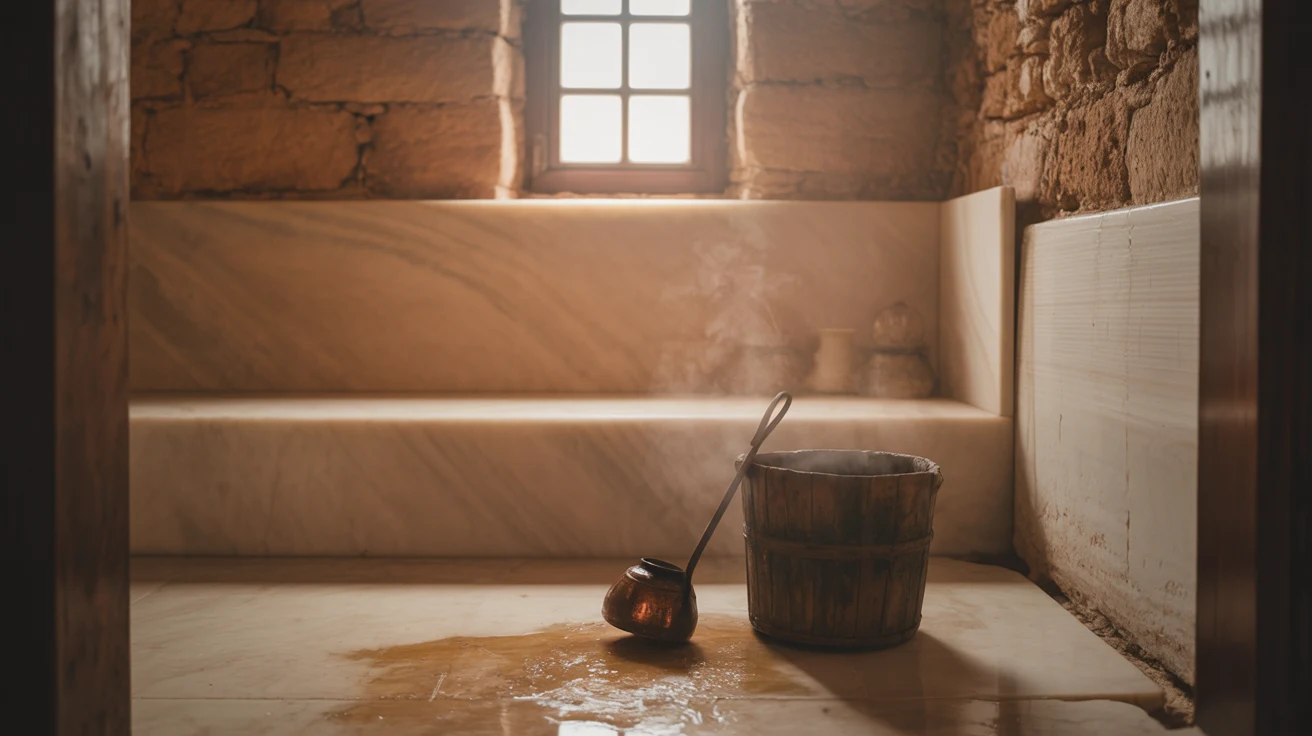
What none of them will give you is the thing a Finnish sauna gives you, which is heat you control yourself with a ladle of water. A hammam is warm, wet, marble and someone else’s hands. It is a completely different tradition that happens to also involve sweating.
Common questions
How much does a Turkish bath in Istanbul cost?
At the historic hammams, self-service starts at €57 ($65) and a traditional package with a scrub and foam wash runs €72 to €95 ($82–110). Adding a 30 to 50 minute massage puts you in the €135 to €158 ($155–180) range, and full luxury packages go from €170 ($195) up to €400 ($455). These are September 2026 rates and do not include the tip.
Which Istanbul hammam is best for a first visit?
Kılıç Ali Paşa Hamamı in Tophane is the best all-round first visit: an award-winning restoration of a Mimar Sinan building, English-speaking staff, a clear booking system, and a mid-range price of 4,300 TL ($86) for the scrub and foam treatment. Çemberlitaş is the cheaper alternative if budget matters more than crowd levels.
Do you have to be naked in a Turkish hammam?
No. You are given a thin cotton wrap on arrival and wearing it throughout is standard practice. Some hammams also provide disposable underwear. Men’s and women’s sections are entirely separate in all four of the historic hammams covered here.
What is the kese scrub?
It is a full-body exfoliation performed by an attendant using a coarse silk or cotton mitt while you lie on the heated marble slab in the hot room. It typically takes about 15 minutes within a package, removes dead skin, and is followed by a foam wash. It is more vigorous than a Western spa scrub.
Do you need to book a hammam in advance?
Yes, especially for weekends and evenings. All four historic hammams recommend or require reservations, often with a deposit, and Kılıç Ali Paşa requires one. Book through the hammam’s own website, and check gender-specific hours before you commit to a time.
How long does a hammam visit take?
Plan for 1.5 to 2 hours in the building even for a basic package. The service itself might be 45 to 60 minutes, with the rest spent changing, resting in the entrance hall afterwards, and drinking tea. Top-tier packages run 90 to 150 minutes of service alone.