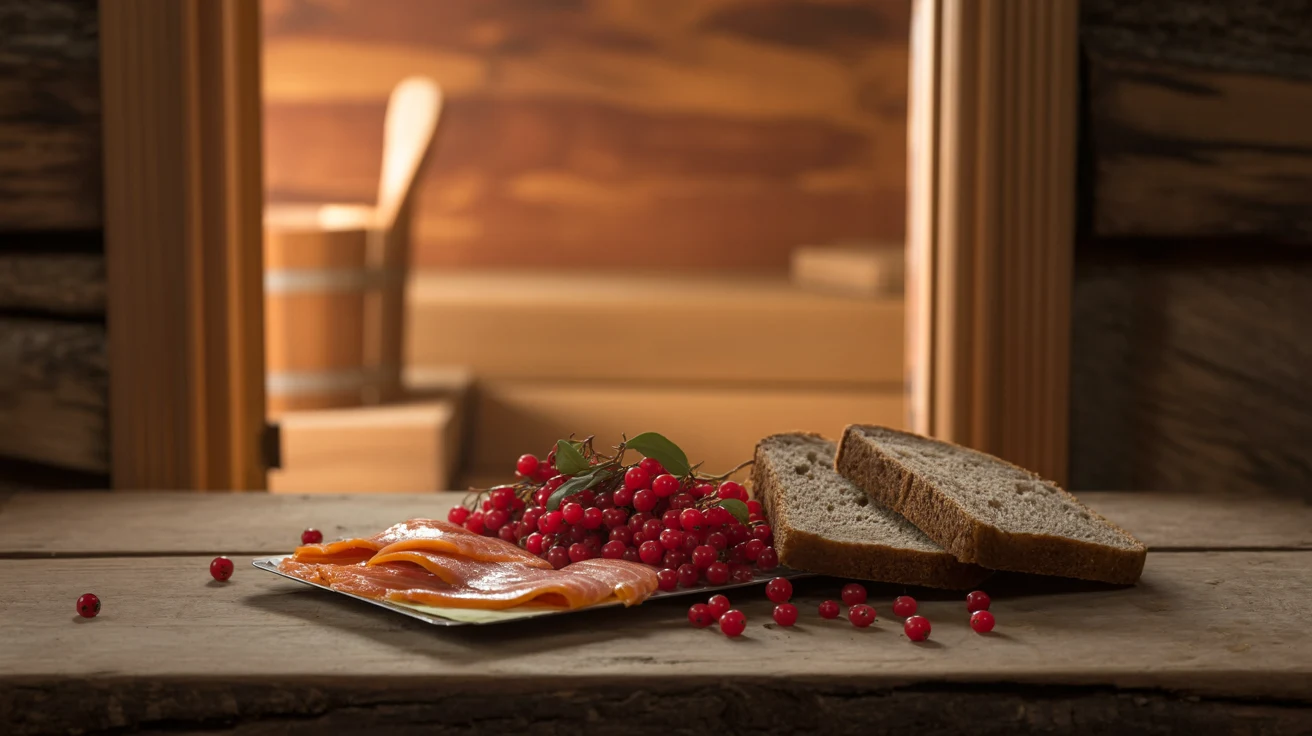
Post-Sauna Food Traditions Around the World
The tidiest explanation for post-sauna food is that sweating makes you crave salt. It’s a good story, and the research doesn’t support it. What the evidence actually shows is that heat exposure tends to suppress appetite – which makes the near-universal habit of eating something small after a bath more interesting, not less. It isn’t hunger. It’s an excuse to stay sitting on the bench with your friends for another twenty minutes.
Finland has the sausage. Korea has eggs baked on stone. Japan has a bottle of milk from a cooler by the changing room. Russia has tea between rounds. Every one of these is small, portable, and shareable, and every one of them arrives at the same moment: after the heat, before you leave.
Finland: the sausage
The Finnish post-sauna staple is makkara (sausage) – specifically a fat, mild ring sausage eaten in the dressing room or on the porch once the sweating is done. HK’s Sininen Lenkki, made in Vantaa, has been on Finnish shelves for more than sixty years and its maker calls it the country’s crowned national sausage, claiming that one is bought somewhere in Finland every four seconds. That figure comes from the manufacturer’s own marketing, not an independent statistics body, so treat it as a brand’s boast rather than a measured fact.
The custom itself is well established: after the bath, people sit down together and eat a sausage with a beer or a soft drink. That’s the whole ritual. Nobody makes a production of it.
You’ll find plenty of instructions online for cooking sausage in foil directly on the heater stones, or in a purpose-built metal holder. Both are folklore as much as technique, and the ritual doesn’t depend on either. What matters is where the sausage is eaten, not how it gets cooked.
Finland also has kotikalja, a low-alcohol malt drink typically 0.8–2.2% ABV in shop-bought form, made by fermenting water, malt, sugar and yeast. It’s a common table drink rather than a documented sauna-specific one, so I’d file it under Finnish beverage culture generally. The drink genuinely tied to the bench is beer, and the sauna and beer tradition is a subject of its own.
Korea: eggs and iced sweet rice drink
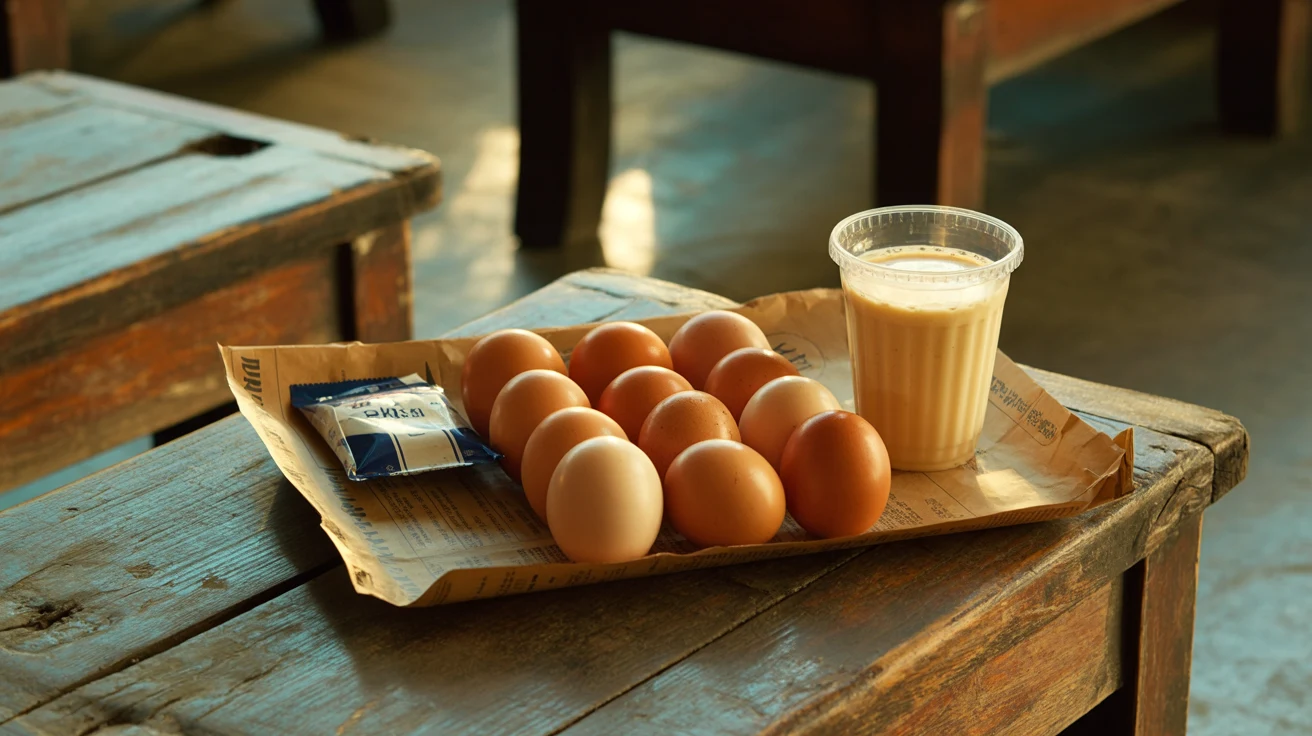
The snack bar in a Korean jjimjilbang sells maekbanseok eggs – slow-baked on elvan stone – handed over with small packets of salt. They’re eaten in the common lounge, still in the shared shirt-and-shorts uniform, usually while lying on a heated floor.
Alongside the eggs sits the drinks cooler: sikhye, a sweet traditional rice beverage made by fermenting rice with malt and normally served as a dessert drink, plus plum, pomegranate and green tea drinks kept iced. Sweet and cold, against a hot dry room.
Japan: the low-temperature egg and the bottle of milk
Onsen tamago is the hot-spring egg, and it’s a genuinely clever piece of cooking. Eggs are submerged in rope nets in water at 65–68°C (149–154°F) for roughly 20 minutes. That range sets the yolk protein but not the white, so you get the inverse of a boiled egg: firm yolk, custard-soft white. It’s usually served in seasoned bonito dashi or soy sauce with chopped spring onion, and supermarkets sell ready-made versions. The Japan National Tourism Organization’s onsen guide is a reasonable starting point if you’re planning to bathe there.
The drink is more interesting than the food. Public bathhouses keep a self-serve cooler near the changing room, and bottled milk, fruit milk and coffee milk became the standard post-bath refreshment – ice cream turns up too. Coffee milk was reportedly created around 1917 by Shinji Sawada in Izumi City, Osaka Prefecture, with the first commercially bottled version sold by Moriyama Dairy in 1923 at a station shop on the Tokaido Main Line. In 2003, Japanese labelling rules forced coffee-flavored milk drinks not made from 100% raw milk to drop the word for milk from their names, which is the kind of regulatory footnote that quietly renames a century-old habit without changing it at all.
Russia: tea, and the room where you drink it
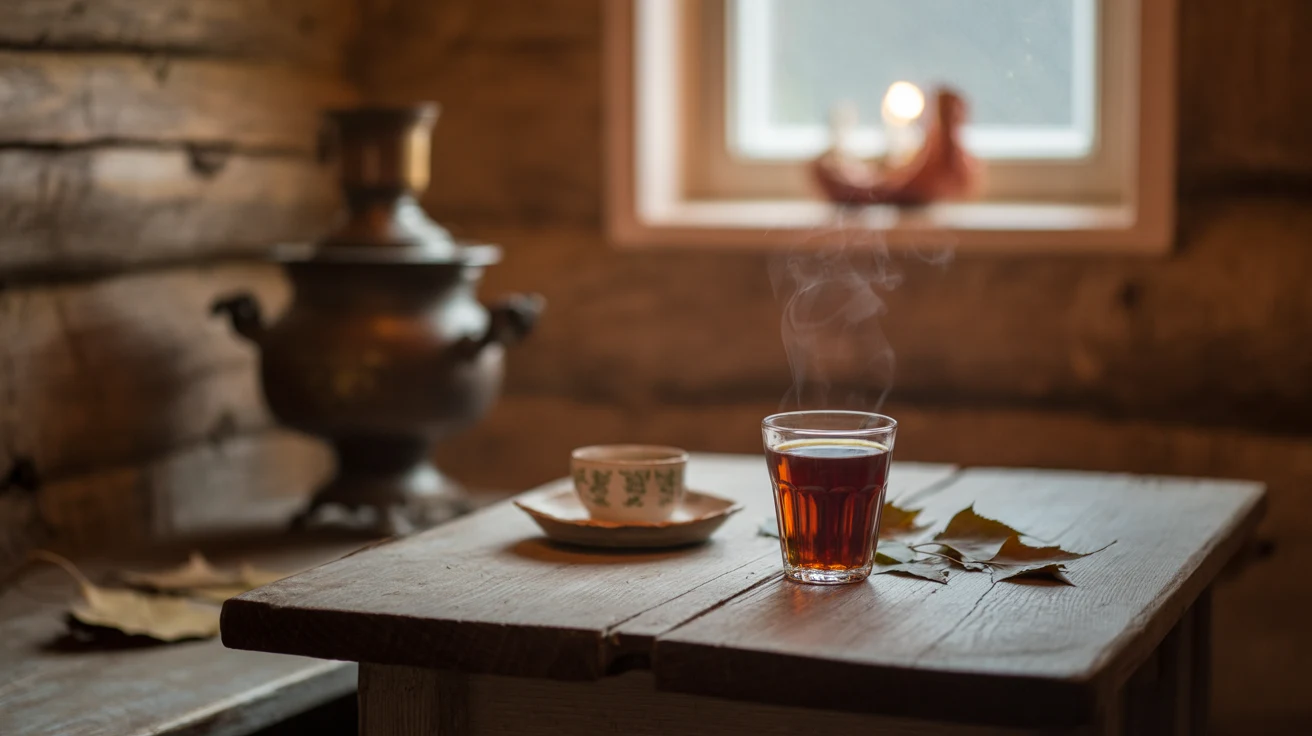
The Russian banya is built around the gap between rounds, not the rounds themselves. Bathers cool off in an antechamber next to the steam room and use the break to drink tea, beer or other beverages, including homemade herbal extracts, and to talk or play games. Larger venues have a bar serving drinks and light meals afterwards, as the overview of banya culture describes.
You will see a lot of articles listing kvass, pelmeni and elaborate spreads of cold appetizers as banya tradition. Treat those as somebody’s dinner party rather than documented custom. What holds up is the structure: a dedicated room, a long break, and something to drink in it.
Germany: what gets poured, not what gets served
German sauna venues are strict in a way that surprises visitors, and the food question mostly comes back as a rule rather than a menu. Etiquette guidance is explicit that high-proof spirits have no place in the sauna or during rest breaks, on grounds of circulatory strain and accident risk. What German venues put on a plate varies too much to generalise; what’s consistent is the rule about what you may not drink.
What Germany does have is the Bier-Aufguss. Roughly half a deciliter of beer is mixed with water and poured on the stones during an Aufguss ritual, producing a bready, malty steam. This is a flavoring for the room, not a drink. In Finland the beer goes in the bather. In Germany it goes on the heater. Both countries are entirely satisfied with their arrangement.
The salt question, honestly
Here’s where the standard explanation falls apart. Sweat does carry sodium – a controlled heat-stress study by Montain and colleagues measured mean sweat sodium concentration at 863 (SD 563) micrograms per milliliter at 27°C and 40% humidity, in seven heat-acclimated subjects doing five 60-minute treadmill bouts across seven hours. Two caveats matter: that’s an exercise-in-heat protocol, not a sauna study, and the conversion to roughly 37–38 mmol/L is my own arithmetic from the molar mass, not a figure printed in the published abstract.
So sodium leaves the body. But the leap from there to “sauna makes you crave salty food” doesn’t hold. A 2025 narrative review on exercise, environmental factors and appetite-regulating hormones reports that extreme heat exposure is associated with increased satiety, reduced appetite and lower energy intake. Heat, in other words, tends to turn appetite down.
Which leaves the cultural explanation, and it fits the evidence better anyway. The foods vary enormously by country: salty in Finland and Korea, sweet in Japan, mostly liquid in Russia. If a shared physiological craving were driving this, the menus would converge. They don’t. What converges is the format – small, immediate, communal.
Drink first, eat second
If you take one practical thing from all of this, make it the drinking rather than the eating. A clinical review by Ahonen and Nousiainen on sauna and body fluid balance recommends replacing sauna-induced fluid loss with small liquid doses taken frequently during bathing – not one large drink at the end. The same review notes that if the sauna follows strenuous exercise, you should replace fluid before going in rather than afterwards.
That’s the reverse of how most people do it, and it’s the single most useful correction in this article. The full picture on sauna hydration gets its own treatment elsewhere.
What all of them have in common
Strip out the specifics and the same three-part pattern shows up in every one of these countries.
| Country | What’s eaten or drunk | Where it happens |
|---|---|---|
| Finland | Ring sausage, with beer or a soft drink | Dressing room or porch |
| Korea | Stone-baked eggs with salt; sikhye and iced fruit drinks | Snack bar and common lounge |
| Japan | Hot-spring eggs; bottled milk, fruit milk, coffee milk | Cooler by the changing room |
| Russia | Tea, herbal drinks, beer; light meals at larger venues | Antechamber between rounds |
| Germany | No spirits; beer goes on the stones as an infusion | Rest area |
Something small. Something salty or sweet. And company. The portion sizes are the tell – nobody is eating a meal after a sauna, because a meal would end the conversation by requiring a table. An egg or a sausage keeps everyone on the bench, half-dressed, at the exact temperature where people say things they wouldn’t say in a restaurant. That’s a large part of what the whole sauna lifestyle is built on.
FAQ
What do you eat after a sauna?
It depends entirely on where you are. In Finland it’s a ring sausage eaten in the dressing room with a beer or soft drink. In Korean bathhouses it’s stone-baked eggs with salt packets and sweet iced rice drink. In Japan it’s a hot-spring egg or, more commonly, a bottle of milk from the cooler by the changing room. All of them are small and shared.
Does sauna make you crave salty food?
There’s no good evidence that it does. Sweating does lose sodium, but a 2025 review of environmental factors and appetite hormones found that extreme heat exposure is associated with reduced appetite and lower energy intake overall. The salty-food pattern in Finland and Korea looks cultural, not physiological – Japan’s post-bath standard is sweet milk, which cuts against a universal salt craving.
What is Finnish sauna sausage?
A mild ring sausage – HK’s Sininen Lenkki is the archetype – eaten after the bath in the dressing room or on the porch. There is no special recipe and no sauna-specific variety: the custom is the sitting together, not the sausage.
Should I eat or drink first after a sauna?
Drink, and ideally start before you finish. A clinical review on sauna and body fluid balance recommends small, frequent liquid doses during bathing rather than one large drink afterwards. If your sauna follows hard exercise, replace fluid before you go in rather than after you come out.
What is onsen tamago?
A Japanese hot-spring egg cooked slowly at 65–68°C (149–154°F) for about 20 minutes. That temperature sets the yolk but not the white, giving a firm yolk inside a custard-soft white – the opposite of a boiled egg. It’s usually served in seasoned bonito dashi or soy sauce with spring onion.
Can you drink alcohol at a German sauna?
German sauna etiquette guidance says high-proof spirits should not be consumed in the sauna or during rest breaks, citing circulatory strain and accident risk. Beer appears in a different role there: a Bier-Aufguss mixes roughly half a deciliter of beer with water and pours it on the stones as a steam infusion.