Best Sauna Hats: Wool, Cotton, and the Polyester Trap
Some links on this page are affiliate links. If you buy through them, I earn a small commission at no extra cost to you. As an Amazon Associate I earn from qualifying purchases.
Water hits the stones, the steam wave rolls up off them, and your ears and scalp feel it before anything else does. Hot air rises, so on the top bench the air around your head can be more than 20°C (about 40°F) hotter than the air down at floor level.
A sauna hat is comfort gear. A proper wool one runs roughly $15 to $70, and nobody has shown it does anything for your health.
At a glance
- Your head sits in the hottest layer of the room, which on the top bench can be more than 20°C (about 40°F) hotter than the air at the floor.
- A hat makes that heat more pleasant. No evidence shows it protects hair, lowers core temperature, or lets you stay in longer.
- Wool felt is the material for a hot room; cheap hats sold as “felt” are often polyester, so look for a stated “100% wool”.
Our picks
- Hot traditional saunas and anyone sitting high: ASKOLD wool felt sauna hat
- Same wool, for people who find the cone shape odd: Halsa wool sauna hat
- Infrared cabins or skin that itches under wool: double-layer cotton sauna hat
Why your head sits in the hottest air in the room
A sauna is a stratified room. The stones heat the air, the air rises, and the layer under the ceiling carries most of the heat in the room. Sit high and your scalp is up in that layer while your feet are in air tens of degrees cooler. That same gradient is why bench height is the most consequential decision in a sauna build.
A hat puts a layer of insulation between your scalp and that hot top air. The thick felt version is a familiar sight in Russian and Ukrainian banyas and in Estonian saunas, and one of the wool hats sold in the US is still made in Ukraine.
What a hat does, and what it doesn’t
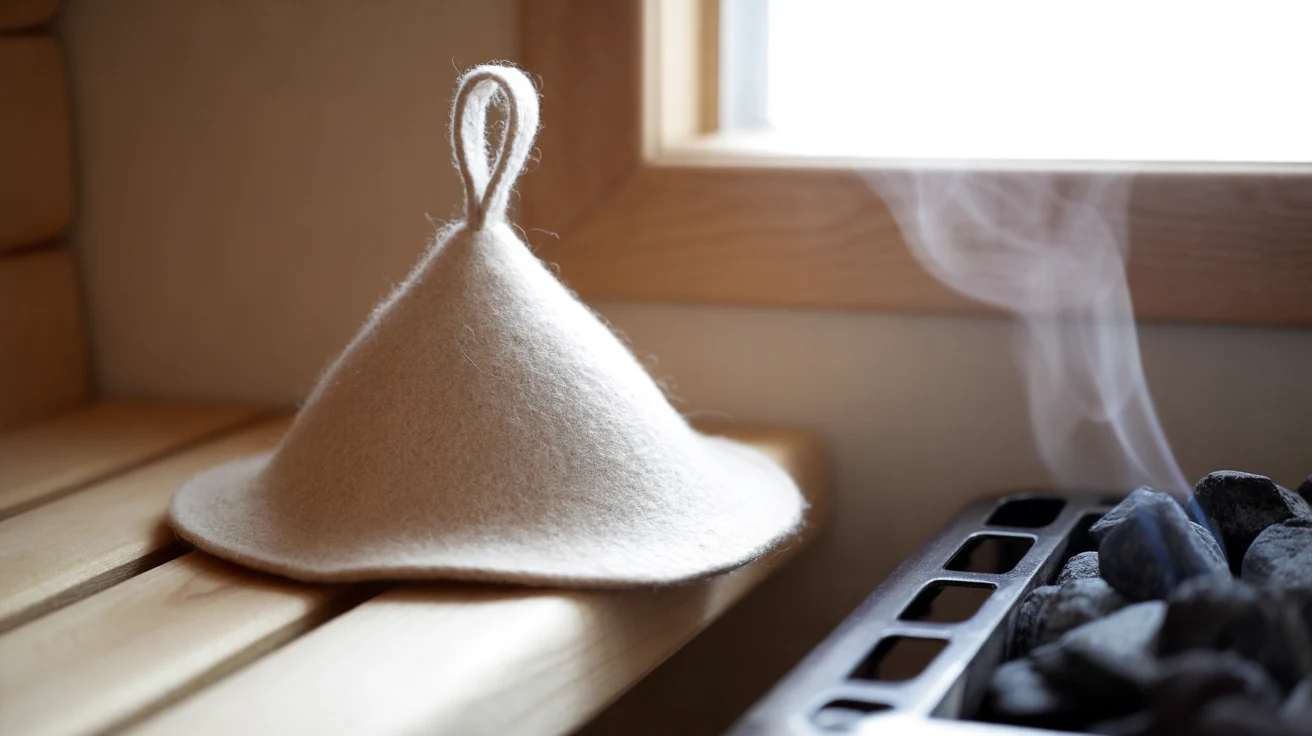
The mechanism is at least plausible. Wool fibers trap small pockets of air, and felt, which is pressed layers of fiber, heats slowly and gives up heat slowly. HUUM’s explanation is that this buffers the scalp from the hot upper air and from the sharp burst of heat when water hits the stones, the steam wave called löyly.
So treat hair-saving and stay-in-longer claims as marketing. The defensible reason to buy one is that your head feels less scorched, which is a perfectly good reason.
If this is your first sauna, buy nothing yet. Work out where in the room you are comfortable first. A hat is a refinement for someone who already knows they want the top bench and keeps losing the argument with their own scalp.
Wool felt, linen, or cotton
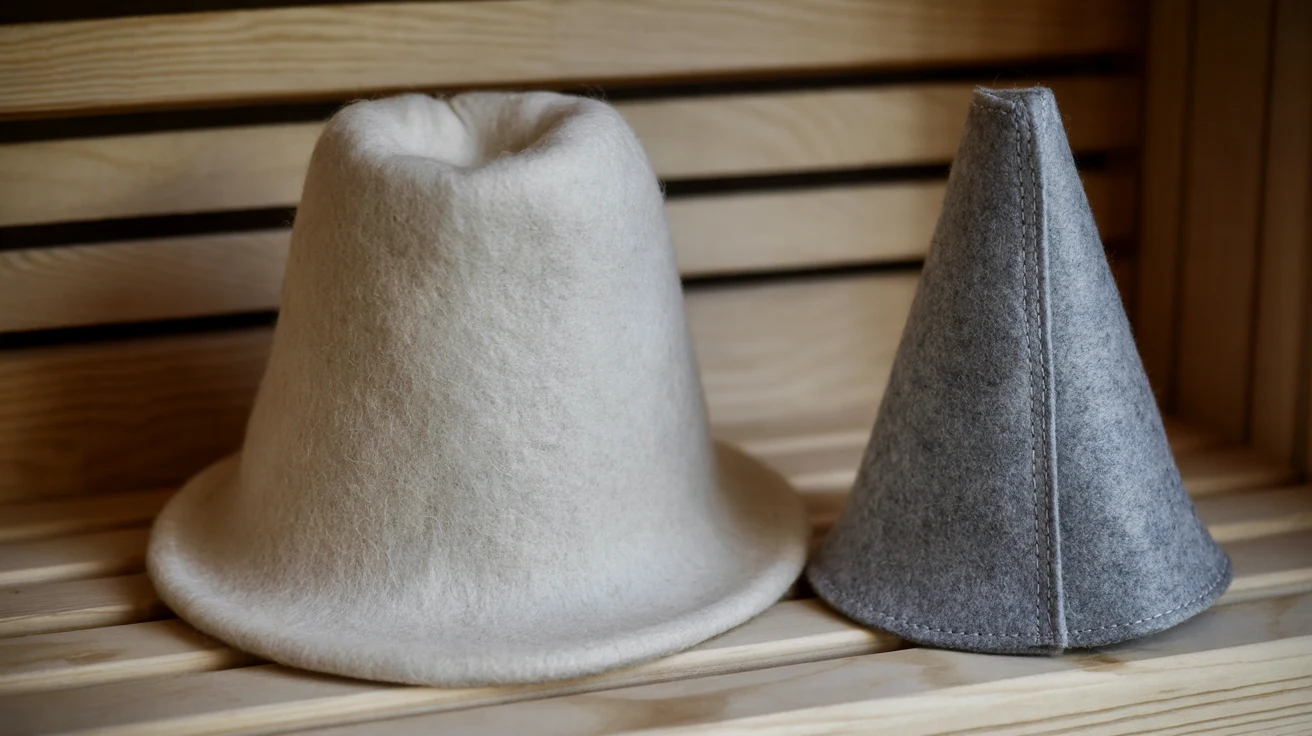
Three constructions cover almost everything on the market: the traditional cone or bell of pressed wool felt with a hanging loop, a softer wool bucket shape, and a light cotton or linen cap, often double-layered. They are not interchangeable.
| Material | How it behaves | Best for |
|---|---|---|
| 100% wool felt | Thick, insulating, slow to heat and slow to release heat; holds its shape | Hot traditional saunas at 70 to 90°C (158 to 194°F), wood-fired rooms, anyone sitting high |
| Linen or linen-cotton terry | Light, absorbent, minimal insulation; dries fast | Cooler sessions, people who cannot tolerate wool on skin |
| Cotton, double layer | Soaks up sweat, easy to launder, packs flat | Infrared cabins, gym saunas, travel |
| Polyester or blended “felt fabric” | Looks like felt, insulates poorly, synthetic against a sweating scalp | Nothing, if you have the choice |
For a hot room, a 100% wool felt cone like the ASKOLD wool felt sauna hat is the answer and it is not close; if the cone shape looks wrong on you, the Halsa wool sauna hat is the same wool in a softer bucket shape with a brim. For an infrared cabin, cotton is the sensible pick, and a double-layer cotton sauna hat also suits skin that itches under wool. Yes, the classic cone makes you look like a garden gnome who took a wrong turn.
The polyester felt trap
“Felt” is a construction, not a fiber. You can press polyester into felt as easily as wool, and plenty of cheap hats are exactly that. A proper wool felt hat costs roughly $15 to $70, and the very cheapest “felt” hats, the ones under about $10, are usually polyester.
The check takes five seconds: find the material percentage, not the word felt. If the listing says “felt” and nothing else, assume synthetic and price it accordingly. A synthetic hat in the hottest air in the room is optimism dressed up as a bargain.
Wetting the hat before a session
Advice conflicts here, so read the label instead of the internet. HUUM suggests dampening the hat lightly with cool or lukewarm water before you go in, while some hand-felted hats ship with the opposite instruction and tell you not to wet them at all, since soaking can distort the shape. Follow whatever came in the bag, and if nothing came in the bag, keep the hat dry and see whether you miss anything.
Care: airing, washing, and never the dryer
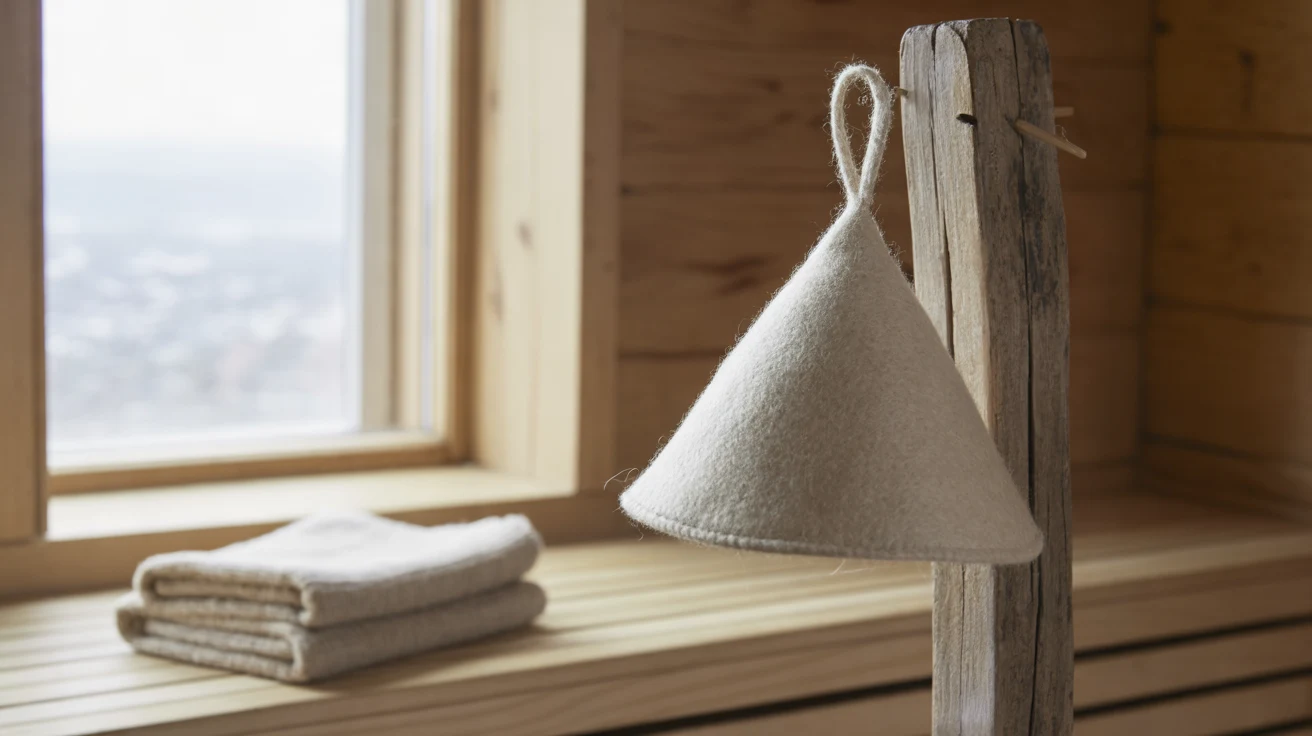
Air the hat after every session and let it dry completely before it goes back in a cupboard. Wash it only when it needs it: by hand, in lukewarm water with a mild detergent, separately from other laundry, then reshape it while it is still damp. Never a tumble dryer, which shrinks wool felt and ruins the shape, and dry it somewhere with moving air outside the hot room rather than on a hook beside the heater.
Children and the lower bench
For children, the lower bench does the work that no accessory can, because it is much cooler than the top. Sauna hats are sold one-size, so on a small head one just slides around; a plain cotton cap works better. Keep sessions short and let a child leave the moment they want to.
Common questions
Why do people wear hats in sauna?
Hot air rises, so your head sits in the hottest layer of the room. On the top bench that air can be more than 20°C (about 40°F) hotter than the air at the floor, and a thick wool hat insulates your scalp and ears from it, and from the burst of heat when water hits the stones. The benefit is comfort; nothing beyond that has been shown.
What is a sauna hat made of?
The traditional version is pressed wool felt, usually a cone or bell shape with a loop to hang it by. Lighter hats are linen, linen-cotton terry, or double-layer cotton. Cheap hats sold as “felt” are often partly or entirely polyester, so look for a stated “100% wool” rather than the word felt on its own.
Do you need a sauna hat?
No. It is optional comfort gear, and no evidence suggests it protects hair, lowers core body temperature, or lets you stay in longer. Buy one if you like sitting high in a hot room and your scalp objects; if you are new to sauna, moving down a bench solves the same problem for free.
Should you wet a sauna hat before using it?
It depends on the hat. HUUM suggests dampening it lightly with cool or lukewarm water before a session, while some hand-felted hats are sold with instructions not to wet them at all, because soaking can distort the shape. Follow the label that came with your hat.
How do you wash a sauna hat?
Air it and dry it fully after every session, and wash it only when it actually needs it. Hand wash in lukewarm water with a mild detergent, separately from other laundry, then reshape it while damp and let it air dry. Never put wool felt in a tumble dryer, as it will shrink and lose its shape permanently.
Do sauna hats work in an infrared sauna?
A thick wool hat is overkill in an infrared cabin, which runs around 50 to 60°C (120 to 140°F) and produces no steam. If you want a cap there, a light cotton or linen one to absorb sweat makes more sense than felt.
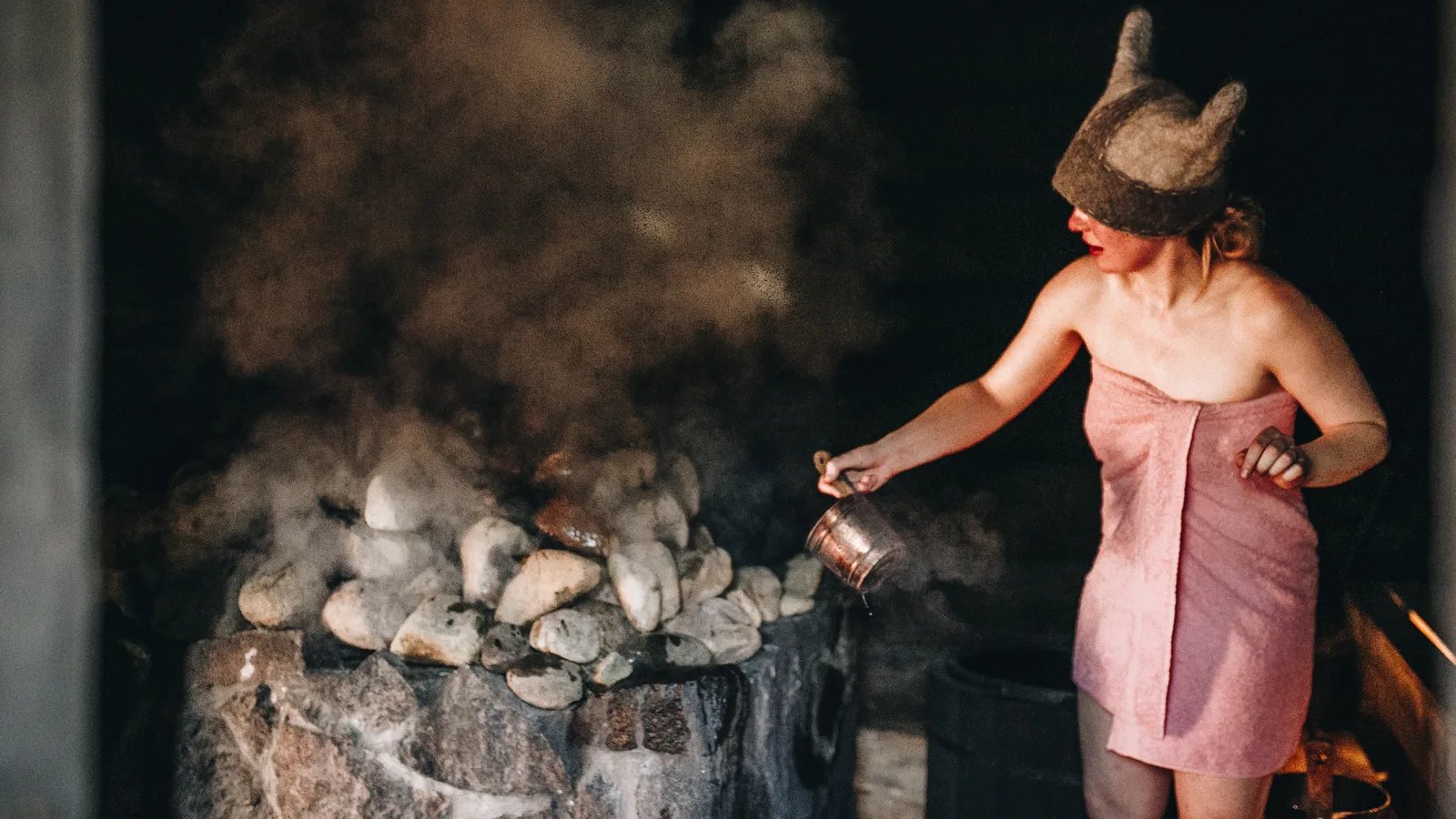
Hero photo: Estoniansaunas, CC BY-SA 4.0, via Wikimedia Commons