Best Sauna Thermometers and Hygrometers
Some links on this page are affiliate links. If you buy through them, I earn a small commission at no extra cost to you. As an Amazon Associate I earn from qualifying purchases.
Air near the ceiling above the heater runs far hotter than the top bench where you sit. Same room, same moment, 20 degrees apart or more.
So the instrument is the easy part. A combined analog thermometer and hygrometer is one of the cheapest things you will ever bolt to a sauna wall, and the good ones have no battery and one adjustment screw. The decisions that matter are what you want the reading to tell you, and where you hang it.
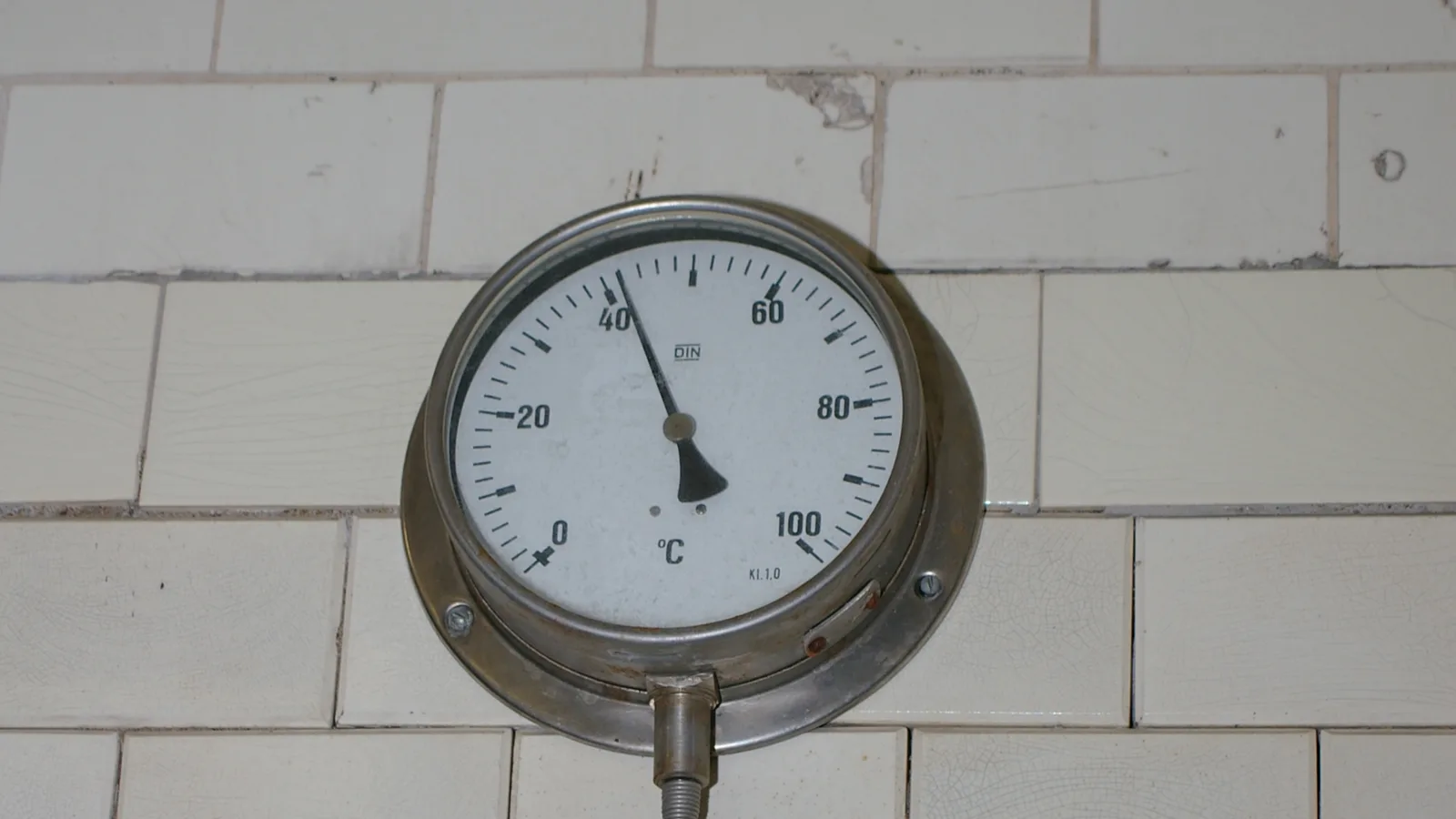
In Finland every sauna has one. In fact, in the house where I grew up, the thermometer still in use is the one that I made in a wood-working class in elementary school.
At a glance
- Buy one combined thermometer and hygrometer, not two dials: humidity is what decides how a given temperature lands on your skin.
- Hang it at head height on the top bench, 20 to 30 cm (8 to 12 in) below the ceiling and away from the heater.
- Household digital room monitors usually stop around 70°C (158°F), which is where a traditional sauna begins.
Our picks
- Traditional sauna, one dial for both readings: Northwood cedar thermometer and hygrometer
- Easiest to read and to fine-tune: MIKSUS 10-inch wood thermometer and hygrometer
- Metal build, Fahrenheit-only scale: defull stainless steel thermometer and hygrometer
Temperature alone doesn’t describe the room
The same air temperature feels like two different rooms at low and high humidity. That is why the standard sauna instrument is a combined unit: the thermometer tells you how hot, the hygrometer tells you how that heat will land on your skin.
Fischer, the German maker of sauna instruments, publishes guide ranges by sauna type: 5 to 10 percent relative humidity in a traditional Finnish sauna, 40 to 55 percent in a bio or soft sauna at 45 to 60°C (113 to 140°F), and 100 percent in a steam room capped at 50°C (122°F). A Finnish room sits at 70 to 90°C (158 to 194°F), and the low humidity is exactly what makes that bearable.
The hygrometer is also the only instrument that shows löyly (the burst of steam that rises when you throw water on the stones) as a number. Throw a ladle and the pointer climbs, then settles back as the stones recover.
How an analog hygrometer works, and how to adjust it
There is no electronics inside. A synthetic hair element physically lengthens as humidity rises, and a fine mechanism translates that movement into pointer travel. Fischer rates its instruments for 80 to 100°C (176 to 212°F) and 0 to 20 percent relative humidity, which is the working envelope of a Finnish sauna rather than a living room.
Because the mechanism is mechanical, it is adjustable. Most units have an adjustment screw you turn with a small screwdriver; some, like the MIKSUS 10-inch wood thermometer and hygrometer, put a fine-tune knob on the back of the case instead, which is the easier arrangement if you expect to correct the reading more than once. Check the reading against a trusted reading now and then, and correct it if it has wandered.
Where to hang it
Hang it at head height of a person on the top bench, roughly 20 to 30 cm (8 to 12 in) below the ceiling and away from the heater. That spot reads the air you are actually sitting in.
Mounted above the heater instead, the dial reads the hottest air in the room, which is the convention heater makers use and the number their sizing charts are written around. Expect it to come in well above bench level, so pick the position that answers the question you care about.
Why a digital room hygrometer stays out of the sauna
Cheap digital thermometer-hygrometers are everywhere and they are genuinely good instruments for a house. The popular TP50 tops out at 70°C (158°F). A traditional sauna starts around 70°C and keeps going. The gadget doesn’t fail dramatically; it just stops having anything useful to say at the exact moment you wanted a number.
Heater control panels use probes designed for the heat and report temperature perfectly well, so this is not an argument against digital sensing. It is an argument against the indoor room monitor that was already in the drawer. Check the rated range on the box before it goes anywhere near the hot room. An analog dial sidesteps the question entirely: nothing to power, nothing to replace.
What to look for on the dial
Three things separate a dial you will actually read from one you will ignore.
- A scale you think in. Many dials carry °F on the outer ring and °C on the inner one; others, like the defull stainless steel thermometer and hygrometer, are Fahrenheit only, 70 to 250°F, with color-coded zones instead of a second scale, which suits you if you never think in Celsius and want a metal case rather than wood.
- A range that covers your room. The MIKSUS 10 in unit reads 10 to 120°C (50 to 250°F), which comfortably brackets any sauna temperature you are likely to run. Dials that stop at 100°C are fine too; dials built for household use are not.
- Dial size. You read this thing from the far bench, through steam, in dim light, without your glasses. Bigger dials and higher-contrast faces win.
What a good one costs
For a traditional sauna, buy one combined thermometer and hygrometer rather than two separate dials, such as the Northwood cedar thermometer and hygrometer, which carries both readings on a single dial in Celsius and Fahrenheit. Case material is an aesthetic decision, not a performance one: cedar, aspen and bamboo match the room, aluminum and stainless suit a more industrial build, and the dial sits in the same heat either way. Fahrenheit only or dual scale, a decent analog unit runs roughly $30 to $75.
Common questions
Where should you put a thermometer in a sauna?
Head height on the top bench, 20 to 30 cm (8 to 12 in) down from the ceiling and clear of the heater, if you want the number to match what you feel. Fixed above the heater, it reports the heater’s own hot air and reads noticeably higher.
Do you need a hygrometer in a sauna?
You don’t need one, but it is the more interesting of the two readings. Humidity is what makes a given temperature feel mild or brutal, and combined units cost little more than a thermometer alone. In a soft or bio sauna, where humidity is the defining variable, it stops being optional.
What humidity should a Finnish sauna have?
About 5 to 10 percent relative humidity, which is what makes 70 to 90°C pleasant instead of punishing; soft saunas run much wetter and cooler, and steam rooms sit at 100 percent. Water on the stones spikes the reading briefly before it settles back.
Can you use a digital thermometer in a sauna?
Only one rated for the heat. Household room monitors usually stop around 70°C (158°F), which is roughly where a traditional sauna begins. Probes built into heater controls handle it fine.
How do you calibrate a sauna hygrometer?
Analog units have a mechanical adjustment, either a screw on the case reached with a small screwdriver or a fine-tune knob on the back. Compare the reading against a reference you trust, then nudge the pointer into agreement. Treat it as an occasional check rather than a scheduled task.
Hero photo: Johann H. Addicks, GFDL 1.2, via Wikimedia Commons