Best Saunas in the United States: City by City
A weekday seat in a wood-fired barrel sauna parked on a Seattle beach costs $35. A day pass to the largest Korean spa in Los Angeles costs $40, and the building never closes. A single admission to the old bathhouse on East 10th Street in Manhattan costs $60, and which shift you walk into determines who you’ll be sitting next to.
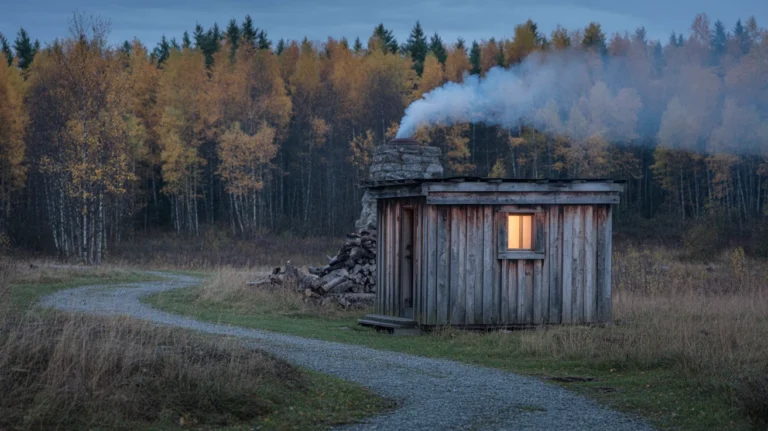
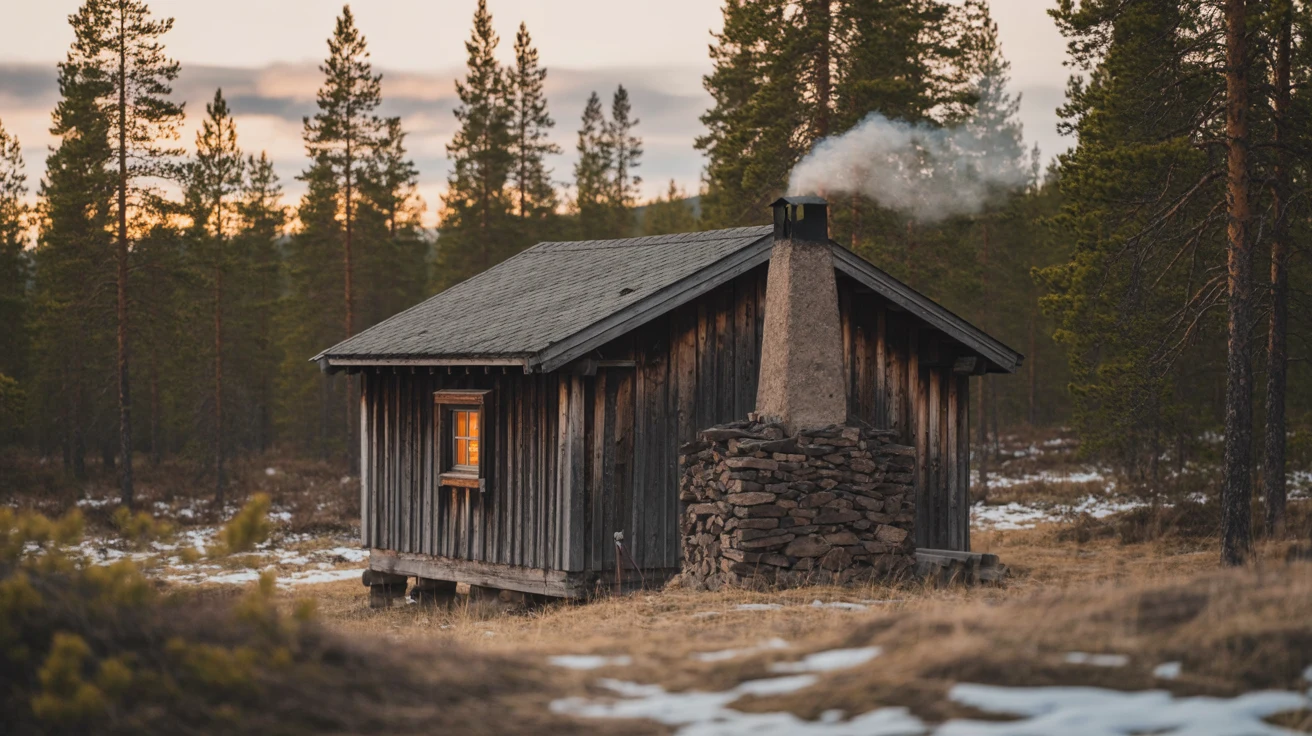
American public sauna is real now, but it is unevenly distributed. Three or four cities have genuinely good options, Minnesota has had them for a century and a half, and the fastest-growing category in the country isn’t a building at all: it’s a barrel on a trailer that shows up at a beach parking lot on Saturday morning. Here’s what’s actually worth your money, city by city, with the prices as they stood in 2025.
The quick map: what a session costs
Prices below come from operators’ own pages. American sauna pricing moves fast, and weekend rates at the bigger urban venues run considerably above weekday rates, so treat these as the floor rather than the number on your receipt.
| City | Venue | Entry | Format |
|---|---|---|---|
| New York | Bathhouse (Flatiron, Williamsburg, Atlantic Ave) | From $39 weekday; $29 at Atlantic Ave | No time limit, no re-entry |
| New York | Russian & Turkish Baths, East Village | $60 single admission | Shift-based schedule, 365 days a year |
| Minneapolis | Little Ember Co, Cedar Lake Sauna | $35 per seat; $119 four-pack | 75 min, lakeside wood-fired |
| Minneapolis | 612 Sauna Cooperative | $200 members / $300 non-members (private) | 90 min, up to 12 people |
| Seattle | Bywater Sauna (mobile) | $35 weekday / $40 weekend | 60 min, cold plunge is the water |
| Seattle | Seattle Sauna, Lake Union | $49 per person | 90 min, floating dock sauna |
| San Francisco | Onsen, Tenderloin | $50 per person | 2 hours, robe and towel included |
| San Francisco | Dogpatch Paddle Sauna | $25/hour; $75-99/month membership | 4-person cedar barrel, waterfront |
| Los Angeles | Wi Spa, Koreatown | $40 daily admission | Open 24/7, multiple floors |
| Austin | Sauna House, North Loop | Check booking page | 75-minute thermal cycle |
New York City: two very different bathhouses
Bathhouse is the polished end of the American market and the reason a lot of people under 35 tried sauna at all. Three locations (Flatiron in Manhattan, Williamsburg and Atlantic Avenue in Brooklyn), open daily 8am to 11:30pm, memberships available, and a full restaurant so you can spend four hours there without leaving. Pricing is variable by day and time: weekdays start at $39 at Flatiron and Williamsburg, $29 at Atlantic Avenue, and one reviewer reported weekend Williamsburg rates in the $50-85 band.
What you get is a proper thermal circuit rather than a single hot box, which is still unusual in the US. For every NYC option, from Brooklyn banyas to the Koreatown spas, see the best bathhouses in NYC.
| Room | Temperature |
|---|---|
| Banya | 90°C (194°F) |
| Dry sauna | 75-85°C (170-185°F) |
| Infrared sauna | 55-75°C (135-170°F) |
| Steam room | Around 45°C (115°F) |
| Thermal pools | 37-40°C (98-104°F) |
| Cold plunges | 7-10°C (45-50°F) |
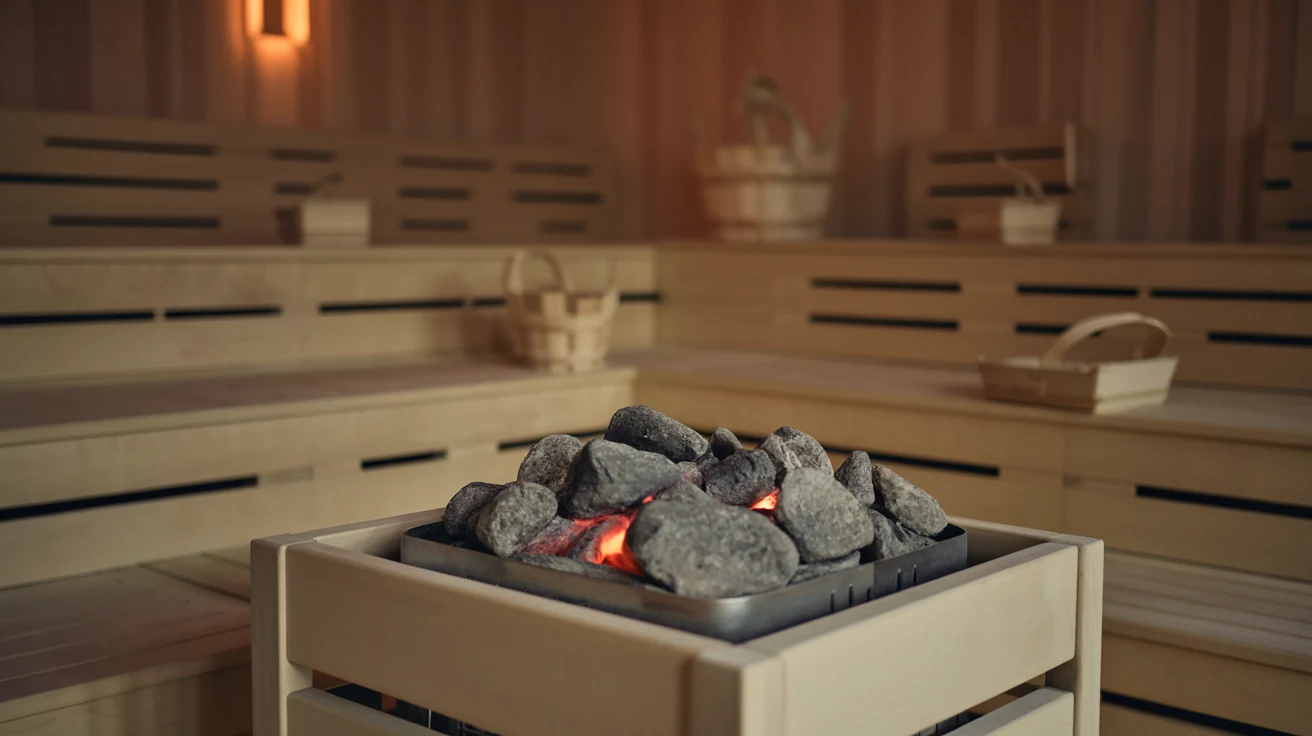
The banya room is the one to prioritize. At 90°C with water going on the stones, it produces real löyly (the wave of steam that rises when water hits hot rocks), which the infrared cabin structurally cannot.
The Russian & Turkish Baths at 268 East 10th Street is the opposite experience: older, hotter, less designed, and run under an unusual co-management arrangement in which two operators, Boris and David, run the facility separately on alternating shifts. Admission passes are shift-specific. Single admission is $60 before tax and card fees, with multi-admission packs available (five for $250). It’s open 365 days a year, coed on most shifts, with men-only windows on Sunday morning and Thursday afternoon.
Minnesota: the actual sauna capital of the United States
Minnesota didn’t discover sauna during the pandemic. Finnish immigrants arriving in the late 19th and early 20th centuries frequently built the sauna first and lived in it while the farm buildings went up, which tells you how the priorities ran. The oldest surviving example is the Barberg-Selvälä-Salmonson smoke sauna in Cokato, built in 1868 and probably the oldest savusauna (chimneyless smoke sauna) still standing in the country, as documented by MinnPost and the Minnesota Historical Society.
Non-Finnish neighbors found the whole business suspicious enough to take the Selvälä family to court in 1885. The Finns won, and Minnesota has been heating small wooden rooms on frozen lakes ever since. That continuity is why the state, along with Wisconsin and Michigan, still anchors Finnish-American sauna culture in a way no coastal city has matched. Chicago, the region’s big city, pairs wood-fired saunas on the Lake Michigan beaches with an old-school Russian bath on Division Street: see the best saunas in Chicago.
The modern expression is community sauna on the lakeshore. 612 Sauna Cooperative, founded in 2016 and worker-owned, runs a rotating seasonal residency; the current site is Hidden Beach on Cedar Lake East, at 2000 S Upton Ave in Minneapolis. Sessions run 90 minutes, the season runs fall through spring, and the co-op programs specifically inclusive slots including BIPOC, LGBTQIA+, silent, and guided Aufguss sessions. Private bookings for up to 12 people cost $200 for members and $300 for non-members; single community seats are sold in packages with member discounts rather than at a flat published rate.
Little Ember Co’s Cedar Lake Sauna, at 2101 Cedar Lake Parkway, is the easiest first visit: $35 for a single seat, $119 for a four-pack, $299 to rent both saunas privately, 75-minute sessions, running November through March, Thursday to Sunday. Two wood-fired saunas, essential-oil steam options, and cold plunge straight into Cedar Lake. Their NorthUp event sauna, built with transparent siding, runs above 95°C. Ten percent of ticket sales go to Minneapolis Parks.
Seattle: floating, mobile, and mostly outdoors
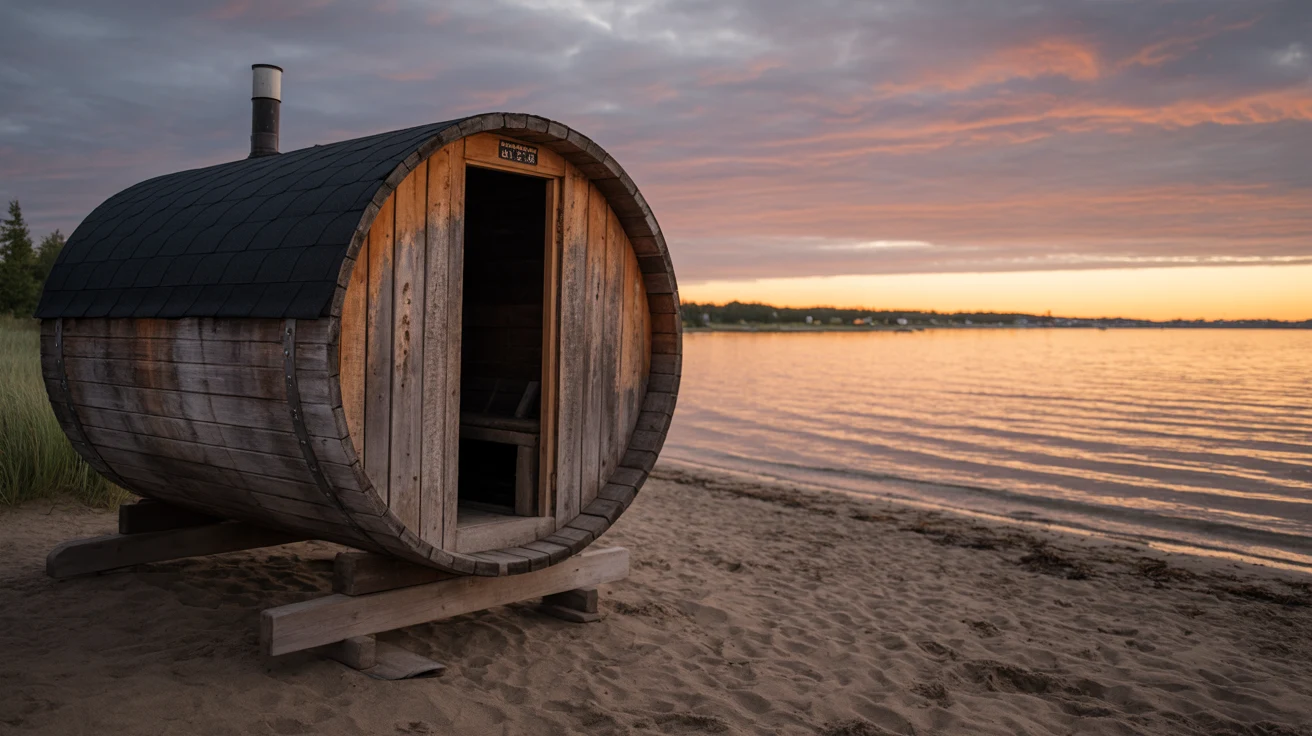
Seattle has the most interesting sauna geography in the country because the cold plunge is free and enormous. Bywater Sauna, launched in 2024 via Kickstarter by Coldwater Collective members Nate Garberich and Laura Lennon, runs two 20-foot Minnesota-built barrel saunas that seat 16 each, billed by the operators as the largest mobile barrel saunas in the US. Sessions are 60 minutes at $35 weekday and $40 weekend, at Golden Gardens and Alki Beach year-round, plus seasonal residencies at Leschi on Lake Washington (October to April) and Old Stove in Ballard (October to June). You cool off in Puget Sound or the lake.
Seattle Sauna at 2401 N Northlake Way is the indoor-ish counterpart: a cedar sauna moored on a dock at Seattle Marina on Lake Union, $49 per person for 90 minutes, up to 10 guests in a guided social session or 12 for a private rental. Cold exposure here is a five-liter bucket shower and an outdoor shower rather than the lake, plus a rooftop deck for the cool-down. The full list, with Banya 5 and the Korean spas north and south of the city, is in the best saunas in Seattle.
| Option | Price | Character |
|---|---|---|
| Bywater Sauna | $35-40 | Mobile barrel, beach, saltwater plunge |
| Seattle Sauna, Lake Union | $49 | Floating cedar, guided social sessions |
| Von Sauna, Kirkland | $32-40 per seat | Floating, seasonal |
| Banya 5, South Lake Union | $$ | Russian banya, full facility |
| Tuli Lodge, Pier 62 | n/a | Paused while it builds a permanent site |
| Seattle Bouldering Project | $30 day pass | Climbing gym with sauna access |
One correction worth making: “Othello Sauna” circulates in Seattle roundups, but I could not confirm any venue operating under that name. The Othello neighborhood’s public bathing is city Parks and Recreation aquatic facilities. Seattle Parks pools charge $8 adult admission on the 2026 fee schedule and some sites, including Green Lake and Rainier Beach, include sauna access. That’s a cheap sauna, not a destination one.
San Francisco and the Bay Area
Onsen, at 466 Eddy Street in the Tenderloin, is the best-executed urban bathhouse in the city: $50 per person for two hours, robe, towel and sandals included, plus complimentary bath products and hot tea. The circuit is a 15-person communal tub at 40°C, a redwood sauna, a steam room, and a custom overhead cold plunge. Schedule matters as much as price: Monday is a men’s session and Wednesday a women’s session with bathing suits optional, Thursday through Sunday are coed with suits required. Reservations cap at four people.
The Bay Area’s newer options are on the water. Fjord in Sausalito, at 2310 Marinship Way, opened in mid-2025 with two six-seat Finnish-style saunas built from repurposed steel shipping containers on a salvaged concrete wave attenuator, running around 90°C with bay views and cold plunge down a ladder into the water. Dogpatch Paddle Sauna at Crane Cove Park, 701 Illinois Street, opened in April 2025: a four-person cedar barrel at the same temperature, $25 an hour or $75-99 a month, next to a kayak and paddleboard operation. The SF Standard’s 2025 survey covers both.
Spa Radiance on Fillmore Street turns up on a lot of “best SF saunas” lists. It’s a well-regarded facial and massage day spa established in 1976, and it has no sauna, steam room, or hydrotherapy at all. Book it for skincare, not for heat.
Los Angeles: the Korean spa floors
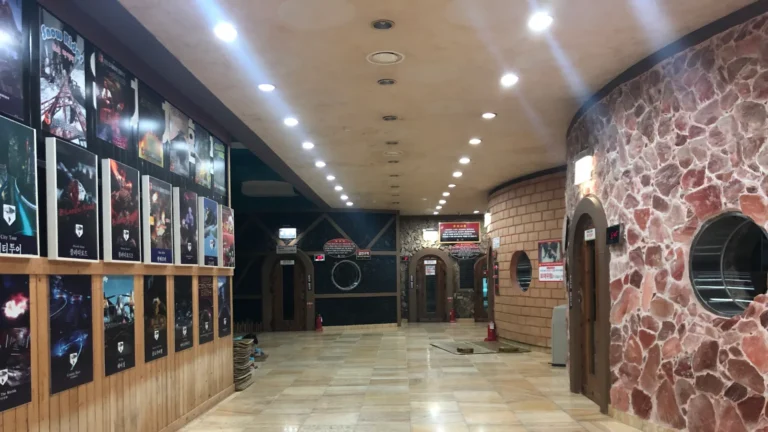
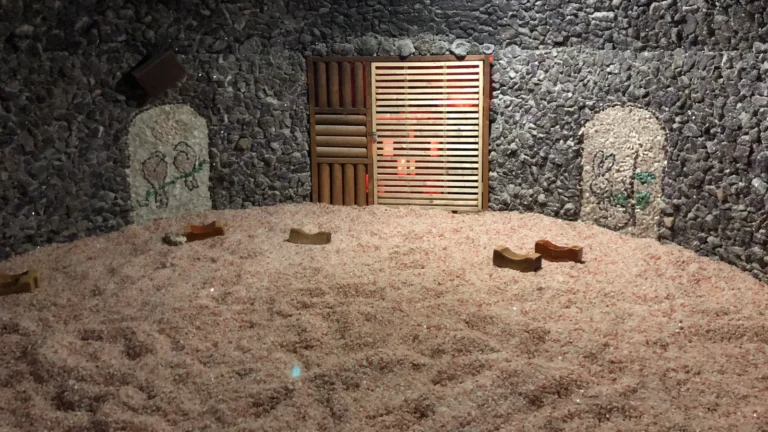
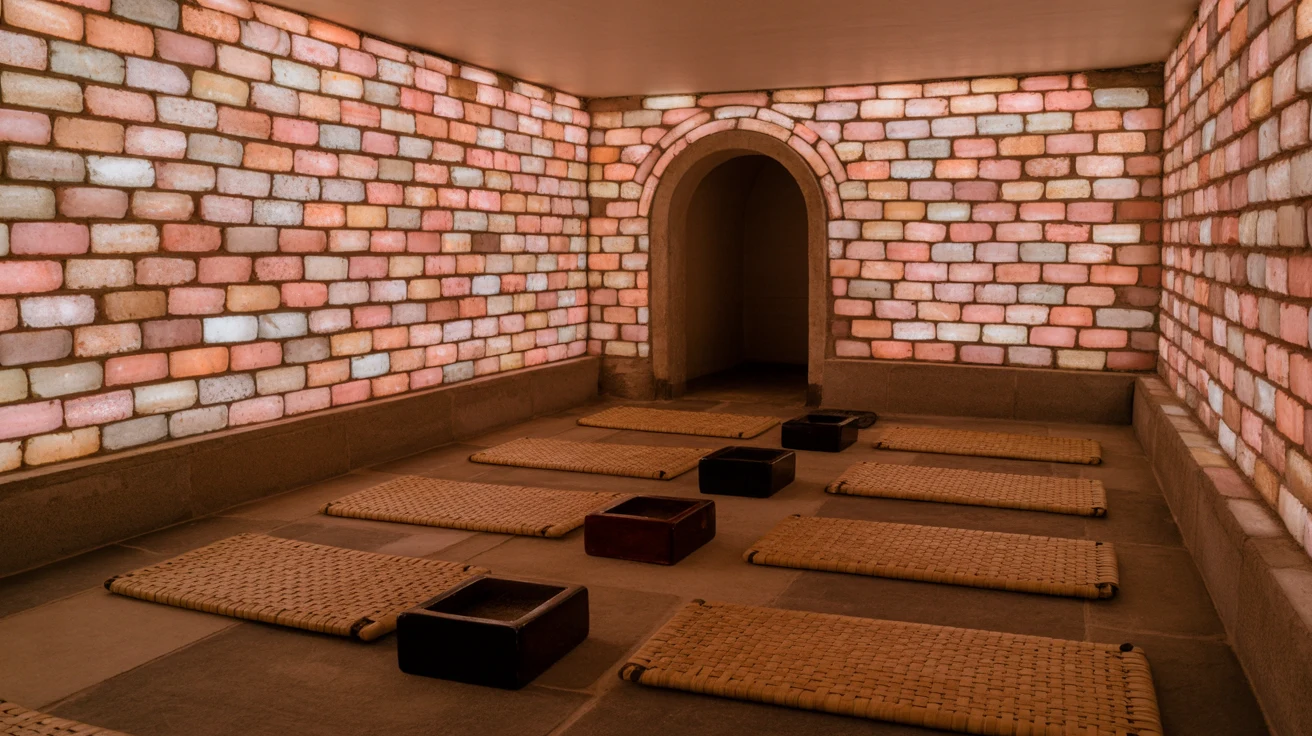
Los Angeles doesn’t have a Finnish sauna scene so much as it has the densest concentration of authentic Korean jjimjilbang spas in the country, and they are better value than almost anything else on this list. Wi Spa at 2700 Wilshire Boulevard, an $18 million facility on the Koreatown and Westlake border, is the largest: $40 daily admission, open 24 hours, with separate women’s and men’s wet floors, a coed jjimjilbang floor carrying five themed sauna rooms (salt and clay among them), a kids’ zone, a restaurant, and a rooftop terrace.
Beyond Wi Spa, Koreatown offers Olympic Spa (women only), Crystal Spa (coed and cheaper), and Spa Palace (overnight stays for adults). Current prices and house rules for each are in our guide to Korean spas in Los Angeles. Smaller Korean spa clusters run in Atlanta’s northeast suburbs and on Houston’s west side: see Korean spas in Atlanta and Korean spas in Houston.
Austin: growth without a settled scene
Austin is the clearest example of American sauna expanding faster than its own infrastructure. Sauna House, the multi-city chain that also operates in Asheville, Charlotte, Durham, Greenville, Knoxville, Raleigh and Bonita Springs, runs its Austin location at 1507 W North Loop Blvd as an interim outdoor “Sauna Garden” with wood-burning saunas while the permanent space is built out. The format is a 75-minute thermal cycle rotating sauna, cold plunge and rest. It’s closed Tuesdays, and the per-person rate isn’t published in a form I could verify, so check the booking page.
The rest of the growth is infrared. Perspire Sauna Studio had four Austin locations open as of September 2024 and signed a development deal for three more on top of five already in the pipeline, citing Central Texas population and business growth. Infrared cabins heat in 10-15 minutes and run at 50-60°C, far cooler than a traditional room, and they cannot produce löyly because there are no stones and no water. That’s a legitimate format with a legitimate following. It just isn’t the same product.
Mobile saunas: the fastest-growing category in America
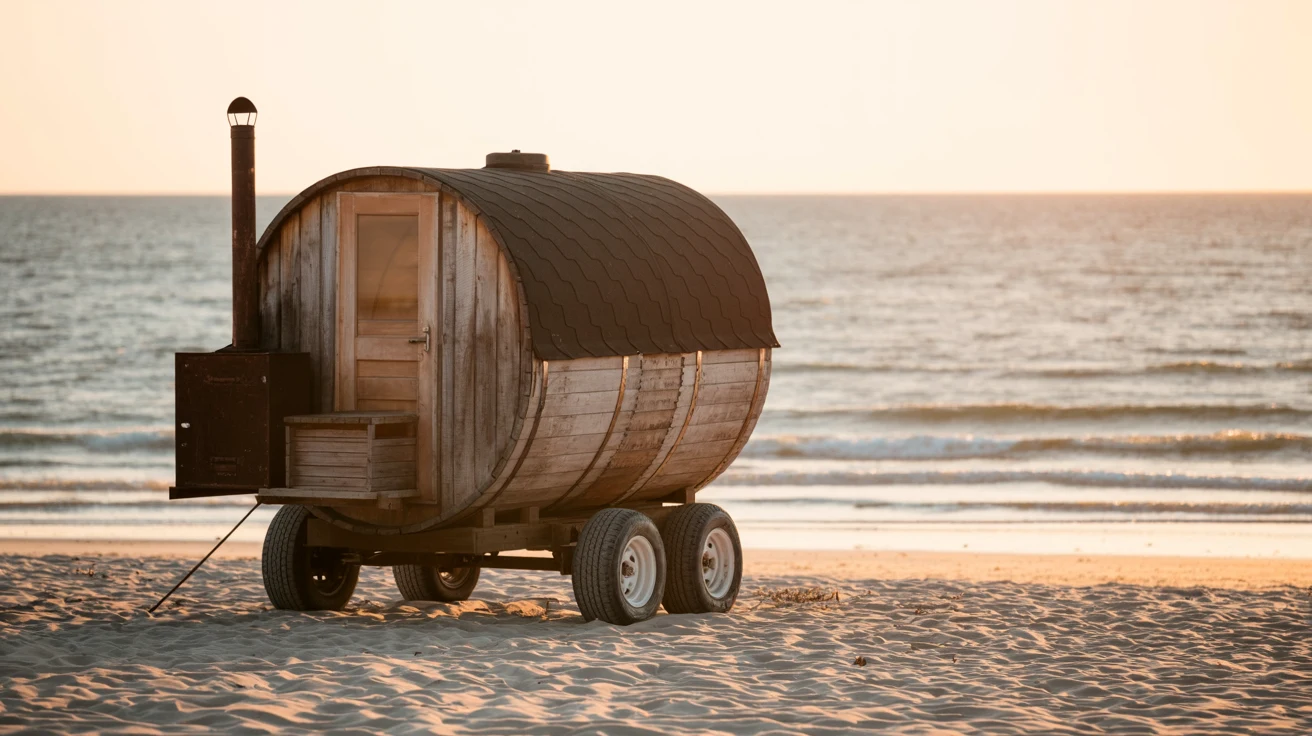
The most interesting thing happening in US sauna right now is that a large share of new capacity has wheels. Mobile saunas, trailer- or truck-mounted wood-fired barrels, rotate between beaches, parks, breweries, festivals and private bookings. The economics are obvious: no lease, no build-out, no permit fight for a fixed facility, and you park next to the cold water instead of plumbing it in.
| Operator | Where | Detail |
|---|---|---|
| Bywater Sauna | Seattle (Golden Gardens, Alki Beach) | Two 20-foot barrels, 16 seats each, $35-40 |
| Good Day Sauna | Lincoln Park, West Seattle | Mobile cedar sauna |
| Hot Rocks Sauna Club | Alki Beach, Lincoln Park, Jensen Point | Barrel seating 12-16, rotating sites |
| Wanna Sauna | Bay Area creeks, pools, private events | Cedar on trailer, seats 10, up to 100°C, salt bar |
| Campfire Sauna & Social | Gillson Beach, Lake Michigan, Wilmette IL | Lakefront community sauna |
The underlying market is growing with it. Technavio projects the US sauna market to grow by $151.3 million between 2024 and 2029, a 6.4% compound annual rate, and Nordak Sauna Co’s analysis put search interest in outdoor saunas up more than 76% in 2023. Post-pandemic appetite for outdoor communal anything, plus the cold plunge trend, did most of the work.
Why American sauna still trails Europe
Compare any of the venues above with the public bathing culture in Helsinki or the sauna parks of Germany and the gap is structural rather than aesthetic. In Finland, public sauna is nude by default, and in Germany it is mixed and nude. In the US, nudity is read as either sexual or shameful, so nearly every public sauna requires swimwear, which changes the room’s social contract entirely. It’s a defensible commercial decision. It also means the American version is a different activity wearing the same name, something you notice immediately if you’ve used the sauna destinations where the European convention still holds.
The second gap is architectural. Industry commentators, including the North American Sauna Society and a long list of builders, make the same complaints about typical US public saunas: too small, benches too low, ventilation inadequate, no proper changing space, and operating temperatures pushed below the European norm of roughly 70-90°C because operators are managing lawsuit risk rather than heat quality. Americans mostly meet sauna as a locker-room amenity attached to a gym membership, not as a two-to-four-hour destination.
So the standard American gym sauna is exactly what you’d expect from that incentive structure: a room run cool enough that nobody complains, a laminated sign about time limits, and a bucket that is there for decoration. The venues in this guide are the ones that decided not to do that.
The trend line is genuinely good, though. The cold therapy boom, social media, and a younger demographic that treats contrast bathing as normal have moved American sauna out of the locker room within about five years. Minnesota, Michigan and Wisconsin kept the real thing alive regionally for over a century; the rest of the country is now catching up in trailers.
Common questions
Which US city has the best sauna scene?
Minneapolis, by a clear margin, if you want authentic wood-fired sauna with real cold water. Finnish immigration made Minnesota the center of American sauna culture in the 1800s and the community sauna operators there still run lakeside sessions all winter. Seattle is the strongest runner-up thanks to its mobile and floating saunas; New York has the most polished commercial facilities.
How much does a public sauna session cost in the US?
Roughly $25 to $60 for a single session or day pass in 2025. Mobile and community saunas sit at the low end ($25 to $40), urban bathhouses in the $39 to $60 range before weekend surcharges, and Korean spa day passes around $40. Private group rentals run from about $200 to $300 for 90 minutes.
Do you have to wear a swimsuit in an American sauna?
Almost always, yes. Unlike Finnish and German public saunas, which are nude by default, US venues generally require swimwear because of liability and cultural norms. A few places run gender-separated sessions where suits are optional, such as Onsen in San Francisco on its men’s and women’s days, so check the schedule if that matters to you.
Are US saunas as hot as Finnish saunas?
Often not. Traditional Finnish sauna sits around 70-90°C (158-194°F), while many US gym and hotel saunas are run cooler to reduce complaints and liability exposure. The dedicated venues are the exception: the banya room at Bathhouse in New York hits 90°C, and several mobile and event saunas run hotter still.
What is a mobile sauna and how do you book one?
A mobile sauna is a wood-fired barrel or cabin sauna mounted on a trailer that rotates between beaches, parks and events instead of occupying a fixed building. You book a timed seat online, typically 60 to 90 minutes, and cool off in whatever water is next to it. Locations rotate seasonally, so confirm the site on the operator’s page in the week you plan to go.
Is an infrared studio the same as a sauna?
No. Infrared cabins heat in 10-15 minutes and run at 50-60°C, warming your body directly rather than heating the air, and they have no stones and no steam. Plenty of people prefer them for the shorter, cooler session. If you want the steam burst that defines traditional sauna, you need a heater with stones you can throw water on.