Sauna Festivals and Events Worldwide
The biggest sauna event in the world is a theatrical competition in Germany where grown adults swing towels to choreographed music and lighting cues. The best one is a Finnish lakeside afternoon where about 200 people pay €25 ($28) to sit in boat saunas next to a medieval castle. Those two facts tell you most of what you need to know about the sauna festival circuit.
There are fewer of these events than the internet suggests. Several well-known names – Helsinki Sauna Day, a Finnish “national sauna day”, a handful of American festivals – turn out on inspection to be dead domains and expired listings. What follows is only what I could verify: events with confirmed dates, confirmed organizers, and in one case a confirmed reason they no longer exist. Where a date or a price genuinely is not published anywhere, I have said where to look rather than guessed at a number.
The Aufguss World Championship
The Aufguss World Championship is organized by Aufguss WM e.V., based in Bielefeld, Germany. It is the closest thing sauna has to a professional competitive circuit, and it exists because German sauna culture turned the act of throwing water on stones into a performance discipline with judges, scoring, and rehearsal time.
The organization runs two separate competitions with different philosophies. The Aufguss WM (World Masters) is the theatrical event: heat and scent combined with storytelling, music, lighting and choreography. The Modern Classic Cup strips all of that away and judges pure classic Aufguss technique – music, essential oils, precise towel work, no costumes, no props, no theatrical effects. Whichever side of that divide you fall on says a lot about what you want from a sauna.
| Competition | 2026 dates | Venue |
|---|---|---|
| Aufguss WM (World Masters) | 13–20 or 14–20 September 2026 (sources differ on the start day) | Satama Sauna Resort & Spa, Wendisch Rietz, Germany |
| Modern Classic Cup | 1–4 October 2026 | Farris Bad, Norway |
The 2026 World Masters venue sits on the shores of the Scharmützelsee lake and is operated by MeineZeit Hotels & Resorts. Note the date discrepancy above: the championship’s own site gives 14 September as the start, the venue operator’s booking site gives 13 September. Both agree the event ends on 20 September. For spectator tickets, check the host venue’s booking site: in past editions they were sold through the venue rather than through the championship organization.

Heinola, 2010, and why nobody competes at sitting in heat anymore
People ask about competitive sauna endurance more than any other festival topic, and the honest answer is that the sport ended, and it ended badly.
The World Sauna Championships ran annually in Heinola, Finland from 1999 to 2010. Competitors sat in a sauna held at extreme temperatures and the last one still upright won. In 2003, five-time champion Timo Kaukonen set a championship record by lasting 16 minutes.
In the final on 7 August 2010, both remaining finalists were pulled from the sauna after roughly six minutes at 110°C (230°F). Russian finalist Vladimir Ladyzhensky died of third-degree burns despite resuscitation attempts. Kaukonen survived with burns covering 70% of his body. An autopsy found Ladyzhensky had taken painkillers and anaesthetic ointments before competing – substances the organizers had forbidden – which is believed to have masked how much damage the heat was doing to him. The account is documented on Wikipedia’s record of the championships.
No further event was held. Finnish prosecutors declined to file negligence charges against the organizing committee, and on 20 April 2011 the City of Heinola formally ended the championships, saying it could not restore the event’s original playful character. That was the correct call. Heat endurance is not a skill, and the body gives very little warning before it stops coping.
Savonlinna Sauna Festival: the one you can actually attend
If you want a Finnish sauna event with a confirmed date and a ticket you can buy, this is it. Savonlinnan Saunafestivaali is organized by Riihisaaren saunaseura ry and held at Riihisaari in Savonlinna, on the shore of Lake Saimaa next to Olavinlinna castle. The 2026 edition runs Saturday 15 August, 14:00–20:00, and is the festival’s third year.
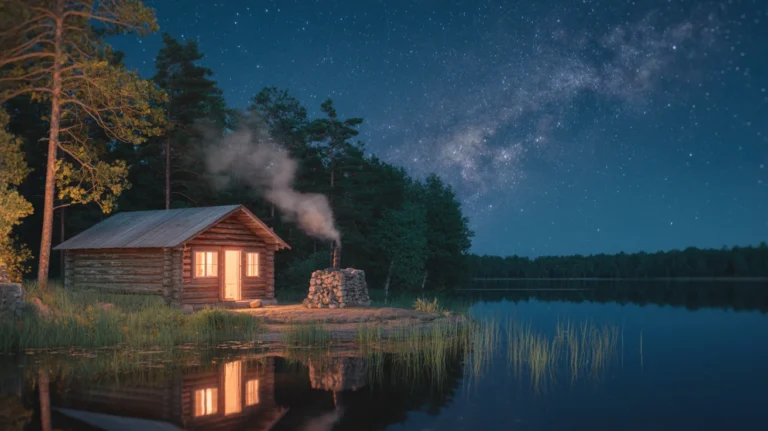
What’s on site: boat saunas, tent saunas, cart saunas and hot pools, plus open-water swimming, food vendors and evening music. Tickets are sold through the Biletti platform.
| Ticket | Price |
|---|---|
| Standard | €25 ($28) |
| Riihisaaren saunaseura members | €20 ($23) |
| Children under 15 with an adult | Free |
| Saimaa Folk ticket holders / circumnavigation swim entrants | Discounted |
The scale is the point. Attendance was around 180 in 2024 and around 200 in 2025 – this is a lakeside afternoon, not a stadium. That intimacy is what makes it a genuine window into Finnish sauna culture rather than a spectacle built for visitors. You will be sharing benches with people who bathe here every week.
The Mobile Sauna Festival in Teuva
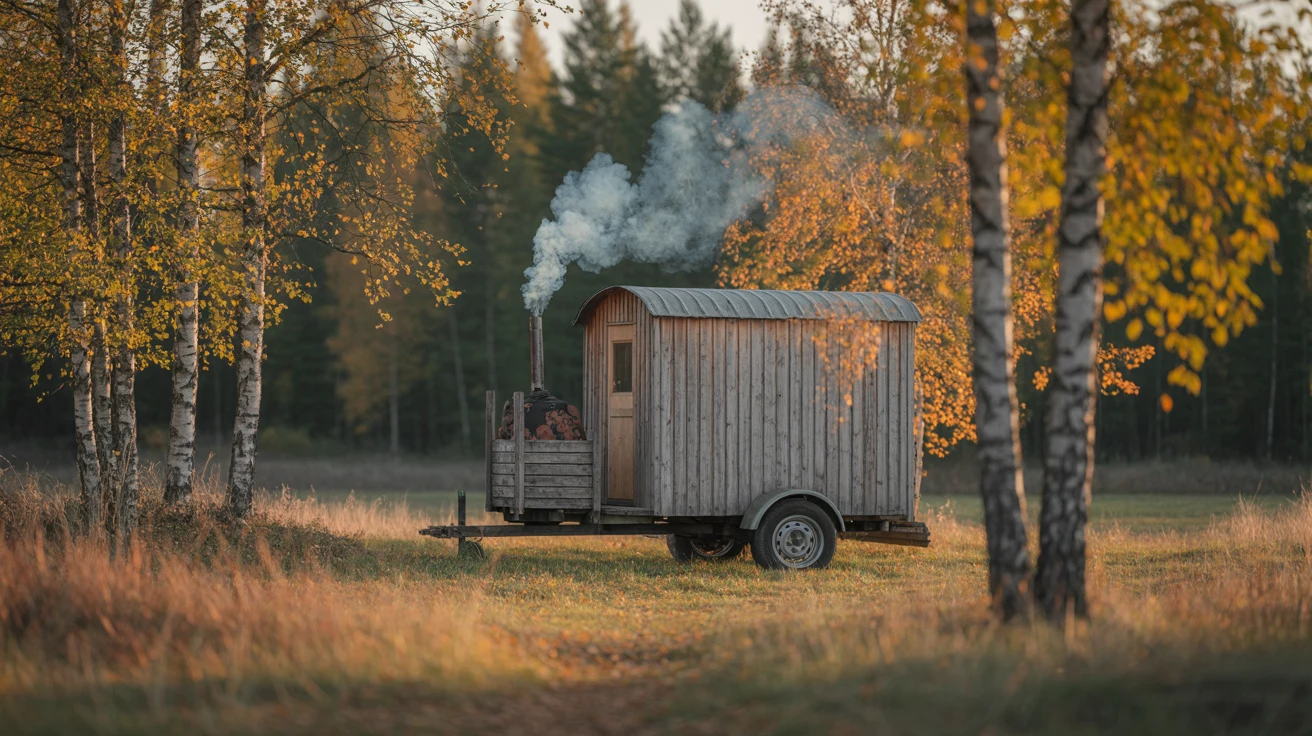
Teuva, a small municipality in western Finland, hosts a gathering of transportable saunas that has been running for roughly two decades. Finnish-language sources list it among the municipality’s recurring events, held almost every year.
The one edition documented at scale was August 2010, the festival’s fifth annual outing: more than 50 pocket-sized saunas assembled on a lakeside, drawing about 6,000 visitors and roughly doubling the town’s population for the weekend. Trailer saunas, van saunas, and the sort of homebuilt contraption that gets welded together over a winter – the same instinct behind the broader boom in mobile sauna experiences, only concentrated into one field for a weekend.
If you want to go, treat it as a trip you plan around rather than a fixed date on the calendar: check the municipality’s own event listings close to summer, and don’t book flights on the assumption that last year’s weekend repeats.
The United States: community saunas, not festivals
American sauna culture is growing fast, but it hasn’t yet produced a festival worth booking a flight around. The promising names lead to parked domains and sponsor listings with no program attached.
What the US does have is the cooperative model, and the clearest example is 612 Sauna Cooperative in Minneapolis. It’s a member-owned cooperative running wood-fired saunas at multiple locations across the Twin Cities, operating since 2016, open to both members and the public by reservation through its own booking system. Reservation releases are announced by newsletter, which is the practical detail that matters – popular slots go quickly.
This is arguably a better structure than a festival. A festival gives you one weekend; a cooperative gives you a bathing culture with a calendar. If you’re in a US city and there isn’t one near you, that’s a gap someone will eventually fill.

The International Sauna Congress: the industry side
The International Sauna Association, founded in 1958, runs a congress that is not a public festival and shouldn’t be booked as one. It’s a gathering of the trade: talks, panels, cultural programming, and the people who build, run and study saunas for a living.
The 2026 congress runs 24–26 September in Oslo, Norway, co-organized with Norges Badstulaug, the Norwegian sauna guild. Venues are SALT in central Oslo and The Well, described by the organizers as Scandinavia’s largest spa. The program includes a Sauna LIVE component at Árdna and optional regional sauna excursions. No registration price was published on either the association’s site or the congress site at the time of writing, so contact the organizers directly.
Worth knowing: the congress falls in the same September window as the Aufguss World Championship, and both are in northern Europe. If you’re building one trip, the calendar makes that awkward rather than convenient.
How to actually attend one
These events have less in common than their category suggests, and the practical requirements differ sharply.
| Event | What it is | Booking route |
|---|---|---|
| Aufguss WM / Modern Classic Cup | Competition, spectator event | Historically via the host venue’s own site |
| Savonlinna Sauna Festival | Public bathing festival | Biletti online ticketing |
| Mobile Sauna Festival, Teuva | Municipal gathering of transportable saunas | Check local listings near the date |
| 612 Sauna Cooperative | Year-round community sauna | Cooperative’s own reservation system, newsletter for releases |
| International Sauna Congress | Industry congress | Direct with organizers |
Three rules cover most of it. First, book accommodation before tickets – small Finnish towns hosting a festival run out of beds long before the event runs out of capacity. Second, bring your own towel and seat cover regardless of what the listing promises. Third, check the organizer’s own site rather than an aggregator, because as this research showed repeatedly, aggregators keep listing events that stopped happening years ago.
For a first-timer, I’d skip the championships entirely. A performance competition is a good show, but you’re watching other people bathe. A small local festival – Savonlinna being the model – puts you in the water and on the benches, which is the actual experience. Championships are for people who already know what they’re comparing. The same logic applies to picking a first destination: the memorable trips tend to be built around one good sauna in a specific place, whether that’s a city bathing house or a wilderness night in Lapland, not around an event program.
FAQ
What is the biggest sauna festival in the world?
By profile, the Aufguss World Championship organized by Aufguss WM e.V. in Germany. It runs two competitions: a theatrical World Masters event and the Modern Classic Cup, which judges pure technique. The 2026 World Masters is at Satama Sauna Resort & Spa in Wendisch Rietz, Germany, ending 20 September.
Are the Sauna World Championships still held?
No. The championships ran in Heinola, Finland from 1999 to 2010 and were formally ended by the City of Heinola on 20 April 2011, after a competitor died from burns in the 2010 final. No comparable heat-endurance competition has replaced them, and that is the right outcome.
Can tourists attend a sauna festival in Finland?
Yes. The Savonlinna Sauna Festival at Riihisaari is open to the public – the 2026 edition is Saturday 15 August, 14:00–20:00, with standard tickets at €25 ($28) and under-15s free when accompanied by an adult. Tickets are sold through the Biletti platform.
Is there a sauna festival in the United States?
Not one with confirmed dates and ticket prices. The strongest US option is a community sauna rather than an event: 612 Sauna Cooperative in Minneapolis has run member-owned wood-fired saunas across the Twin Cities since 2016, bookable by the public through its own reservation system.
What happens at a sauna festival?
It depends entirely on the type. Competitions like the Aufguss World Championship are spectator events where performers deliver scored steam routines. Public festivals like Savonlinna’s are participatory: boat, tent and cart saunas, hot pools, open-water swimming, food and evening music.
How far ahead should I book a sauna festival trip?
Book accommodation as soon as dates are confirmed, especially for events in small towns where the local bed supply is limited. Tickets themselves are usually easier – Savonlinna’s attendance has been in the low hundreds – but lodging near a lakeside Finnish festival is the real constraint.