Finnish Sauna Culture: A Complete Guide
Finland has more saunas than cars. That’s not a tourism slogan – it’s a verifiable fact. With roughly 3.3 million saunas serving 5.5 million people, that’s one sauna for every 1.7 Finns. You’ll find them in apartment buildings, corporate headquarters, the Finnish Parliament House, and even 1,400 metres underground in Pyhäsalmi Mine. The sauna isn’t a Finnish hobby or wellness trend. It’s closer to running water – a baseline utility that nobody questions and everybody uses.
Understanding Finnish sauna culture means understanding that this has nothing to do with luxury spas, eucalyptus towels, or Instagram-worthy cedar rooms. It’s a practice older than Christianity in Finland, woven so deeply into daily life that UNESCO recognized it as Intangible Cultural Heritage of Humanity in 2020. Here’s what that actually looks like.
A History Measured in Millennia
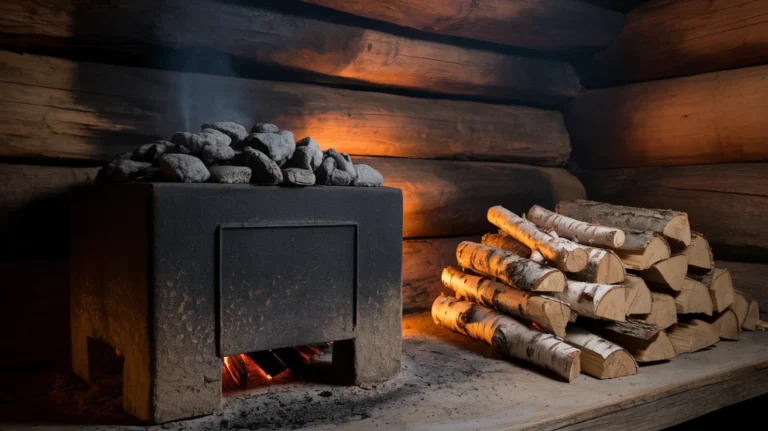
The word “sauna” is Finnish – one of the few Finnish words that made it into every other language on Earth. The earliest saunas were pits dug into slopes, used primarily as winter dwellings. A fireplace heated a pile of stones, water was thrown on them to produce steam, and the space served as home, kitchen, and bathhouse all at once. The rest of the vocabulary is collected in the sauna glossary.
These evolved into savusauna – smoke saunas – which remain the oldest distinct sauna type. A savusauna works by burning large amounts of wood for six to eight hours, letting the smoke escape, then bathing in the residual heat. The result is a soft, enveloping warmth with the unmistakable aroma of wood smoke. Most Finnish people still consider the smoke sauna the finest kind, and they’re probably right.
Throughout Finnish history, the sauna served purposes far beyond bathing. It was where women gave birth – the most sterile environment available, with hot water always ready. It was where meat was cured, linen was washed, and the dead were prepared for burial. The Finnish military took sauna so seriously that a WWII-era field manual states a battalion needs only an eight-hour break to build saunas, heat them, and bathe. Finnish soldiers on UN peacekeeping missions in Eritrea famously erected saunas as one of their first structures.
Sauna as Everyday Life
Here’s where most outsiders get it wrong. They think sauna is something Finns do the way Americans do yoga or Brits do pub quizzes – a leisure activity, a hobby, something you might or might not get around to. It isn’t. Sauna is what Finns do the way everyone else breathes. Those who have the opportunity typically sauna at least once a week, with Saturday being the traditional sauna day.
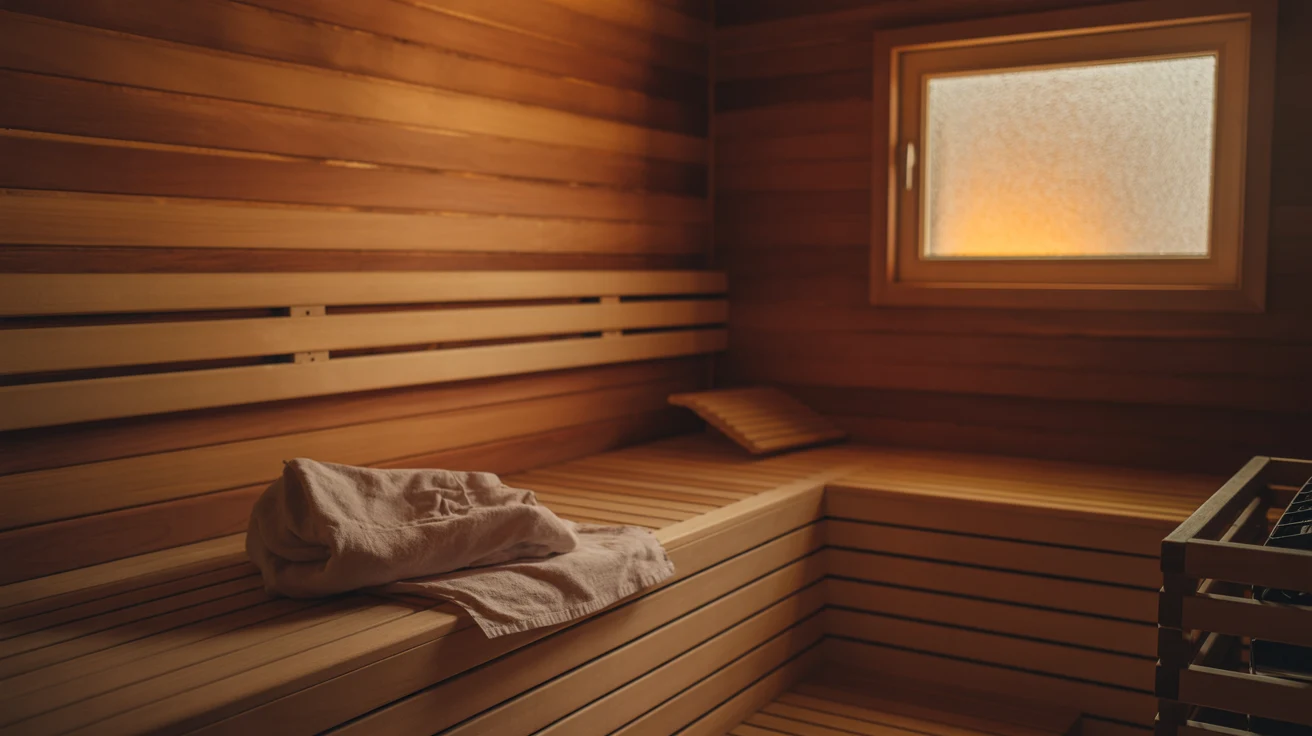
The infrastructure reflects this. Even standard apartment buildings in Finnish cities have communal saunas – or individual saunas built right into the apartments. Big companies have their own saunas. State institutions have saunas. The president has an official sauna. The prime minister has one too. Diplomatic visits to Helsinki have ended with policy positions adjusted in towels. This is not a rumour; it is documented in memoirs. When Finns travel abroad, one of the first things they look for is a sauna. The Finnish Church in Rotherhithe, London, has its own.
A typical Finnish sauna session runs at 80–110°C (176–230°F). Bathers alternate between the hot room and cooling off – in a lake, a shower, or just the outdoor air. There’s no rigid protocol. Some people sit quietly for 15 minutes, others go in and out for hours. Beer may be involved. Sausages (makkara) grilled on the stove are traditional at summer cottages. The experience is social but unhurried, casual but meaningful.
Family Tradition and the Passing of Knowledge
Finnish children are introduced to sauna from infancy. This isn’t a formal education – it’s absorption. You learn how to behave in sauna the same way you learn table manners: by being there with your family, watching, participating. Families sauna together. The knowledge passes from grandparents to parents to children without anyone thinking of it as “teaching” anything.
UNESCO’s inscription specifically notes this intergenerational transmission: “Sauna traditions are commonly passed down in families, though universities and sauna clubs also help share knowledge.” The family sauna tradition blurs the line between hygiene, bonding, and ritual. It’s where conversations happen that might not happen elsewhere – not because the sauna forces intimacy, but because the rhythm of heat and rest creates a natural space for it.
Historically, this connection ran even deeper. The sauna was where Finnish women gave birth, taking advantage of the cleanest, warmest room available. You can still find people in Finland who were born in a sauna.
Sauna and Finnish Identity
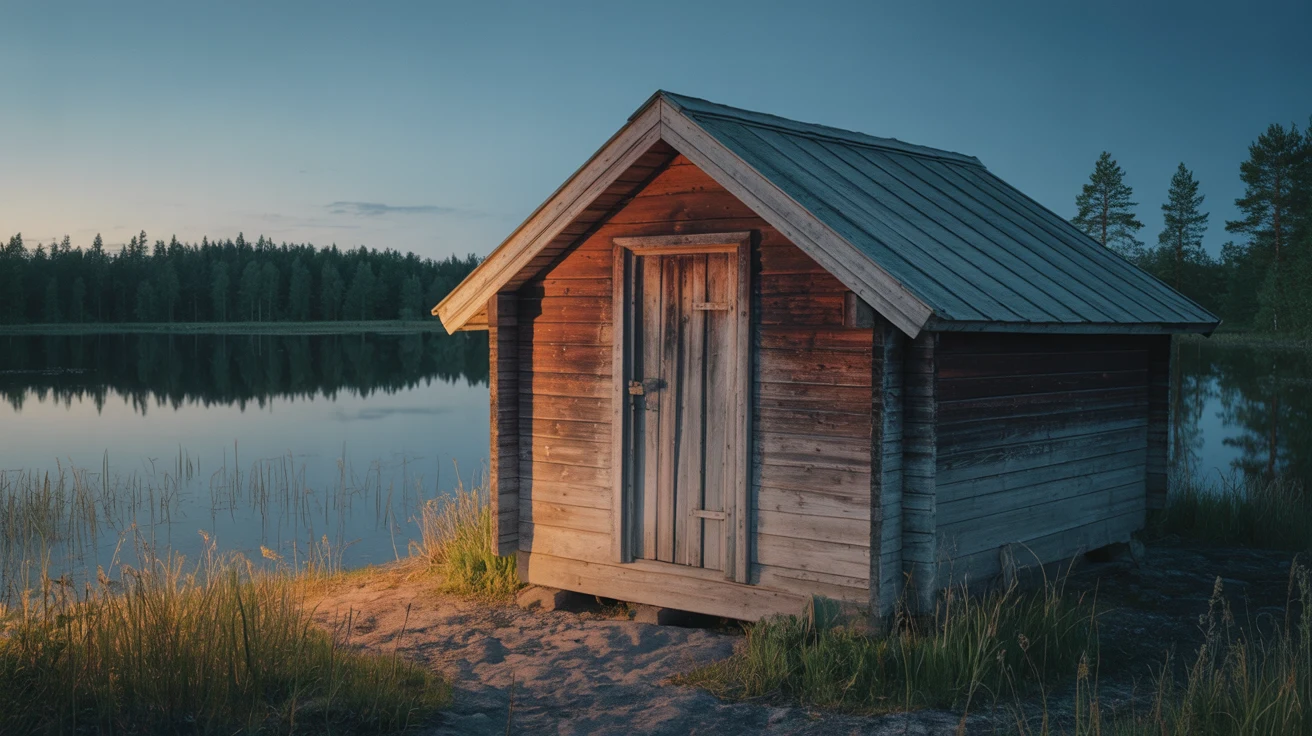
The sauna is inseparable from what it means to be Finnish. It’s an important part of national identity – not in a flag-waving way, but in the quiet, structural sense that it shapes how Finns relate to each other, to nature, and to themselves.
One of the most distinctive features: saunas are strictly egalitarian. No titles, no hierarchies. A CEO and a janitor sit on the same bench, equally naked, equally human. This isn’t idealistic rhetoric – it’s enforced by the setting itself. There’s something about sitting in 90°C heat with nothing on that dissolves pretension efficiently.
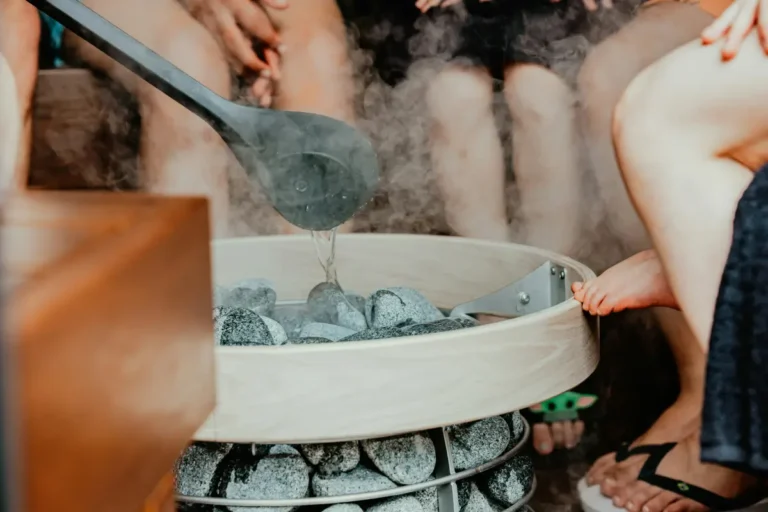
At the heart of the experience lies löyly (pronounced roughly “LOH-loo”) – the steam released when water is cast onto heated stones. The word means more than just “steam.” It carries a spiritual dimension, something closer to “the spirit of the sauna.” Getting the löyly right – the temperature of the stones, the amount of water, the quality of the resulting steam – is an art that Finns take seriously without ever being precious about it. There is a full guide to what löyly is and how to throw it.
UNESCO classified Finnish sauna culture under three domains: social practices and rituals, knowledge and practices concerning nature, and traditional craftsmanship. That breadth tells you something. This isn’t just a bathing habit – it’s a complete cultural practice that connects physical craft, social behavior, and a relationship with the natural world.
Vihta and Vasta: The East-West Divide
If you want to start a friendly argument between Finns, ask them what you call a birch whisk. In western Finland, it’s a vihta. In eastern Finland, it’s a vasta. Same object – a bundle of fresh birch branches bound together – two names, and strong opinions on both sides. This is one of the most well-known east-west dialect markers in Finnish culture.
| Feature | Western Finland | Eastern Finland |
|---|---|---|
| Name for birch whisk | Vihta | Vasta |
| Cultural significance | Regional identity marker | Regional identity marker |
| Material | Birch branches (harvested fresh in summer) | Birch branches (harvested fresh in summer) |
| Winter use | Dried or frozen whisks | Dried or frozen whisks |
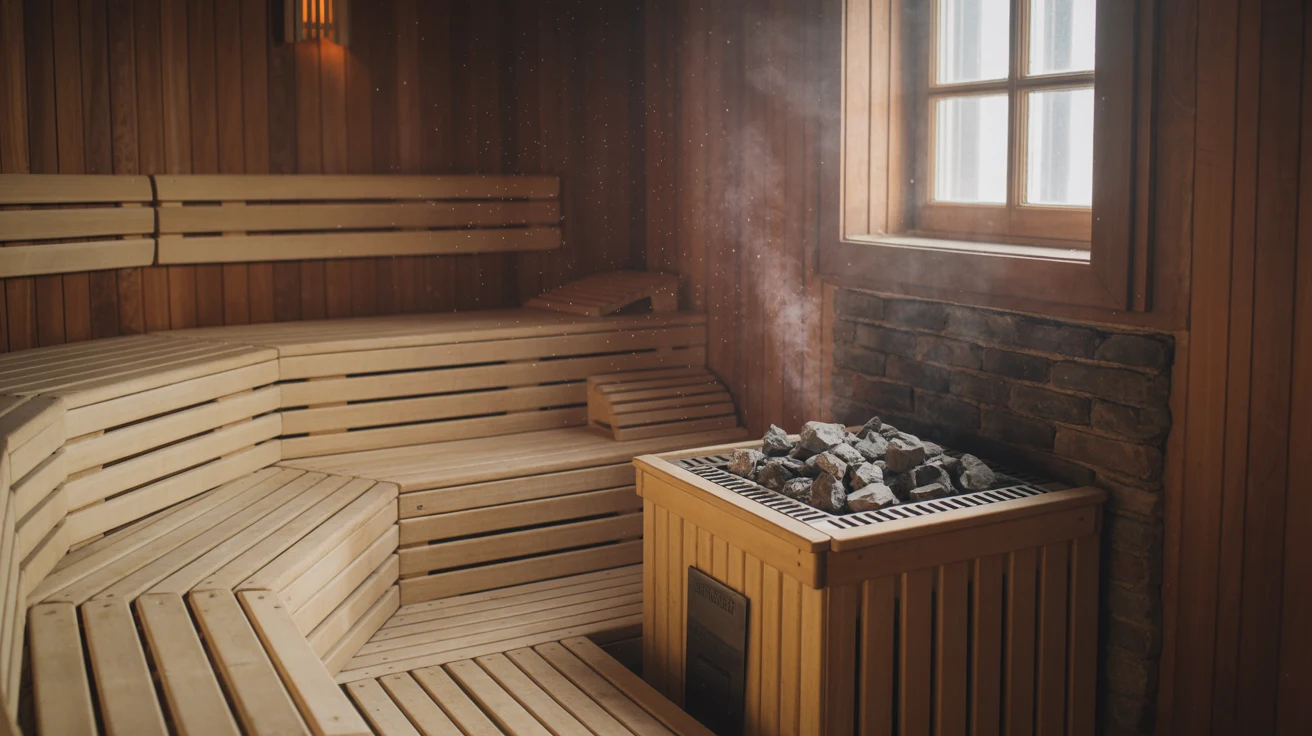
The vasta (or vihta, depending on whose side you’re on) is dipped in water and used to gently beat the body. This stimulates circulation, fills the sauna with the fresh scent of birch, and feels remarkably good. It’s one of those things that sounds odd until you try it, after which it becomes indispensable. The whisks are typically harvested in midsummer when birch leaves are at their best – soft, fragrant, and full of sap.
Public Saunas: Decline, Revival, and the Culture of Shared Heat
Finland’s traditional public saunas nearly vanished after the 1950s, as private home saunas became standard. When almost everyone has a sauna in their apartment or cottage, the economics of running a public one stop working. The old public saunas in cities closed one by one.
In recent years, the trend has reversed. New public saunas have emerged through private initiatives, combining traditional sauna practice with modern architecture and urban planning. Helsinki’s Löyly, perched on the waterfront, became internationally famous. Tampere promotes itself as “the sauna capital of the world” with reason – the density of public saunas there is remarkable.
The Finnish Sauna Society (Suomen Saunaseura ry) in Helsinki operates one of the most respected traditional sauna facilities in the country. Visits cost 12€ for members and 25€ for guests. They maintain separate days for men and women – women on Monday and Thursday, men on Tuesday, Wednesday, Friday, and Saturday, with the first Saturday of each month as a shared session.
Public saunas in Finland post signs indicating whether they’re for men, women, or mixed (sekasauna). The default in most traditional public saunas is gender-separated – this isn’t prudishness, it’s convention. Mixed saunas are more common at summer cottages and among friend groups.
Ritual Saunas: Christmas, Midsummer, and Sacred Occasions
While Finns sauna routinely throughout the year, certain occasions elevate the practice into something closer to ritual. The two most significant are Christmas Eve and Midsummer.
Joulusauna – The Christmas Sauna
Joulusauna is taken on Christmas Eve, before the evening meal. It’s considered one of the most sacred sauna occasions of the year – a moment of stillness and cleansing before the celebration begins. Families gather, the sauna is heated carefully, and the pace slows down. There’s a particular quality to a Christmas Eve sauna that’s hard to describe to someone who hasn’t experienced it: the combination of winter darkness, candlelight, anticipation, and the ancient rhythm of heat and rest.
Juhannussauna – The Midsummer Sauna
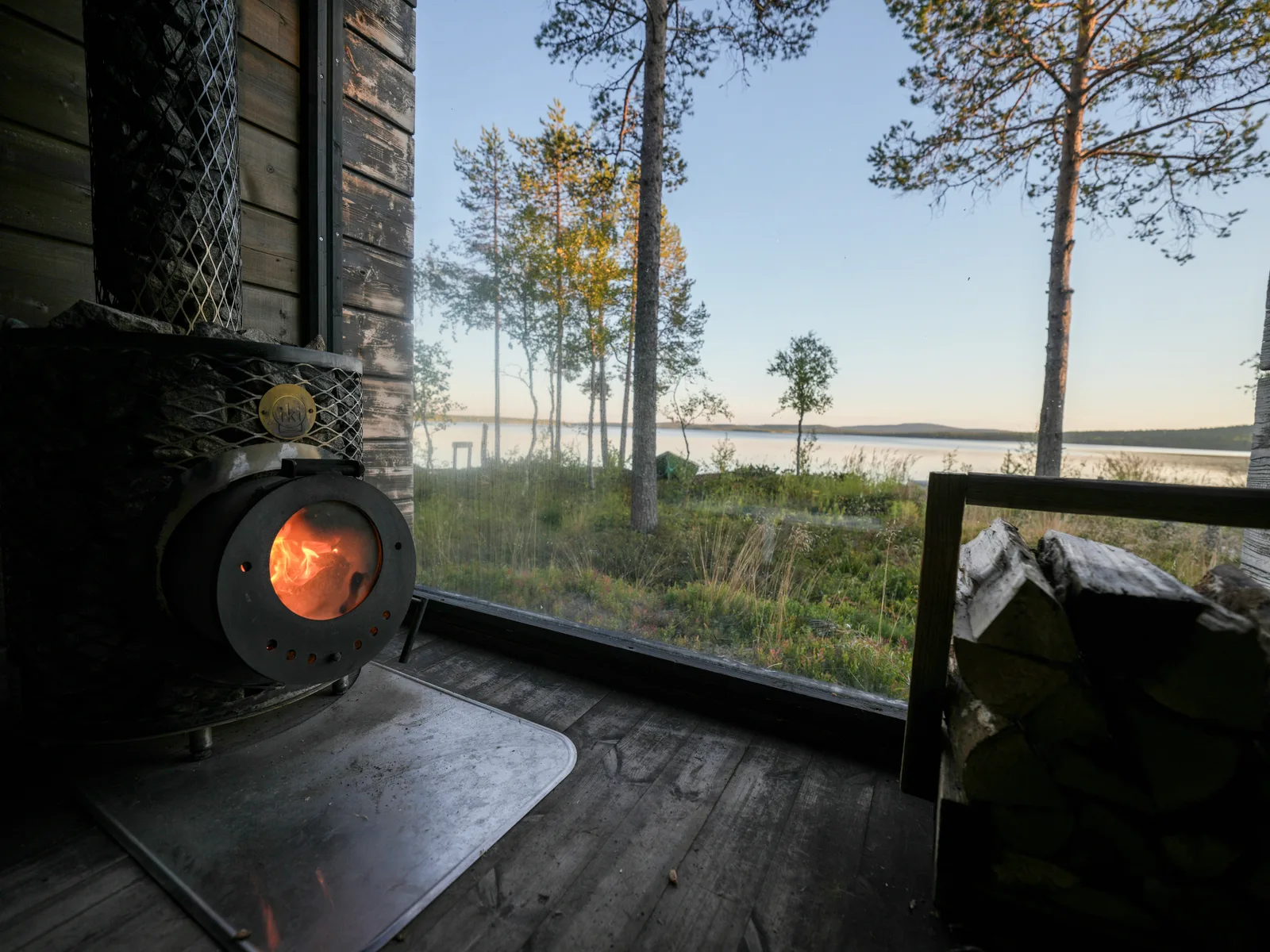
Midsummer (Juhannus) sauna is the summer counterpart – typically taken at the family mökki (summer cottage) by a lake. Where joulusauna is inward and contemplative, the Midsummer sauna is expansive and celebratory. The sun barely sets, the lake is right there for cooling off, and the birch whisks are at their freshest. This is Finnish sauna culture at its most photogenic, but also its most genuine.
Saunarauha: The Unwritten Code
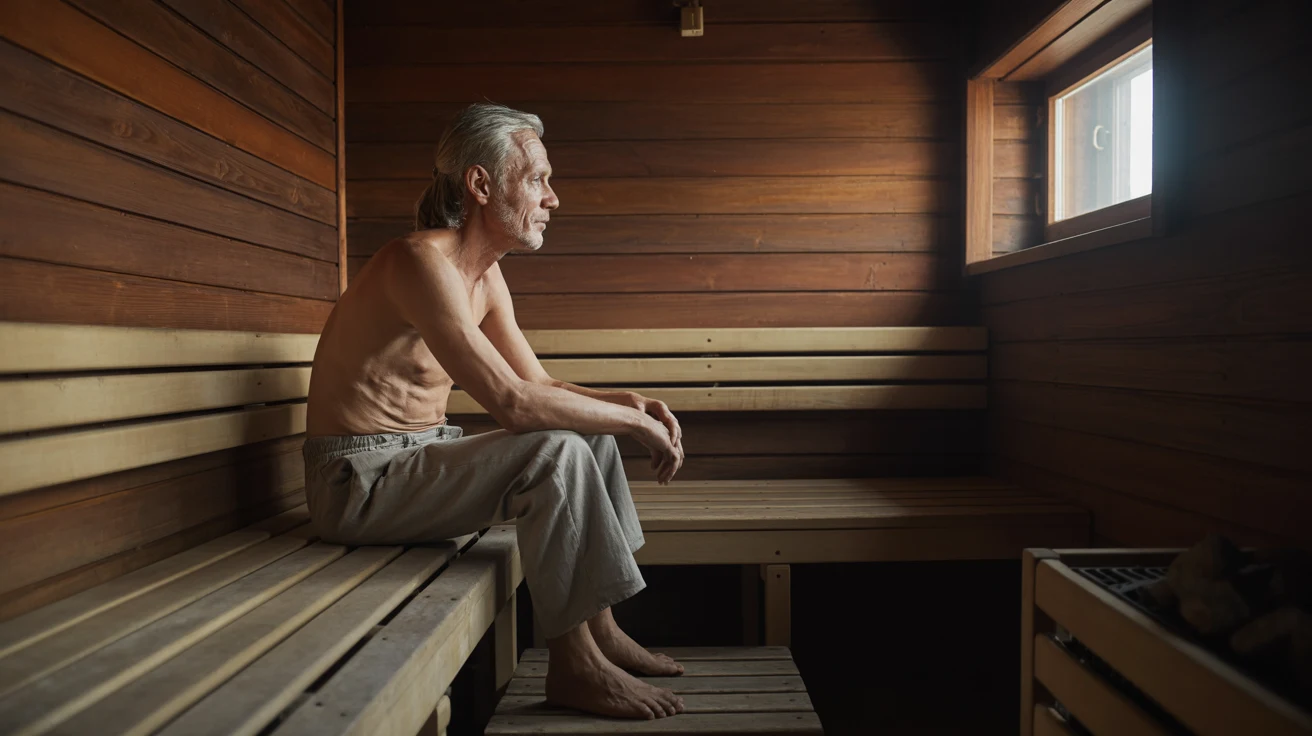
Saunarauha translates literally to “sauna peace,” and it governs everything about how Finns behave in the sauna. It’s never written on a wall or explained in an orientation. You absorb it by growing up Finnish, or you learn it by paying attention. Old folk sayings make the same point, and the best known of the Finnish sauna sayings and proverbs tells you to behave in the sauna as you would in church.
The principles are simple: quiet contemplation, respect for others’ space and comfort, no hierarchy or titles, no confrontation, and a general atmosphere of equality and calm. Visit Finland describes Finnish saunas as “calm, quiet, and free of distractions – no music, fragrances or coloured lights, just the gentle scent of birch and the soothing heat of steam.” That’s saunarauha in practice.
This doesn’t mean Finnish saunas are silent monasteries. Friends talk, families laugh, stories get told. But there’s a quality of attention that changes in the sauna. Voices lower. Pace slows. The Finnish Sauna Society explicitly states that its purpose is to cherish “traditional, polite sauna customs, which are based on respecting each other’s sauna peace.” When an organization whose only purpose is sauna makes saunarauha its foundational principle, you understand how central it is. The same society called heat contests foreign to sauna culture a year before the fatal 2010 final of the Sauna World Championships in Heinola.
UNESCO Recognition: What It Means
On 17 December 2020, UNESCO inscribed Finnish sauna culture on the Representative List of the Intangible Cultural Heritage of Humanity. The decision (15.COM 8.b.27) recognized sauna as “an integral part of the lives of the majority of the Finnish population” that involves “much more than simply washing oneself.”
UNESCO’s inscription covers three cultural domains: social practices, rituals and festive events; knowledge and practices concerning nature and the universe; and traditional craftsmanship. The key quote from the inscription captures it well: “In a sauna, people cleanse their bodies and minds and embrace a sense of inner peace. Traditionally, the sauna has been considered as a sacred space – a ‘church of nature.'”
| UNESCO Inscription Detail | Information |
|---|---|
| Date inscribed | 17 December 2020 |
| List | Representative List of the Intangible Cultural Heritage of Humanity |
| Session | 15th session (15.COM) |
| Decision reference | 15.COM 8.b.27 |
| Saunas cited | 3.3 million for 5.5 million inhabitants |
| Related inscription | Estonia’s smoke sauna tradition in Võrumaa (inscribed 2014) |
The Finnish Heritage Agency committed, alongside Finnish sauna communities, to safeguard the tradition’s vitality. This wasn’t a rescue mission for a dying practice – Finland has 3.3 million saunas and shows no signs of abandoning them. The recognition was more about affirming what Finns already knew: this is significant cultural heritage, not just a nice hot room.
What Makes Finnish Sauna Culture Actually Different
Every culture with a sauna tradition thinks theirs is the real one. But Finnish sauna culture is distinct in ways that go beyond temperature settings and architecture.
| Aspect | Finnish sauna | Most other sauna traditions |
|---|---|---|
| Cultural role | Everyday baseline (like bathing) | Leisure activity or health practice |
| Accessibility | 1 sauna per 1.7 people | Varies widely; typically commercial |
| Hierarchy in sauna | Strictly egalitarian – no titles | Often informal but less codified |
| Central concept | Löyly (steam + spiritual dimension) | Heat as primary focus |
| Sound/atmosphere | Saunarauha – quiet, contemplative | Varies (German Aufguss is performative) |
| Birch whisks | Vihta/vasta – widely used | Russian banya uses veniki (similar tradition) |
The deepest difference is attitudinal. In most countries, sauna is something you go to. In Finland, it’s something that’s already there – in your building, your cottage, your workplace. You don’t schedule a sauna session the way you’d schedule a massage. You just sauna, the way you just eat dinner. That level of integration into ordinary life is what sets Finnish sauna culture apart from every other tradition on Earth.
FAQ
Why is sauna so important in Finland?
Sauna is important in Finland because it’s not treated as a luxury or hobby – it’s a fundamental part of daily life, comparable to bathing or eating. With roughly 3.3 million saunas for 5.5 million people, saunas are found in homes, apartments, workplaces, and government buildings. The tradition carries deep cultural meaning around equality (no titles or hierarchy in the sauna), family bonding, and connection to nature, which is why UNESCO inscribed it as Intangible Cultural Heritage in 2020.
How often do Finns sauna?
Most Finns who have access to a sauna – which is nearly everyone – use it at least once a week. Saturday is the traditional sauna day, though many Finns sauna more frequently, especially those with cottage saunas during summer. Special occasions like Christmas Eve (joulusauna) and Midsummer (juhannussauna) involve ritual sauna sessions that are considered among the most meaningful of the year.
Is Finnish sauna culture really different from other countries’ sauna traditions?
Yes, and the difference is primarily one of integration rather than technique. In most countries, sauna is a leisure or wellness activity you seek out. In Finland, sauna is embedded into everyday infrastructure – apartment buildings have them, offices have them, even the Parliament has one. The cultural code of saunarauha (sauna peace), the strict egalitarianism, and the spiritual concept of löyly also distinguish Finnish practice from traditions like German Aufguss or Russian banya, which have their own distinct characters.