The History of Finnish Sauna: 2,000 Years of Heat
The Finnish sauna is older than Finland itself. Archaeologists put the earliest versions at roughly 2,000 years ago – pits dug into hillsides, lined with stones, heated by fire, then sealed and used for bathing once the smoke cleared. The room came before the house. For many families through the medieval and early modern periods, the sauna was built first and lived in while the actual dwelling went up around it.
That continuity – pit to smoke room to electric cabin to UNESCO heritage list – is what makes Finnish sauna culture unusual. Most bathing cultures got displaced by plumbing. Finland’s didn’t. It just kept absorbing new technology while keeping the ritual intact.
The earliest Finnish saunas: pits in the ground
The first saunas weren’t buildings. They were pits, dug into a slope, covered with animal skins or sod, with a stone hearth at one end. You’d burn wood inside until the stones were scorching, rake out the embers, let the smoke escape, then climb in to bathe. The walls absorbed heat from the stones and radiated it back for hours.
This pit-sauna model spread across the Finno-Ugric world – versions of it existed from the Baltic east into Siberia. What made the Finnish line distinct was persistence. While other cultures abandoned the pit sauna for Roman-style bathhouses or Russian banyas, rural Finns kept refining the same basic idea: heat stones, throw water, sit in the steam.
The technology jumped from pit to standalone log structure sometime in the early medieval period, but the operating principle didn’t change. You still heated stones with a fire, and the steam from water on hot stones – the löyly (the burst of soft, enveloping steam released when water hits the stones) – was the whole point.
The smoke sauna era (savusauna)
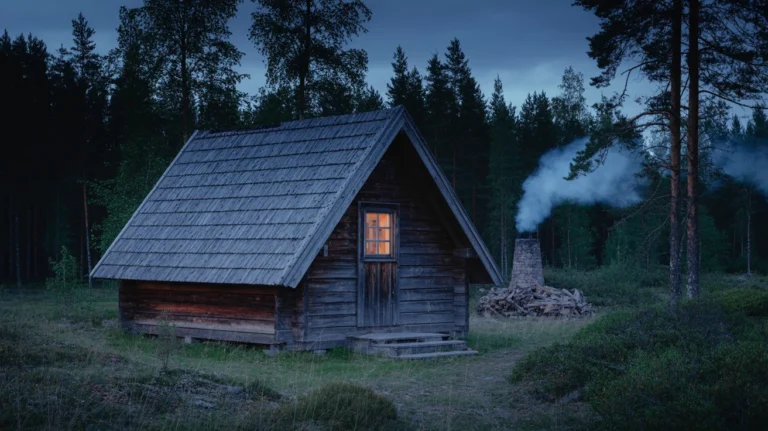
The savusauna (smoke sauna – a chimney-less log room where wood is burned for hours, then the smoke is vented before bathing) was the dominant Finnish sauna for roughly a thousand years, from the early medieval period until the late 1800s. Every farm had one. Many had two.
The build is simple and brutal: a log cabin, a massive stone-and-iron stove with no chimney, and a single small vent. You fire it for four to eight hours. Smoke fills the room, blackens the walls, and slowly heats the stone mass to working temperature. Then you let the fire die, open the vent, clear the smoke, and bathe in a room that smells like woodsmoke and tar and holds heat for the rest of the night.
Smoke saunas produce a softer, denser löyly than any modern heater can match. The huge stone mass holds enormous thermal energy and releases it slowly. The carbon-coated walls also have antibacterial properties – which matters because the savusauna wasn’t just a bathing room.
It was also where babies were born. Through the 18th and 19th centuries, the sauna was the cleanest space on a Finnish farm: hot enough to sterilize, private, warm, with running water and a bench. Midwives delivered babies in saunas well into the 20th century. The sick were nursed there. The dead were washed there before burial. It was a room that held the whole arc of a rural life.
The continuous-fire period
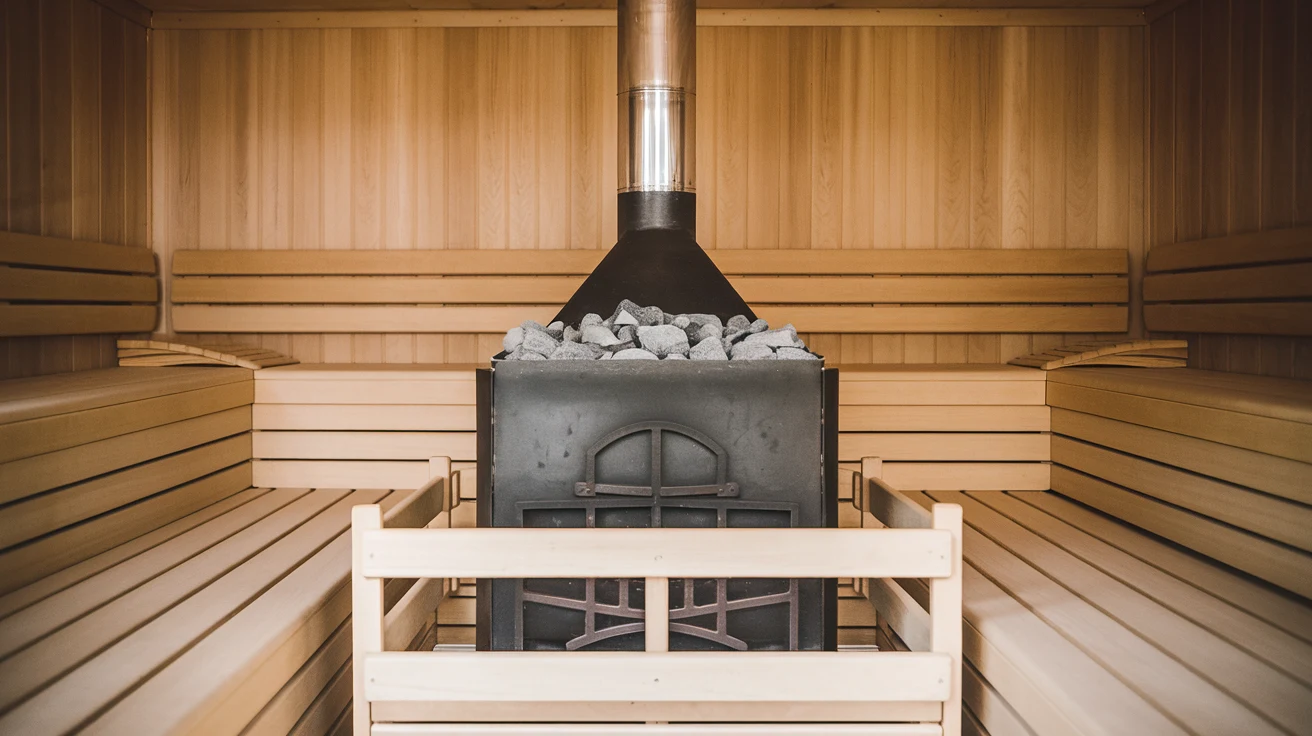
The smoke sauna started losing ground in the late 19th century when the continuous-fire heater arrived – a wood stove with an actual chimney. You could fire it during the bath instead of for hours beforehand, which dropped heat-up time from most of a day to roughly 30–45 minutes. The stones sat on top of the firebox; smoke went up the flue.
This was a revolution in convenience. Daily sauna became practical for people who weren’t farming full-time. The technology spread fast through Finnish towns and into apartment buildings, where shared building saunas (talosauna) appeared in basements.
The trade-off, then as now: the löyly from a chimney stove is sharper, drier, less forgiving than savusauna steam. Purists complained. Most people decided convenience won. The smoke sauna survived in rural areas and as a deliberate cultural choice, but the continuous-fire kiuas (the heated-stone stove that gives a sauna its working temperature) became the default.
The electric heater changes everything (1930s–1950s)
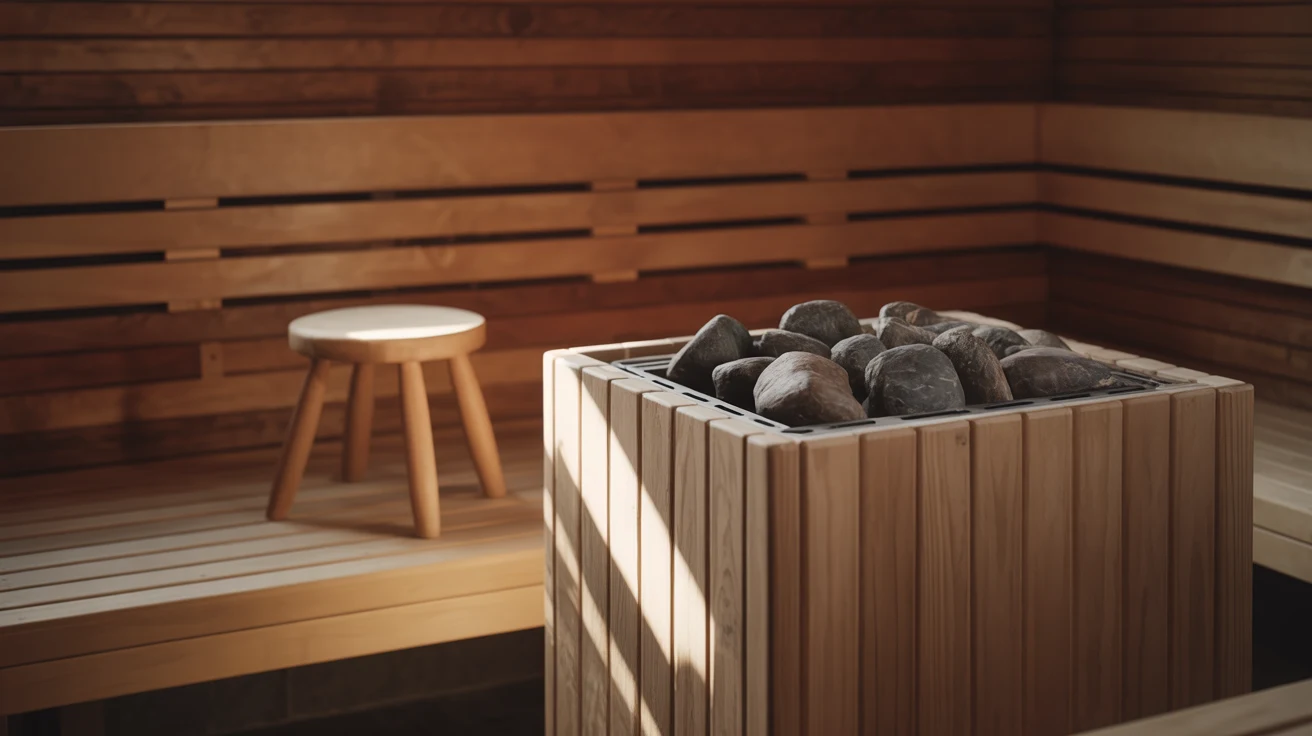
Metos introduced the first commercial electric sauna heater around 1938. It was a rough beginning – early electric units were underpowered, the stones didn’t get hot enough for proper löyly, and connoisseurs dismissed them as not real saunas at all.
The technology improved through the 1940s and 1950s. By the postwar reconstruction era, electric heaters were good enough that they could be installed in apartment bathrooms, hotel basements, and suburban homes without a chimney, a wood supply, or a fire-safety setback. This is the moment Finnish sauna became truly universal – not because every Finn could build a smoke sauna, but because every Finnish apartment building could install an electric one.
By the 1980s, Finland had roughly two million saunas for a population of about five million. Most were electric. The country had effectively achieved one sauna per household – a density no other bathing culture has ever matched. Companies like Harvia grew up alongside this expansion and now ship heaters worldwide.
Sauna during World War II
The Winter War (1939–1940) and the Continuation War (1941–1944) put Finnish sauna culture under conditions no peacetime heater test could simulate. Finnish soldiers built field saunas everywhere they camped – tent saunas, dugout saunas, improvised log saunas thrown together in a day. The army considered them essential infrastructure, not a luxury.
The reasoning was practical. Sauna killed lice. It treated frostbite. It washed men who’d been in trenches for weeks. It gave soldiers somewhere to be warm and clean and briefly human in the middle of a brutal winter campaign. German soldiers fighting alongside Finnish units were astonished. Soviet troops captured Finnish field saunas and used them. If your enemy uses your sauna as a tactical objective, you have built a sauna culture impossible to deny.
The wartime experience hardened sauna’s place in Finnish identity. It wasn’t just something farmers did. It was something the whole nation, under the worst conditions imaginable, refused to give up.
Modern Finnish sauna culture
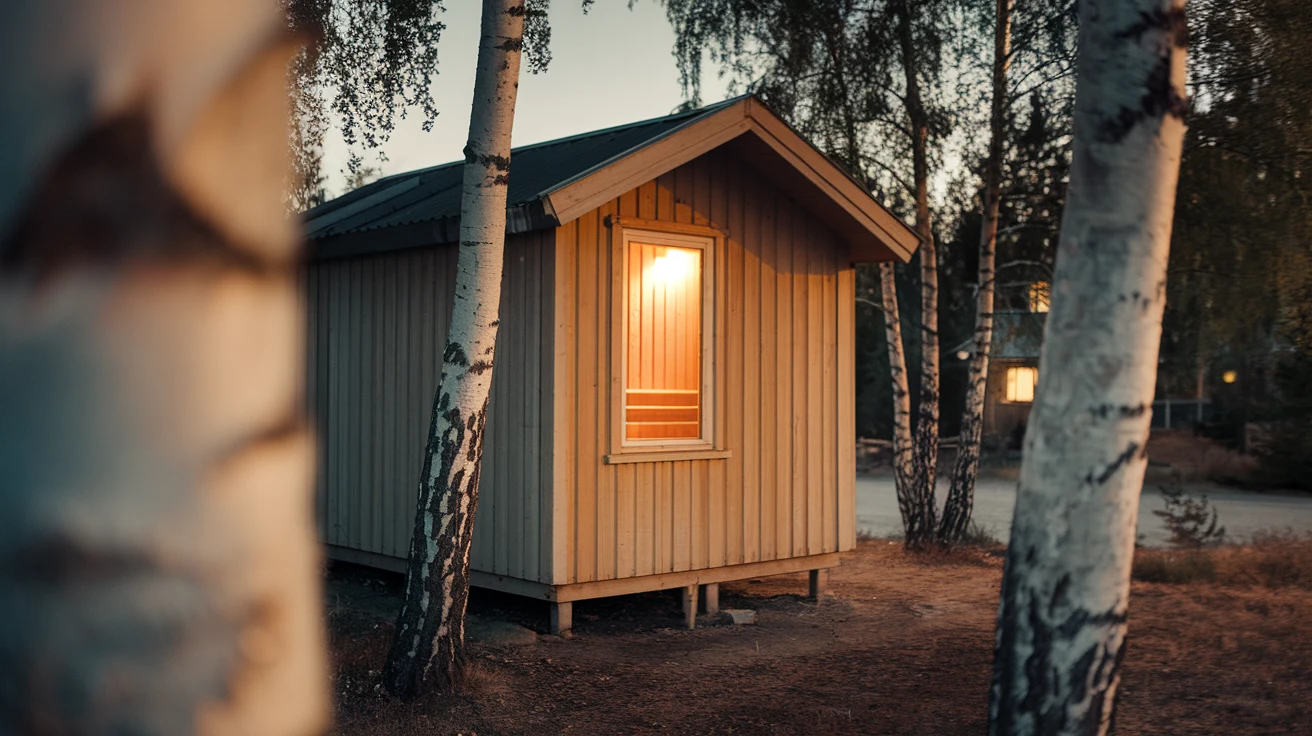
Postwar Finland built fast – apartment blocks, suburbs, summer cottages – and put a sauna in nearly all of it. Building codes effectively assumed every residence would have one. Office buildings got company saunas where executives held meetings in towels. Embassies abroad installed Finnish saunas as a kind of soft-power gesture. The President had a sauna at the official residence and used it for diplomacy.
The summer cottage (mökki – the rural lakeside cabin where Finns spend weekends and holidays) became the cultural heart of sauna in the late 20th century. The mökki sauna is usually wood-fired, often by the lake, often the whole point of the trip. You sauna, you swim, you sit on the dock with a beer, you sauna again. This is where the practice lives in its most undiluted form.
Public saunas had a strange middle period. Many of the old neighborhood saunas closed in the 1970s and 1980s as private home saunas became universal. Then, starting around 2010, a new generation of public saunas opened in Helsinki and other cities – Löyly, Kulttuurisauna, Allas – designed as architecture and as social spaces, not as last-resort bathing for people without their own. Public sauna is having its second life right now.
UNESCO recognition: 2020
In December 2020, UNESCO inscribed Finnish sauna culture on its Representative List of the Intangible Cultural Heritage of Humanity. The application, prepared with the Finnish Sauna Society, framed sauna not as a building or a piece of technology but as a living practice – the ritual, the etiquette, the social meaning, the transmission from generation to generation.
That framing matters. UNESCO doesn’t list buildings on the intangible heritage list; it lists practices. The recognition was for what Finns do in saunas and what saunas mean in Finnish life, not for the saunas themselves. It put sauna in the same cultural category as flamenco, French gastronomy, and Japanese washoku cuisine.
The recognition also locked in something Finns had argued about for decades: the difference between a sauna and a hot room. UNESCO’s definition centers on löyly, on the wood-and-water ritual, on the social practice. An infrared cabin in a gym is not a sauna in the heritage sense. A wood-fired log room by a Finnish lake is. The distinction is now official.
Sauna milestones at a glance
| Era | Sauna type | Key development |
|---|---|---|
| ~2,000+ years ago | Pit sauna | Earth-dug pits with heated stones – first permanent structures for many settlers |
| Medieval–early 1900s | Smoke sauna (savusauna) | Log-built, chimneyless – the dominant form for centuries |
| Late 1800s–early 1900s | Continuous fire stove | Chimney-vented stoves cut heat-up time, enabled urban saunas |
| ~1938 | Electric heater | First electric kiuas developed in Finland |
| 1939–1944 | Field saunas | Improvised saunas on the front lines during Winter and Continuation Wars |
| 1950s–1970s | Electric apartment sauna | Electric heaters dominate new construction; sauna becomes standard in apartments |
| 2020 | Cultural recognition | UNESCO inscribes Finnish sauna culture as intangible cultural heritage |
What the long arc tells you
Two thousand years of continuous practice produces some clear patterns. The technology keeps changing – pit, smoke room, chimney stove, electric heater, networked smart controllers – but the ritual is remarkably stable. Heat stones. Throw water. Sit in the steam. Cool down. Repeat. Everything else is implementation detail.
The other pattern is integration. Finnish sauna never became a specialized luxury or a once-a-year ritual. It stayed embedded in daily life – the apartment building, the office, the summer cottage, the army base, the maternity ward (until hospitals took over), the funeral preparation. That integration is what UNESCO actually recognized, and it’s what makes the Finnish version distinct from the German aufguss spectacle or the Russian banya social ritual or the Japanese onsen tradition.
If you’re building a sauna outside Finland – a backyard cabin, a basement room, a barrel sauna on a deck – you’re joining a 2,000-year-old conversation. The hardware is mostly Finnish (Harvia, Huum, Tylö, Saunum). The terminology is Finnish — löyly, kiuas, and the vasta (the leafy birch whisk used to gently stimulate skin in the steam). And the basic question is the same one Finns have been answering since the Iron Age: is the room hot enough, is the steam soft enough, and is anyone coming to join you?
FAQ
How old is the Finnish sauna?
Archaeological evidence puts the earliest Finnish saunas at roughly 2,000 years ago, beginning as pit saunas dug into hillsides and heated with stone hearths. The above-ground log sauna and the smoke sauna (savusauna) developed over the medieval period, and the practice has continued unbroken since.
When did electric sauna heaters appear?
The first commercial electric sauna heater was introduced in Finland around 1938 by Metos. Early models were underpowered and dismissed by purists, but the technology improved through the 1940s and 1950s and made sauna practical in apartments, hotels, and suburban homes without a chimney.
Were babies really born in saunas?
Yes – through the 18th and 19th centuries and into the early 20th, midwives commonly delivered babies in saunas. The sauna was the cleanest, warmest, most private space on a typical Finnish farm, with the carbon-coated smoke-sauna walls offering some natural antibacterial protection. The practice ended as hospital births became standard.
Why did UNESCO recognize Finnish sauna in 2020?
UNESCO added Finnish sauna culture to its Intangible Cultural Heritage list in December 2020 because the practice – the ritual, the etiquette, the social and family meaning – has been continuously transmitted across generations and remains embedded in everyday Finnish life. The recognition is for the cultural practice, not the building.
What’s the difference between a smoke sauna and a modern sauna?
A smoke sauna (savusauna) has no chimney – wood is burned for several hours to heat a massive stone mass, then the smoke is vented before bathing. A modern wood-fired or electric sauna heats stones during the bath itself via a chimney or electrical element. Smoke saunas produce a softer, denser löyly, but take much longer to prepare.