Best Saunas in Sweden: Bastu and Kallbadhus
Sweden’s best sauna experience costs nothing. The public sauna at Jubileumsparken in Gothenburg – an award-winning piece of architecture on the Göta River harbourfront, seating up to 25 people, with a saltwater pool next door – is free. You just have to book it in advance.
That tells you something about how Sweden treats bathing culture. The bastu (Swedish sauna) here isn’t a weekly household ritual the way it is in Finland, across the Gulf of Bothnia. It’s a public amenity, a social outing, and increasingly a piece of design. And Sweden has one thing Finland genuinely doesn’t: the kallbadhus, the waterfront cold bath house, where the whole point is the water you jump into afterward.
The kallbadhus: Sweden’s own bathing institution
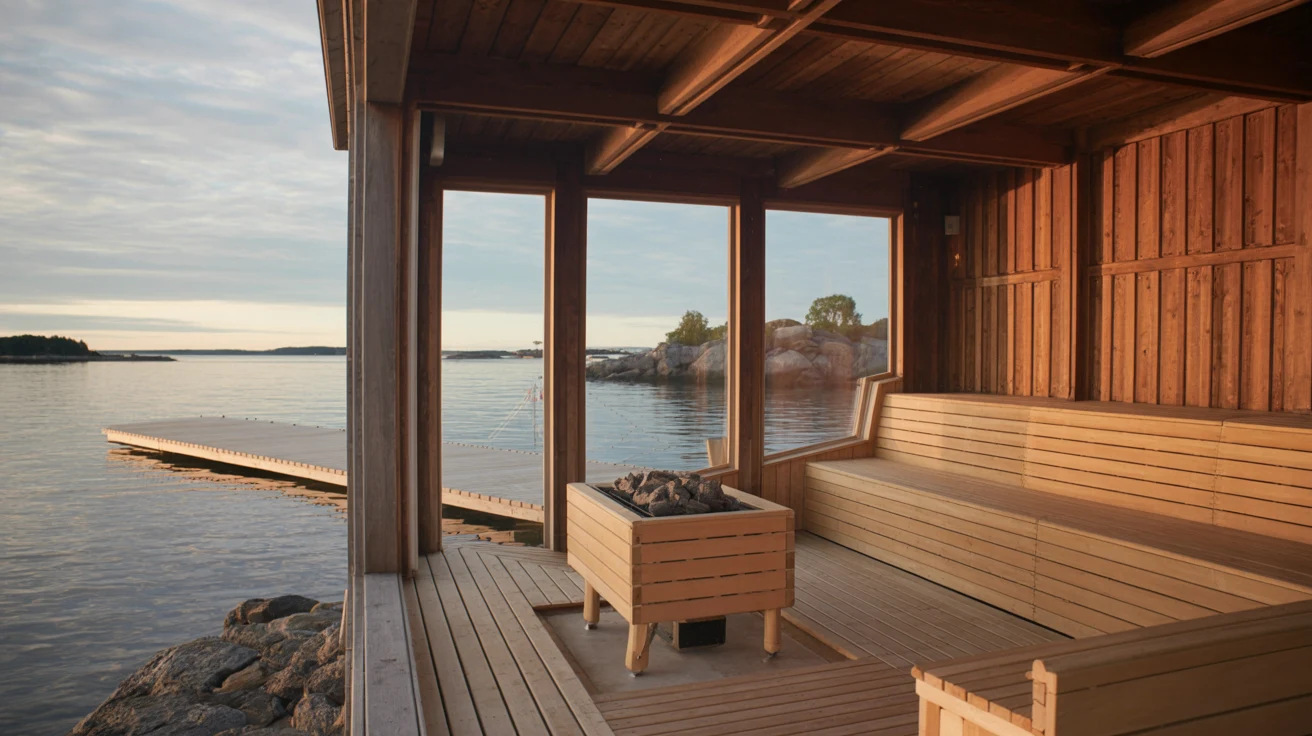
Cold bath houses appeared along Swedish shorelines in the last quarter of the 19th century, borrowed from continental health-resort culture, with open-air stair-equipped sea pools preceding them from the 1850s. The format has barely changed: a wooden structure built out over the water, gender-segregated saunas inside, and a jetty or ladder dropping straight into the sea. Most stay open all year, which is the entire point – a cold bath house in July is a swimming club, and in February it’s a test of character.
This is the structural difference from Finland. A Finnish public sauna is a room you heat and a ritual you perform inside it. A Swedish cold bath house is a building designed around the transition between hot and cold, with the sauna as one half of a pair. If you’ve done the contrast cycle in a Finnish lakeside sauna and liked it, the Swedish version is the same idea with better carpentry and colder salt water.
Entry stays cheap by design. These places were built as public health infrastructure, not spas, and the pricing still reflects it – most public options in and around Stockholm sit in the double-digit-SEK range rather than the hundreds.
Hellasgården: the Stockholm classic
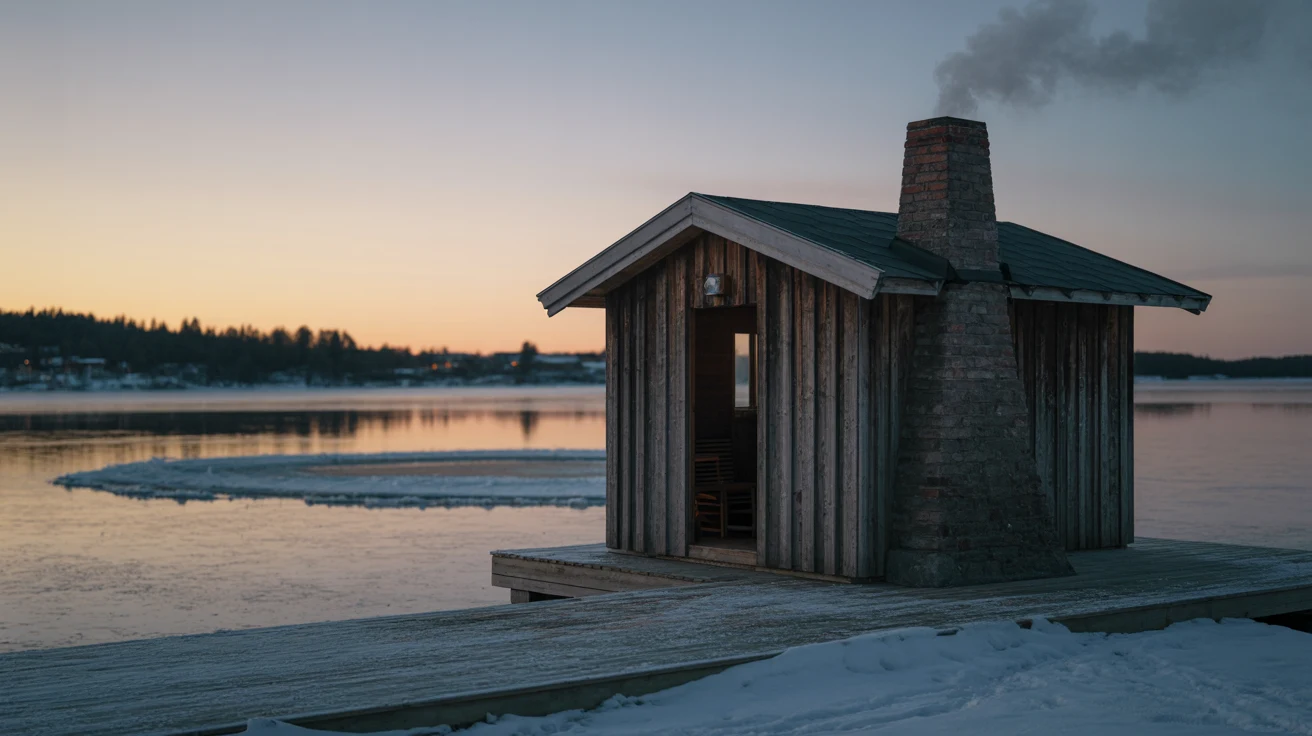
If you want one Stockholm sauna and you want it to feel like the real thing rather than a spa, go to Hellasgården. It sits in the Nacka nature reserve at Ältavägen 101, roughly 15 minutes by bus 401 from Slussen, on the shore of Lake Källtorp. Separate saunas for men and women, nudity compulsory, a jetty for the plunge, and in winter a hole drilled through the ice.
Entry runs 110–190 SEK ($11–19) per adult (~$10–$18) depending on the day. Time Out Stockholm’s fact-checked listing cites 110 SEK ($11); the wider range reflects weekend pricing. Sessions run in 90-minute slots with a maximum of 22 guests per gender at once, so booking online is effectively required – drop-ins are possible on weekday mornings until 13:00 if there’s space.
| Detail | Hellasgården |
|---|---|
| Entry (adult) | 110–190 SEK ($11–19) |
| Gym/changing room only | 60 SEK ($6) |
| Towel hire | 80 SEK ($8) |
| Bathrobe hire | 120 SEK ($12) |
| Private sauna hire | 3,000 SEK ($305) first hour, weekdays |
| Hours | Weekdays 08:45–21:00; weekends 09:15–18:00 |
| Session length | 90-minute booked slots, max 22 per gender |
Summer changes the rules: between 22 June and 16 August the sauna runs evenings only, which catches out visitors who assume a year-round venue keeps year-round hours. The hiking trails around the lake make it a half-day rather than an hour, and that’s how locals use it.
Stockholm’s other options, ranked by what you actually want
Stockholm’s bathing scene splits cleanly by budget and by how much architecture you want with your heat. Centralbadet, open since 1904 and unrepentantly Art Nouveau, is the easiest entry point for a visitor: 195 SEK ($20) for sauna only, 300–400 SEK ($30–40) for a full day pass with pool access depending on weekday or weekend, and 410–510 SEK ($41–52) for the relax package with robe and towels.
| Venue | Type | Price | Best for |
|---|---|---|---|
| Eriksdalsbadet, Södermalm | Public swim complex with sauna | Typically 70–150 SEK ($7–15) | Cheapest central option |
| Hellasgården, Nacka | Lakeside public sauna | 110–190 SEK ($11–19) | Cold plunge in a real lake |
| Centralbadet | Historic indoor bathhouse-spa | 195–510 SEK ($20–52) | Art Nouveau interior, rainy days |
| Stockholm 1897, Djurgården | Seaside sauna | 425 SEK ($43) | Waterfront setting, year-round |
| Sturebadet | Premium spa | Premium tier | Business travellers with expense accounts |
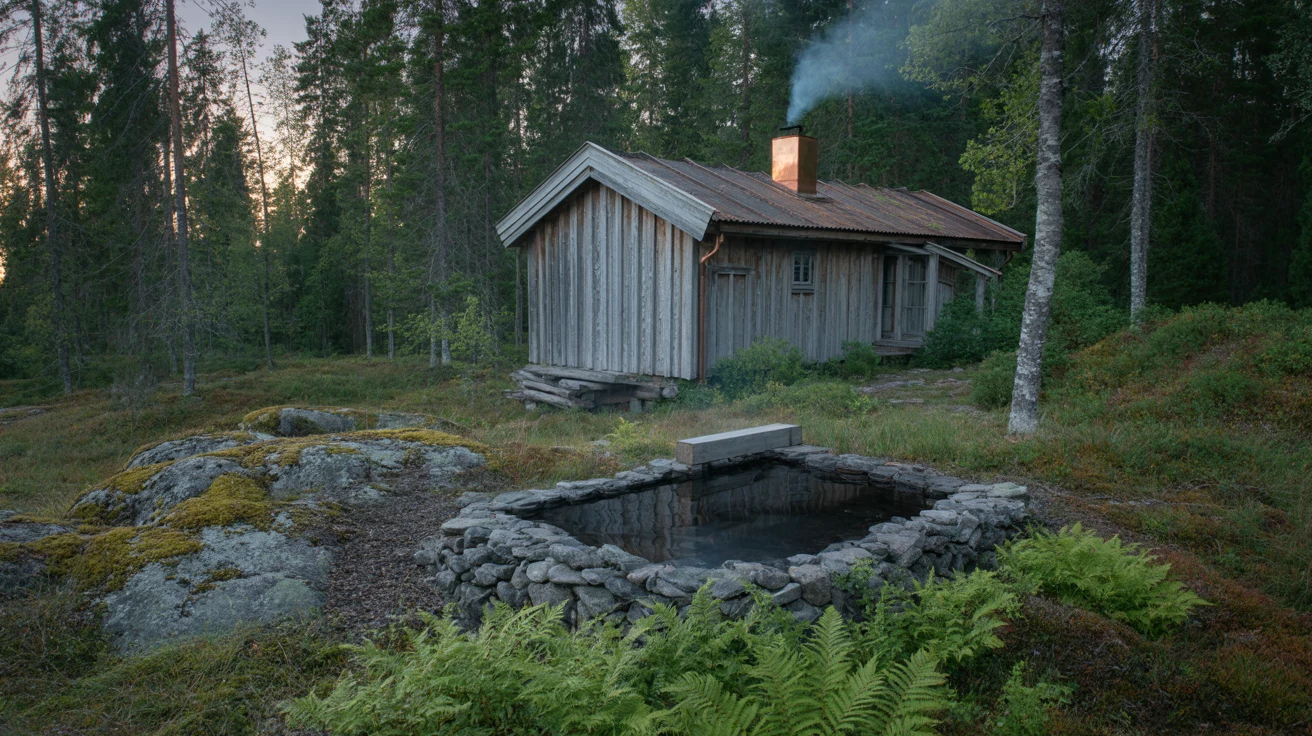
Beyond the city, the archipelago has grown a genuine micro-sauna culture – small, rustic saunas on islands like Finnhamn and Sandhamn, reachable on Waxholmsbolaget ferries. These are the least polished and the most rewarding, in roughly that order.
Gothenburg: free architecture and floating rafts
Gothenburg’s scene is coastal, saltier, and – for the money – better than Stockholm’s. The sauna at Jubileumsparken in the Frihamnen harbour is the headline: an architecturally spectacular public building beside the floating harbour pools on the Göta River, accessible by lift, holding up to 25 people, open year-round alongside one saltwater pool. Cost: nothing. You book it through goteborg.se in advance and you turn up.
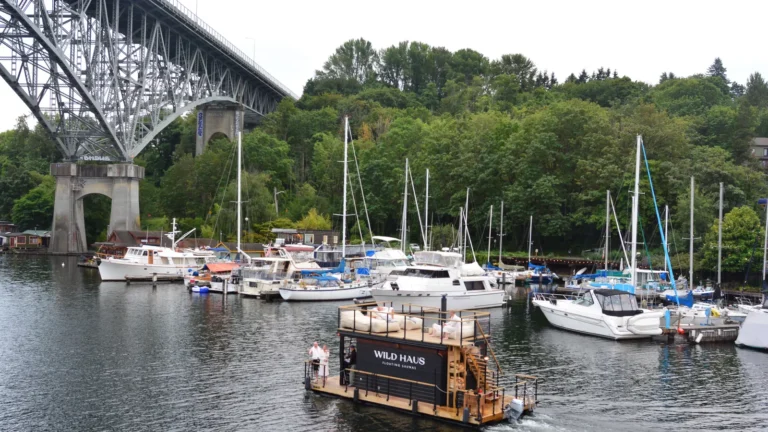
Out in the archipelago, Kajkanten Vrångö is a wood-fired floating sauna raft in Vrångö harbour with a hot tub and a ladder into the sea, running year-round, and you can order dinner delivered to the raft. North of the city off Tjörn, the floating hotel Salt & Sill on Klädesholmen operates the S/S Silla sauna boat, with relaxation areas, a swimming platform, a heated hot tub and a sun deck; the session includes hot tub access.
Twenty minutes inland at Mölnlycke, Hällsnäs Hotell & Konferens has a lakeside manor setup with a wood-fired floating sauna, an infrared cabin and two outdoor hot tubs, included in the day spa package with lunch. It also houses the two-Michelin-star restaurant Signum, which is an unusual thing to find attached to a wood-fired sauna.
Floating saunas on Lake Mälaren
Lake Mälaren is Sweden’s third-largest lake at 1,140 km², threading west from Stockholm and draining into the Baltic, and it has become the natural home of the floating sauna. The most striking of these is Big Branzino, launched in 2023: a hand-built pine-clad, bow-shaped vessel on a steel catamaran hull, designed by architects Thomas Sandell and Johan Strandlund, with a western red cedar interior wrapped around a wood-burning stove fitted with a custom blacksmith-made glass door. It does up to 5 knots and tours the archipelago.
The packaged version is Stockholm Boat Tours’ “Nordic Thrills & Floating Chills” – a RIB speedboat run past the Royal Palace and Gamla Stan into the archipelago, then two hours in a floating sauna on Lake Mälaren with direct cold-plunge access and a roof-diving option. It’s priced per group: 20,900 SEK ($2,100) for up to 12 people, which works out around 1,742 SEK ($175) per person at full capacity and considerably worse at four.
Cheaper lakeside and city options exist if you skip the boat. Saltsjöbadens friluftsbad runs 90 SEK ($9) and opens May to September; Sätrabastun charges 40 SEK ($4) and runs August to May; Tanto bastu sits in central Stockholm. All of them put you within a few steps of water cold enough to matter.
Arctic Bath: the expensive one, and whether it’s worth it
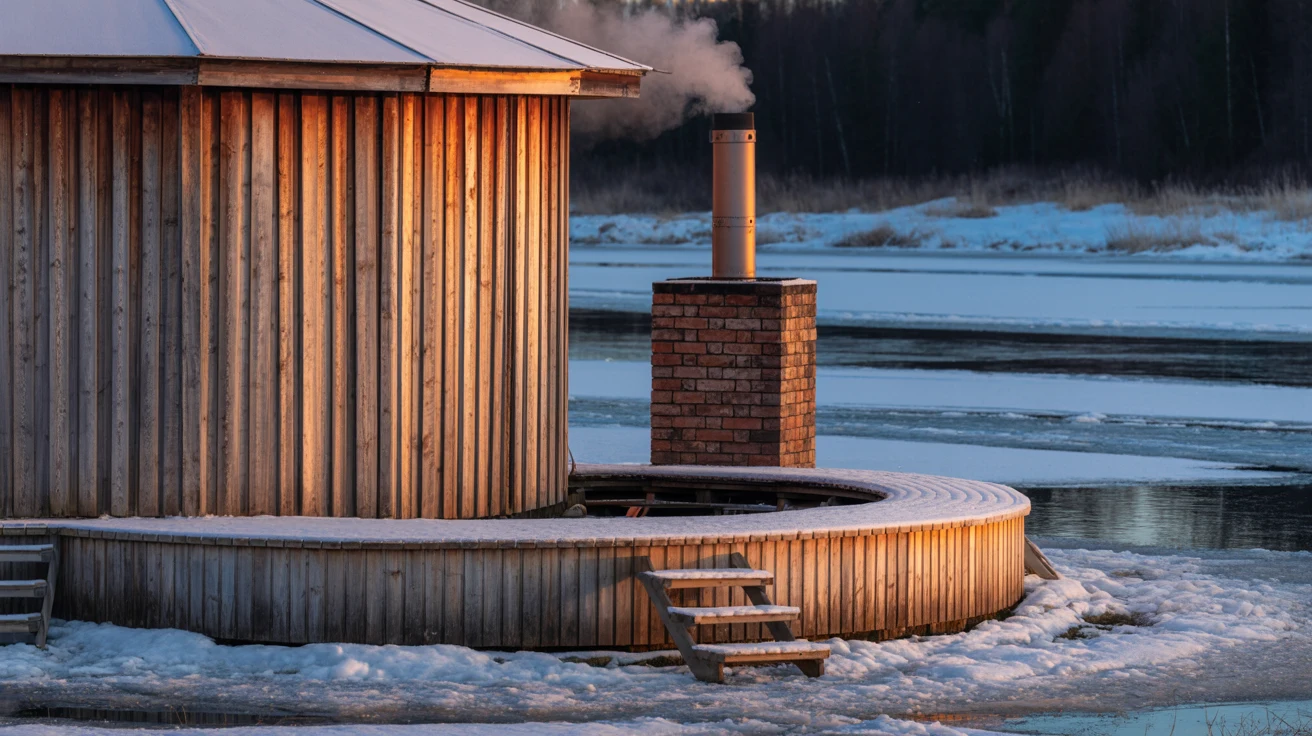
Arctic Bath is a ring-shaped floating hotel and spa on the Lule River at Harads in Norrbotten, about a 70-minute drive from Luleå Airport. The design references the region’s timber floating industry: the structure free-floats in summer and freezes into the river in winter. The centrepiece is an open-air circular river pool – the cold plunge – surrounded by two dry saunas and one steam sauna. Twelve cabins total: six floating water cabins, three land suites, three land family cabins, with the water cabins designed by Bertil Harström and Johan Kauppi.
It photographs absurdly well, and that’s usually where scepticism starts. But the substance holds up: it’s a Small Luxury Hotels of the World member with a Michelin Key, the spa is included in the room rate rather than sold as an add-on, and the water cabins have sloping roof windows specifically for watching the northern lights from bed.
| Option | Price | Includes |
|---|---|---|
| Water cabin (24 m², 57.5 m² deck, 2 guests) | From ~7,800–9,600 SEK ($790–970)/night (~$700–$900+) | Breakfast, five-course dinner, full spa access |
| Land suite | From ~8,900–9,600 SEK ($900–970)/night | Breakfast, five-course dinner, full spa access |
| Spa day, non-guests | 1,295 SEK ($130) per person | Spa 13:30–15:30, loaned swimwear/robe/slippers, gift box, fika 15:30–16:00 |
| Guided tour | 125 SEK ($13) per person | Tour only, no bathing |
Rates are seasonal and move a lot; check arcticbath.se rather than trusting any figure you read in a travel article, including this one. Two practical constraints: the spa day for non-guests depends on hotel occupancy and needs advance booking, and the property closes annually from around mid-April to mid-June.
Sweden or Finland? An honest comparison
Finland wins on infrastructure and Sweden wins on architecture. That’s the short version. Finland has around 3.3 million saunas serving 5.5 million people – close to one per household – against roughly 300,000 for Sweden’s 10 million. In Finland the sauna is UNESCO-listed intangible cultural heritage, built into apartment blocks, used twice a week as a matter of routine. In Sweden it’s a social outing: something you do with friends after sport, not a family institution with a fixed slot in the week.
Löyly – the burst of steam when water hits the stones – is where the two diverge most. Finnish practice treats it as the whole event, with dramatic humidity spikes and conversation as a distant second priority. Swedish practice uses it, but sparingly, and optimises instead for a room you can sit in comfortably for a long time. Neither is wrong; they’re different products. If you’re deciding between countries, the Finnish sauna scene is the deeper cultural dive and Helsinki’s public saunas are its shop window, well covered by Visit Helsinki’s public sauna listings and by the Finnish Sauna Society.
| Sweden | Finland | |
|---|---|---|
| Typical heat | 70–80°C, often drier | 80–100°C, humid |
| Löyly | Used moderately | The defining ritual |
| Social frame | Friends, after activity | Family, multi-generational |
| Nudity | Nude when segregated; swimwear increasingly OK in mixed | Nude, more strictly held |
| Signature format | Cold bath house, floating sauna | Smoke sauna, lakeside cottage sauna |
| Atmosphere | Quiet, contemplative | Intense, ritualistic |
Go to Sweden if you want spectacular public buildings, waterfront cold bath houses, floating saunas in an archipelago, or one extraordinary Arctic property. Go to Finland if you want maximum heat, smoke saunas, and a country where the practice is genuinely woven into daily life. Sweden is also the gentler introduction – the milder heat suits first-timers who found the Finnish version overwhelming. The cold bath house tradition, though, has no Finnish equivalent, and for travellers chasing sauna destinations it’s the strongest reason to put Sweden ahead of the obvious choice.
Planning a Swedish sauna trip
Book everything. This is the single practical difference from Finland, where walking into a public sauna is normal. Hellasgården runs capped 90-minute slots, the free Gothenburg sauna requires advance booking through the city, and Arctic Bath’s spa day depends on hotel occupancy. Turning up unannounced is how you end up in a hotel gym sauna instead.
Budget-wise, the spread is enormous and the correlation with quality is weak. Free at Jubileumsparken, 40 SEK ($4) at Sätrabastun, 110–190 SEK ($11–19) at Hellasgården, 425 SEK ($43) at Stockholm 1897, 1,295 SEK ($130) for an Arctic Bath spa day. The free one is architecturally the most impressive building on that list. Bring your own towel where hire costs extra, and expect gender segregation with compulsory nudity at the traditional venues – the etiquette is closer to Finnish practice than to anything you’ll have met in a hotel spa.
FAQ
What is a kallbadhus?
A kallbadhus is a Swedish cold bath house: a wooden building constructed over the water with gender-segregated saunas inside and direct sea or lake access for cold swimming. They spread through Sweden from the late 19th century as public health facilities and most remain open year-round, including through winter.
How much does a sauna cost in Stockholm?
Public options are cheap – Eriksdalsbadet typically runs 70–150 SEK ($7–15) for adults, Hellasgården 110–190 SEK ($11–19), and Sätrabastun 40 SEK ($4). Historic Centralbadet charges 195 SEK ($20) for sauna only or 300–400 SEK ($30–40) for a full day pass, and premium spas like Sturebadet sit well above that.
Is the sauna at Jubileumsparken in Gothenburg free?
Yes. The public sauna in Frihamnen harbour is free to use, but you must book in advance through goteborg.se. It holds up to 25 people, is wheelchair accessible by lift, and runs year-round alongside one saltwater pool.
How much does Arctic Bath cost?
Water cabins start from roughly 7,800–9,600 SEK ($790–970) per night with breakfast, a five-course dinner and full spa access included; land suites run from about 8,900–9,600 SEK ($900–970). Non-guests can book a spa day for 1,295 SEK ($130) per person, or a guided tour without bathing for 125 SEK ($13). Rates are seasonal, so confirm on the hotel’s own site.
Are Swedish saunas hotter or cooler than Finnish ones?
Cooler, generally. Swedish saunas typically run 70–80°C (158–176°F) and are often drier, while Finnish saunas commonly sit at 80–100°C with heavy steam. Swedish practice favours longer, more social sessions over short intense ones, which makes it a gentler introduction for first-timers.
Do you have to be naked in a Swedish sauna?
In traditional gender-segregated saunas like Hellasgården, yes – nudity is compulsory and a towel is used to sit on. Mixed-gender saunas in Sweden increasingly permit swimwear, which is a more relaxed standard than Finland’s. Check the individual venue’s rules before you arrive.