Best Sauna Experiences in Lapland
The cheapest great sauna in Lapland costs €13 ($15). The most expensive bed above one costs €2,000 ($2,300) a night. Both are within a few hours’ drive of each other, both put you under the same aurora, and only one of them requires booking six months ahead.
That spread is the whole planning problem in a sentence. Lapland sells sauna at every tier – public smoke saunas by a fell stream, guided wilderness sessions with an ice hole and a dinner fire, and glass-roofed igloos with a private heater in the bathroom. The experiences are genuinely different, not just differently priced, and the one that suits you depends mostly on whether you want the sauna to be the trip or the trip to include a sauna.
Glass igloos with a private sauna
This is the premium tier, and the formula is consistent: a thermally glazed bedroom ceiling so you can watch the sky from bed, plus a private electric or wood heater in the same unit. You pay for the glass. The sauna is the part that makes the room usable on the nights when the sky stays gray, which in Lapland is most of them.
One thing to settle before you book at this tier: the glass has to be heated. Unheated domes fog up from your own breath within minutes, and you spend the night looking at condensation rather than at the sky. Which properties actually have heated glass – and how the rest of the field compares on room size, view and what the nightly rate really covers – is a subject of its own, and I’ve gone through every glass igloo property in Lapland in a full glass igloo comparison.
| Period | Typical rate (unit only, per night) |
|---|---|
| Shoulder season (Sep, Oct, Mar) | €250–500 ($285–570) |
| Peak winter (Jan–Feb) | €500–900 ($570–1,050) |
| Christmas week | €900–2,000 ($1,050–2,300)+ |
| Mid-range advertised year-round | €400–800 ($455–910) |
Location moves the number as much as the calendar does. Northern Lapland above 68°N carries roughly a €200–400 ($230–455) premium per night over Rovaniemi-area properties of equivalent quality, which is what you pay for being further from an airport and closer to the auroral oval. Breakfast is often included at the top resorts; read what the rate covers before comparing two numbers.
Kakslauttanen Arctic Resort in Saariselkä invented the glass igloo format in 1973 and still runs the biggest version of it – 214 units, plus the world’s largest savusauna (smoke sauna), rated for 100 people at once. Small igloos start from €424 ($485) a night with breakfast and dinner included and run €800–1,000 ($910–1,150) in peak winter; the Kelo-Glass Igloos add a private electric sauna, fireplace and kitchenette to a 90 m² unit.
Snow and ice saunas
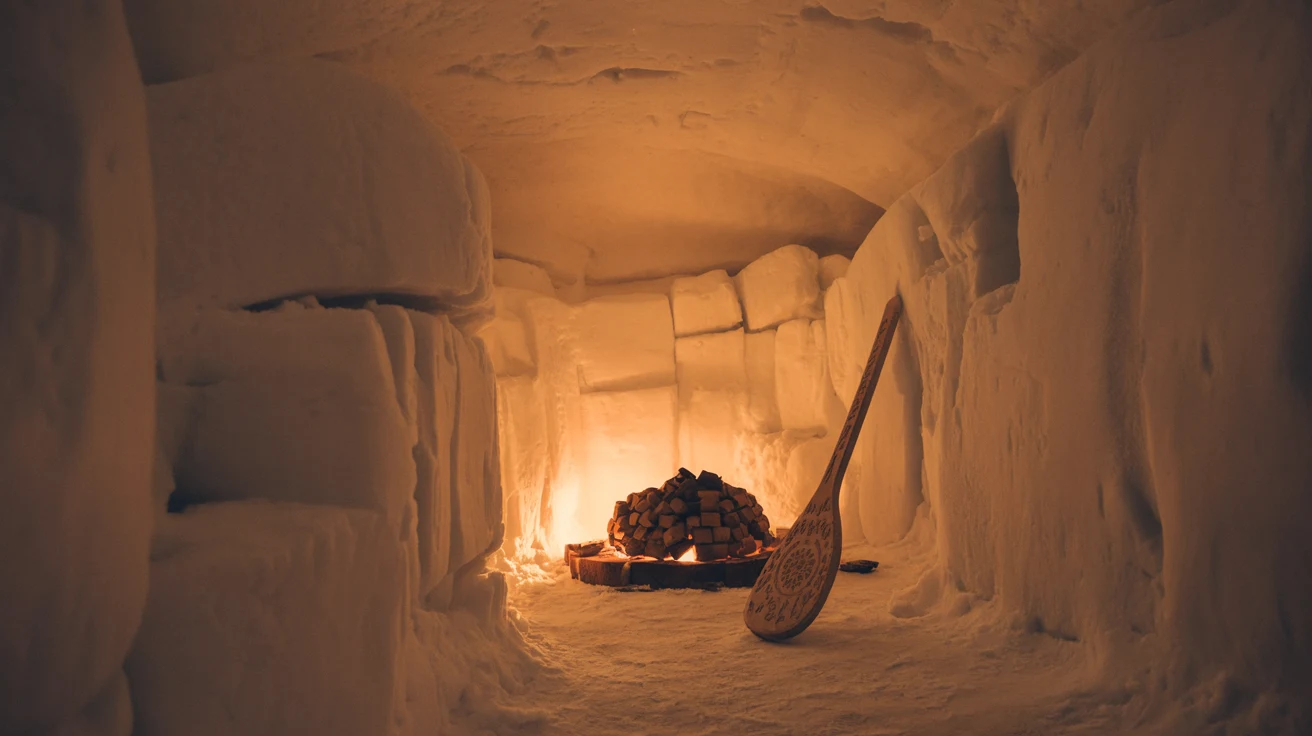
Arctic SnowHotel outside Rovaniemi runs what it bills as the only sauna actually built from compacted snow and ice and heated with a real stove. Throwing water on the stones inside a snow structure gives you all three states of water in the same room at once, which is the kind of thing that sounds like marketing until you’re standing in it. The visit costs €149 ($170) for adults and €89 ($100) for children, includes return transfers from Rovaniemi or Santa Claus Village, and covers private group use of the snow sauna, a traditional log sauna and an outdoor heated jacuzzi. It runs mid-December to the end of March, and the hotel is rebuilt with a new theme every year.
Apukka Resort, fifteen minutes from Rovaniemi, has its own ice sauna shaped like a timber cabin, plus a sauna carriage mounted on skis that staff can tow to the door of your igloo. A sauna that arrives at your accommodation on skis is not a traditional Finnish arrangement. It is, however, an extremely Finnish solution to the problem of walking outside in February.
Wilderness wood-fired saunas
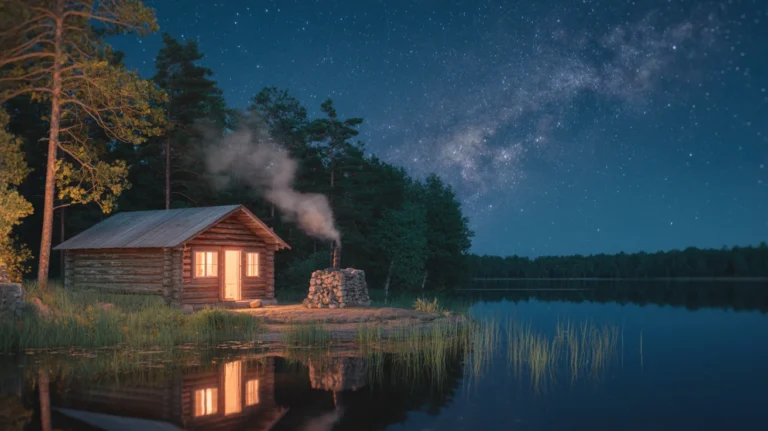
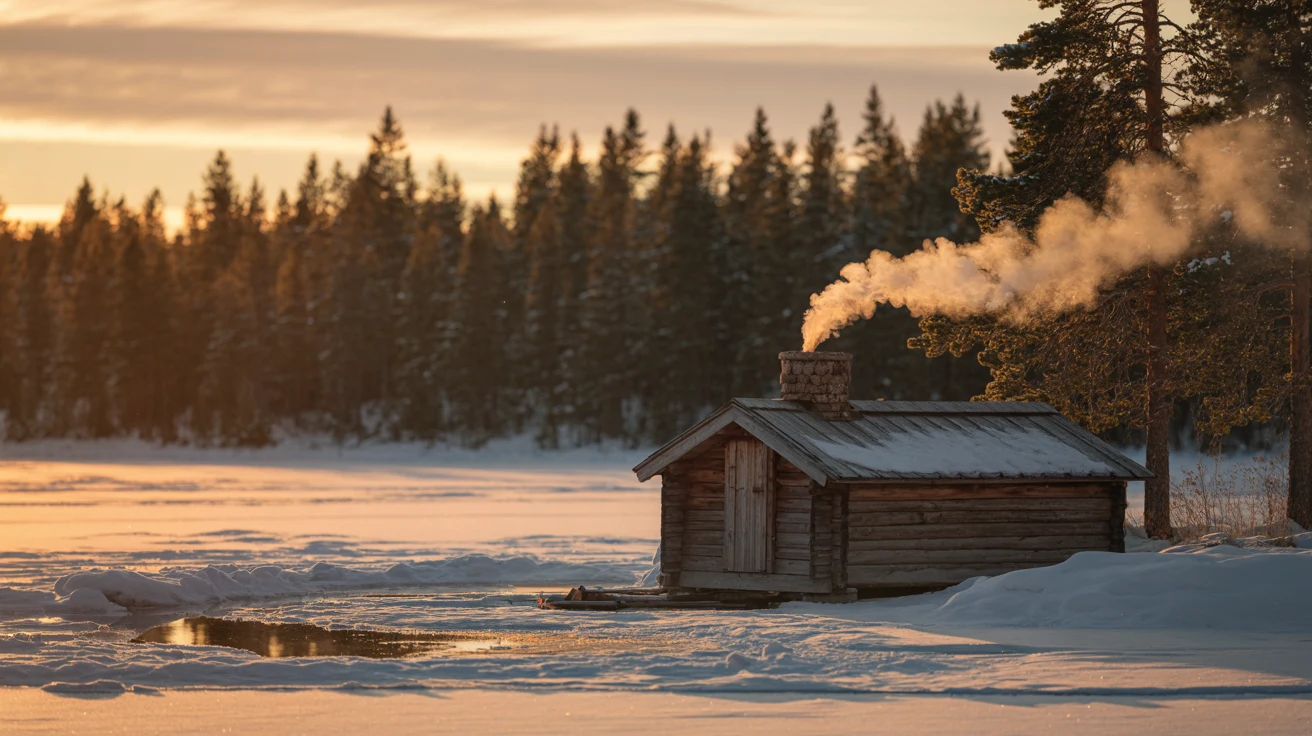
If you only book one sauna in Lapland, book this one. A wood-fired heater on a frozen lake, birch logs, no schedule beyond how long the fire holds – this is the version Finns actually do, and it’s the one worth structuring an evening around. Guided sessions in the Rovaniemi area run €120–298 ($135–340) per person for four to four and a half hours, usually including transfer, a guide, food and the cold dip.
| Experience | Where | Included | From |
|---|---|---|---|
| Traditional Finnish Sauna Experience (StayLapland) | Kuoksa Wilderness Park, Rovaniemi | Private lakeside wood sauna, birch whisk, lake swim, snacks, pickup within 10 km – 4 hrs | €149 ($170)/person |
| Private Wooden Heated Sauna & Ice Swimming (StayLapland) | Rovaniemi area | Private wood sauna, hand-cut ice hole, winter clothing, guide – 4 hrs | €298 ($340)/group |
| Wilderness Sauna, Swim & Dinner (Nordic Adventures) | Lakeside cottage ~30 km from Rovaniemi | Wood-fired sauna, optional ice swim, Lappish dinner over open fire – 4.5 hrs | €143 ($165)/person |
| Best of Lapland: Sauna, Ice Swim, Dinner & Aurora | Rovaniemi | Wood-fired sauna, optional ice dip, smoked salmon dinner, aurora watching – 4.5 hrs | €154 ($175)/person |
| Arctic Sauna World | Jeris Lakeside Resort, Muonio | Five themed saunas, direct lake access, 2-hour session, booking required | €30 ($34)/person |
| Kuurakaltio Smoke Sauna (Kiilopää) | Saariselkä, 16 km from the village | Smoke sauna by a fell stream, public sessions Tue/Wed/Fri | €13–18 ($15–21)/adult |
Arctic Sauna World in Muonio is the best value on that table by a distance: five saunas named for figures from Finnish folklore, each built around a different element – Ukko for fire and smoke, Vellamo facing the lake, Repo oriented north specifically for aurora watching. It sits beside Pallas-Yllästunturi National Park, about forty minutes from Levi, and it’s open daily from 15:00 to 22:00.
The StayLapland session includes a vasta (birch whisk; called a vihta in western Finland), which is worth doing at least once. You slap your own shoulders and back with a bundle of fresh birch, the room fills with the smell of it, and the whole thing makes far more sense in practice than in description. Why Finland has two names for it, and how to use one properly, is covered in vihta vs vasta.
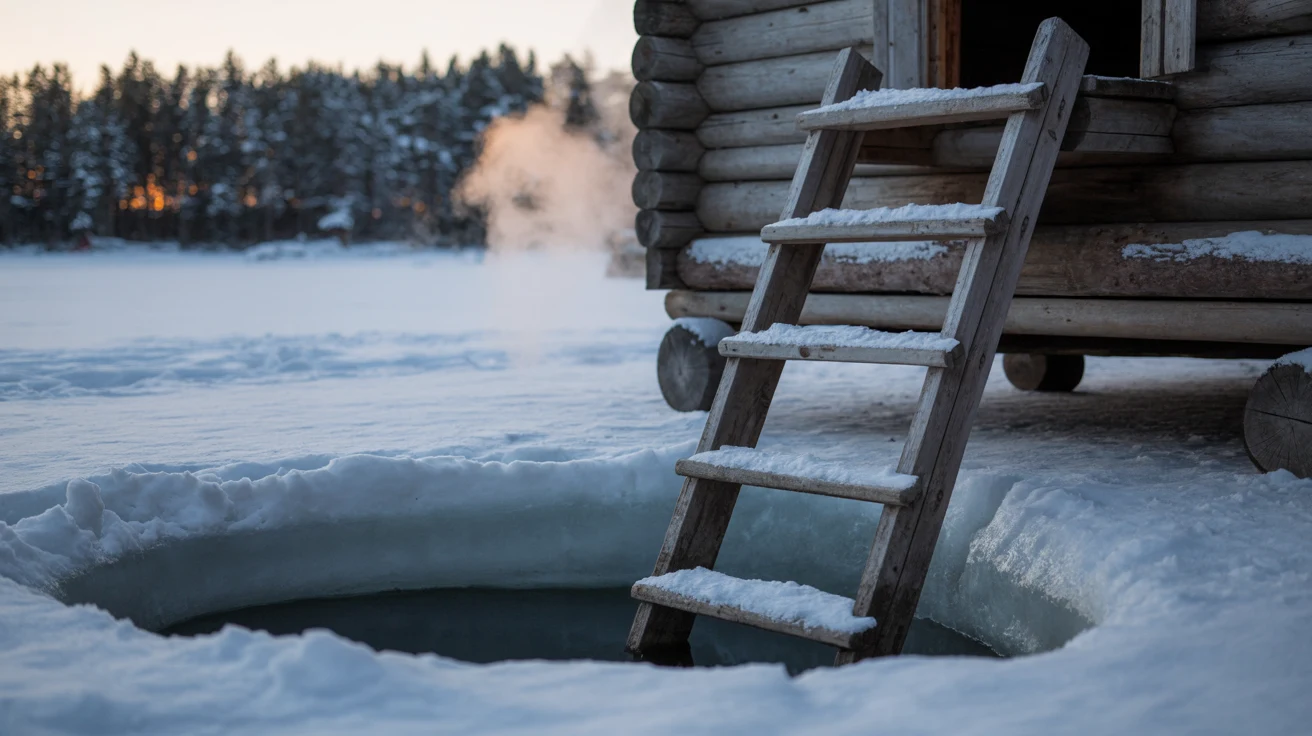
Ice holes and the cold half of the ritual
The sauna is only half the format. The other half is avanto – a hole cut through the lake ice with a chainsaw or auger, with a small ladder down into water sitting at around -0.5°C (31°F). Coming out of a 70–100°C (158–212°F) room and into that is the contrast the whole Finnish winter ritual is built on, and ice hole swimming is available at essentially every serious sauna venue in Lapland.
Winter ice on Lapland lakes typically runs 50–100 cm thick, so the hole is maintained rather than improvised. Guides brief you before you go in, provide the ladder and the safety instructions, and the experience is considered safe when those guidelines are followed. You walk in slowly, you keep your head up, you stay in for seconds rather than minutes, and you don’t do it after drinking.
Kiilopää is the outlier and arguably the best of them: instead of a lake, you cool off in Kiilopuro, a fast-running fell stream beside the smoke sauna. Moving water, no cut hole, and total darkness overhead in midwinter.
Timing it for the Northern Lights
Aurora season runs from late August to early April. The Finnish Meteorological Institute puts the odds at roughly 50% of dark, clear nights at the Lapland ski resorts like Levi and Saariselkä, rising to around 75% at Kilpisjärvi in the far northwest. March and early April give the best combination of darkness and clear weather, which is also when accommodation gets cheaper – a rare case of the good month and the cheap month being the same month.
Several operators deliberately schedule a late-afternoon departure, around 16:00–16:30, so that the sauna session and the drive home fall inside the aurora window. That’s the booking to look for between October and March. During kaamos (polar night), the deep midwinter stretch from November into January, the daylight never fully arrives but it doesn’t fully leave either – the sky turns blue and pink for hours and the snow reflects it back.
Where to stay
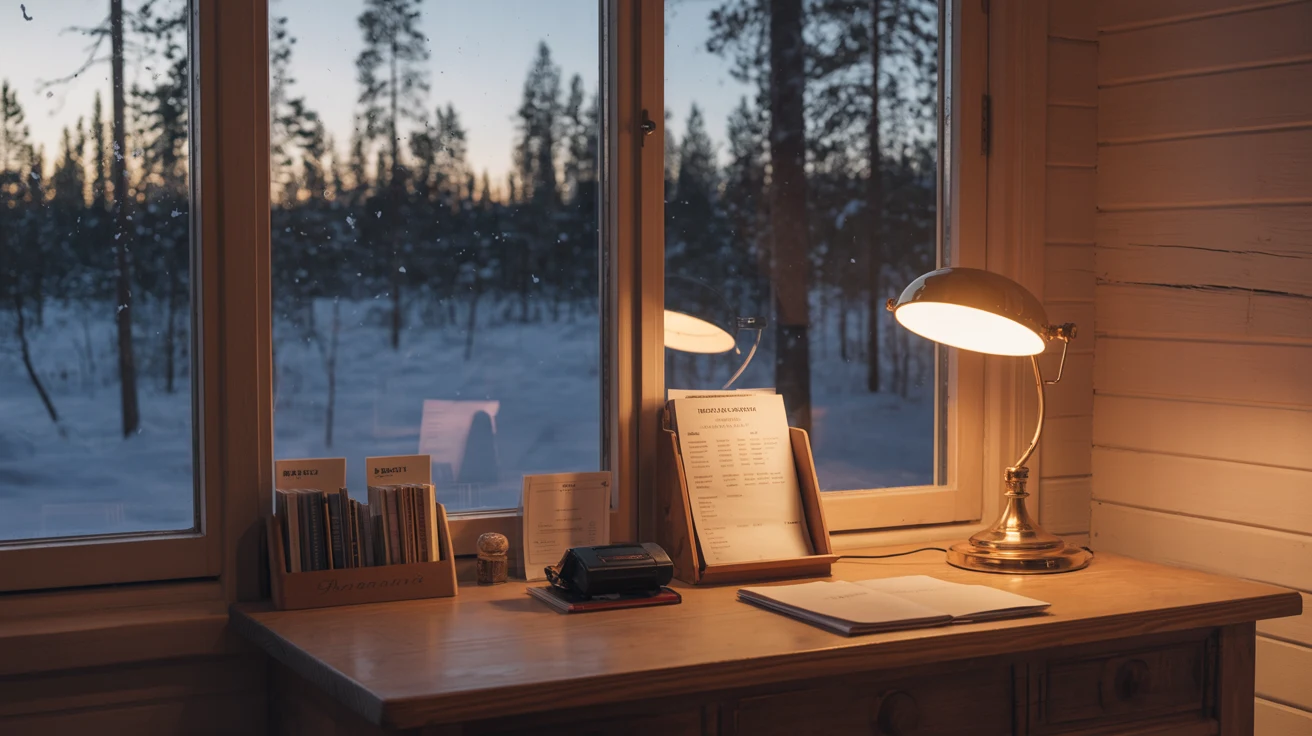
The hotel choice mostly sets what kind of sauna you have on tap without booking a separate excursion. All of these appear regularly on lists of Finnish sauna destinations.
Two things about the From column before you budget from it. These are the properties’ own floor rates – the cheapest night of the year, usually shoulder-season and midweek – and pricing a specific December or January date at the same properties routinely returns two to three times the figure shown. They are also 2025–26 season rates; operators have been republishing 2026–27 prices through this autumn and the increases have not been small. Use the table to compare the properties against each other, not to work out what your trip will cost.
| Property | Location | Sauna setup | From |
|---|---|---|---|
| Kakslauttanen Arctic Resort | Saariselkä, 241 km above the Arctic Circle | 100-person smoke sauna; private saunas in Kelo-Glass Igloos and log cabins; on-site ice hole | €424 ($485)/night (with breakfast and dinner) |
| Apukka Resort | Rovaniemi, 10 min from the airport | Ice sauna, lakeside saunas, sauna carriage on skis, ice hole on Lake Olkkajärvi | €250 ($285)/night (Sep); €600 ($685)+ peak winter |
| Golden Crown Levin Iglut | Utsuvaara Fell, Levi | Northern Lights House villa with private sauna, terrace and outdoor hot tub | €299 ($340)/night (Superior Igloo) |
| Wilderness Hotel Inari | Shore of Lake Inari, 69°N | On-site sauna and ice swimming in Lake Inari; log cabins with sauna and fireplace | €280 ($320)/night (Aurora Cabin) |
| Gáldu Hotel & Spa | Edge of Urho Kekkonen National Park, Saariselkä | Outdoor forest spa: three saunas, heated pool, cold plunge | Reported ~€750–900 ($855–1,050)/night peak winter |
Apukka is the easiest first trip – ten minutes from the runway, huskies and reindeer on site, winter clothing provided free. Wilderness Hotel Inari is the opposite end: further north, on Finland’s largest Lapland lake, in Sámi cultural territory, with autumn aurora reflecting off open water before the freeze. Gáldu, a 31-room boutique property named one of Travel + Leisure’s best new hotels in the world for 2026, runs what it describes as the northernmost outdoor forest spa of its kind.
For flights, basing decisions, driving in winter and a full week-by-week itinerary, I’d send you to Lapland Trip Planner, which covers the trip logistics this page doesn’t. Lapland is also one of the strongest entries on any list of sauna destinations worth traveling for, though the competition from Japan and Estonia is real.
What I’d actually book
If sauna is the point of the trip, spend the money on the wilderness session and the accommodation on something ordinary. A €149 ($170) guided evening on a frozen lake with a wood fire, a birch whisk and an ice hole will stay with you longer than a glass ceiling will. If the trip is about the aurora and the sauna is a bonus, invert it: book the igloo in March at shoulder rates, use the private heater every night, and add one public sauna like Muonio or Kiilopää for €13–30 ($15–34) to see what the unstaged version looks like.
The mistake I see most often is booking one aurora-optimized evening in late December at peak rates and treating it as the highlight. Weather doesn’t cooperate on schedule. Heat and cold water do, every single night, regardless of the sky. Traditions like this are documented and defended by the Finnish Sauna Society for good reason.
Common questions
How much does a sauna experience in Lapland cost?
Public sessions at wilderness saunas start around €13–30 ($15–34) per person for one to two hours. Guided private experiences with a wood-fired sauna, an ice-hole swim and food run €120–298 ($135–340) per person for four to four and a half hours in the Rovaniemi area. A glass igloo with a private sauna is €250–500 ($285–570) per night in shoulder season and €500–900 ($570–1,050) in peak winter.
What is the best time to visit Lapland for sauna and Northern Lights?
March and early April give the best combination of dark skies and clear weather according to the Finnish Meteorological Institute, and rates fall 30–40% compared to January and February. Aurora season overall runs from late August to early April. December through February is the most atmospheric but the most expensive and the hardest to book.
Is ice hole swimming safe for a first-timer?
At guided venues, yes, when you follow the briefing. Guides maintain the hole, provide a ladder and instruct you on entry. Stay in for seconds rather than minutes, keep your head above water, never go in after drinking alcohol, and never swim alone. If you have a heart condition or high blood pressure, talk to your doctor before trying cold immersion.
Do I need to stay at an expensive resort to use a good sauna in Lapland?
No. Arctic Sauna World in Muonio charges €30 ($34) per person for a two-hour session across five saunas with lake access, and the public smoke sauna sessions at Kiilopää near Saariselkä are €13–18 ($15–21) per adult. Both are better saunas than most hotel facilities at any price.
What is a snow sauna and is it actually hot?
It’s a sauna built from compacted snow and ice with a real wood stove inside – Arctic SnowHotel near Rovaniemi runs the best-known one. Yes, it heats properly; the steam condenses against the frozen walls as warm mist rather than melting them. The visit costs €149 ($170) per adult including transfers and runs from mid-December to the end of March.
How far in advance should I book a glass igloo with a private sauna?
For December through February, at least six months ahead – the good units at the well-known resorts sell out. March is much easier and considerably cheaper. September, October and April also fall inside aurora season with far more availability.