Best Saunas in Germany: Saunalandschaft Guide
Germany runs the largest sauna culture in the world outside Finland, and it does it at a scale that would make a Finn blink. The country’s Saunalandschaft (sauna landscape, meaning a spa complex with many themed saunas rather than a single room) is a genre unto itself: 20 or 30 heat rooms under one roof, hourly ceremonies with towel-wielding masters, and everyone naked. That last part catches most tourists off guard, so read to the end before you book.
This guide covers four venues worth crossing a border for: the world’s largest thermal complex outside Munich, the two Berlin spas that anchor the city’s sauna scene, and a 148-year-old Roman-Irish bathing temple in the Black Forest. Prices below are verified 2025 day-pass rates, not training-data guesses.
Therme Erding: the world’s largest, and it feels like it
Therme Erding sits about 40 km (25 miles) northeast of Munich, a 30-minute drive, and covers roughly 185,000 square meters after a 2007 expansion that more than doubled its footprint. The dedicated sauna zone alone, the Vital & Sauna area, is around 12,900 square meters with more than 20 themed textile-free saunas. Around 4,000 people pass through on a busy day.
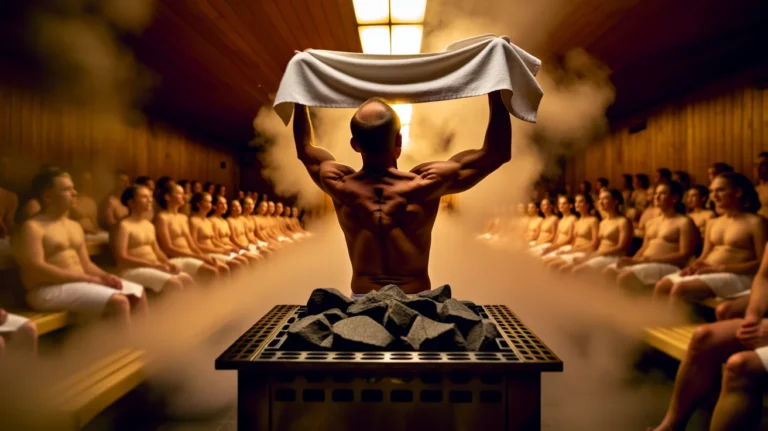
The themed cabins are the draw. The Banja Sauna is billed as the world’s largest log-cabin banya, seating over 100 in Siberian stone pine with a birch-sap ritual at 75°C (167°F). The Kelo Sauna is built from 500 aged Siberian pine logs and runs at 85°C. There’s a Lake Sauna with a panoramic roof deck at 70°C, an Alpine Lodge at 85°C, and Tuscany- and Venice-themed rooms for when you want your sweat with a soundtrack. Roughly 150 wellness activities run daily, including Aufguss (an infusion ritual where a master pours scented water on the stones and fans the steam with a towel) across multiple saunas.
Here is the honest part: Therme Erding is overwhelming on a first visit, and that’s not just tourist jitters. Experienced German spa-goers say the same. Travel writer LeAnna Brown, no stranger to German thermal baths, described it as “a whole other beast” and admitted she wasted time just trying to figure the place out. Four distinct zones, a dual-wristband system, and dozens of saunas will do that to you.
The sauna zone is 16+ and fully textile-free. Book online (a €3.90 ($4) reservation fee) to guarantee entry on weekends and school holidays, when the complex hits capacity. If four hours is enough, the weekday 4-hour Vital & Sauna pass at €47 ($54) is the better-value option than the full day.
Vabali Berlin: the easiest first German sauna
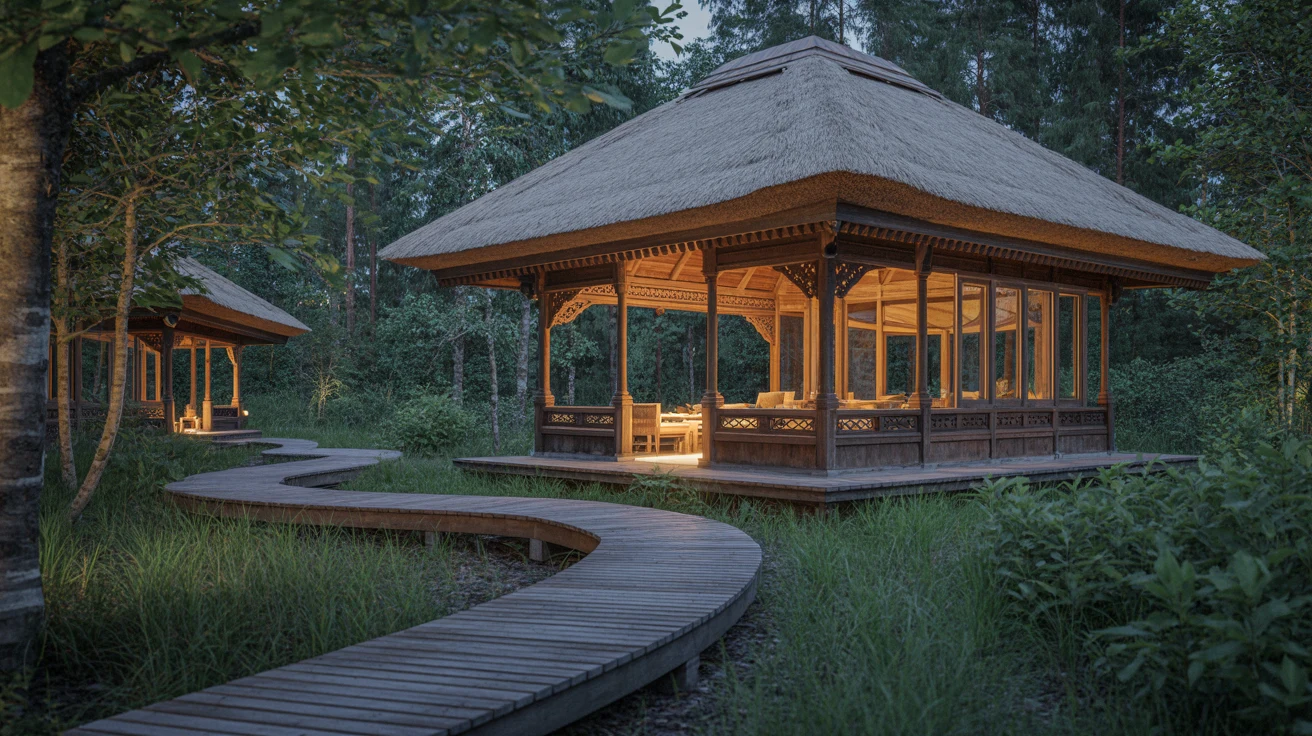
If Therme Erding is the deep end, Vabali Spa Berlin is the shallow end with a lifeguard. It sits in Berlin-Moabit, under 500 meters from Berlin Hauptbahnhof, so there’s zero transport planning involved. The 20,000-square-meter complex is built as a Balinese village: wooden pile dwellings connected by walkways, furnishings imported from Bali, two floors plus a garden. Ten saunas and three steam baths, one indoor pool, and several outdoor and relaxation pools round it out.
This is the venue every English-language guide points first-timers toward, and the reasons hold up. The scale is large but navigable. Signage is English-friendly. Staff proactively brief newcomers on etiquette at entry. And the Balinese aesthetic softens the culture shock of walking into a mixed-gender naked spa considerably better than a clinical Bavarian megatherme does. Infusion ceremonies run every 30 minutes, so you never have to wait long to observe the ritual before deciding whether to sit through one yourself.
Signature saunas include the outdoor Beji garden sauna at around 95°C (203°F), the Di Dalam infusion sauna at 80°C, and gentler herbal and birch rooms at 70°C. The garden sauna is the highlight, though a 95°C first round is an ambitious way to introduce yourself to German sauna culture.
The Aufguss ceremonies at Vabali are the gentle end of a ritual Germany treats as a competitive sport, and worth understanding before you go. There’s more depth on German Aufguss culture than any single venue visit will teach you, including how the world-championship show format differs from the classic infusion.
Friedrichsbad Baden-Baden: the 17-stage bathing temple
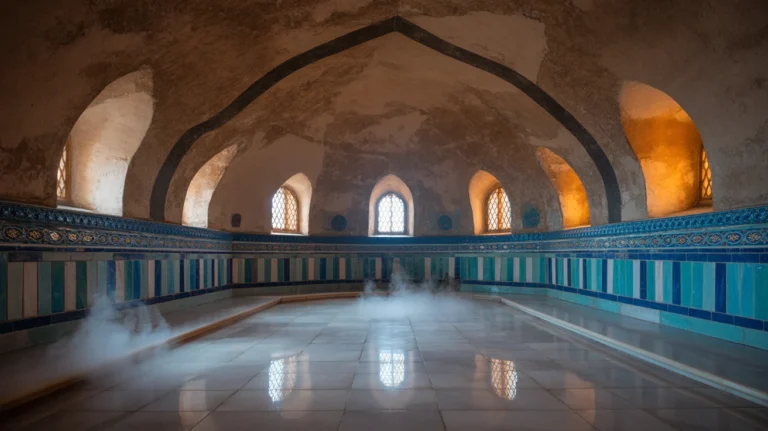
Friedrichsbad is the outlier here, and the most beautiful. Opened in 1877 in the Black Forest spa town of Baden-Baden, it’s a Roman-Irish bathing temple: brass columns, hand-painted majolica tiles, a painted domed hall, and marble throughout. Mark Twain wrote that “you lose track of time within ten minutes and track of the world within twenty.” Baden-Baden became a UNESCO World Heritage Site in 2021, and Friedrichsbad is the centerpiece.
This is not a free-roam sauna landscape. It’s a prescribed 17-stage sequence, roughly three hours, that walks you through warm and hot dry-air rooms, an optional soap-and-brush massage, steam rooms, thermal baths at graduated temperatures, a cold plunge, and finally a warm relaxation room and a reading room with aromatic tea. You follow the numbered path; you don’t choose your own adventure.
Admission is a flat €39 ($44) with no time limit, and it includes everything: bath slippers, towels, shampoo, body lotion, and the tea. You genuinely bring nothing but time. The optional soap-brush massage is a €19 ($22) add-on, bookable same-day on-site from 10am, available only in specific afternoon windows.
Liquidrom Berlin: the boutique urban spa
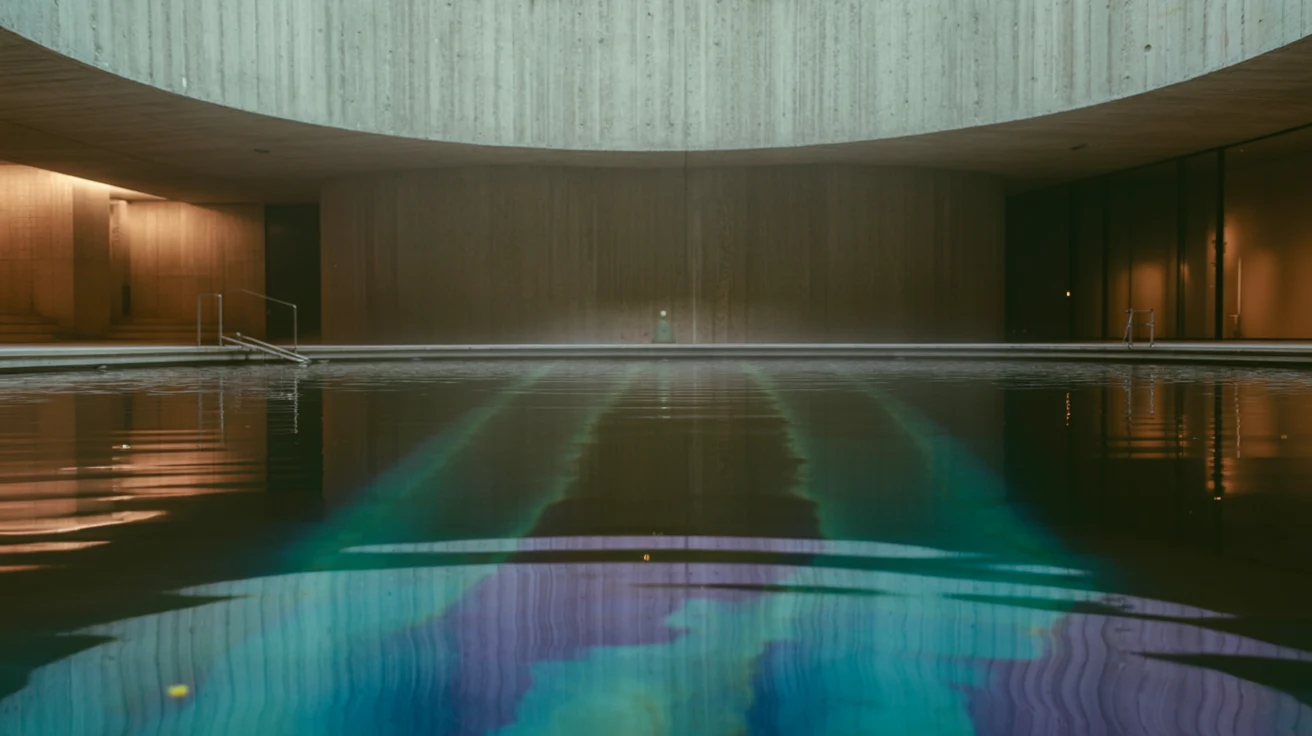
Liquidrom in Berlin-Kreuzberg is the anti-Therme: small, dark, and self-consciously stylish. Its centerpiece is Dome 36, a 36°C (97°F) saltwater pool beneath a concrete dome with underwater speakers, where the light bounces off the walls and the music plays through the water. On Tuesday, Thursday, and Saturday evenings, Berlin and international DJs perform live underwater sets. It’s spa-meets-nightlife, and there’s nothing else quite like it in this guide.
The heat rooms are compact but well-designed: a Hot Room at 90°C with hourly infusions, a Kelo Room at 80°C, a Salt Room at 65°C, and a dense Steam Room at 45°C. The Aufguss program runs hourly with named, branded sessions, OPEN, SCRUB, CUT, HONEY, ICE DROP, MASK, from 10am to midnight. It’s the urban, art-directed take on a ritual the bigger venues do at scale.
Pricing works differently. You buy time-based thermal-bath access, and the sauna area is a separate add-on. The 180-minute Deep Dive is €29.50 ($34), and the €2.50 ($3) sauna add-on brings it to €32 ($36) for the full experience. One thing worth knowing: swimwear is required in all water areas here, and only the sauna zone is textile-free, which is the reverse of what nervous first-timers might expect. During some Sound Sessions, swimwear is required in the sauna too.
Day-pass prices compared
All figures are verified 2025 rates in euros, unit-only, current at the time of research. Prices at these venues rise on weekends, holidays, and school-vacation periods, so a weekday visit is both cheaper and quieter everywhere.
| Venue | Product | Weekday | Weekend / holiday |
|---|---|---|---|
| Therme Erding | Vital & Sauna day pass (16+) | €62 ($71) | €69 ($79) |
| Therme Erding | Vital & Sauna 4-hour | €47 ($54) | — |
| Vabali Berlin | Day pass (all facilities) | €51.50 ($59) | €56.50 ($64) |
| Vabali Berlin | 4-hour | €36.50 ($42) | €39.50 ($45) |
| Friedrichsbad | Roman-Irish bath (no time limit) | €39 ($44) | €39 ($44) |
| Liquidrom Berlin | Deep Dive 180 min + sauna add-on | €32 ($36) | €32 ($36) |
For most visitors the 4-hour options are the sweet spot. You’ll rarely last a full day in the heat anyway, with proper cool-downs between rounds, and four hours covers a themed sauna landscape comfortably. Friedrichsbad’s flat €39 ($44) with everything included is the best-value entry here once you factor in that towels, slippers, and toiletries cost extra elsewhere.
The nudity heads-up: FKK and what tourists get wrong
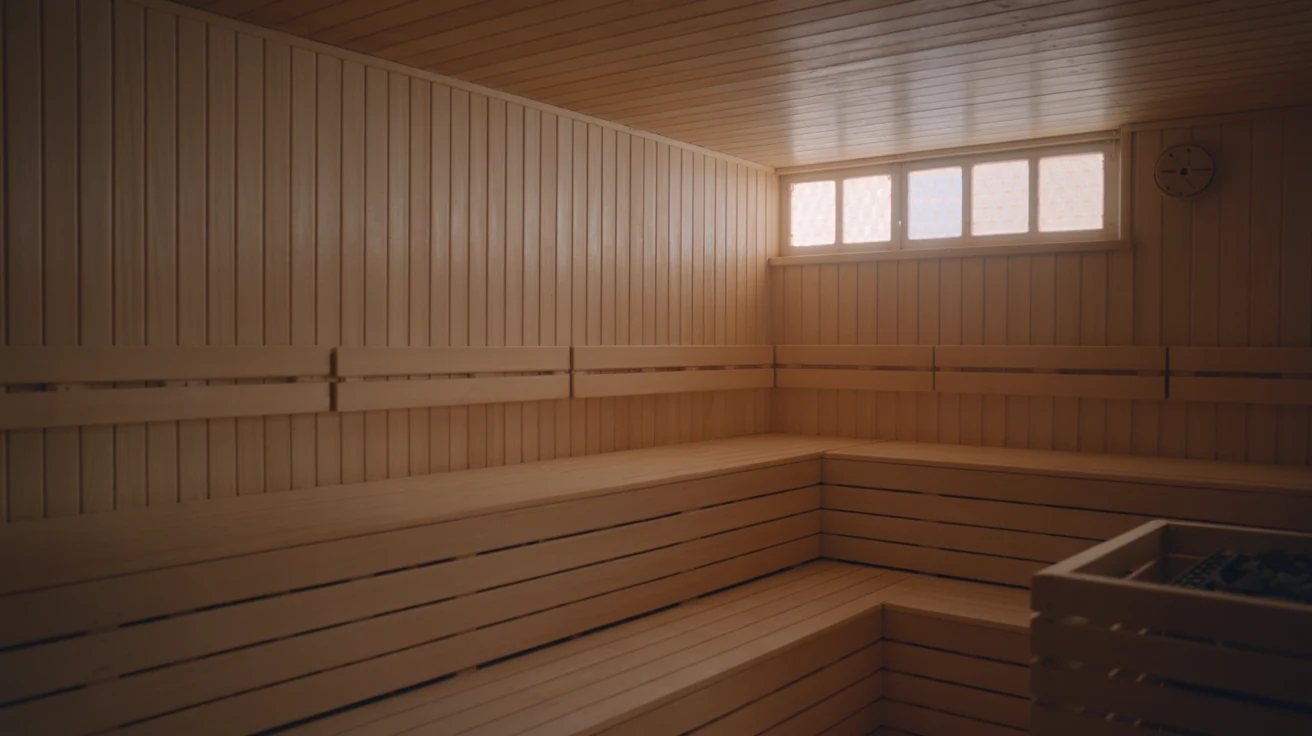
Here is the thing most guides bury and you should read first: German saunas are textile-free by default, and this is not negotiable. The tradition is called FKK (Freikörperkultur, “free body culture”), rooted in the mid-19th-century Lebensreform movement, and it’s deeply normalized. Swimwear in the sauna room isn’t just unusual; it’s often against house rules and considered unhygienic, because textiles trap sweat against the wood.
Saunas are mixed-gender by default. This unnerves first-time visitors and shouldn’t. German sauna culture treats the naked body as ordinary, and Germans in the sauna pay no attention whatsoever to anyone else’s. Staring, sexual behavior, or unwanted contact is taken seriously by staff and gets you removed. Most tourists describe the first ten minutes as awkward and the rest as completely normal. Many major venues also offer women-only or FLINTA timeslots if mixed-gender isn’t for you.
Two rules carry real weight. First, you must always sit or lie on a towel, hands and feet included, never directly on the wood. This is a hygiene rule, not a suggestion. Second, phones and cameras stay in your locker in all sauna and pool areas, full stop. There is no photo in the sauna. There has never been a photo in the sauna. There will never be a photo in the sauna.
Age minimums matter too. Most textile-free sauna areas are 16+ (Therme Erding, Vabali), while Friedrichsbad and Liquidrom admit 14+. Bring a large towel, flip-flops, and, for the pools, swimwear. Rent a towel on-site if you forget; most venues offer it for a few euros.
How Germany fits the wider sauna map
German Saunalandschaft is its own species: bigger, more theatrical, and more ceremony-driven than the Finnish original, where a sauna is often one quiet room by a lake. The Aufguss showcase culture, competitive at the national and world-championship level and centered in Germany, has no real Finnish equivalent. If you’re planning a broader trip, Germany pairs well with the other great European bathing traditions on any list of the best sauna destinations worth traveling for.
FAQ
Do you have to be naked in a German sauna?
Yes, in the sauna room itself. German saunas are textile-free (textilfrei) by default, and swimwear is usually against house rules and considered unhygienic. This applies regardless of gender, and most saunas are mixed-gender. Pool areas are often the exception, where swimwear is typically required, so pack it anyway.
What is the largest sauna complex in Germany?
Therme Erding, near Munich, is the world’s largest thermal spa and sauna complex at roughly 185,000 square meters. Its dedicated textile-free sauna zone alone covers around 12,900 square meters with more than 20 themed saunas. Budget at least four to six hours and download the map before you arrive.
How much does a German sauna day pass cost?
Verified 2025 rates: Therme Erding’s Vital & Sauna day pass is €62 ($71) weekday and €69 ($79) weekend; Vabali Berlin is €51.50 ($59) weekday and €56.50 ($64) weekend; Friedrichsbad is a flat €39 ($44) with no time limit; and Liquidrom’s Deep Dive plus sauna add-on is €32 ($36). Weekday visits are cheaper and quieter everywhere.
Which German sauna is best for a first-time visitor?
Vabali Spa Berlin is the most tourist-friendly introduction. It’s a five-minute walk from Berlin Hauptbahnhof, has English-friendly signage and staff who brief newcomers on etiquette, and its Balinese atmosphere softens the culture shock of a mixed-gender naked spa. Its infusion ceremonies run every 30 minutes, so you can observe before joining in.
Is Friedrichsbad in Baden-Baden always nude?
No. Since July 1, 2024, Friedrichsbad is textile-free and mixed-gender on Monday, Tuesday, Thursday, Friday, and Sunday, but swimwear is required on Wednesday and Saturday. Check the day before you plan your visit if you have a strong preference either way.
What is Aufguss?
Aufguss is a German sauna ritual in which a trained master pours scented water over the hot stones and uses choreographed towel movements to circulate aromatic steam. Sessions last about 15 minutes. Germany is the center of competitive Aufguss, from classic infusions to theatrical show performances with music and lighting.