Joulusauna: The Finnish Christmas Sauna Tradition
On December 24th, while most of the Western world is wrapping last-minute gifts or arguing about whether Die Hard counts as a Christmas movie, Finland goes quiet. The streets empty. Shops close early. And across the country – in cities, in villages, in lakeside cabins buried under snow – families file into the sauna together. This is joulusauna (the Christmas Eve sauna), and for Finns, Christmas doesn’t start until it happens.
It’s not a quaint add-on to the holiday. Joulusauna is the emotional centerpiece of Finnish Christmas – older than the tree, older than the gifts, older than the church service. Understanding why requires knowing what sauna means in Finland, which is something considerably deeper than “a hot room.”
What Joulusauna Is
Joulusauna is a family sauna taken on the afternoon of December 24th, typically between 2:00 and 5:00 PM. The timing is deliberate: it falls after the day’s preparations are finished but before the evening’s celebrations – the Christmas dinner, the visit from Joulupukki (Santa Claus), and for some families, midnight church. The sauna marks the transition from ordinary time to sacred time.
Every family has its own order. In many households, the eldest bathe first, then younger generations follow. Others go by gender, or simply by whoever’s ready. The point isn’t rigid protocol – it’s that everyone takes their turn before the evening begins. Nobody sits down to Christmas dinner without having been in the sauna first. That would be like skipping grace, except Finns who never say grace still take joulusauna.
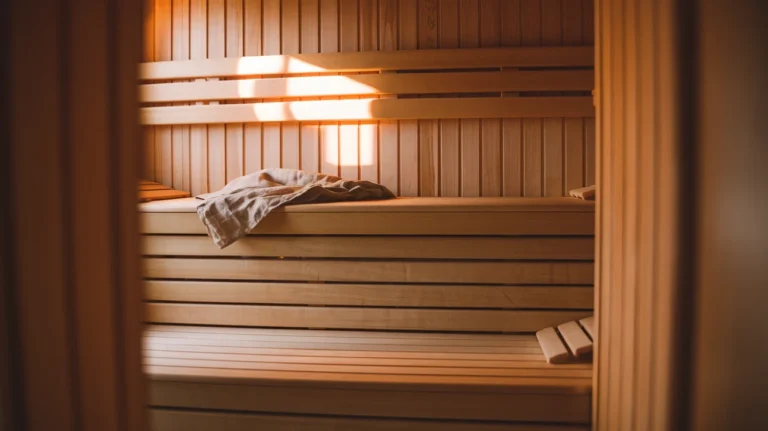
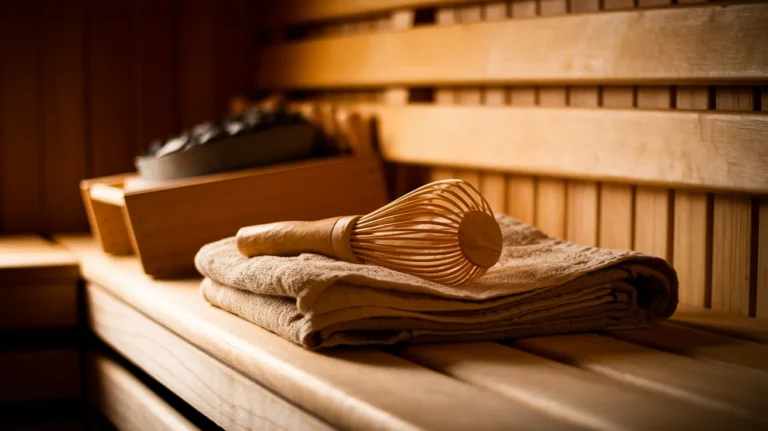
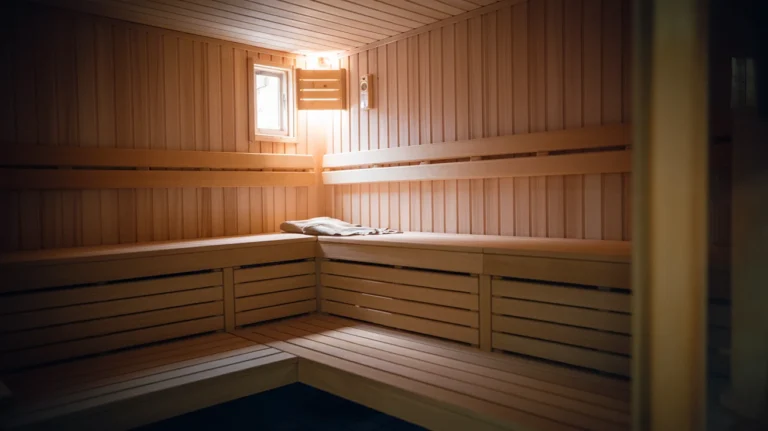
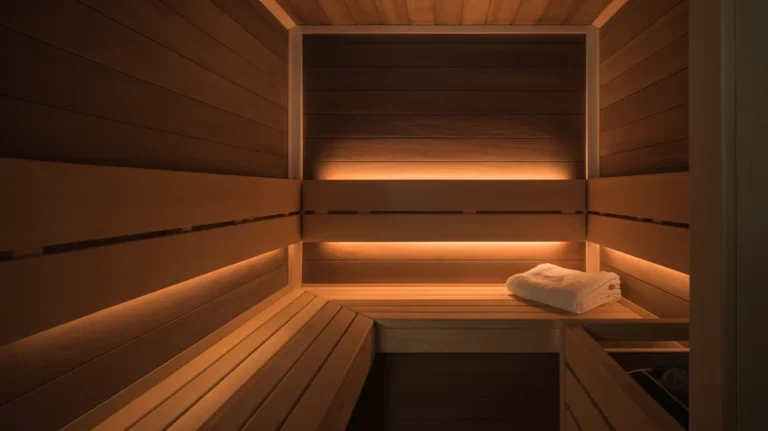
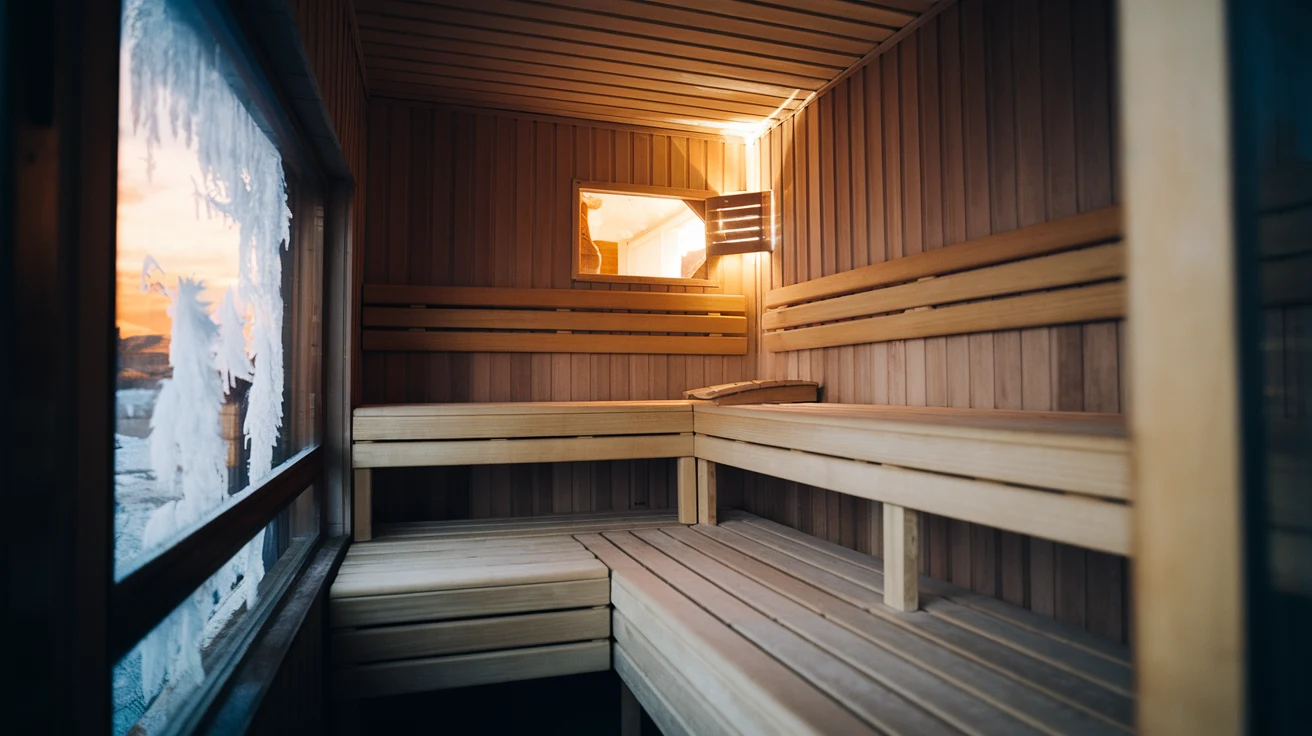
The sauna itself is prepared with more care than usual. Fresh towels, clean benches, sometimes birch branches or candles on the changing room bench. In homes with a wood-fired sauna, someone starts the fire hours earlier to ensure the stones are perfectly heated. The effort signals respect – for the day, for the family, for the space itself.
Historical Origins
Joulusauna predates Christianity in Finland by a comfortable margin. The winter solstice was already the most significant turning point in the Nordic calendar long before missionaries arrived, and ritual bathing marked the transition. When Christianity layered itself over older traditions – as it did across Scandinavia – the sauna stayed. The Church was pragmatic enough to recognize that removing the sauna from Finnish life was neither possible nor advisable.
In agrarian Finland, the sauna was the cleanest room in the household. It was where women gave birth, where the sick were treated, and where the dead were washed before burial. On Christmas Eve, the sauna served all these functions symbolically: it was a place of purification, renewal, and contact with something larger than daily life. Families would heat the sauna not just for the living but for the spirits of deceased relatives, who were believed to return on Christmas Eve.
This wasn’t metaphorical. Families left the sauna heated and lit through the night so that ancestors could bathe after the living had finished. Food was left on the table, candles burned in the windows, and the sauna door was left slightly ajar. Sleeping arrangements sometimes shifted – people slept on the floor so that the dead could use the beds. The boundary between the living and the dead was understood to be thinnest at the solstice, and joulusauna was the ritual that honored that permeability.
The Connection to Ancestor Remembrance
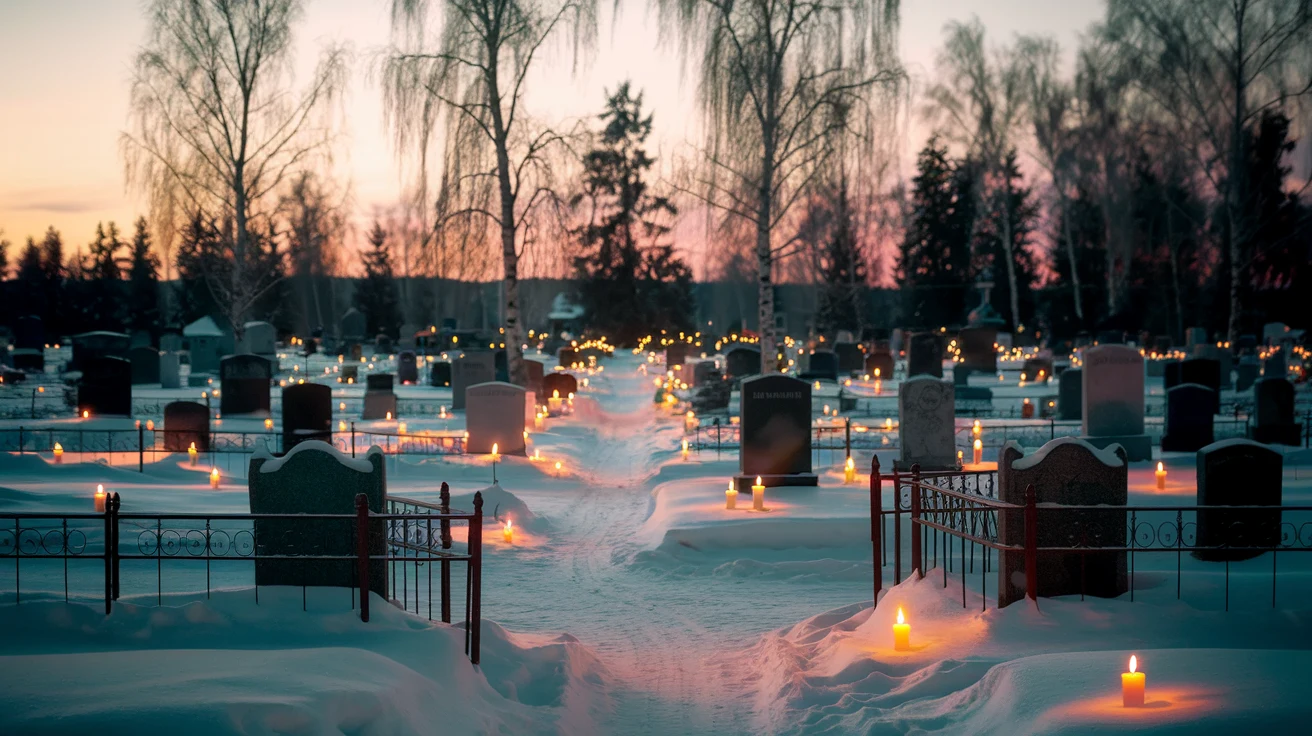
The ancestor dimension of joulusauna has faded in modern Finland, but it hasn’t disappeared entirely. Many Finns visit family graves on Christmas Eve morning, lighting candles on the headstones. Finnish cemeteries on December 24th are extraordinary – hundreds of candles flickering in the snow, the silence broken only by footsteps. This practice is the direct descendant of the older tradition of inviting the dead home for Christmas.
In the sauna itself, the ancestral connection survives as atmosphere more than explicit belief. The quiet of joulusauna – the absence of the usual banter, the slower pace, the longer pauses between throwing water – carries a weight that Finns describe as saunarauha (sauna peace). It’s the same word used for everyday sauna calm, but on Christmas Eve it means something slightly different. There’s a sense of continuity: your grandparents sat on these benches, and their grandparents before them, and the heat and the steam are the same heat and steam.
Modern Observance
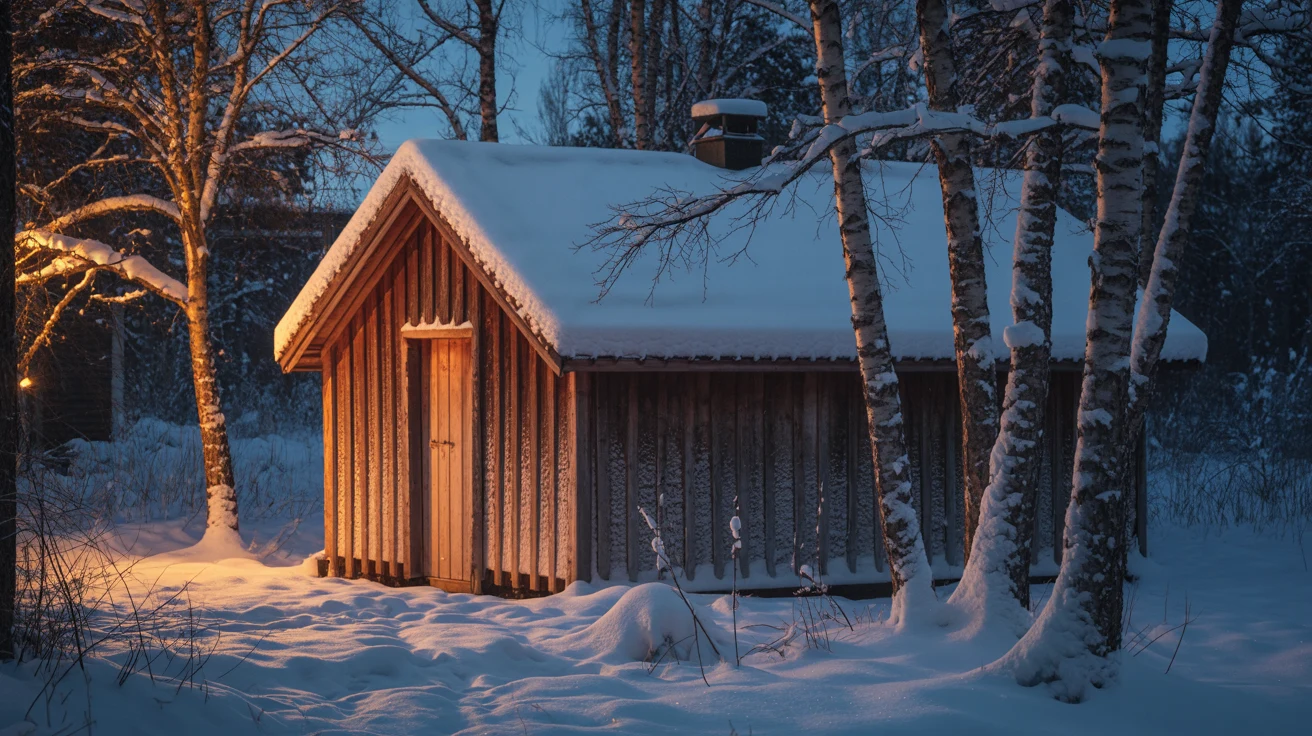
Finland has roughly 3.3 million saunas for 5.5 million people, and on Christmas Eve, an overwhelming majority of them are in use. Joulusauna is practiced by religious and secular families alike, by people who sauna daily and people who barely sauna the rest of the year. It’s one of the few traditions that cuts across every demographic line in Finnish society.
Even non-religious Finns – and Finland is one of Europe’s most secular countries – observe joulusauna without irony. The tradition doesn’t require belief in anything specific. It requires only a sauna, family, and the willingness to be quiet together for a while. In a culture that already values silence, this is not a high bar.
For Finns living abroad, joulusauna is often the tradition they miss most acutely. More than the food, more than the snow, more than the language – the absence of the Christmas sauna is what makes December 24th feel wrong. Expat Finns have been known to improvise: a friend’s sauna in another country, a spa booking timed precisely for the afternoon, or in desperate cases, a very hot shower taken with deliberate solemnity. None of these fully substitute.
The Structure of the Evening
Joulusauna fits into a larger Christmas Eve sequence that has barely changed in generations. The typical Finnish December 24th runs like this: morning preparations and grave visits, early afternoon joulusauna, followed by Christmas dinner (ham, casseroles, rice porridge with a hidden almond), then the arrival of Joulupukki – who, in Finland, knocks on the front door and hands out gifts personally rather than sneaking down chimneys – and finally, for some families, a late church service.
The sauna’s placement is structurally important. It separates the work of Christmas (cooking, cleaning, decorating) from the celebration. You go into the sauna as someone who has been busy all day. You come out clean, slow, warm, and ready to be present with your family. In Finland, the sauna is where business deals happen. Also arguments. Also reconciliation. On Christmas Eve, it’s where the year’s tension gets left behind on the benches.
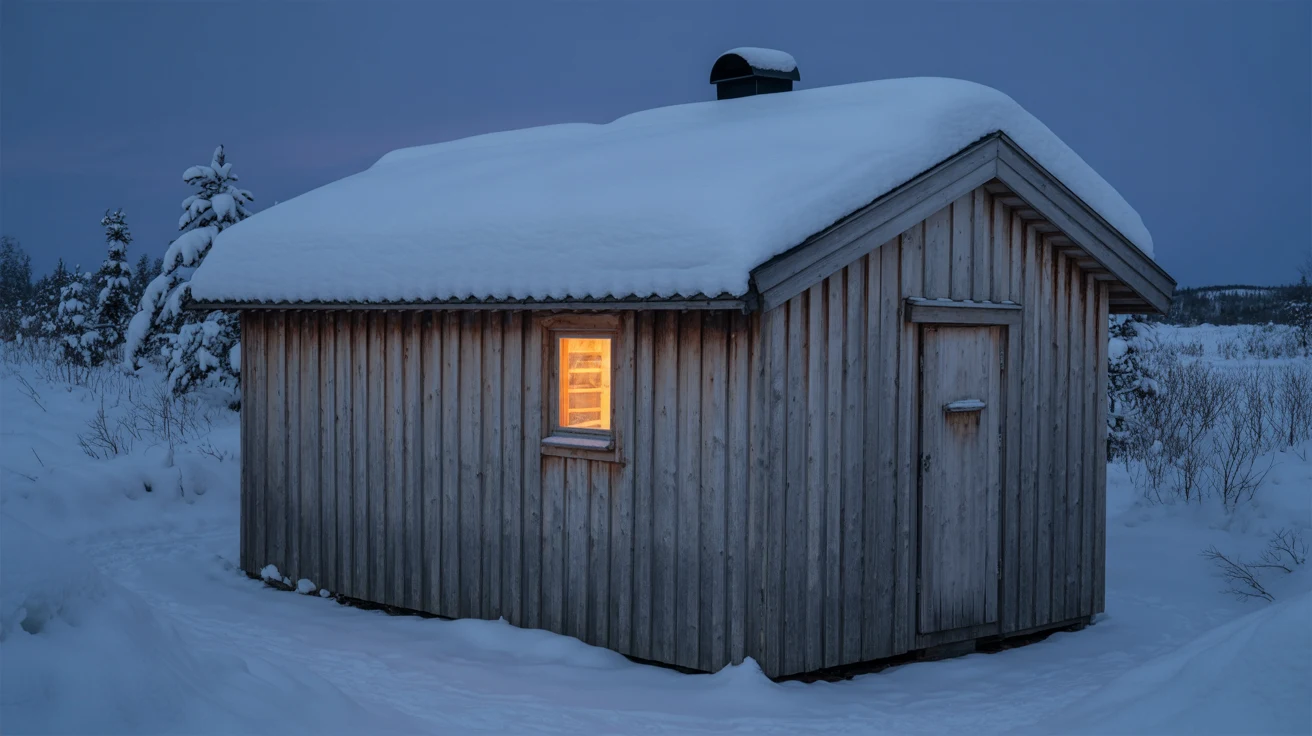
After joulusauna, the pace of the evening drops. People move slowly. Voices stay low. There’s a particular quality to a Finnish household between the sauna and the dinner table on Christmas Eve – a collective exhale that has been rehearsed, unconsciously, for centuries.
Why It Matters Beyond Finland
Joulusauna is worth understanding even if you never set foot in Finland, because it reveals what sauna actually is in its home culture. Not exercise recovery. Not a health hack. Not a luxury amenity. Sauna is a space where ordinary time stops and something older takes over – a space serious enough to anchor the most important evening of the year.
When UNESCO inscribed Finnish sauna culture on its Intangible Cultural Heritage list in 2020, joulusauna was part of what they meant. The tradition embodies everything the inscription recognized: the centrality of sauna to Finnish identity, its role in marking life’s transitions, and its function as a space where social hierarchies dissolve and people simply exist together in the heat.
You don’t need to be Finnish to bring some of this into your own practice. On your next Christmas Eve – or any evening that matters – heat the sauna a little earlier, a little more carefully. Sit longer. Talk less. Let the steam do what it’s been doing in Finland for a thousand years.
FAQ
What is joulusauna?
Joulusauna is the Finnish tradition of taking a family sauna on the afternoon of December 24th (Christmas Eve). It’s one of Finland’s most widely observed traditions, practiced by both religious and secular families, and marks the transition from everyday life into the Christmas celebration.
What time do Finns take joulusauna?
Joulusauna typically takes place between 2:00 and 5:00 PM on December 24th. The timing falls after the day’s preparations are complete but before the evening celebrations – Christmas dinner and gift-giving – begin.
Why is the Christmas sauna important in Finnish culture?
Joulusauna predates Christianity in Finland and connects to ancient solstice rituals, ancestor remembrance, and purification traditions. It functions as both a physical cleansing and an emotional reset, separating the work of the day from the celebration of the evening. For many Finns, Christmas doesn’t feel like Christmas without it.
Do all Finns take a sauna on Christmas Eve?
The vast majority do. Finland has roughly 3.3 million saunas for 5.5 million people, and joulusauna crosses religious, generational, and regional lines. Even Finns who rarely sauna during the rest of the year typically observe the Christmas Eve tradition.
Can non-Finns participate in joulusauna?
If you’re invited to a Finnish family’s joulusauna, it’s a significant gesture of inclusion. Follow the family’s lead on pace and conversation – the Christmas sauna tends to be quieter and more reflective than a typical sauna session. No special knowledge is required beyond basic sauna etiquette.