Juhannussauna: Finnish Midsummer Sauna Tradition
Juhannussauna is the sauna Finns wait for all year. On the Friday closest to June 21, the entire country empties out of cities and heads for lakeside cottages where the sauna has been heating since afternoon, fresh birch whisks hang by the door, and the sun barely dips below the horizon. This isn’t a casual Friday evening steam – it’s the centerpiece of Juhannus (Finnish Midsummer), a holiday that ranks alongside Christmas in cultural weight. Many Finns will tell you, without hesitation, that this is the most important sauna of the year.
What makes it different from every other sauna session isn’t the temperature or the technique. It’s the convergence of everything at once: the longest light of the year, water warm enough to swim in, birch leaves at their freshest, and an entire nation collectively agreeing that nothing else matters for the next 48 hours.
What Juhannus means and why the sauna is central
Juhannus falls on the Friday closest to June 21 – the summer solstice, give or take a day. Finland essentially shuts down. Shops close, offices empty, and highways out of Helsinki clog with traffic as people make the annual pilgrimage to family cottages. The holiday has pre-Christian roots as a celebration of light and fertility, later absorbed into the Christian calendar as the feast of John the Baptist. The pagan undertones never really left.
The sauna sits at the heart of Midsummer because it always has. Long before Juhannus was a national holiday, Finns heated the sauna on the solstice as a ritual of purification and renewal. The tradition survived Christianization, industrialization, and urbanization. Even Finns who rarely use their sauna the rest of the year will fire it up for Juhannus. The UNESCO recognition of Finnish sauna culture specifically notes these seasonal traditions as living heritage, not museum pieces.
Fresh-cut birch whisks: the gold standard
The vihta – or vasta, depending on which part of Finland you’re in – is a bundle of fresh birch branches used to gently whisk the body during a sauna session. You can use dried or frozen vihta year-round, but Midsummer is the one time of year when the fresh version is at its absolute peak. The leaves are fully opened but still young and soft, the branches supple, and the scent of birch sap fills the entire sauna room.
Traditionally, vihta are cut on Midsummer Day itself, ideally in the morning. You select young birch branches with plenty of leaves, bundle them together, and they’re ready to use within hours. The difference between a fresh Juhannus vihta and a dried winter one is the difference between fresh basil and the dusty jar in the back of your spice cabinet. Both technically work. One is clearly better.
The whisking itself serves multiple purposes: it stimulates circulation, releases the scent of birch into the steam, and creates gentle air currents that move hot löyly across the skin. On Midsummer, when the sauna door stays open and closed a dozen times over the course of the evening, the smell of fresh birch becomes inseparable from the memory of the night.
The lake swim: not optional
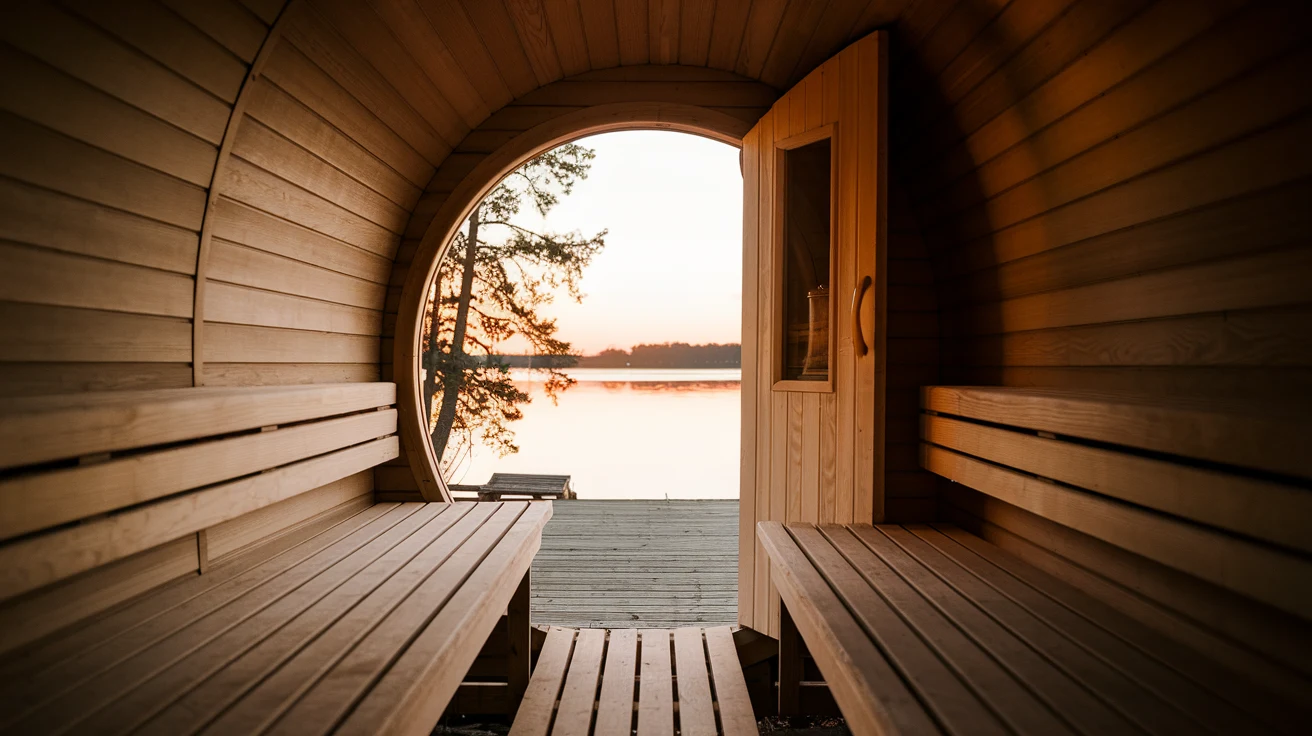
A Juhannus sauna without a lake swim is like a birthday without a cake – technically possible, culturally incomplete. Finnish cottage culture revolves around lakeside locations, and Midsummer is when the water finally reaches swimmable temperatures after months of ice and snowmelt. By late June, lake surface temperatures hover around 18–22°C (64–72°F), which is cold enough to shock after the sauna but warm enough that you don’t lose the feeling in your feet.
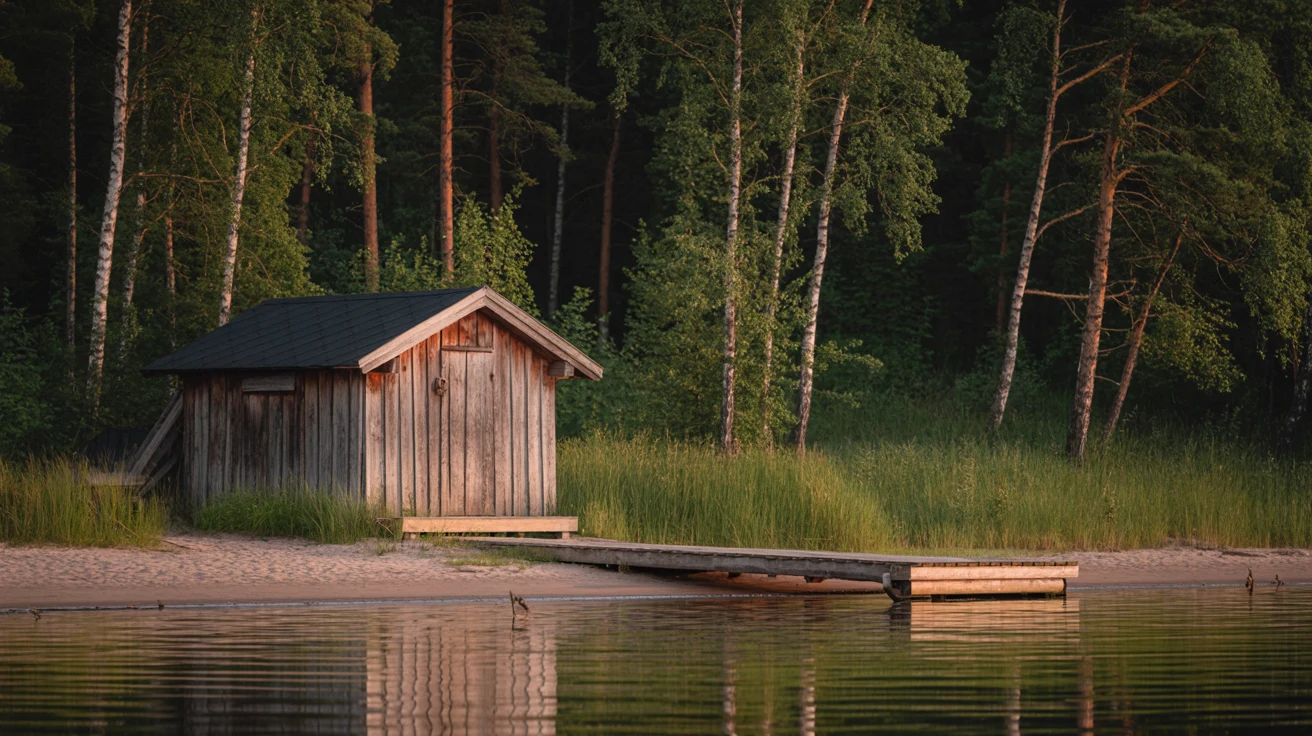
The rhythm goes: sauna round, lake swim, rest on the dock, repeat. Between rounds, people sit on the dock wrapped in towels, nursing a beer, watching the light shift across the water without ever going dark. Some cottages have a proper dock with a ladder; others have a rocky shoreline where you wade in and push off. The method doesn’t matter. The sequence does.
All-night sessions in the white nights
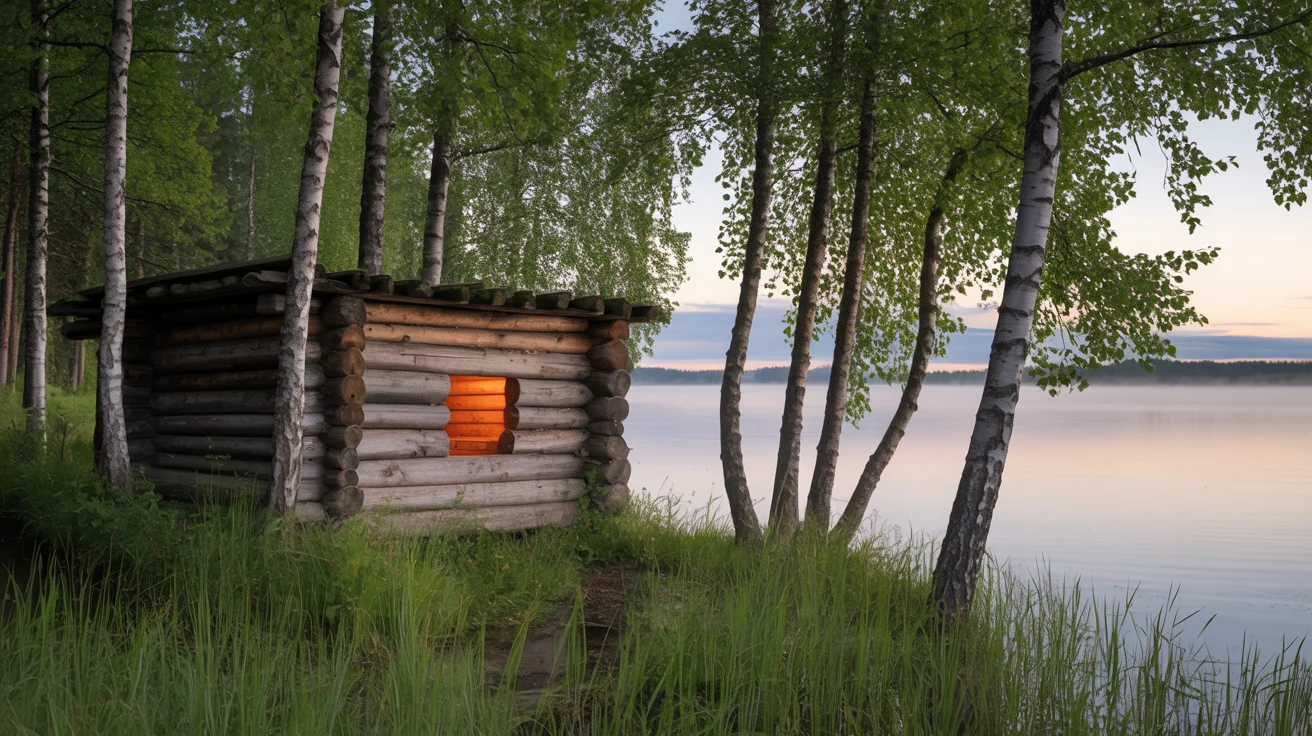
Finland’s location means the sun barely sets at Midsummer – in the south, you get a few hours of dusky twilight; in Lapland, it doesn’t set at all. This changes the entire texture of the sauna evening. There’s no natural endpoint. No darkness to signal bedtime. The sauna stays hot, the lake stays accessible, and the birch whisks stay fresh. Sessions that start at six in the evening can stretch past midnight without anyone checking a clock.
In Finland, the sauna is where business deals happen. Also arguments. Also reconciliation. On Midsummer, it’s mostly the last two, lubricated by beer and the specific honesty that comes from sitting naked in a hot room with people you’ve known your whole life. The extended light gives these conversations room to breathe – there’s no pressure to wrap up, no sense that the evening is ending, because it isn’t.
The Finnish Sauna Society estimates there are roughly 3.3 million saunas in Finland for a population of 5.5 million. On Juhannus, a significant portion of those are simultaneously in use – creating what might be the largest coordinated bathing event on the planet, repeated annually, without anyone organizing it.
Cottage culture and why location matters
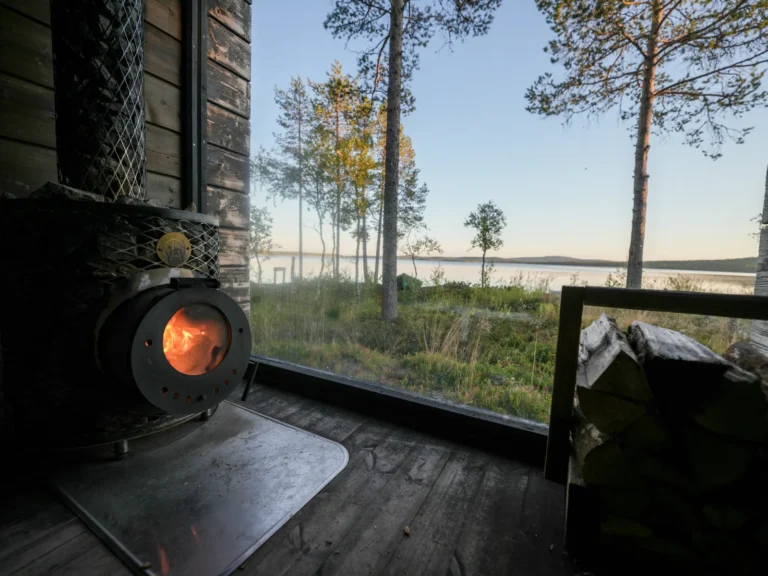
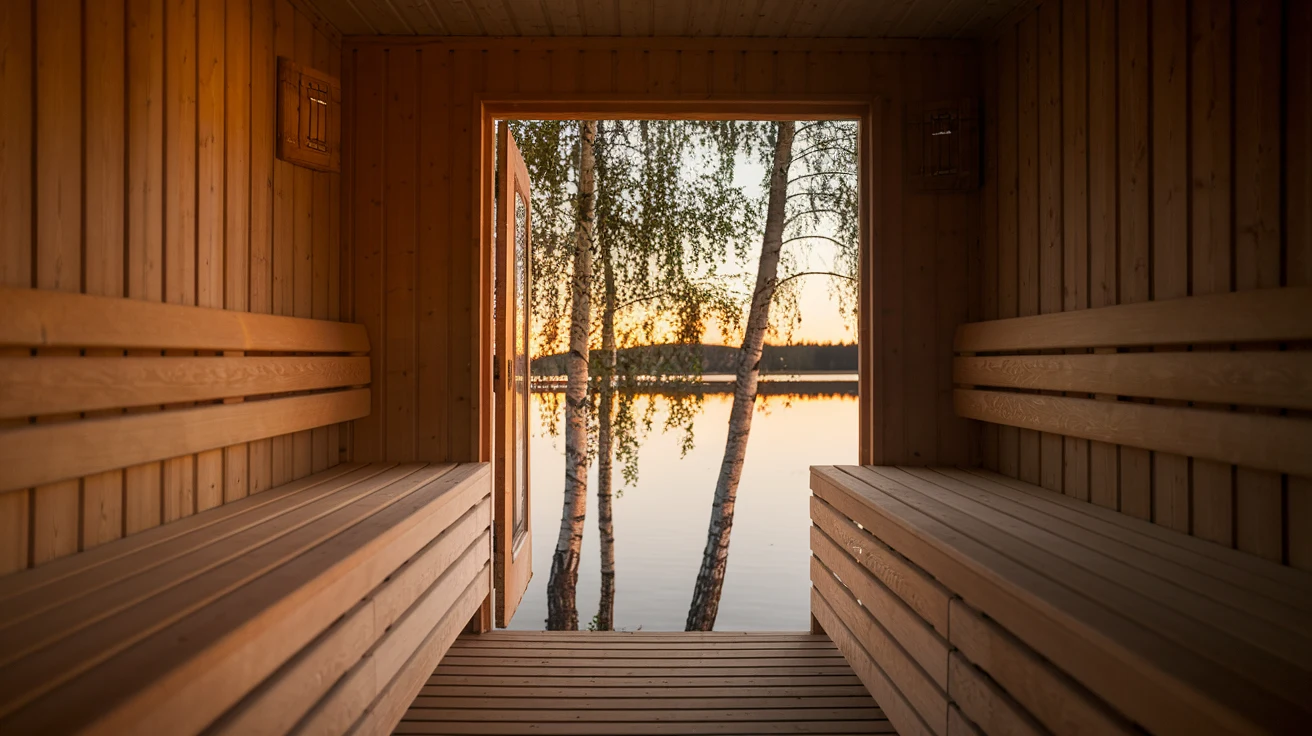
Understanding Juhannussauna requires understanding Finnish cottage culture. Finland has approximately 500,000 summer cottages, known as mökki (summer cabin). Many have been in families for generations. They’re typically simple – no Wi-Fi, sometimes no running water – and nearly all have a sauna. The mökki sauna is often wood-fired, heated with birch logs, and situated steps from the lake.
This is why Juhannussauna feels different from a regular Tuesday evening sauna in a Helsinki apartment building. The setting is the point. The wood-fired kiuas (sauna heater) takes 30–45 minutes to heat, which creates a natural gathering rhythm as people arrive, help carry firewood, and wait for the stones to get hot. The whole process is slower and more communal than flipping a switch on an electric heater.
The North American Sauna Society has noted growing interest in replicating Finnish seasonal sauna traditions outside Finland. For Americans with lakeside property, a Midsummer sauna session is entirely achievable – the solstice happens everywhere, birch trees grow across the northern states and Canada, and the only thing you can’t import is the white night. You’ll just have to stop at sunset like the rest of the world.
How Juhannussauna compares to Joulusauna
If Juhannussauna is the extroverted sibling – long, social, loud, outdoors – then Joulusauna (the Christmas sauna) is the quiet, reflective one. Both are considered essential sauna moments in the Finnish calendar, but they serve different emotional purposes. Midsummer is about abundance: light, warmth, company, fresh birch, open water. Christmas sauna is about stillness: dark afternoon, candlelight, the smell of tar soap, and the silence of snow.
Together, they bracket the Finnish year. One marks the peak of light; the other, the depth of darkness. Both involve the same basic act – heating stones, throwing water, sitting in the steam – but the experience couldn’t be more different. Finns don’t rank them against each other. They need both.
FAQ
What is Juhannussauna?
Juhannussauna is the traditional Finnish Midsummer sauna, taken on the Friday closest to June 21. It’s the centerpiece of Juhannus (Finnish Midsummer) celebrations and is considered by many Finns to be the most important sauna session of the year, combining fresh birch whisks, lake swimming, and extended sessions under the white night sky.
Why are fresh birch whisks important on Midsummer?
Midsummer is when birch leaves are at their peak – fully opened but still young, soft, and full of sap. Fresh-cut vihta (or vasta) release oils, moisture, and fragrance that dried versions can’t match. Traditionally, the birch branches are cut on Midsummer Day itself, making this the gold standard for birch whisking all year.
When exactly is Juhannus celebrated?
Juhannus falls on the Friday closest to June 21 each year. The holiday weekend runs through Saturday, and most Finns travel to lakeside cottages for the entire long weekend. The sauna is typically heated on Friday afternoon or evening and may stay in use well into the night.
Can you experience Juhannussauna outside Finland?
The core elements – a wood-fired sauna, fresh birch whisks, and a lake to swim in – are available anywhere with birch trees and lakeside property, particularly across the northern United States and Canada. The one thing you can’t replicate is the white night: Finland’s extreme latitude means the sun barely sets at Midsummer, creating an endless evening that stretches sauna sessions past midnight.
How does Juhannussauna differ from a regular sauna session?
The temperatures and techniques are similar – 70–100°C with löyly – but the setting, duration, and atmosphere are completely different. Juhannussauna happens at a lakeside cottage, uses fresh-cut birch whisks, alternates with lake swims, and lasts for hours across multiple rounds. It’s a communal event, not a quick weeknight steam.