German Aufguss: The Performance Sauna Tradition
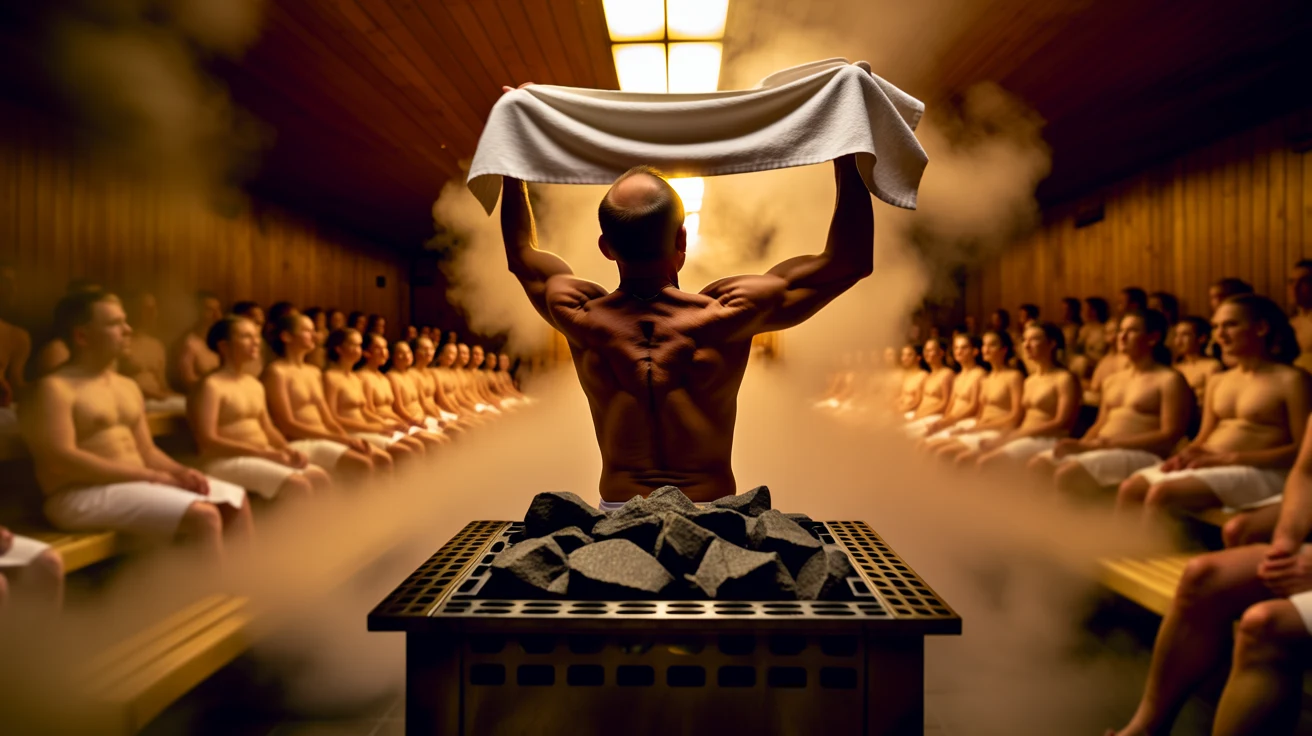
An Aufguss (German for “infusion”) is what happens when a Finnish sauna hires a choreographer. A trained attendant walks into a hot room, pours scented water over the stones, and then waves a towel in elaborate patterns to push the heat around the room. It lasts 8 to 15 minutes, nobody talks, and at the end people sometimes applaud. This is mainstream sauna culture across Germany, Austria, and Switzerland, and it is nothing like sitting quietly in a Finnish cabin.
If you have only done saunas the Finnish way, the German version will surprise you: it is a performance, it runs on a schedule, and the person running it has training. It is also, done well, one of the best sauna experiences you can have.
What an Aufguss actually is
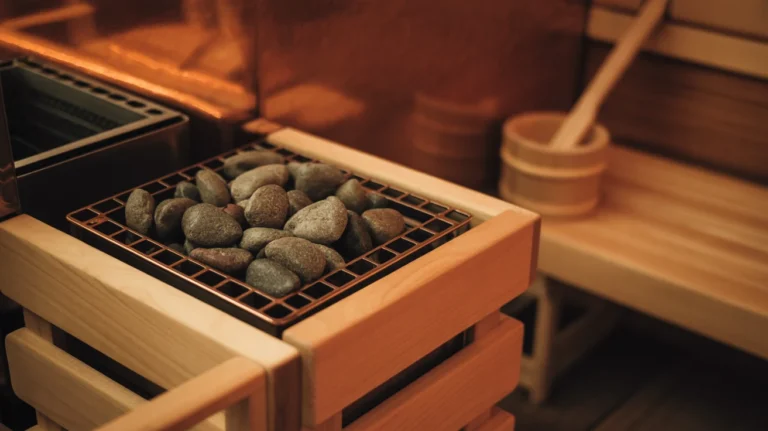
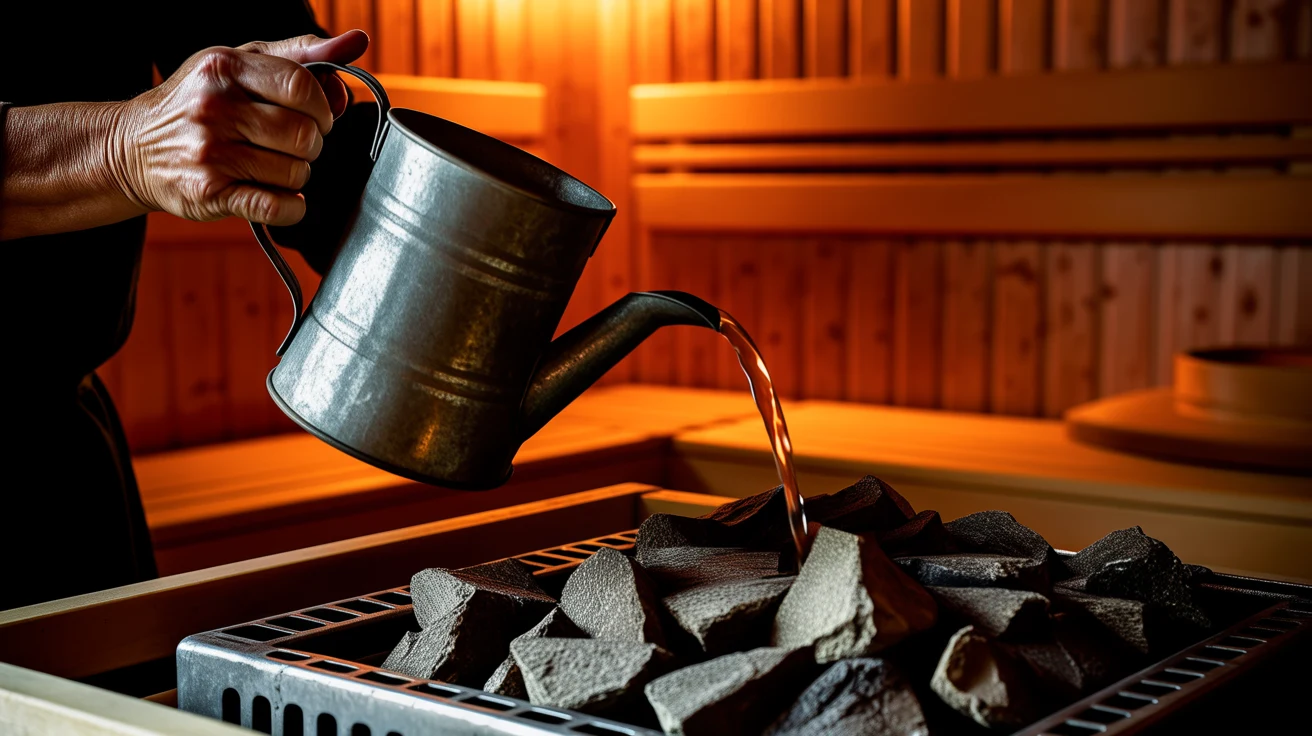
The ritual has three parts, always in the same order. First, water infused with essential oils goes onto the hot stones, releasing a wave of scented steam. Then the attendant works the room with a towel, folding it, snapping it, and swinging it overhead in choreographed moves. Finally, the cycle repeats two or three times, each round hotter than the last as more water hits the stones.
The towel work is the part outsiders misread as showing off. It is not. Heat and steam collect near the ceiling of a sauna, and waving a towel drives that hot air down onto the people on the benches. The theatrical spinning distributes the löyly (the burst of steam thrown off the stones) evenly across the room. It looks like a show because the physics happens to look good. A skilled attendant can make a 90°C (194°F) room feel like it jumped ten degrees in one pass, purely by moving air.
The Saunameister: a trained role, not a lifeguard
The person running the show is a Saunameister (sauna master), and the title is earned. Larger German spas send staff to certification courses covering scent blending, towel technique, heat management, and how to read a room full of overheating guests. A good one paces the rounds so nobody bolts for the door, chooses oils that build rather than clash, and knows exactly how much water the stones can take before the steam turns punishing.
This is the biggest cultural gap from Finland, where there is no attendant at all. In a Finnish sauna you throw your own water and the room polices itself through silence and habit. In Germany, the ritual is curated by a professional, and you are the audience. Both work. They are just different theories of what a sauna is for.
Aufguss championships are a real thing
Yes, there is competitive towel waving. The Aufguss World Championship brings Saunameisters from across Europe to perform themed routines judged on choreography, scent composition, heat delivery, and storytelling. Competitors build sets around music, costumes, and narrative arcs, all inside a sauna, all while doing the actual physical work of moving heat with a towel.
It sounds absurd until you watch one. The winning routines are genuinely athletic and precisely timed, and the scent-and-heat sequencing is closer to a discipline than a gimmick. A championship-level performer will spend a long time planning the oil progression, longer choreographing the towel, and then deliver the whole thing in a room hot enough to end most people’s day. Do not confuse it with the old Sauna World Championships in Heinola, an endurance contest won by whoever stayed on the bench longest at 110°C (230°F).

Saunalandschaft: the German sauna landscape
German saunas rarely come as a single room. They come as a Saunalandschaft (sauna landscape): a sprawling complex with multiple saunas at different temperatures, steam rooms, cold plunge pools, relaxation halls, outdoor gardens, and a restaurant. You buy a day ticket and drift between rooms for hours, timing your visits around the posted Aufguss schedule the way you would plan around film showings.
This scale is why the German model produces professional attendants and world championships and Finland does not. A national tradition built around the family cottage sauna stays personal and quiet. A commercial complex serving hundreds of guests a day turns the ritual into a scheduled, staffed event. Neither is more authentic; they grew from different rooms.
Naked, mixed, and completely normal
German sauna culture is textile-free and usually mixed-gender. You are expected to be fully naked inside the sauna, sitting on your own towel for hygiene, and swimwear is often explicitly banned because synthetic fabric holds sweat and bacteria in the heat. This applies to men and women sharing the same room, and it is unremarkable to everyone present except the first-time foreign visitor.
The logic is practical rather than provocative. In Finland this expectation is enforced by custom and the occasional raised eyebrow. In Germany it is enforced by a printed sign at the entrance and a staff member who will mention your shorts. The nudity is not the event; it is just the dress code, and Germans treat it with the emotional intensity of a coat check.
Etiquette: silence and commitment
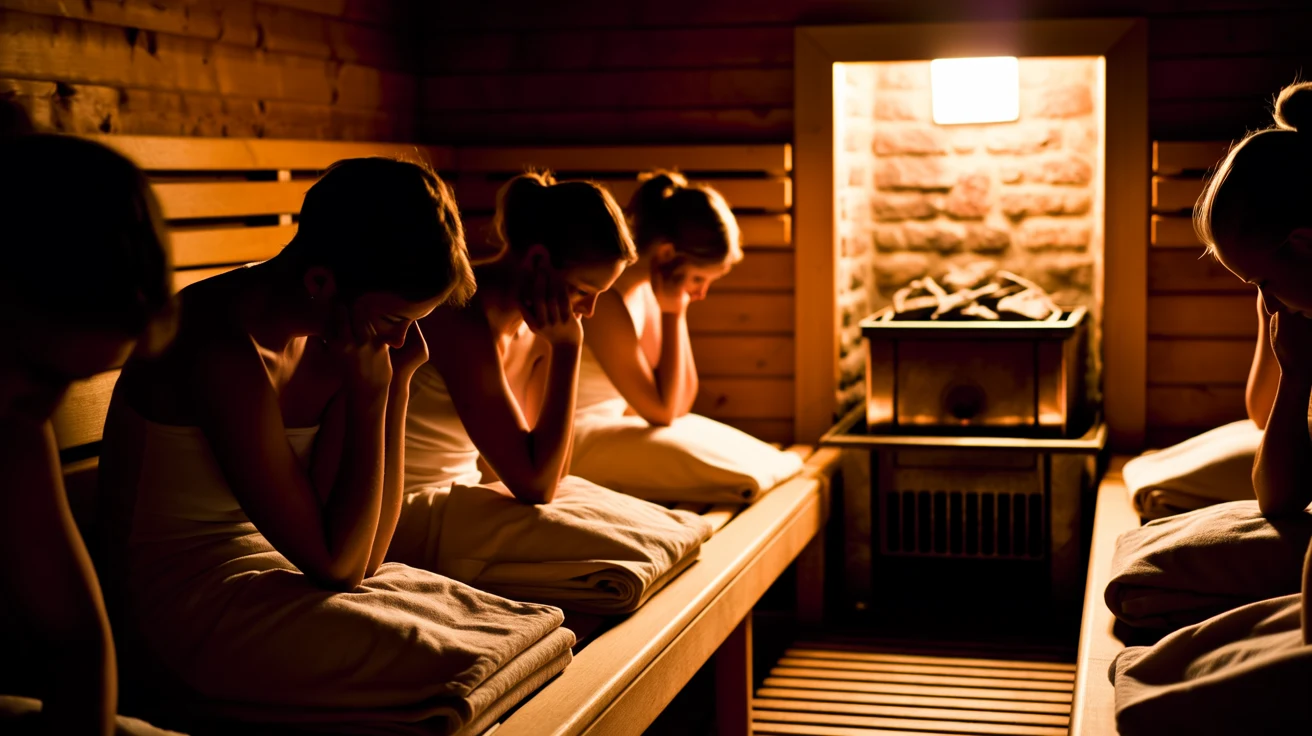
The rules inside a German sauna are stricter than most newcomers expect. Talking during an Aufguss is a serious breach, phones do not exist in this space, and you do not walk out once the ritual has started unless you are genuinely unwell. Enter before the Saunameister begins, take your seat, and stay put until the final round ends. Shower before you go in, and always sit or lie on your towel so no sweat touches the wood.
The commitment rule catches people off guard. An Aufguss is a closed sequence, and doors opening mid-ritual dump the carefully built heat and break the room for everyone. If you cannot handle 12 minutes at rising temperatures, sit lower or skip that round entirely rather than start and quit. For the deeper cultural version of these rules, the Finnish Sauna Society covers the etiquette that Germany inherited and then formalized.
How Aufguss compares to Finnish löyly
Both traditions live and die on steam. The difference is who controls it and what it is for. Finnish sauna is participatory, silent by default but socially loose, and centered on the personal act of throwing water when you want it. German Aufguss is a spectator ritual: professionally run, scented, choreographed, and scheduled. One is a conversation with a room; the other is a performance you attend.
| Element | Finnish löyly | German Aufguss |
|---|---|---|
| Who throws water | Anyone in the room | Trained Saunameister only |
| Scent | Usually none, sometimes birch or beer | Essential oils, central to the ritual |
| Towel waving | None | Choreographed heat distribution |
| Structure | Informal, open-ended | 8-15 minute scheduled ritual |
| Talking | Allowed, often quiet | Silence expected |
| Setting | Cottage, apartment, lakeside | Large commercial sauna landscape |
If you want to understand where the whole thing came from, it helps to see Aufguss as one branch of the broader family of sauna cultures that all descend from the same basic idea: a hot room, some stones, and water. Germany took that idea and gave it a director. Denmark borrowed it next: the Danish saunagus is the same guided ritual under a shorter name, run by a trained gusmester.
FAQ
What is German Aufguss?
Aufguss is a German sauna ritual where a trained attendant pours scented water over hot stones and then waves a towel in choreographed patterns to spread the heat and steam around the room. It typically lasts 8 to 15 minutes across two or three rounds, and guests sit in silence for the whole sequence.
Are German saunas naked?
Yes. German sauna culture is textile-free, and you are expected to be fully nude inside the sauna, sitting on your own towel for hygiene. Rooms are usually mixed-gender, and swimwear is often banned outright because synthetic fabric traps sweat and bacteria in the heat.
What is the difference between Aufguss and Finnish löyly?
Löyly is the steam a Finnish bather throws by ladling water onto the stones whenever they choose, in an informal and often silent room. Aufguss is a scheduled performance run by a professional who adds scent and uses towel work to distribute the heat, with the guests as a silent audience rather than participants.
What is a Saunameister?
A Saunameister is the certified attendant who performs an Aufguss. The role requires training in scent blending, towel technique, and heat management, and top performers compete in international championships judged on choreography, aroma, and heat delivery.
Is the towel waving just for show?
No. Hot air and steam collect near the sauna ceiling, and the towel drives that heat down onto the people on the benches, distributing it evenly across the room. It looks theatrical because the physics of moving hot air happens to look dramatic, not because it is decorative.