Sauna Hydration: How Much Water You Actually Need
You lose water in a sauna – that part is obvious. What’s less obvious is how much, and how badly most people replace it. A typical session can cost you anywhere from half a liter to a liter and a half of sweat in an hour, and most people walk out, drink a single glass of water, and call it even. They’re usually still down a pint by bedtime.
Hydration around sauna isn’t complicated, but it has a few rules worth getting right. Drink before, sip if you need to during, and replace more than you think afterward. Here’s the actual playbook.
How much you sweat in a sauna
Sweat loss in a sauna varies enormously – temperature, session length, humidity, and your own physiology all push the number around. A common working range is roughly 500–1500ml per hour-long session at Finnish temperatures of 80–100°C (176–212°F). That’s a wide range because a 10-minute round at 80°C and three 20-minute rounds at 95°C are not the same event.
Why so much? A traditional Finnish sauna runs hot and dry – 10–20% relative humidity – which means sweat evaporates fast and your body keeps producing more to cool itself. Your sweat glands don’t ration. Unlike your kidneys, which conserve water when you’re running low, eccrine sweat glands don’t concentrate sweat or slow down to protect you. They keep going as long as you’re hot.
Pre-sauna: drink before you’re thirsty
Walk in already topped up. Aim for about 500ml of water in the hour before your session. Thirst lags behind actual fluid status, so by the time you feel thirsty in the heat you’re already behind – and the sauna is the worst place to be playing catch-up.
Don’t overcorrect either. Chugging a liter five minutes before you sit down just means a full bladder and an interrupted session. Spread it across the hour. The goal is starting at baseline, not pre-loading like a camel.
During the sauna: sip if you need to
Whether you drink inside the sauna is partly preference and partly session length. For a short single round, you don’t need to – you’ll replace everything afterward. For longer sessions or multiple rounds, having water within reach during the cool-down breaks between rounds makes sense. How many rounds you’re doing ties directly to how long to stay in the sauna, and longer total time means more to replace.
Cool or room-temperature water is fine. Some people find ice water during a session unpleasant on a hot stomach; others don’t care. There’s no performance penalty either way – drink what you’ll actually drink.
Post-sauna: replace more than you lost
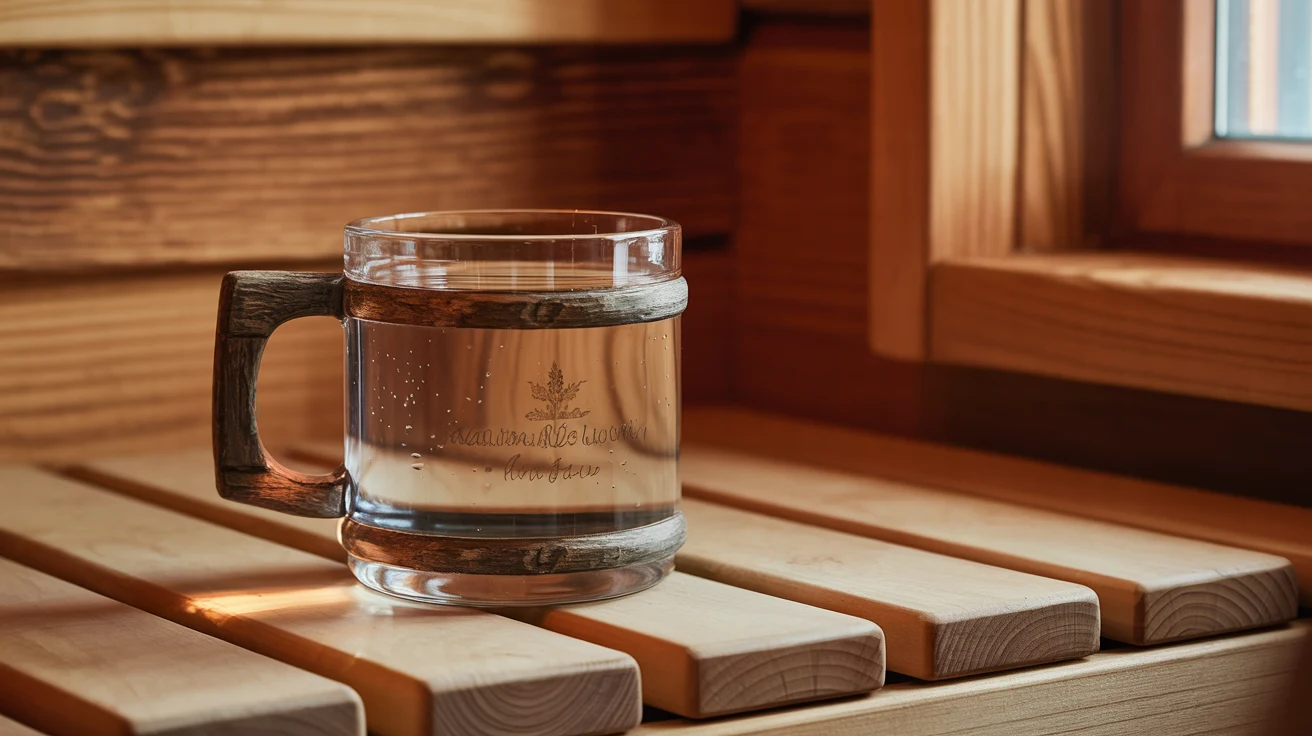
This is where most people fall short. The rule of thumb for replacing fluid after heavy sweating is roughly 1.5 times the volume you lost – so if you sweated out a liter, you’re aiming closer to 1.5 liters over the following hours, not one quick glass at the door. You drink more than you lost because some of it leaves again as urine before it’s fully absorbed. If you see us Finns replacing water with beer don’t start copying us. It’s one of those “do as I say, not as I do” situations.
Spread it out. Slamming a liter in one go mostly produces a bathroom trip; sipping steadily over the next couple of hours actually rehydrates you. And if you’re stepping into a cold plunge or lake afterward, the cold blunts thirst – you’ll feel less inclined to drink right when you should.
Electrolytes: when plain water isn’t enough
Sweat isn’t just water. It carries sodium, chloride, and potassium, and for a normal sauna session, food covers the losses – a salty meal afterward does most of the work. Trace minerals and vitamins are at minimal risk from sweating, so you don’t need a supplement cabinet.
The exception is heavy, prolonged sweating, especially if you’re a “salty sweater” (white residue on skin or clothes is the tell). People who lose a lot of sodium in sweat are at higher risk of imbalance during long sessions. If you’re doing extended multi-round sessions and only drinking plain water, you can actually dilute your sodium – replacing fluid without replacing salt. An electrolyte drink or a pinch of salt with that post-sauna water closes the gap.
| Stage | What to drink | How much |
|---|---|---|
| Before (1 hour prior) | Water | ~500ml, spread out |
| During (between rounds) | Cool or room-temp water | Sips as needed |
| After | Water; add electrolytes for long sessions | ~1.5x sweat lost |
Why not alcohol
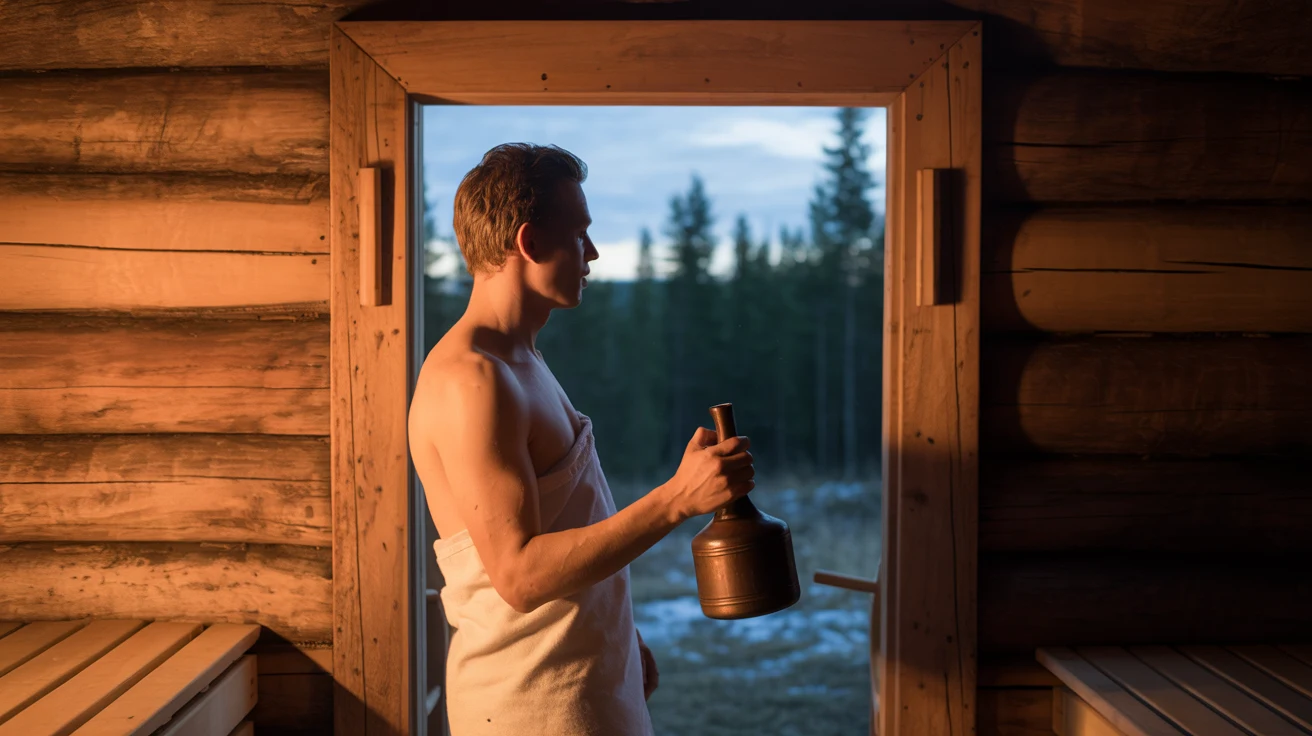
The beer-and-sauna pairing is genuinely Finnish, genuinely traditional, and genuinely not a hydration strategy. Alcohol is a diuretic – it makes you lose more fluid on top of what you’ve already sweated out, which is the opposite of what your body needs walking out of a hot room.
There’s also a safety angle that’s easy to ignore. Heat lowers blood pressure, alcohol lowers it further, and the combination raises the risk of fainting and worse. It’s a real concern, not a buzzkill technicality – the most preventable sauna deaths in Finland involve alcohol. If you want the cultural context without the lecture, read up on the Finnish sauna and beer tradition and where it fits. Just don’t treat the beer as the water.
Signs you’re getting dehydrated
Even mild dehydration drains energy and clouds thinking before you notice it. In a sauna, the warning signs are worth knowing because the environment masks them – you expect to feel hot and a little woozy, so it’s easy to push past the point you should have stepped out.
Watch for dizziness or lightheadedness, a headache, a racing heart that doesn’t settle during cool-down, nausea, or dark urine afterward. Any of these means stop, cool down, and drink. Dehydration overlaps with several reasons some people shouldn’t be in the heat at all, so it’s worth understanding the broader sauna risks and contraindications before you push long sessions.
FAQ
Should you drink water during a sauna?
For a short single round you don’t have to – you can replace everything afterward. For longer or multiple rounds, keep water within reach and sip during the cool-down breaks between rounds. Cool or room-temperature water works equally well.
What should you drink after a sauna?
Water is the foundation – aim for about 1.5 times the fluid you sweated out, spread over the following hours rather than all at once. After long, heavy sessions, add electrolytes or have a salty snack to replace the sodium you lost in sweat.
Can you drink alcohol in a sauna?
It’s a real Finnish tradition but not recommended. Alcohol is a diuretic that worsens fluid loss, and combined with the heat it lowers blood pressure and raises the risk of fainting. If you want a drink, have it after your session and after you’ve rehydrated with water.
How much water do you lose in a sauna?
Roughly 500–1500ml in an hour-long session, depending on temperature, duration, humidity, and your own physiology. Weighing yourself before and after – each kilogram lost is about a liter of fluid – is the simplest way to know your own number.
How much water should you drink before a sauna?
About 500ml in the hour before your session, spread out rather than chugged right before you sit down. Starting hydrated matters because thirst lags behind actual fluid loss, and the heat is the worst place to play catch-up.