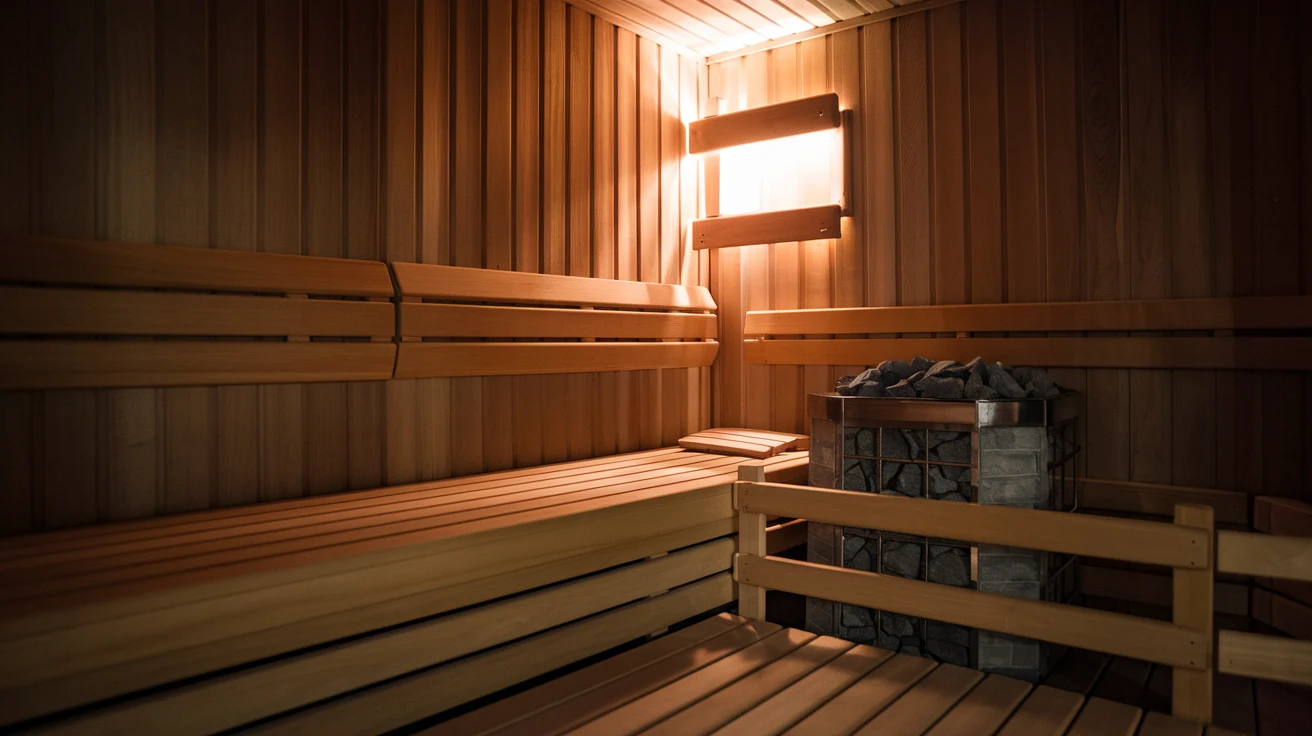
What Is a Sauna? A Clear Definition
A sauna is a room heated to 80–100°C (176–212°F) where you sit, sweat, and – if you’re doing it right – throw water on hot stones to create löyly, the burst of steam that’s the entire point. That’s the Finnish definition, and since “sauna” is a Finnish word adopted into English, the Finns have a reasonable claim to defining it. Finland exports cars (not many), iron ore (substantial), and the word “sauna” (universal). They are happy with this trade balance.
But walk into most American gyms and spas labeled “sauna,” and you’ll find something quite different – an infrared cabin at 55°C, a steam room with tile walls, or a wood-paneled room running so cool you could comfortably read a novel in it. The word has been stretched far beyond its original meaning, and understanding what actually counts as a sauna matters more than you’d think.
The Finnish Definition: Stones, Steam, and Spirit
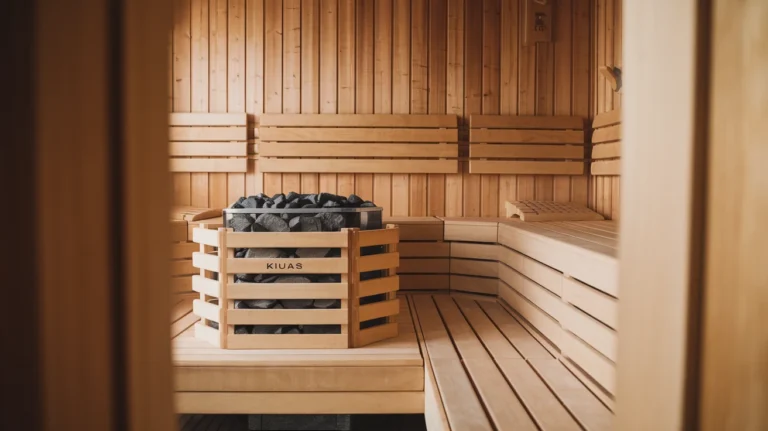
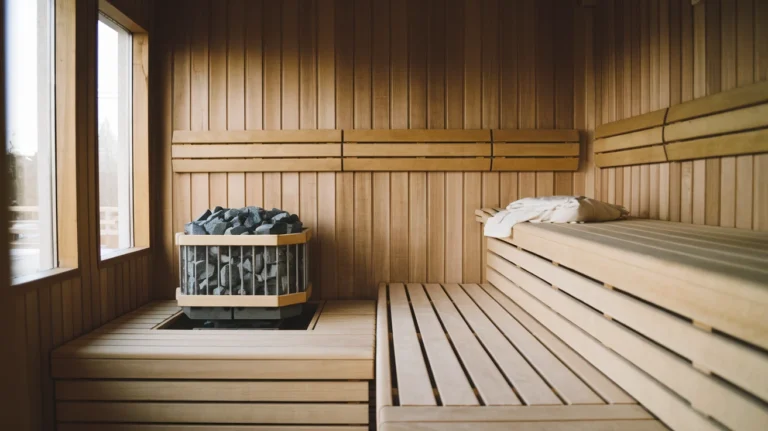
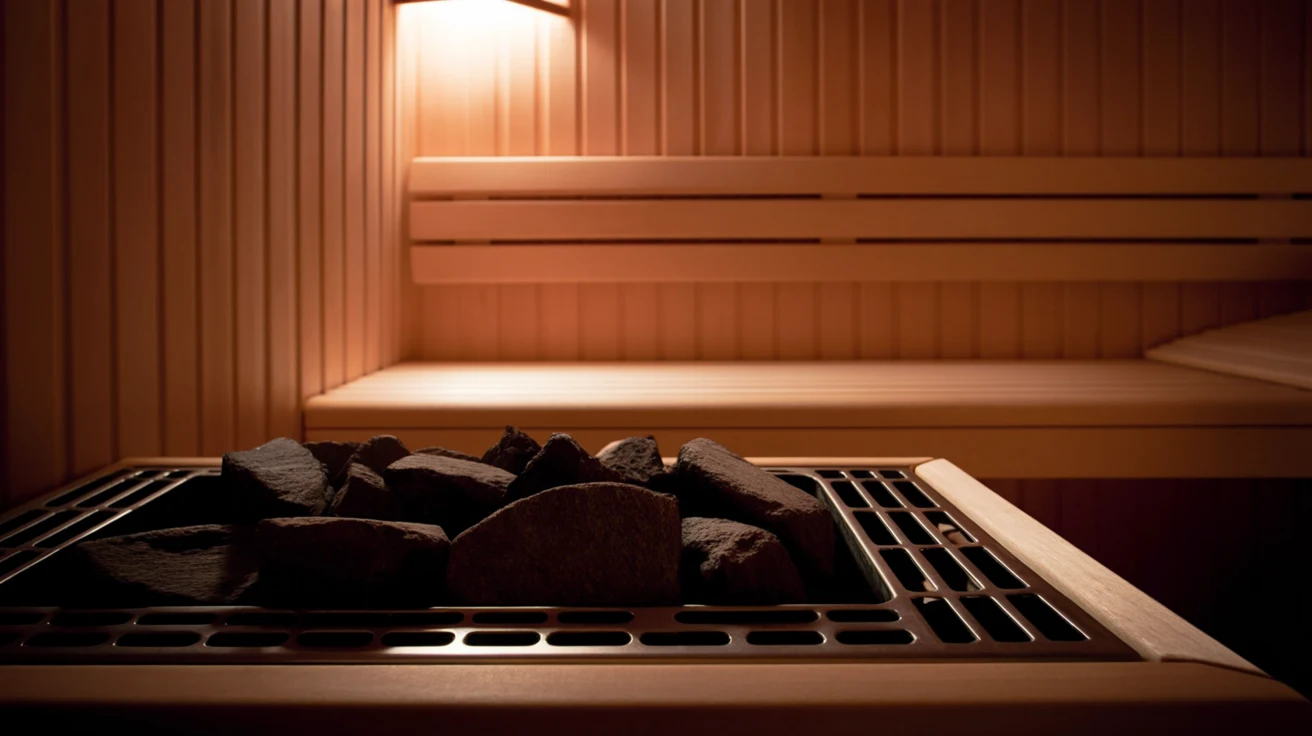
At its core, a sauna is built around a kiuas – a stone stove, either wood-burning or electric, loaded with rocks. You heat those stones until the room reaches 80–100°C, then throw water on them. The resulting steam is löyly, and it’s what separates a sauna from a hot room. Löyly isn’t just steam in the physical sense – the Finnish word carries connotations of spirit, atmosphere, the feeling of the heat enveloping you. It’s the soul of the experience.
Finland has 3.3 million saunas for 5.5 million people. They’re in homes, apartment buildings, corporate headquarters, the Parliament House, and even 1,400 meters underground in the Pyhäsalmi Mine. Finnish sauna culture was inscribed on UNESCO’s Representative List of the Intangible Cultural Heritage of Humanity on 17 December 2020, described as “a sacred space – a church of nature” where “people cleanse their bodies and minds and embrace a sense of inner peace.”
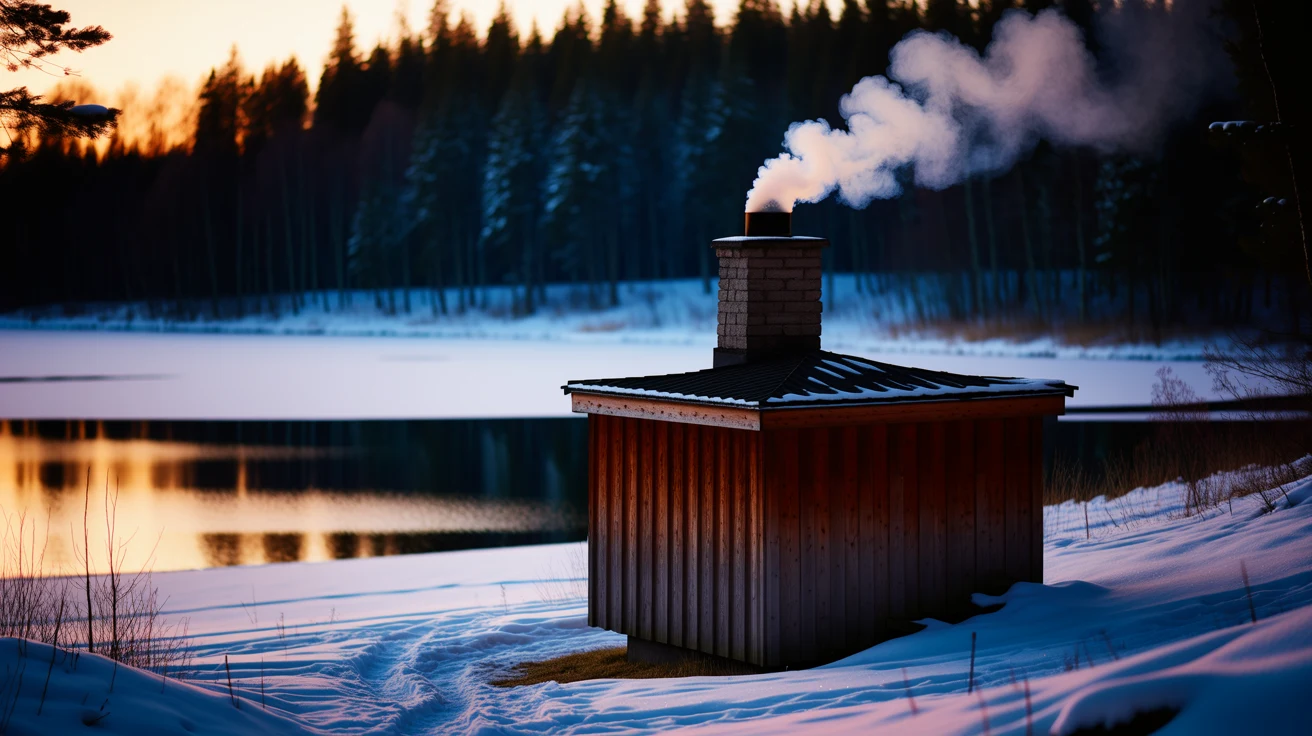
The earliest Finnish saunas date back roughly to 7000 BC – pits dug into slopes that doubled as winter dwellings. The first recognizable type was the savusauna (smoke sauna), heated by burning wood for six to eight hours, then venting the smoke before anyone bathed. Modern saunas are more convenient, but the essential elements haven’t changed: stones, water, steam, heat. Nine thousand years of iteration is enough to know what works. Most product roadmaps would be lucky to claim nine thousand minutes.
How a Sauna Differs from a Steam Room
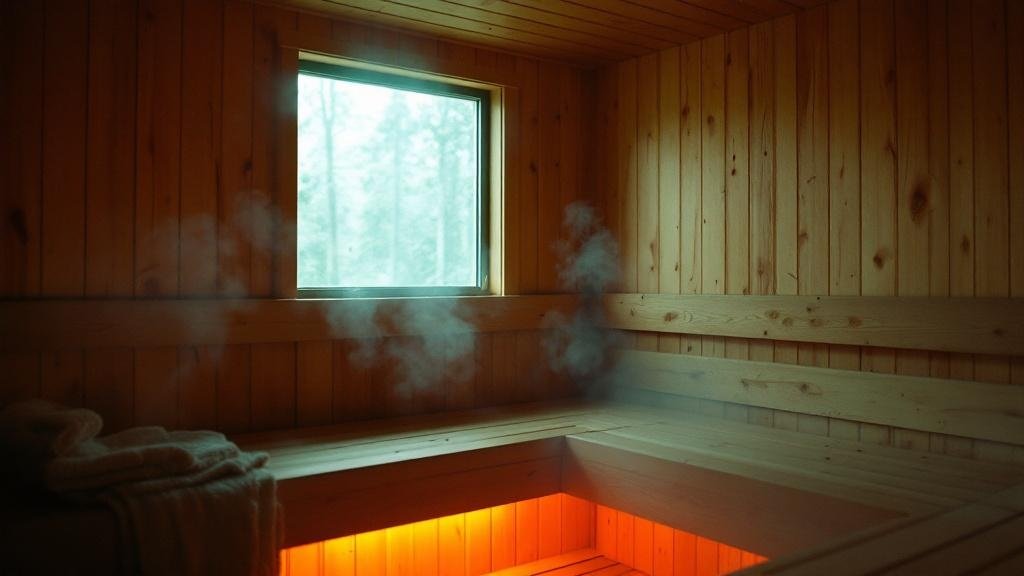
This is the most common point of confusion, and the distinction is : humidity. A sauna uses dry heat at high temperatures. A steam room uses wet heat at much lower temperatures. They feel intense in different ways, but the mechanisms are fundamentally different.
| Traditional Sauna | Steam Room | |
|---|---|---|
| Temperature | 80–100°C (176–212°F) | 40–50°C (104–122°F) |
| Humidity | 5–30% | ~100% |
| Heat source | Stone stove (kiuas) radiating heat into air | Steam generator dispersing water vapor |
| Materials | Wood (cedar, aspen, spruce) | Tile, glass, stone (non-porous) |
| Can you see clearly? | Yes | Often not – thick visible steam |
A steam room at 45°C can feel as punishing as a sauna at 85°C because saturated air prevents your sweat from evaporating. Your body’s primary cooling mechanism is disabled, so your core temperature rises faster even though the air is much cooler. In a sauna, the dry air lets sweat evaporate off your skin – that’s why you can tolerate temperatures that would scald you in water or steam.
The cultural traditions differ too. The steam room traces its lineage to the Roman thermae and the hammam (Turkish bath), which features progressively hotter rooms and staff-assisted scrubbing with running water. The Finnish sauna is self-directed – you control the heat, you throw the löyly, you step outside to cool down on your own terms.
How a Sauna Differs from an Infrared Cabin
An infrared cabin uses panels that emit infrared light, which is absorbed directly by your skin. The air doesn’t get particularly hot – typically 50–65°C (122–149°F) – because the panels are heating you, not the room. There are no stones. There’s no kiuas. There’s no water to throw, and therefore no löyly.
| Traditional Sauna | Infrared Cabin | |
|---|---|---|
| Temperature | 80–100°C (176–212°F) | 50–65°C (122–149°F) |
| Humidity | 5–30% (with löyly bursts) | Ambient (no steam capability) |
| Heat mechanism | Convection – hot air heats body | Radiation – infrared light heats skin directly |
| Produces löyly? | Yes | No |
| Has kiuas (stone stove)? | Yes | No |
The “is infrared a real sauna?” debate is genuinely interesting because even the authorities disagree. The Finnish Sauna Society flatly states that infrared is not a sauna – no kiuas, no löyly, no sauna. But UNESCO’s 2020 inscription listed sauna forms as “electric, wood-heated, smoke and infra-red” with “no hierarchy among them.” So you have the culture’s self-appointed guardians on one side and a UN body on the other.
Here’s the practical reality: if you’ve experienced 90°C with fresh löyly from a stone stove and then sat in a 55°C infrared cabin, you already know these are not the same thing. They both make you sweat. They may both have health benefits. But the experience, the sensation, the ritual – it’s like comparing a campfire to a space heater. Both produce heat. That’s roughly where the similarities end.
How a Sauna Differs from a Hot Tub
This one seems obvious – one is air, the other is water – but the thermal physics are worth understanding. Water transfers heat approximately 25 times more efficiently than air. That’s why a hot tub at 38°C (100°F) can feel as thermally stressful as a sauna at 85°C, even though the temperature numbers aren’t even close.
The critical difference for your body: in a sauna, you sweat and that sweat evaporates, cooling you. In a hot tub, your skin is submerged, so sweat can’t evaporate. Your core temperature rises faster in water, which is why hot tub sessions are typically shorter and hot tub temperatures are kept much lower. The sauna tradition also involves deliberate rounds – heat, then cool down (cold plunge, cold shower, outdoor air), then heat again. Hot tub use is typically continuous.
Culturally, they’re not in the same category. The Finnish sauna is a ritual space with thousands of years of tradition, once considered the most important room when building a new dwelling – a place for bathing, giving birth, and curing meats. The hot tub is… recreational.
Why These Distinctions Actually Matter
This isn’t pedantry. Conflating saunas, steam rooms, infrared cabins, and hot tubs causes three real problems.
Different Physiological Effects
Dry heat at 90°C challenges your cardiovascular system differently than humid heat at 45°C or water immersion at 38°C. Your body’s thermoregulatory response works well in dry sauna heat, is impaired in steam rooms (humidity blocks sweat evaporation), and is essentially disabled in hot tubs (skin is submerged). Infrared at lower temperatures produces sweating with less cardiovascular strain. Research suggests these different exposures may have different health outcomes – lumping them together under “sauna” muddies the science.
Mismatched Expectations
Someone who reads about Finnish sauna culture and then books an infrared cabin expecting löyly, birch vihta (bundles of birch branches used to gently slap the skin), and intense 90°C heat will be disappointed. Someone seeking gentle infrared therapy who walks into a properly heated Finnish sauna may be genuinely overwhelmed. The word matters because people make decisions based on it.
Cultural Erasure
When “sauna” means any heated enclosure, the specific cultural practices recognized by UNESCO – the ritual of löyly, the tradition of heating and cooling rounds, the communal silence, the near-sacred status in Finnish life – get diluted into generic “wellness.” Finland didn’t get 3.3 million saunas by accident. There’s meaning in the specificity.
The Broad Definition vs. the Real One
Language evolves, and “sauna” has clearly expanded in English to encompass heated enclosures that wouldn’t qualify under the Finnish definition. That’s how language works – you can fight it, but you’ll lose. The Mayo Clinic uses “infrared sauna” without quotation marks. Most dictionaries define sauna broadly. The ship has sailed in casual English.
But knowing the original, specific definition is still useful. It tells you what to look for when you want the real experience. It helps you understand why Finnish sauna culture earned UNESCO recognition while “hot wooden room” did not. And it gives you the vocabulary to describe exactly what kind of heat experience you’re after – whether that’s a 95°C Finnish sauna with birch löyly, a 55°C infrared cabin for gentle sweating, or a steam room that’ll have you gasping at 45°C. The sauna glossary defines the terms you will meet along the way.
A sauna, at its heart, is stones and steam and heat. Everything else is a heated room with good marketing.