Sauna Temperature Guide: What’s Normal, What’s Too Hot
Some links on this page are affiliate links. If you buy through them, I earn a small commission at no extra cost to you. As an Amazon Associate I earn from qualifying purchases.
A real Finnish sauna runs at 80-100°C (176-212°F). The sauna at your American gym probably runs at 60-70°C – and that gap is why you walk out of one feeling reset and the other feeling like you sat in a warm closet. Temperature is the first number anyone checks, and most people are checking it against the wrong baseline.
But the thermometer only tells part of the story. The same 80°C feels completely different depending on humidity, where you’re sitting, and whether anyone has thrown water on the stones. Here’s what’s normal, what’s too hot, and how to find the heat that works for you.
The normal Finnish range: 80-100°C
The Finnish standard sits between 80°C and 100°C, with 80-90°C as the sweet spot most experienced bathers settle into. When researchers from the University of Eastern Finland ran their landmark 20-year cohort study linking sauna use to lower cardiovascular mortality, they used roughly 80°C as the typical Finnish sauna temperature. That’s the baseline a culture inscribed on the UNESCO Intangible Cultural Heritage list considers ordinary.
If you’re used to American public saunas, 80°C will feel aggressive at first. That’s not because it’s dangerous – it’s because you’ve been calibrated to something cooler. Give it three or four sessions and the old temperature will start to feel pointless.
Why most US public saunas run too cold
Walk into a gym or hotel sauna in the United States and you’ll often find it set well below the Finnish range. Operators dial the heat down for liability and to accommodate first-timers who’d flee at 90°C. The result is a room warm enough to make you sweat eventually but never hot enough to do what a sauna is supposed to do. How the American version drifted this far from the Finnish one is told in the history of the American sauna.
The bigger problem is that most American public saunas come with a sign forbidding water on the stones. In Finland this is solved by buying a heater rated to take water. In America it’s solved by printing a sign. Without that water, you’re left with dry heat and no way to build intensity – which brings us to the part of the equation the thermometer can’t show you.
Temperature without humidity isn’t real sauna heat
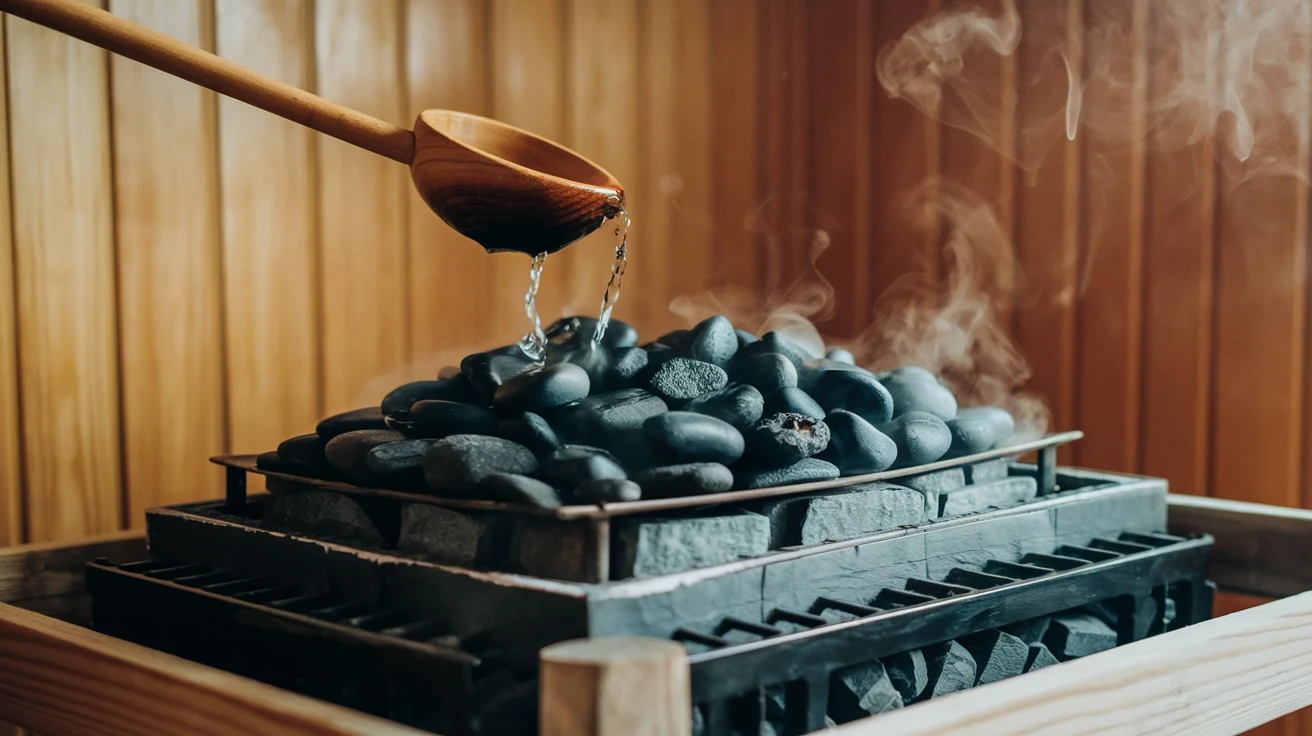
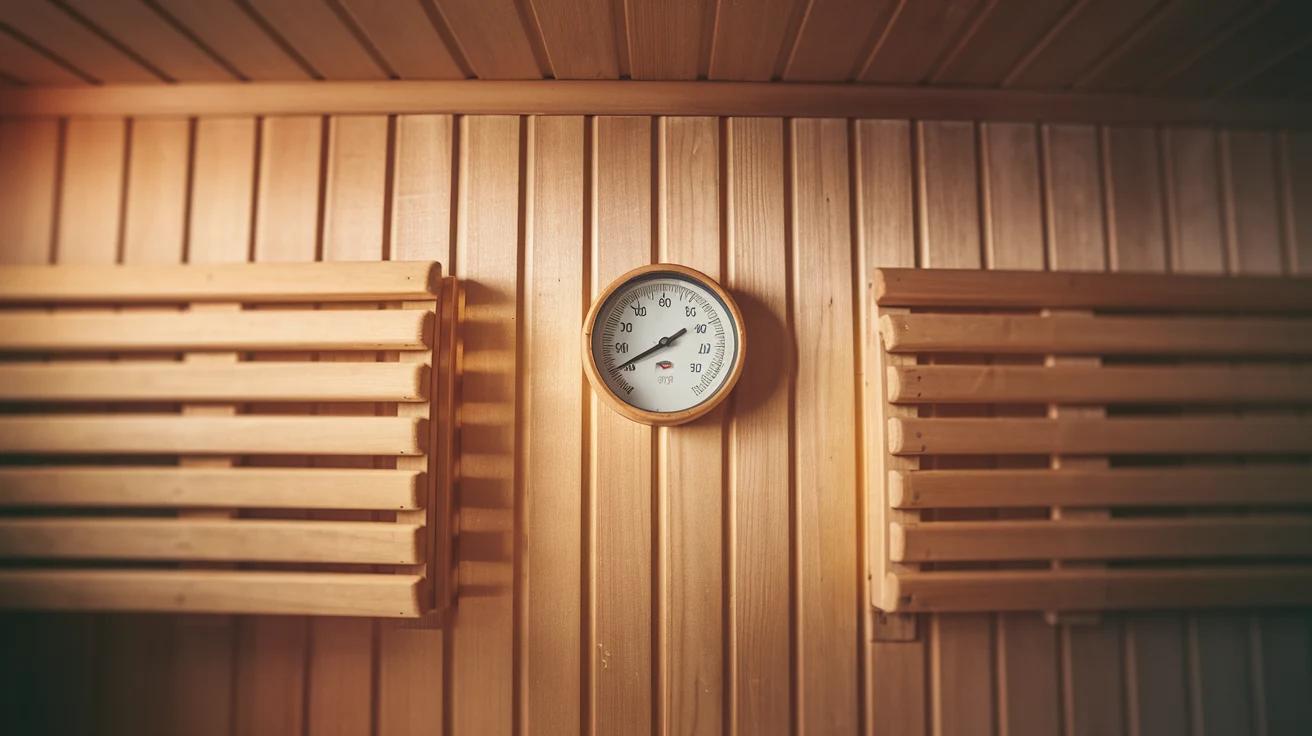
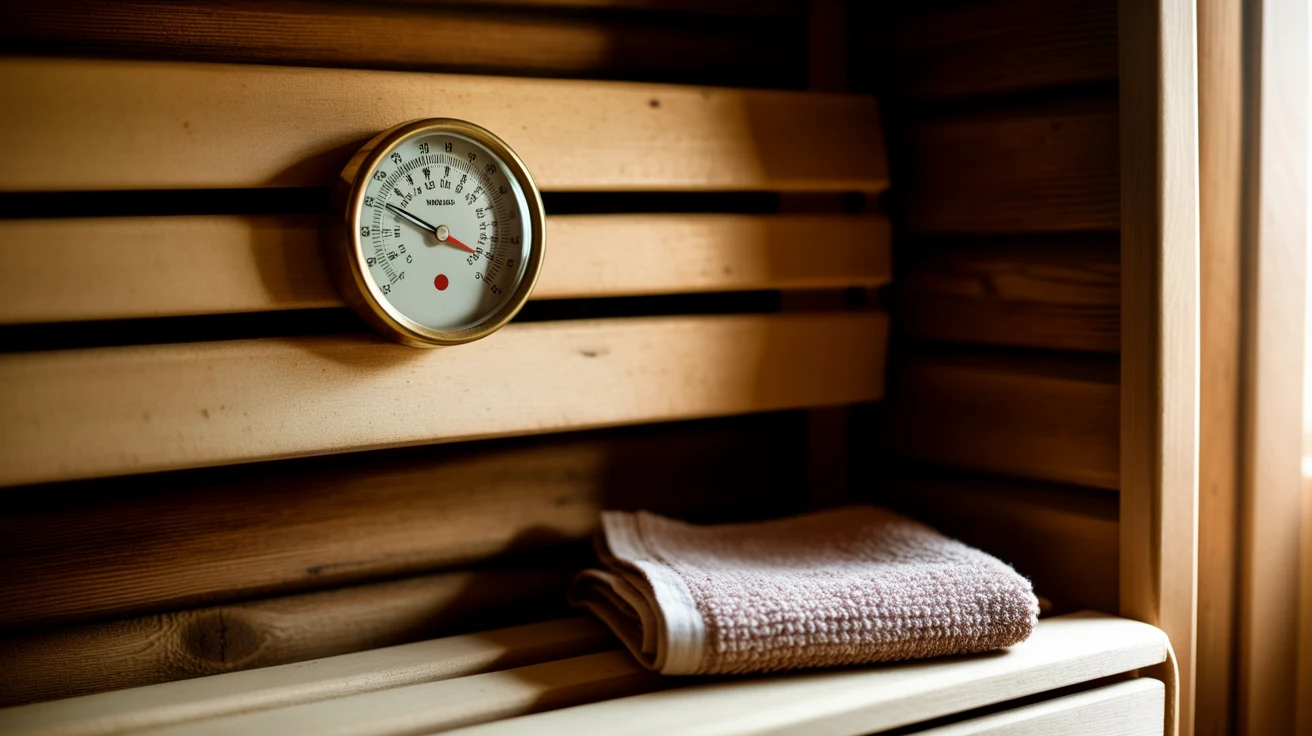
Here’s the thing most temperature guides miss: the number on the wall is only half of what you feel. A dial that reads humidity too, like the Northwood thermometer and hygrometer, shows you both halves. When you ladle water onto hot stones, you get löyly – the burst of steam and the wave of heat that comes with it – and the air suddenly feels far hotter even though the thermometer barely moves.
The mechanism is simple. Humid air stops your sweat from evaporating efficiently, so your body loses its main cooling trick and the heat lands harder. A dry 90°C room and a 90°C room after a few ladles of water are not the same experience. This is why two saunas at identical temperatures can feel 20 degrees apart, and why dry heat alone never quite satisfies people who’ve felt the steam version.
A sauna that can’t take water on the stones is, by Finnish standards, not finished. It’s a hot room with good intentions.
Top bench versus lower bench
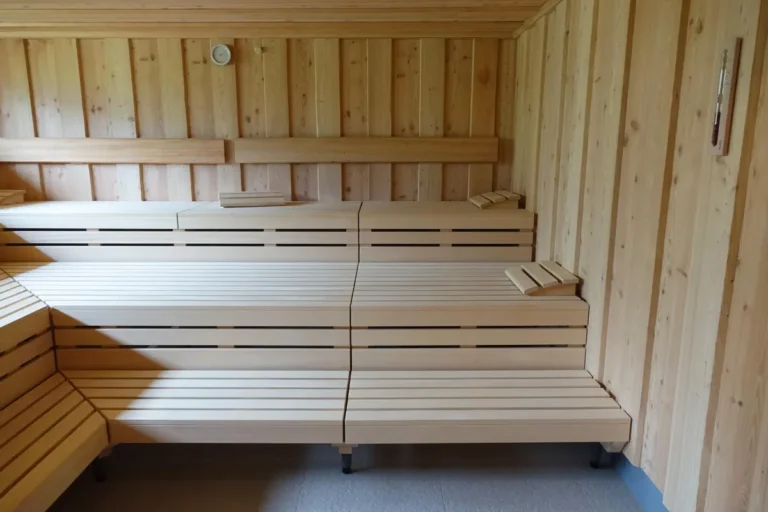
Hot air rises, which means a sauna is not one temperature – it’s a stack of them. The top bench, near the ceiling, can run roughly 20°C hotter than the floor. Two people in the same room can be having completely different experiences depending on which level they chose.
| Position | Relative heat | Best for |
|---|---|---|
| Top bench | Hottest – up to ~20°C above floor | Experienced bathers, full intensity |
| Lower bench | Noticeably milder | Beginners, longer sits, cooling down |
| Floor level | Coolest in the room | Children, anyone feeling lightheaded |
This is the easiest dial you have. You don’t need to change the heater setting to get a gentler or fiercer session – you just move down or up a bench. New bathers should start low and climb only when the lower level starts to feel easy.
Where beginners should start
If you’re new to this, aim for 70-80°C (158-176°F). It’s warm enough to sweat properly and build the habit, but forgiving enough that you won’t bail in five minutes. Sit on a lower bench, keep your first rounds short, and pay attention to how your body responds rather than to the clock.
Build up gradually. Most people find their personal sweet spot somewhere in the 80-90°C range within a few weeks, and the early discomfort at “high” temperatures fades faster than they expect. How long you stay matters as much as how hot the room is – there’s a real difference between a 10-minute round and a 20-minute one at the same temperature.
How hot is too hot?
For recreational use, 100°C (212°F) is a sensible upper bound. People go higher, but the returns shrink and the risks climb. The World Sauna Championships in Heinola, Finland, ran competitors at temperatures above 110°C – and were permanently cancelled after a fatality in 2010. That’s the clearest possible argument that hotter is not automatically better.
Heat tolerance is individual. Hydration, alcohol, medications, and cardiovascular conditions all change where your safe limit sits, and research on health benefits consistently studies ordinary Finnish temperatures, not extreme ones. There’s no benefit waiting at 110°C that you can’t get at 85°C with good steam. Push the temperature for bragging rights if you want, but the actual sauna lives in the normal range.
FAQ
What is the ideal sauna temperature?
For a traditional sauna, 80-90°C (176-194°F) is the sweet spot most experienced bathers prefer, within an overall Finnish range of 80-100°C. Beginners should start cooler, around 70-80°C, and work up. The “ideal” also depends on humidity – a humid 80°C feels considerably hotter than a dry one.
Is 200 degrees Fahrenheit too hot for a sauna?
No. 200°F is about 93°C, which sits comfortably within the normal Finnish range of 80-100°C. It’s on the warmer end and may feel intense to beginners, but it’s a standard temperature for experienced bathers, especially on the top bench.
Why is my sauna only reaching 150°F?
150°F is about 66°C, below the traditional Finnish range. Common causes are an underpowered heater for the room size, poor insulation or a vapor barrier issue, excessive ventilation, or simply not enough warm-up time. Many US public saunas are also deliberately set this low for liability reasons.
Can a sauna be too hot?
Yes. Above 100°C (212°F) the risks rise without meaningful added benefit, and extreme heat can cause dehydration, dizziness, or worse. The World Sauna Championships, which ran above 110°C, were cancelled after a death in 2010. Stay within the normal range, hydrate, and avoid alcohol before bathing.