Savusauna: The Finnish Smoke Sauna Explained
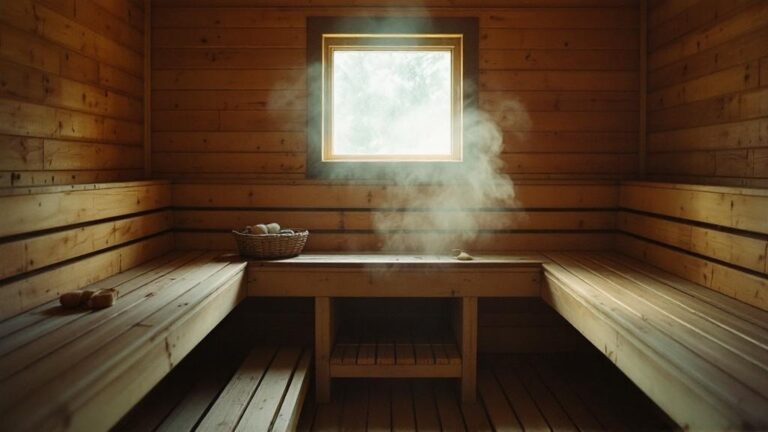
The oldest form of sauna in Finland has no chimney. No thermostat. No timer. A savusauna (smoke sauna) is a single room with a massive stone stove, a fire that burns for hours, and smoke that blackens every surface before being aired out – leaving behind a heat so soft and an aroma so distinctive that a significant number of Finnish sauna enthusiasts consider it the only experience worthy of the word “sauna.”
Building and heating a savusauna is spectacularly impractical by modern standards. It takes 50–100 kg of firewood and 4–8 hours of tending a fire just to get one session. The fact that it survived at all – and that people are now actively reviving it – tells you something about what gets lost when you optimize sauna for convenience.
What a Savusauna Actually Is
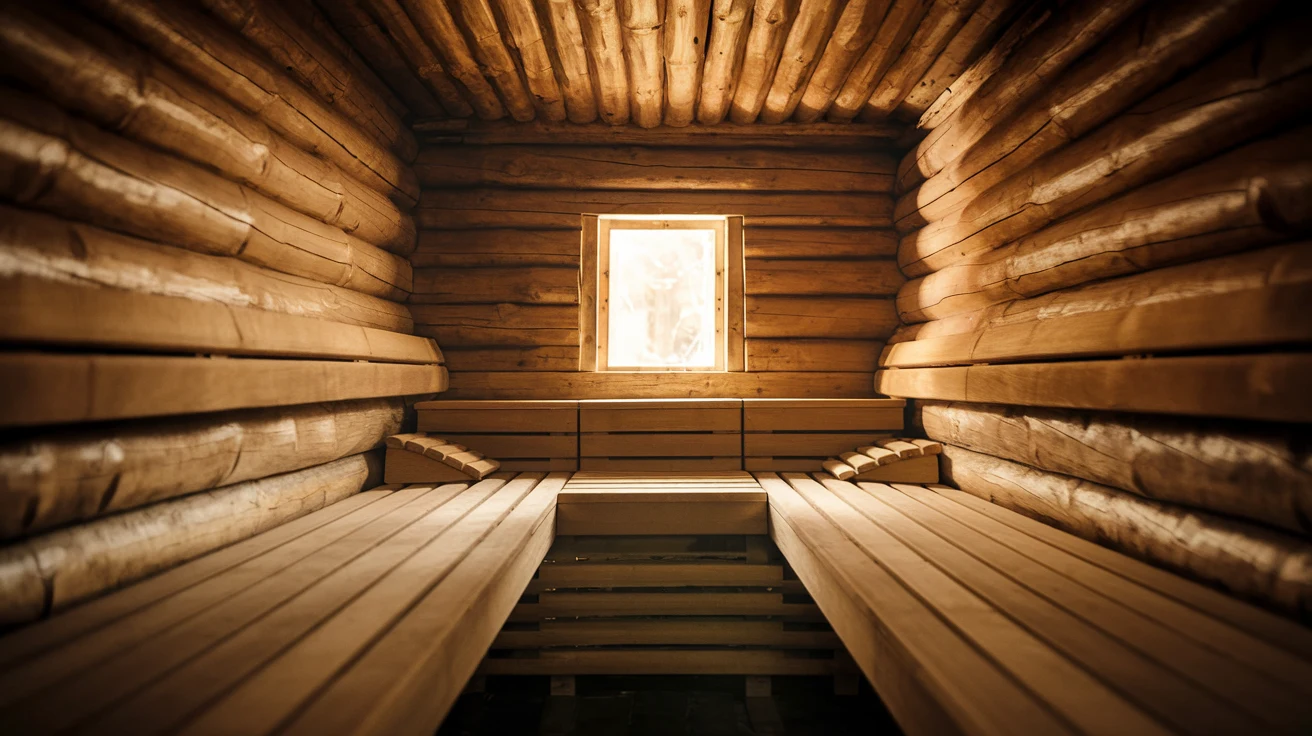
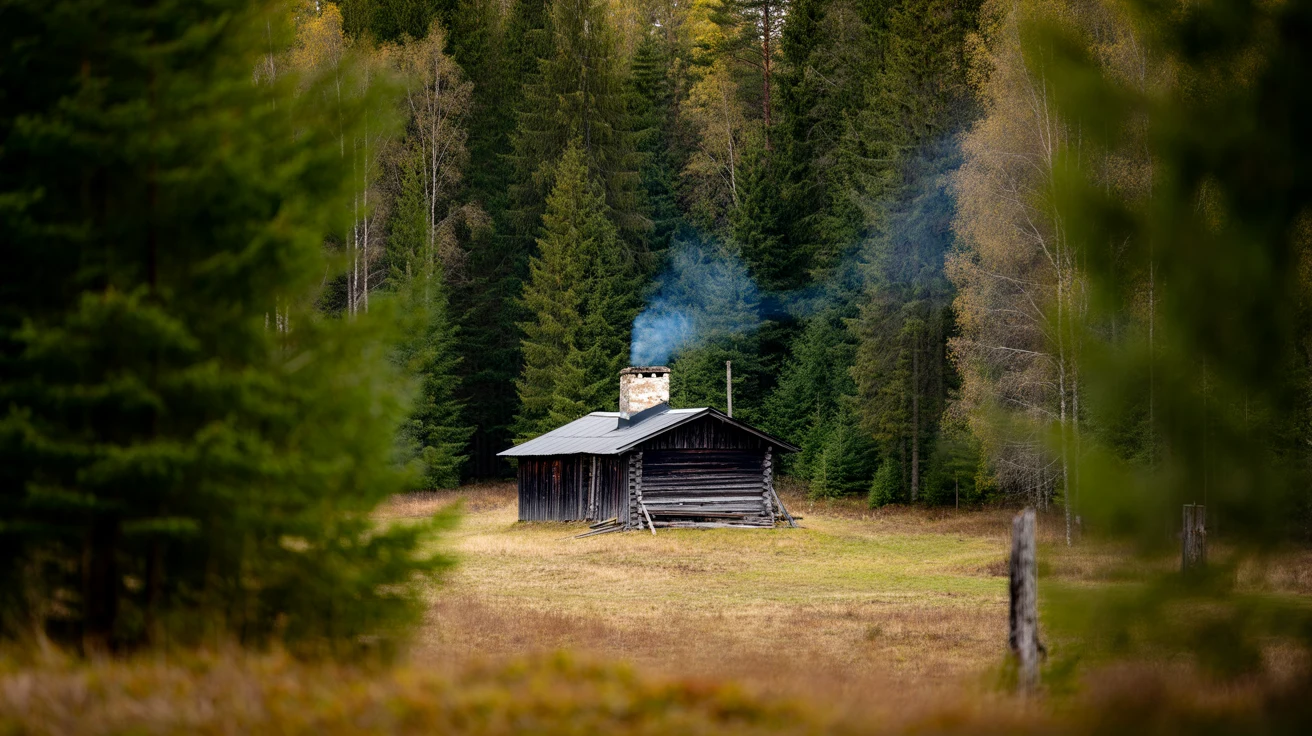
A savusauna is a log-built sauna room with a large stone stove (kiuas, the sauna heater) but no chimney and no flue. When you light the fire, smoke fills the entire room. It passes through and around the stones, heating them slowly over hours. The smoke exits through a small vent in the wall or ceiling, or simply through gaps in the logs, but most of it stays inside – coating the walls, ceiling, and benches in a layer of soot and tar.
Once the stones are fully heated and the fire has burned down to embers, you open the door and vent to clear the remaining smoke. This airing stage is critical. After 30–60 minutes, the room is smoke-free but holds an enormous thermal mass in those stones. The heat radiates evenly from every direction – walls, ceiling, stones – because the smoke has heated the entire structure, not just the air around a heater. You throw water on the stones for löyly (the burst of steam that defines Finnish sauna), and the steam quality is unlike anything an electric or even a conventional wood-fired kiuas produces.
The Heating Process
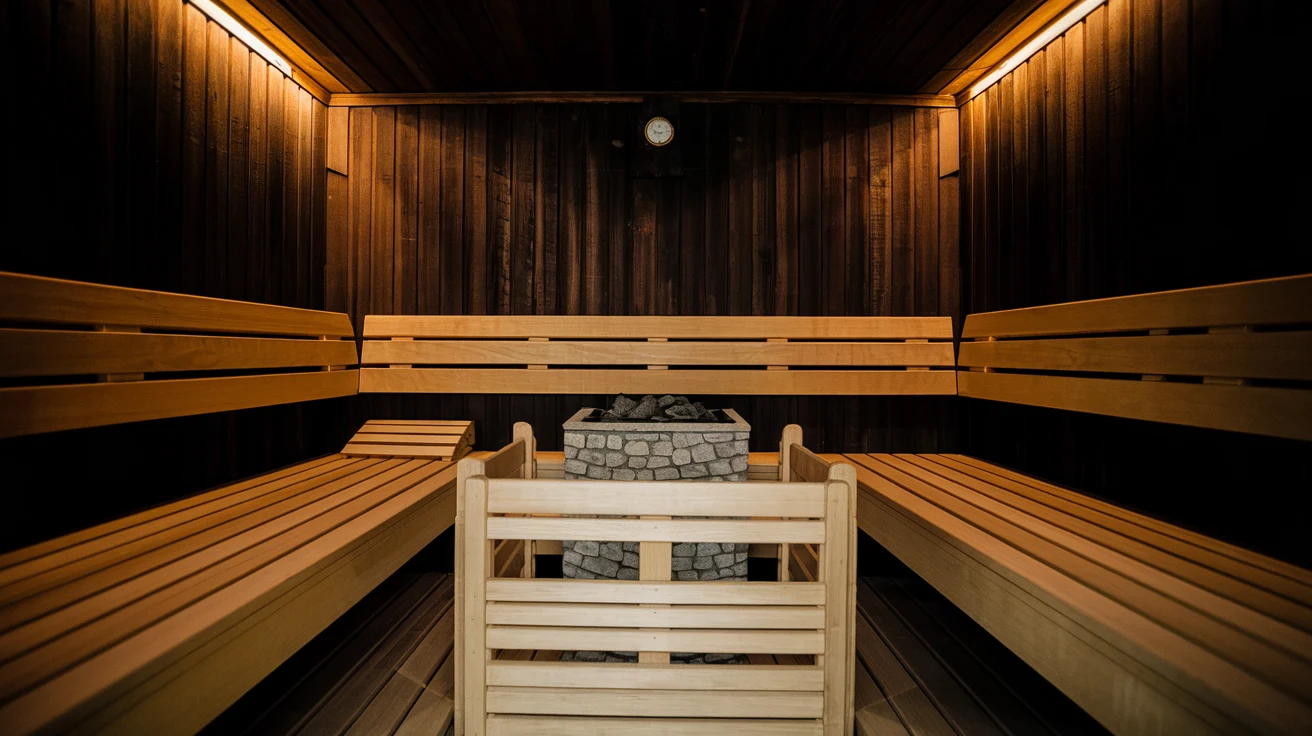
Heating a savusauna is a half-day commitment. You’re not “turning on the sauna” – you’re managing a controlled fire inside a sealed room for 4–8 hours, depending on the size of the stove, the mass of stones, outside temperature, and how patient you are. A typical session burns through 50–100 kg of firewood, most of it birch.
The fire is built directly inside the stone mass or in a firebox beneath it. You feed it continuously, keeping the flames high enough to drive heat deep into the stones. The room fills with dense smoke. Visibility drops to almost nothing. Someone has to check the fire periodically – opening the door carefully, adding wood, adjusting airflow – while being blasted with smoke and heat. It’s physical labor, and the person tending the fire earns their first turn on the bench.
When the stones have absorbed enough heat (a skilled tender judges this by touch, color, and experience rather than a thermometer), you let the fire die completely. Every ember must be out. Then you open the door and vent, clear any remaining ash, and wait for the smoke to dissipate. The bench surfaces get wiped clean of soot – a task traditionally done with a wet birch vasta (the birch whisk used for gentle beating during sauna, also called vihta in western Finland). Only then do you bathe.
The thermal mass in those stones holds heat for hours. A well-heated savusauna stays at bathing temperature (70–80°C) for an entire evening – enough for a large family or group to cycle through multiple rounds without the heat fading.
Why Purists Prefer It
The heat in a savusauna feels fundamentally different from a conventional sauna. In an electric sauna, heat comes from one source – the heater – and radiates outward. The air near the ceiling is hot; the air at floor level is not. In a savusauna, the smoke has heated every surface uniformly. The walls radiate. The ceiling radiates. The stones radiate. You’re enveloped rather than blasted.
People describe the heat as “softer” – not cooler, but gentler at the same temperature. Part of this is the radiant uniformity. Part of it is humidity: the blackened wood walls and the massive stone mass interact with the löyly differently, holding moisture in the air longer. The steam feels denser and hangs lower. You don’t get the sharp bite that a dry electric sauna can deliver at the same reading on the thermometer.
Then there’s the atmosphere. A savusauna is dark. The soot-blackened walls absorb light. Traditionally there’s no electric lighting – maybe a candle or the ambient glow from cracks in the logs. You sit in near-darkness, surrounded by the smell of birch smoke and hot stone. It’s about as far from a bright, tiled gym sauna as you can get. The Finnish concept of saunarauha (the peace of the sauna – an unspoken agreement to leave the outside world at the door) comes more naturally in a room that looks and feels like it belongs to a different century.
Why the Savusauna Nearly Disappeared
For most of Finnish sauna history, all saunas were smoke saunas. The chimneyed kiuas didn’t become common until the late 1800s, and electric heaters arrived in the mid-20th century. Once Finns had the option of a sauna that heated in 30 minutes instead of six hours, required no fire-tending, and didn’t occasionally burn down, the savusauna became a relic.
Fire risk was the practical killer. A savusauna involves an open fire in a wooden room with no chimney, tended for hours. Sparks land on dry timber. Insurance companies took notice. Municipal building codes tightened. By the mid-20th century, building a new savusauna was difficult in most urban and suburban areas, and the ones that remained were aging structures on rural properties.
The shift to apartments accelerated the decline. Finland urbanized rapidly after World War II, and apartment buildings installed electric saunas in basements or individual units. A generation grew up thinking sauna meant a small tiled room with an electric heater. The savusauna became something your grandparents had at their summer cottage – if the building was still standing.
The Revival
The savusauna is coming back, driven by the same impulse that keeps people baking sourdough when sliced bread exists: the slow version produces something the fast version cannot. The Finnish Sauna Society has been instrumental in documenting and promoting the tradition, maintaining their own savusauna on the island of Lauttasaari in Helsinki.
New builds are appearing on private properties across Finland, particularly in the lake districts of eastern Finland and Lapland. Some are faithful replicas of traditional designs – hand-hewn logs, earthen floors, stone stoves built from local fieldstone. Others incorporate modern fire-safety improvements (concrete-backed stone stoves, fire-resistant roofing materials) while preserving the essential chimney-free, smoke-in-the-room principle.
UNESCO’s 2020 recognition of Finnish sauna culture as intangible cultural heritage explicitly highlighted the savusauna tradition. That international attention gave the revival institutional legitimacy and tourism appeal – though most savusauna devotees would have kept building them regardless of what UNESCO thought.
Where to Experience a Savusauna Today
Authentic savusaunas aren’t on every corner, but they’re findable if you know where to look. In Helsinki, the Finnish Sauna Society’s facility on Lauttasaari island is the benchmark – a genuine smoke sauna maintained to traditional standards. Access is typically through membership or guest invitations, though they periodically open to visitors.
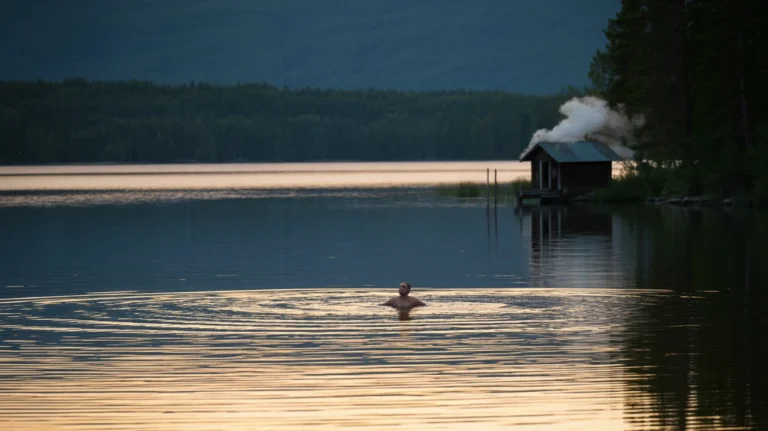
Outside Helsinki, the lake districts of eastern Finland – particularly around Savonlinna, Kuopio, and the broader Saimaa region – have the highest concentration of operating savusaunas, both private and available through rental cottages and tourism operators. Lapland offers several wilderness savusauna experiences paired with lake or river swimming.
Estonia also has a living smoke sauna tradition. The Võro smoke sauna tradition in southern Estonia received its own UNESCO recognition in 2014 and remains actively practiced – worth a side trip if you’re already in Finland.
In North America, authentic savusaunas are rare but not nonexistent. A handful of Finnish-heritage communities in Minnesota and Michigan’s Upper Peninsula maintain them. The North American Sauna Society tracks events and locations. Some sauna builders with Finnish roots construct them for private clients, though local building codes can make permitting a challenge.
Safety: Carbon Monoxide Is Not Optional
A savusauna can kill you if you bathe before the smoke has fully cleared. This is not a theoretical risk. Carbon monoxide (CO) is odorless and colorless, and it accumulates in a sealed room with a smoldering fire. The traditional method of judging air quality – if you can see clearly and breathe comfortably, the smoke has cleared – is effective but relies on experience. Modern savusauna operators increasingly use CO detectors as a backup.
The rules are non-negotiable: never enter a savusauna while the fire is still burning. Wait until all embers are fully extinguished. Air the room with the door and vent open until the smoke has visibly cleared. If you smell anything acrid or feel lightheaded after entering, leave immediately and air longer. When in doubt, wait another 30 minutes.
Fire risk is the other serious concern. You’re maintaining an open fire in a wooden building for hours. Keep water nearby – not just for löyly, but for emergencies. Clear combustible materials from the area around the building. Never leave a firing savusauna unattended. These are the same precautions that kept smoke saunas operational for centuries, and they haven’t changed because they don’t need to.
Can You Build One at Home?
Technically, yes. Practically, it depends on where you live, how much land you have, and how much your local building department knows about chimneyless wood-fired structures (likely nothing, which means a long permitting conversation). A savusauna should be a separate outbuilding, well away from other structures – 15 meters minimum from your house is a reasonable starting point.
The construction itself is by sauna standards: a log or heavy-timber room with thick walls, a massive stone stove, a small vent, a sturdy door, and benches. No electrical work. No plumbing required. The complexity is in the stone stove design – the stone mass needs to be large enough to hold heat for hours, the firebox needs proper airflow, and the arrangement needs to direct smoke across the ceiling rather than pooling at bench level.
For most people outside rural Finland, the closest practical equivalent is a wood-fired outdoor sauna with a chimneyed kiuas. You get real fire, real wood heat, real löyly – everything except the smoke. It’s a meaningful compromise: 90% of the experience with 10% of the fire risk and permitting headaches.
FAQ
What does savusauna mean?
Savusauna translates directly from Finnish as “smoke sauna.” It refers to the original Finnish sauna design: a room with a large stone stove but no chimney, where smoke fills the space during heating and is aired out before bathing. The word is used interchangeably with “Finnish smoke sauna” in English.
How long does it take to heat a savusauna?
A savusauna takes 4–8 hours to heat, depending on the size of the stone mass, the volume of the room, and outside temperature. A typical session burns through 50–100 kg of firewood. After the fire dies, you need an additional 30–60 minutes to air the smoke out before bathing.
Is a savusauna dangerous?
The primary risk is carbon monoxide poisoning if you enter before the smoke has fully cleared and all embers are extinguished. With proper airing and an experienced operator, the risk is managed effectively – Finns have been bathing in smoke saunas safely for centuries. Fire risk also exists during the hours-long heating process and requires vigilant tending.
Where can I try a savusauna?
The best places are in Finland’s eastern lake districts (Saimaa region, around Savonlinna and Kuopio), where rental cottages and tourism operators offer authentic savusauna experiences. In Helsinki, the Finnish Sauna Society maintains a traditional smoke sauna. Southern Estonia also has a living smoke sauna tradition with UNESCO recognition.
What makes savusauna heat different from a regular sauna?
In a savusauna, smoke heats every surface in the room – walls, ceiling, benches, and stones – creating uniform radiant heat from all directions. This feels noticeably softer and more enveloping than a conventional sauna where heat comes primarily from a single heater. The steam also behaves differently, hanging denser and longer in the smoke-seasoned room.