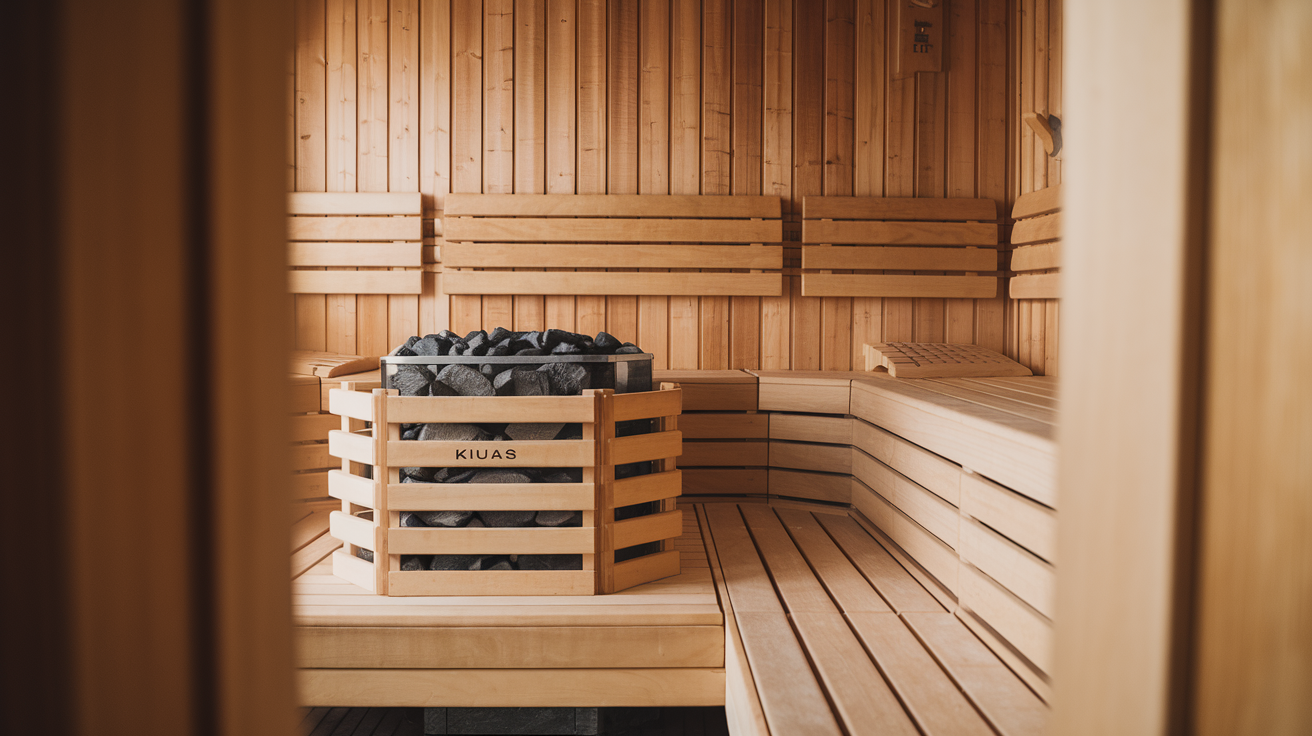
Wet vs Dry Sauna: The Real Difference
The “wet vs dry sauna” debate is one of the most misunderstood topics in the sauna world – mostly because the entire framing is wrong. A real Finnish sauna isn’t wet or dry. It’s both, cycling between the two with every ladle of water thrown on the stones. The distinction only exists because American gym culture created a category called “dry sauna” when they installed heaters that couldn’t handle water.
Once you understand what’s actually happening with humidity, temperature, and steam in a sauna, the wet-vs-dry question answers itself – and you’ll know exactly what to look for in your own setup.
What People Mean by “Dry Sauna” and “Wet Sauna”
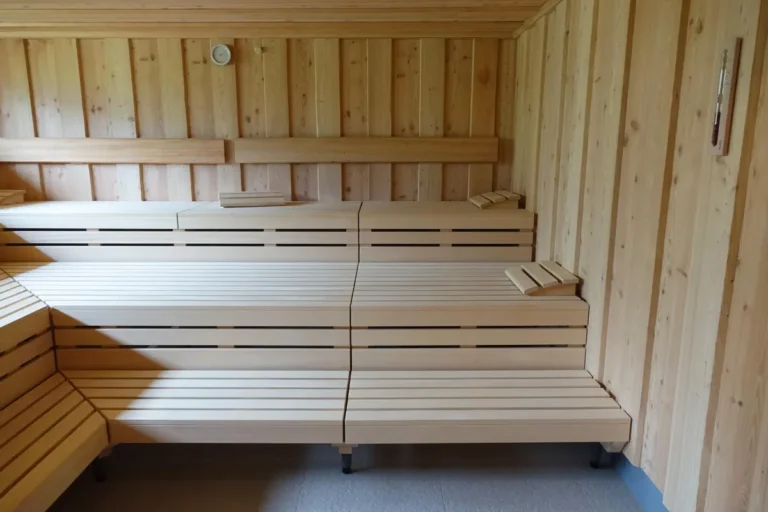
When most people say “dry sauna,” they mean a hot room with low humidity – typically 5–15% relative humidity. The air is hot (often 80–100°C / 176–212°F), but there’s little moisture in it. Sweat evaporates quickly off your skin, which is why some people find dry heat more tolerable even at high temperatures. In practice, a “dry sauna” usually means one where nobody is throwing water on the stones – either because the heater can’t handle it, or because the house rules say not to.
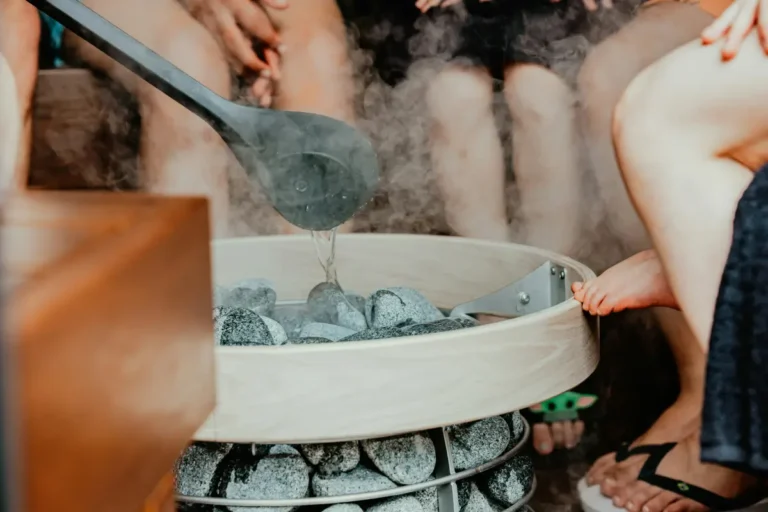
A “wet sauna” refers to the same type of heated room, but with water being thrown on the stones to create bursts of steam. This is löyly (pronounced roughly “LOW-lu”) – the wave of humid heat that hits your skin when water vaporizes off hot sauna stones. After a good löyly throw, humidity can spike to 30–60% briefly before settling back down. The air temperature may actually drop slightly as the water absorbs some heat from the stones, but the perceived heat on your skin increases dramatically.
The Finnish Sauna Isn’t “Wet” or “Dry” – It Pulses
Here’s where the common framing breaks down entirely. In Finland, a sauna session isn’t set to one humidity level like a thermostat. You throw water on the stones, löyly fills the room, you endure the wave of heat, it dissipates, the room dries out somewhat, and then someone throws more water. This cycle repeats throughout the session – pulses of intense humid heat alternating with drier periods of recovery.
The Finnish Sauna Society describes the heater’s job as both heating the room and turning water into steam. Löyly isn’t an add-on or a “wet mode.” It’s a fundamental part of how a sauna works. Calling a Finnish sauna either “wet” or “dry” is like calling a conversation either “talking” or “listening” – it’s both, in rhythm.
This is what makes sauna bathing dynamic rather than static. You control the intensity. Want more heat? Throw water. Want to back off? Wait. The contrast between löyly waves and dry recovery periods is a huge part of what makes sauna bathing enjoyable – and what separates it from just sitting in a hot room.
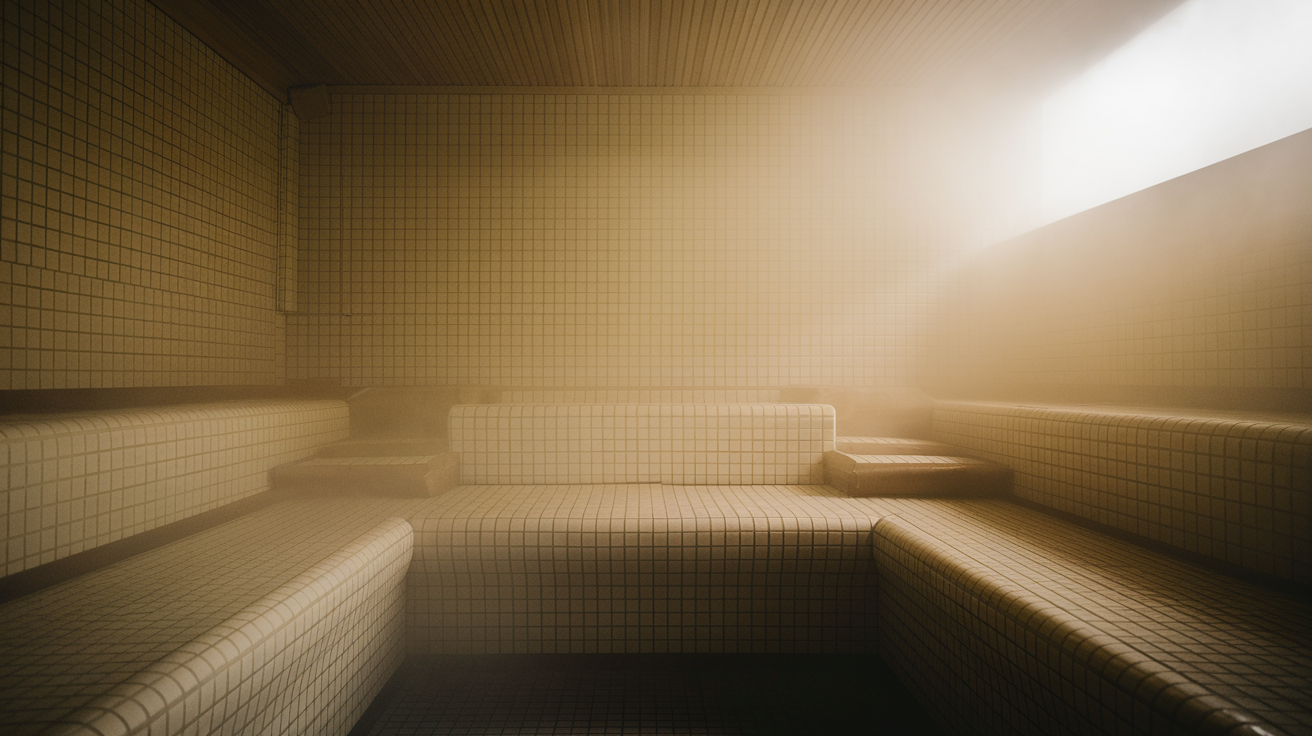
A Steam Room Is Not a “Wet Sauna”
This confusion comes up constantly, so let’s be clear: a steam room and a wet sauna are completely different environments. A steam room uses a separate steam generator to pump continuous steam into a tiled room, maintaining close to 100% humidity at relatively low temperatures – typically 40–50°C (104–122°F). You can barely see across the room. The walls are tile or stone, not wood.
A sauna with löyly operates at 80–100°C with brief humidity spikes of 30–60% that dissipate within minutes. The room is wood-lined (wood doesn’t burn your skin at high temperatures the way tile would). The steam comes from water hitting stones, not from a machine. The heat is radiant and convective, not just a cloud of moisture.
| Feature | Dry Sauna | Sauna with Löyly (“Wet”) | Steam Room |
|---|---|---|---|
| Temperature | 80–100°C (176–212°F) | 80–100°C (176–212°F) | 40–50°C (104–122°F) |
| Humidity | 5–15% | Pulses of 30–60%, settling lower | ~100% continuous |
| Steam source | None | Water on hot stones | External steam generator |
| Wall material | Wood | Wood | Tile, stone, or glass |
| Visibility | Clear | Brief haze after löyly | Dense fog |
| Perceived heat | Hot but tolerable | Intensely hot during löyly waves | Warm and heavy |
If someone tells you their gym’s steam room is a “wet sauna,” they’re describing a fundamentally different thing. Both are enjoyable. They’re just not the same experience.
Health Effects: Does Humidity Matter?
The honest answer is that most of the major health research on sauna doesn’t distinguish carefully between wet and dry conditions. The landmark Finnish study published in JAMA Internal Medicine (2015) followed 2,315 men over roughly 20 years and found that frequent sauna bathing – 4–7 sessions per week – was associated with significantly lower risk of fatal cardiovascular disease and all-cause mortality. But Finnish sauna practice inherently involves löyly, so the study population was using what Americans would call a “wet” sauna.
A 2018 review in Mayo Clinic Proceedings summarized broader evidence linking sauna bathing to reduced cardiovascular risk, improved pulmonary function, and potential mental health benefits. Again, these studies primarily involved traditional Finnish sauna use with löyly cycles.
What we do know about the physiological mechanics: according to the Finnish Sauna Society, sauna bathing raises skin temperature to 38–39°C and can push your heart rate up to 130 beats per minute. At room temperature, about 10% of blood pumped by the heart goes to the skin. In the sauna, as blood vessels dilate, as much as 70% may circulate through the skin. That’s a serious cardiovascular workout regardless of humidity level.
Why US Gyms Have “Dry Saunas”
Walk into most American gym saunas and you’ll find a sign: “Do not pour water on the heater.” Sometimes there’s a bucket of water and a ladle anyway – sometimes not. The reason is usually the heater itself. In Finland this problem is solved by buying a proper kiuas — a sauna heater rated to take water. In America it’s solved by printing a sign. The bucket-and-sign combination is the American sauna in miniature: risk management dressed up as optimism.
Many commercial electric heaters installed in US fitness centers aren’t true sauna heaters. They’re lower-cost units with exposed heating elements and insufficient stone mass that can be damaged by water contact. Pouring water on them can short the elements, crack them from thermal shock, or create a safety hazard. Finnish manufacturers like Harvia – which has been making heaters for over 75 years and produces more than 200,000 units annually – specifically design their sauna heaters to handle water on stones. The stone compartment is built to absorb water, vaporize it safely, and distribute steam evenly.
The category “dry sauna” essentially exists in the US because gyms bought the wrong heaters and had to tell everyone not to use water. Over time, people started thinking “dry” was a legitimate type of sauna rather than a compromised version of one.
| Heater Type | Can Handle Löyly? | Notes |
|---|---|---|
| Finnish wood-burning (kiuas) | Yes – designed for it | Large stone mass, built for water contact |
| Finnish electric (e.g., Harvia, Huum) | Yes – designed for it | Stones surround or cover elements; proper drainage |
| Budget commercial electric | Often no | Exposed elements, minimal stone mass, risk of damage |
| Infrared panels | No – no stones | Different technology entirely; no löyly possible |
So Which Should You Choose?
If you’re visiting a gym or spa, you don’t have much choice – you get whatever heater they installed. Enjoy it for what it is. Dry sauna still gives you the heat stress, the cardiovascular response, and the sweating that make sauna bathing beneficial.
If you’re building or buying your own sauna, the answer is : get a heater that handles löyly. You can always run it dry when you want gentler heat, but you can’t add löyly capability to a heater that wasn’t designed for it. The ability to throw water gives you control over your session intensity, and it’s what makes the sauna experience dynamic rather than just sitting in a hot box.
Finnish sauna culture was added to UNESCO’s list of Intangible Cultural Heritage in December 2020 – the first Finnish tradition to receive that recognition. The culture they recognized isn’t “dry sauna” or “wet sauna.” It’s the whole practice: heating the room, throwing löyly, alternating between intense heat and cool-down periods, and doing it all again.