Sauna 101: The Complete Beginner’s Guide
Finland has roughly 3 million saunas for 5.5 million people. That’s one sauna for every two Finns – more saunas than cars. They’re in apartments, corporate headquarters, the Finnish Parliament, and even 1,400 meters underground in Pyhäsalmi Mine. Sauna isn’t a spa day in Finland. It’s closer to brushing your teeth.
If you’re new to sauna, that context matters. Most of what Americans think of as “sauna” – a dry cedar box in the corner of a gym, barely warm enough to break a sweat – isn’t really doing the thing. This guide covers what a real sauna is, how it works, what to expect your first time, and the basics that took Finns a few thousand years to figure out.
What a Sauna Actually Is (And What It Isn’t)
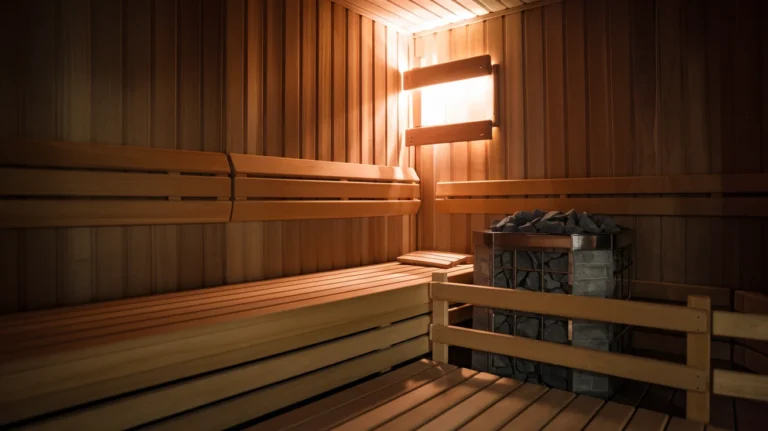
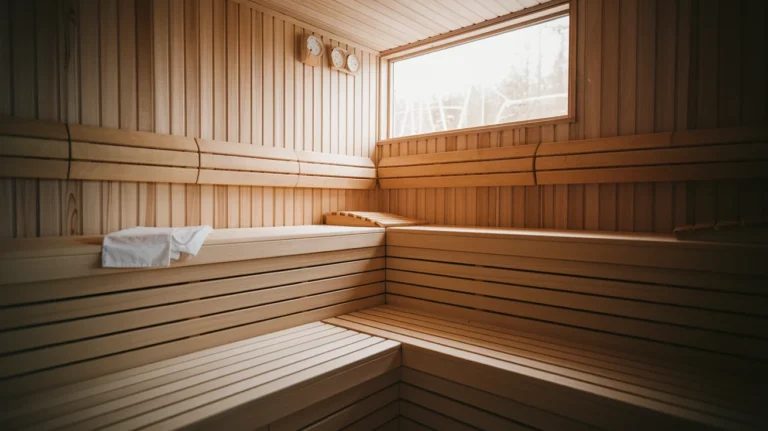
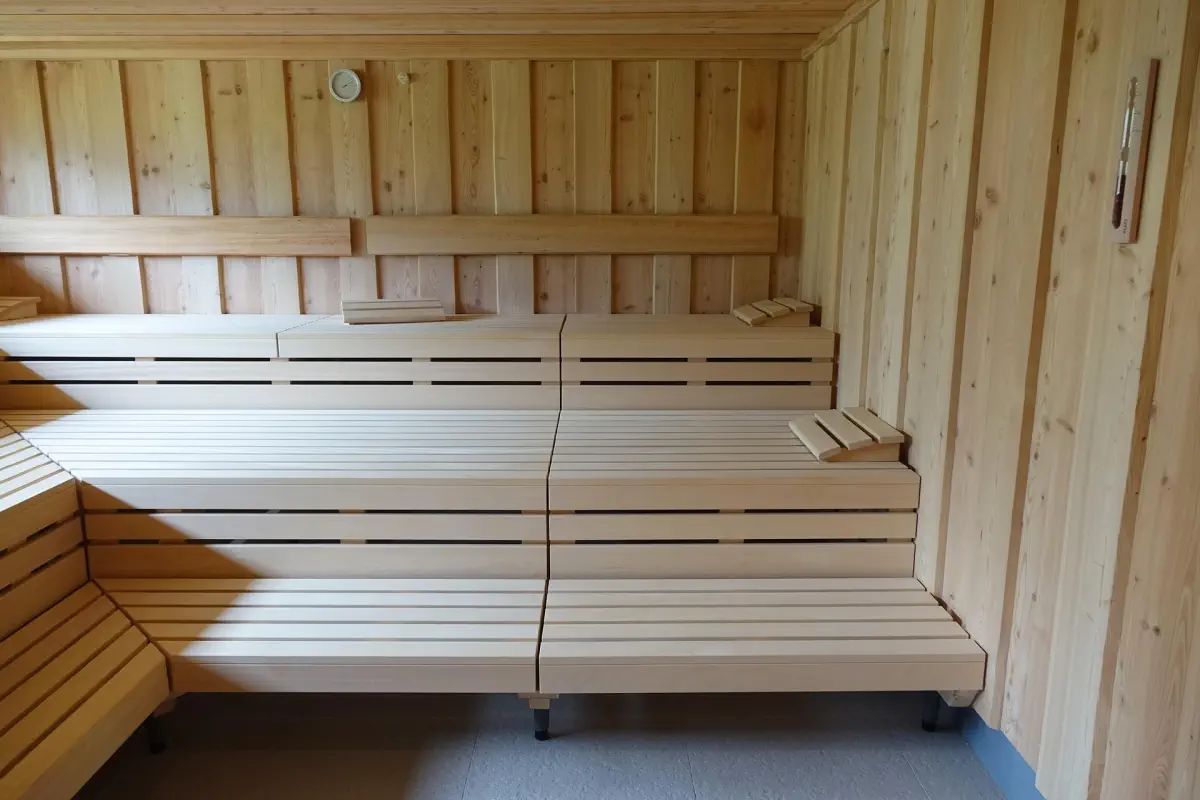
A sauna is a room designed to heat you with hot air and steam produced by throwing water on heated stones. Those stones sit on or inside a heater called a kiuas (kee-oo-as). The room is typically wood-lined, with tiered benches so you can sit higher (hotter) or lower (cooler). Temperatures run between 80–100°C (176–212°F), and the humidity swings wildly depending on how much water hits the stones.
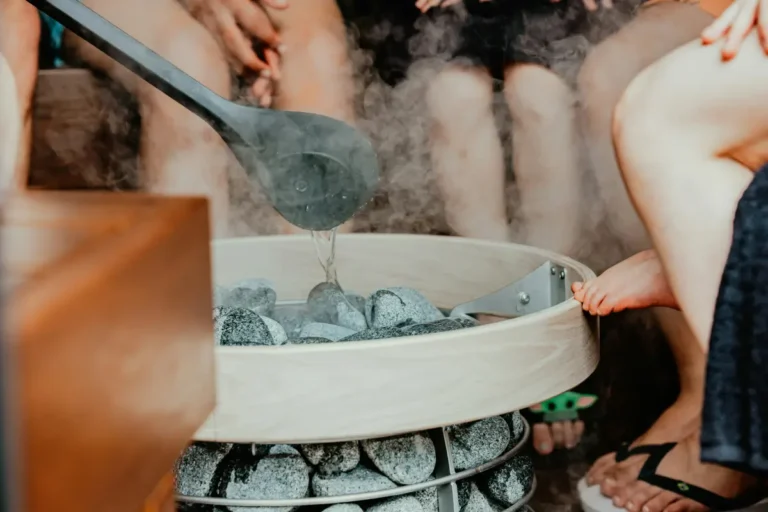
That last part – the water on the stones – is what separates a sauna from everything else. It creates löyly (roughly “luh-loo”), the burst of steam and heat that is the soul of the experience. A sauna without löyly is just a hot room.
People constantly confuse saunas with three other things. They’re all different:
| Feature | Traditional Sauna | Steam Room | Infrared “Sauna” | Hot Tub |
|---|---|---|---|---|
| Temperature | 80–100°C (176–212°F) | 40–49°C (104–120°F) | 45–60°C (113–140°F) | 37–40°C (98–104°F) |
| Humidity | Variable (low → high with löyly) | Near 100% | Very low | N/A (water immersion) |
| Heat source | Heated stones (kiuas) | Steam generator | Infrared light panels | Heated water |
| How it heats you | Convection, conduction, radiant heat, steam | Steam (convection) | Direct radiant infrared light | Water conduction |
| Löyly? | Yes – the whole point | No | No | No |
Steam rooms operate at much lower temperatures but near 100% humidity – think Roman thermae heritage. Infrared cabins heat your skin directly with light panels at far lower temperatures, with no stones and no steam. Finnish sauna organizations don’t consider infrared to be sauna at all. Hot tubs are warm baths. Each has its merits, but they’re fundamentally different experiences. The Finnish definition of what actually counts as a sauna is stricter than most American gyms and spas assume.
A Brief History: From Pits in the Ground to Parliament
The earliest Finnish saunas date back roughly to 7000 BCE – pits dug into hillsides, used primarily as winter dwellings. A fireplace heated stones to high temperatures, and water thrown on those stones produced steam for warmth and hygiene. When Finns moved to a new area, the sauna was the first structure they built. People lived in it, ate in it, gave birth in it, and treated the sick in its near-sterile environment.
The first dedicated sauna type was the savusauna – the smoke sauna. You’d burn a massive wood fire for six to eight hours, let the smoke clear, then bathe in the residual heat stored in the stones and blackened walls. It’s still considered the purest form of sauna by traditionalists.
Finnish sauna culture was inscribed on the UNESCO Intangible Cultural Heritage list in December 2020 – official recognition of something Finns have known for millennia. The word “sauna” itself is Finnish, one of the few Finnish words that’s entered virtually every language on earth.
How a Sauna Actually Heats You
Understanding the physics helps you understand why sauna feels the way it does – and why löyly changes everything.
Four heat transfer mechanisms work together in a traditional sauna:
- Convection: Hot air circulates around your body, transferring heat from the surrounding air mass to your skin. This is the baseline – what you feel the moment you walk in.
- Conduction: Direct contact with heated surfaces. The bench under you, the hot air molecules touching your skin. This is why you sit on a towel – cedar conducts less heat than tile, but it’s still hot.
- Radiant heat: The kiuas and hot surfaces radiate infrared energy toward your body. You can feel this as directional warmth when you sit near the heater.
- Löyly (steam): When water hits the hot stones, it flashes to steam. That steam carries enormous thermal energy – humid air transfers heat to your body far more efficiently than dry air at the same temperature. A 85°C sauna with a good throw of löyly feels drastically hotter than a bone-dry 95°C room.
This is why the wet vs. dry distinction matters so much. A traditional Finnish sauna is neither permanently wet nor permanently dry – it oscillates. You control the humidity by controlling how much water you throw. That control is part of the ritual.
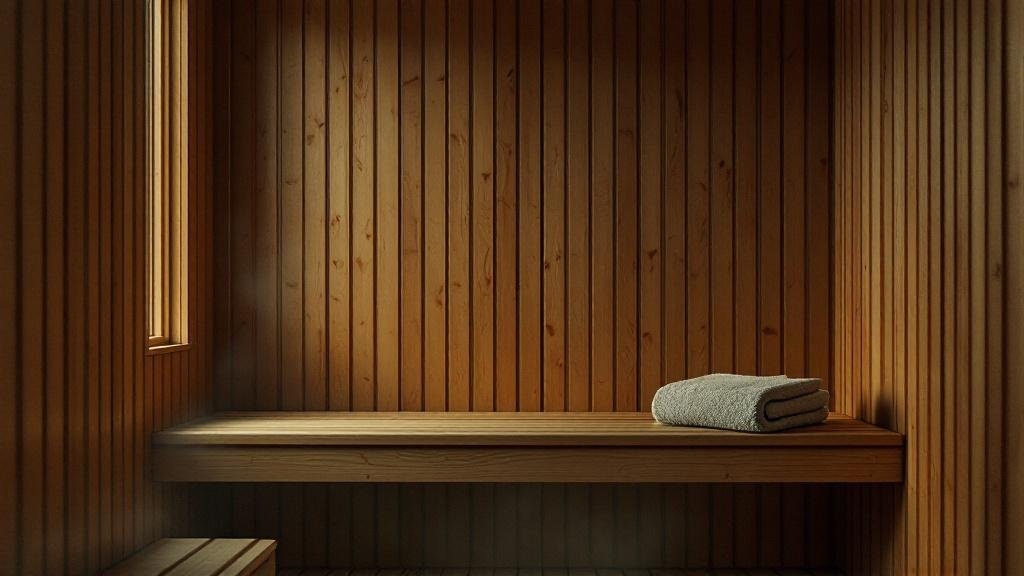
Temperature: How Hot Should It Be?
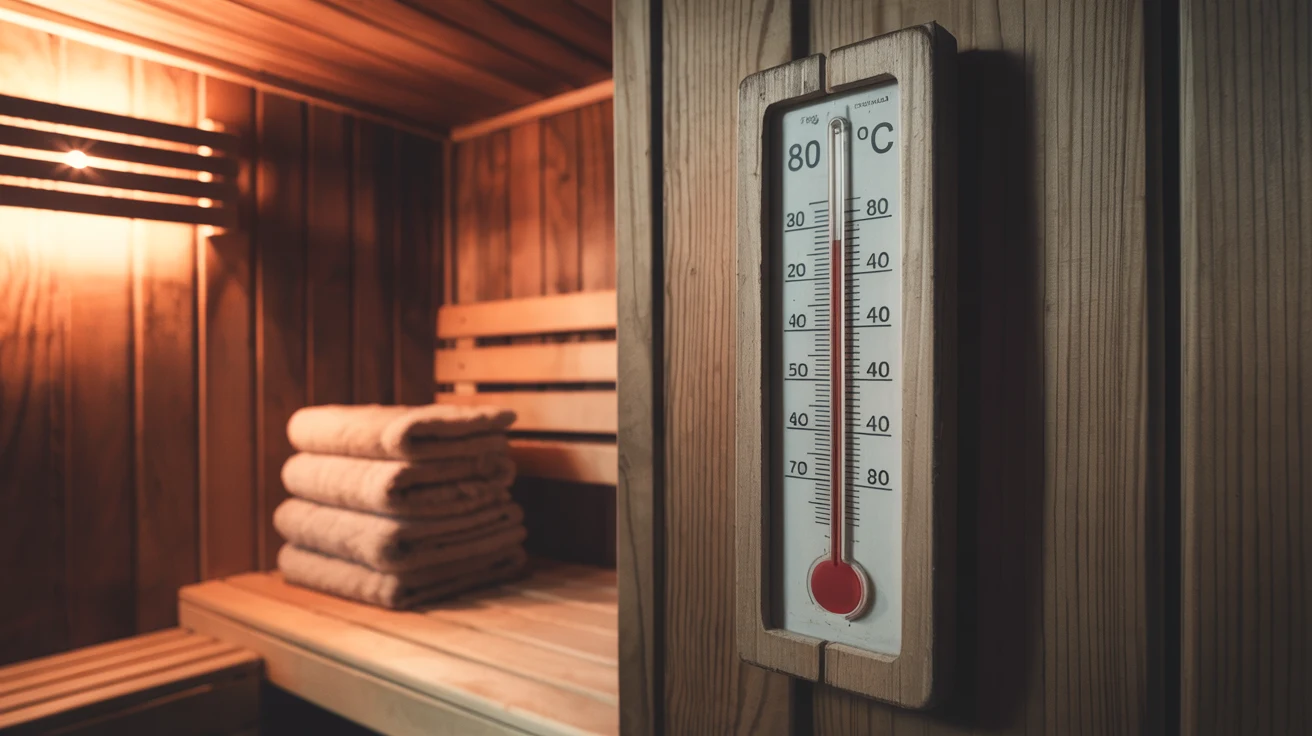
The standard range for a traditional sauna is 80–100°C (176–212°F), measured at head height on the upper bench. Beginners are better off starting at the lower end – 80°C is plenty hot when löyly is involved.
| Level | Temperature | Who It’s For |
|---|---|---|
| Mild | 70–80°C (158–176°F) | Absolute beginners, those with heat sensitivity |
| Standard | 80–90°C (176–194°F) | Most regular sauna users, most sessions |
| Hot | 90–100°C (194–212°F) | Experienced users, traditional Finnish preference |
Temperature is only half the equation. Humidity matters just as much. A dry 90°C feels tolerable; add a ladle of water to the stones and that same 90°C will have you reaching for the door handle. Experienced bathers learn to read the room – literally – and adjust their löyly throws to the heat they want. For the full breakdown of how temperature, humidity, and bench position interact, see our sauna temperature guide.
How Long to Stay In
A typical sauna session runs 15–20 minutes. But that’s not one continuous stretch of endurance – it’s usually broken into two or three rounds with cooling breaks between them.
A traditional Finnish session looks something like this:
- Round 1 (10–15 minutes): Warm up, throw some water on the stones, let your body adjust. Leave when you feel ready – not when you’re struggling.
- Cooling break (5–15 minutes): Cold shower, cold plunge, lake swim, or just sit outside. Drink water.
- Round 2 (10–15 minutes): Go back in. This round usually feels better – your body’s warmed up and the heat feels deeper.
- Optional Round 3: Some people do three rounds, some do two. There’s no correct number.
The total ritual – including cooling and rest – might take 60–90 minutes. It’s not a race. The cooling phases are as important as the heat phases. In Finland, the whole thing has a pace to it, like a conversation with long comfortable pauses.
Cooling Down Between Rounds
The contrast between heat and cold is central to the sauna experience. Finns have perfected this with characteristically direct solutions: jump in a lake, roll in snow, or plunge into an ice hole (avanto). If those aren’t available, a cold shower works perfectly.
The cold isn’t punishment – it’s the counterpoint that makes the next round of heat feel extraordinary. Your blood vessels dilate in the heat and constrict in the cold, and the whole cycle leaves you feeling alert and deeply relaxed at the same time. Yes, those can coexist.
Between rounds, sit or lie down somewhere comfortable. Let your heart rate settle. Drink water. This rest period is part of the practice, not downtime between the “real” parts.
What to Wear
This depends entirely on where you are and who you’re with.
In Finland and most Nordic countries, sauna is traditionally done nude. The Finnish Sauna Society in Helsinki maintains separate days for men and women – a common arrangement in Finnish public saunas. In private home saunas (the vast majority in Finland), families and close friends sauna together without much thought about it.
In the United States, norms are different. Most public saunas expect swimsuits. Some Korean jjimjilbangs and Russian banyas operate nude within gender-separated areas. German saunas are famously clothing-free and mixed-gender – wearing a swimsuit will get you asked to remove it. The country-by-country detail is in what to wear in a sauna.
| Setting | Typical Expectation |
|---|---|
| Finnish private sauna | Nude, sit on a towel |
| Finnish public sauna | Nude, gender-separated times/areas |
| US gym/spa sauna | Swimsuit or towel wrap |
| German public sauna | Nude, mixed-gender (swimsuits prohibited) |
| Korean jjimjilbang | Nude in wet areas (gender-separated), clothed in common areas |
Whatever you wear, always sit on a towel. It’s hygienic, it protects the bench wood, and in some places it’s strictly enforced. If you have the option, skip synthetic fabrics – they trap heat against your skin uncomfortably. Cotton towels or nothing.
Hydration: More Important Than You Think
Plan on drinking at least 500ml (about 16 oz) of water per session. You’ll sweat significantly – a single session can produce substantial fluid loss, and dehydration will make the experience unpleasant fast. Headaches, dizziness, and nausea in a sauna are almost always hydration problems.
Drink water before you go in, between rounds, and after you finish. Not beer – at least not until after the last round. Alcohol and extreme heat are a genuinely dangerous combination, impairing your body’s ability to regulate temperature and your judgment about when to leave.
Who Should Not Sauna
Sauna is safe for most healthy adults, but certain conditions require caution or medical consultation:
- Unstable cardiovascular conditions: If you have uncontrolled blood pressure, recent heart attack, or unstable angina, talk to your doctor first. Stable, well-managed cardiovascular conditions are generally not a contraindication – a large prospective study of 2,315 Finnish men found that more frequent sauna use was associated with reduced cardiovascular mortality risk. But “association” isn’t “prescription,” and individual circumstances vary.
- Pregnancy: Guidance varies by country. Many Nordic women continue sauna use during pregnancy with medical approval, but most American medical organizations recommend caution. Consult your provider.
- Alcohol intoxication: Seriously, don’t. Alcohol impairs thermoregulation and judgment. This combination contributes to sauna injuries and fatalities every year.
- Acute illness or fever: Your body is already fighting to regulate temperature. Don’t add extreme external heat to that battle.
- Children: Young children can use saunas with supervision at lower temperatures and shorter durations – Finnish children grow up in saunas. But they need to be old enough to communicate discomfort and leave when they want to.
When in doubt, ask a doctor. Sauna is a powerful physiological stimulus. That’s exactly why it has benefits, and exactly why it demands respect.
Etiquette: The Unwritten Rules
Sauna etiquette varies by culture, but some principles are nearly universal. The Finnish concept of saunarauha – sauna peace – is the foundation: the sauna is a place of calm, respect, and quiet. The North American Sauna Society promotes similar principles for the growing US sauna community.
Always:
- Shower before entering – rinse off lotions, perfumes, gym sweat
- Sit on a towel (hygiene and bench protection)
- Keep your voice down – conversation is fine, but the sauna isn’t a sports bar
- Ask before throwing water on the stones in a shared sauna – not everyone wants more löyly
- Leave the door open for the shortest possible time
Never:
- Use your phone in the sauna (heat damages electronics anyway)
- Stare at other bathers (especially in nude settings – this should be obvious)
- Pour essential oils directly on the stones (they can burn and produce acrid smoke; use diluted sauna scents in the water instead)
- Exercise, stretch, or do anything that makes the space about you instead of the shared experience
The deeper etiquette lesson: Finnish sauna culture treats the sauna as an equalizer. No status, no performance, no pretense. Parliament members sauna with staffers. CEOs sauna with janitors. The heat strips everything down to the essentials – which, if you think about it, is the whole point.
Your First Sauna Session: A Practical Walkthrough
Here’s what to do if you’ve never set foot in a sauna:
- Before: Drink a full glass of water. Eat something light – don’t go in on an empty stomach or a full one. Bring two towels (one to sit on, one to dry off).
- Shower first. Soap and rinse. This isn’t optional.
- Enter and sit on the lower bench. Give yourself a few minutes to adjust to the heat. Breathe normally through your nose.
- If there’s a bucket and ladle, wait. In a shared sauna, see what others are doing before throwing water. In your own sauna, start with a small ladle – you can always throw more.
- Stay 10–15 minutes the first time. Leave sooner if you need to. There is zero shame in leaving early.
- Cool down. Cold shower for 30–60 seconds, or just sit in room temperature air. Drink water.
- Go back in if you want. The second round is usually more comfortable. Your body has figured out what’s happening.
- After: Shower again, drink more water, sit quietly for a few minutes. The post-sauna calm is half the experience.
That’s it. It’s not complicated. Finns have been doing this since before recorded history, including very small children. The basic mechanics haven’t changed in thousands of years because they don’t need to.
FAQ
How hot should a sauna be?
A traditional sauna runs between 80–100°C (176–212°F), measured at head height on the upper bench. Beginners should start at the lower end of that range – around 80°C – and sit on the lower bench where it’s cooler. The perceived heat also depends heavily on humidity: a moderate-temperature sauna with good löyly can feel hotter than a dry room at a higher temperature.
How long should you stay in a sauna?
A typical round lasts 15–20 minutes, with most sessions consisting of two to three rounds separated by cooling breaks. Total time including rest periods is usually 60–90 minutes. Listen to your body – leave when you feel ready, not when a timer tells you to. There’s no minimum you need to hit for the experience to “count.”
Do you wear clothes in a sauna?
It depends on culture and setting. In Finland and much of Europe, saunas are traditionally used nude with a towel to sit on. In the US, most public saunas expect swimsuits or towel wraps. German public saunas require nudity and prohibit swimsuits. When in doubt, check the house rules or observe what other bathers are doing.
How often should you use a sauna?
Most Finns sauna at least once a week, with Saturday being the traditional day. Research suggests that more frequent use (4–7 times per week) is associated with greater health benefits compared to once-weekly use, though these are observational findings, not prescriptions. Starting with one to two sessions per week is a reasonable baseline for beginners.
Is sauna safe?
For most healthy adults, yes. A major prospective study of over 2,300 Finnish men found that frequent sauna use was associated with reduced cardiovascular and all-cause mortality risk. However, people with unstable heart conditions, those who are pregnant, anyone under the influence of alcohol, or those with acute illness should consult a doctor before using a sauna. The most common problems – lightheadedness and dehydration – are preventable with adequate water intake and leaving when you feel uncomfortable.