Lake Swimming After Sauna: The Real Finnish Way
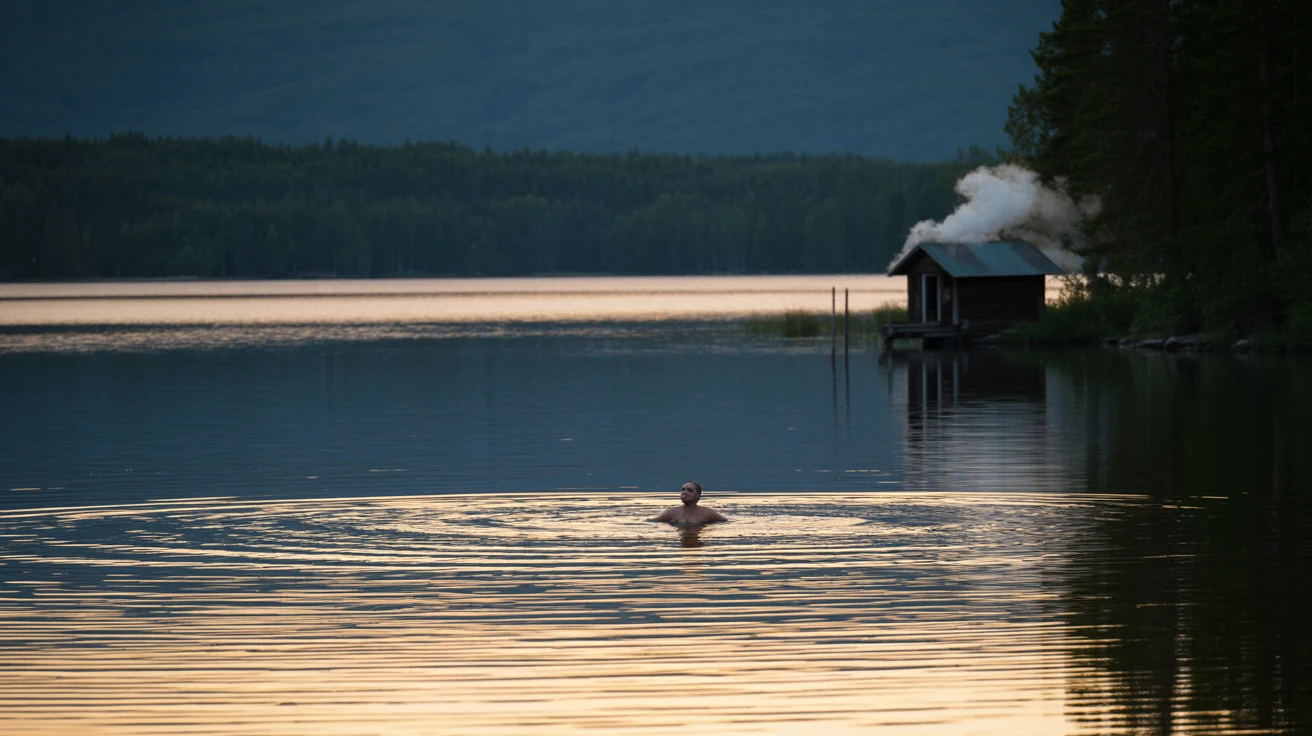
Finland never invented the cold plunge tub because it never needed one. Järvi-meriwiki, the national lake and sea register maintained with the Finnish Environment Institute, lists 55,875 lakes in its database, and a large share of Finnish sauna sessions end with somebody walking twenty meters down a dock and stepping off the end of it.
What surprises visitors is not the cold in winter – everyone expects that. It’s the cold in August. On 21 August 2026, Vesi.fi recorded lake surface temperatures of roughly 16-19°C (61-66°F) in southern Finland and 13-15°C in the north. That is not swimming-pool water. That is a cold plunge with reeds in it.
Why the lake beats a plunge tub
Statistics Finland counted 495,145 free-time residences at the end of 2024 – the first time the total fell below half a million, and the last edition of that particular release before the series was discontinued. Nearly all of those cottages sit on water, and nearly all of them have a sauna. The cold source is free, self-chilling, and larger than any tub you can buy.
That’s the whole reason the habit never became a product in Finland. The heat-cold-heat alternation that a modern cold plunge protocol now prescribes in minutes and degrees was, in Finland, just what you did between the second and third round, because the water was right there. In the United States the same effect is achieved by buying a chest freezer and a chiller. In Finland it is achieved by standing up.
The trade-off is honesty about control. A tub holds a set temperature; a lake does whatever the weather told it to do. In June a shallow southern lake can be genuinely pleasant. In late August the same lake is a different experience, and in November it is another one again.
What the water is actually like in summer
Use real readings rather than holiday photographs. The Finnish water information service Vesi.fi publishes surface temperatures through the season, and its own caveat matters: surface water varies enormously with season and weather, so any single figure is a snapshot, not an average.
| Location | Lake surface temperature, 21 August 2026 |
|---|---|
| Southern Finland | approx. 16-19°C |
| Northern Finland | approx. 13-15°C |
| Kilpisjärvi (far northwest Lapland) | approx. 11°C |
Those numbers sit well inside the range people deliberately pay for in a plunge tub. The difference is that nobody in Finland calls it therapy. It’s just the lake, in August, at the end of a dock, and somebody’s grandmother is already in it.
The cottage sauna is where the habit lives
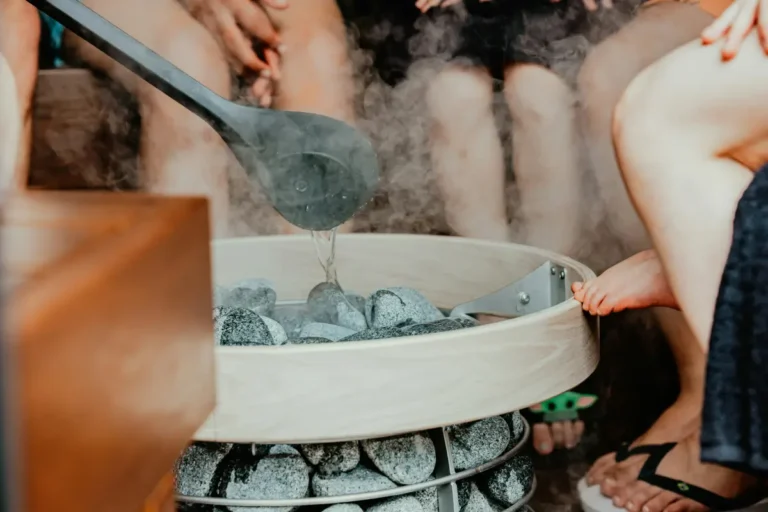
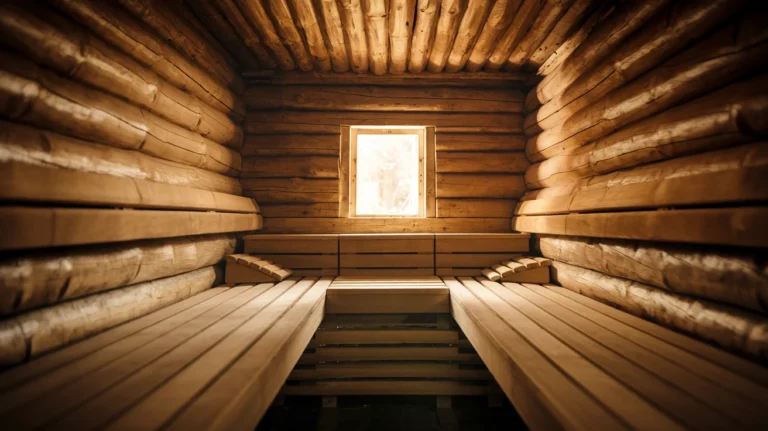
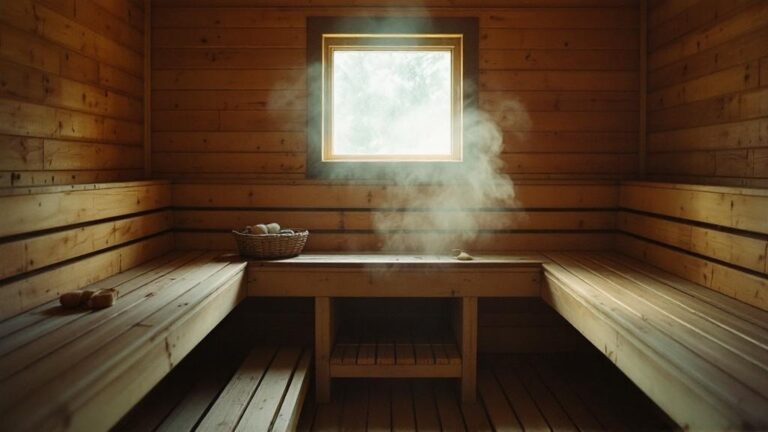
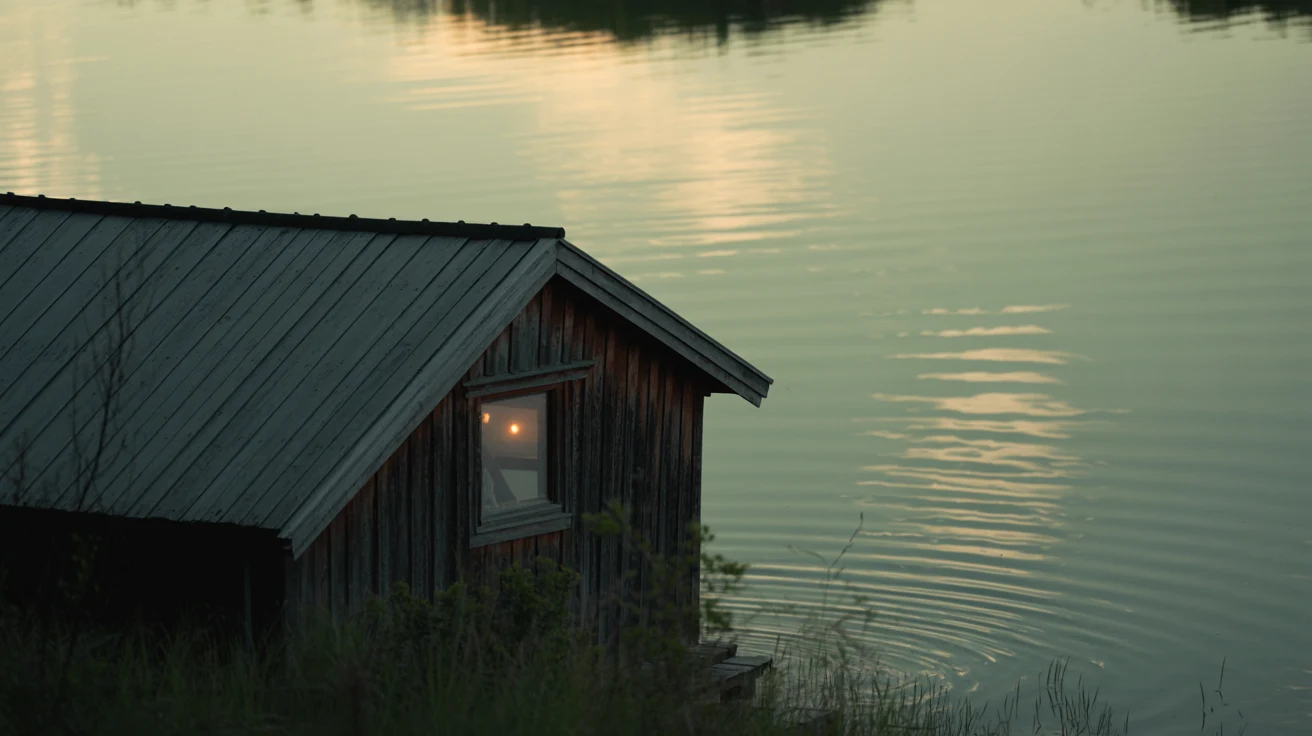
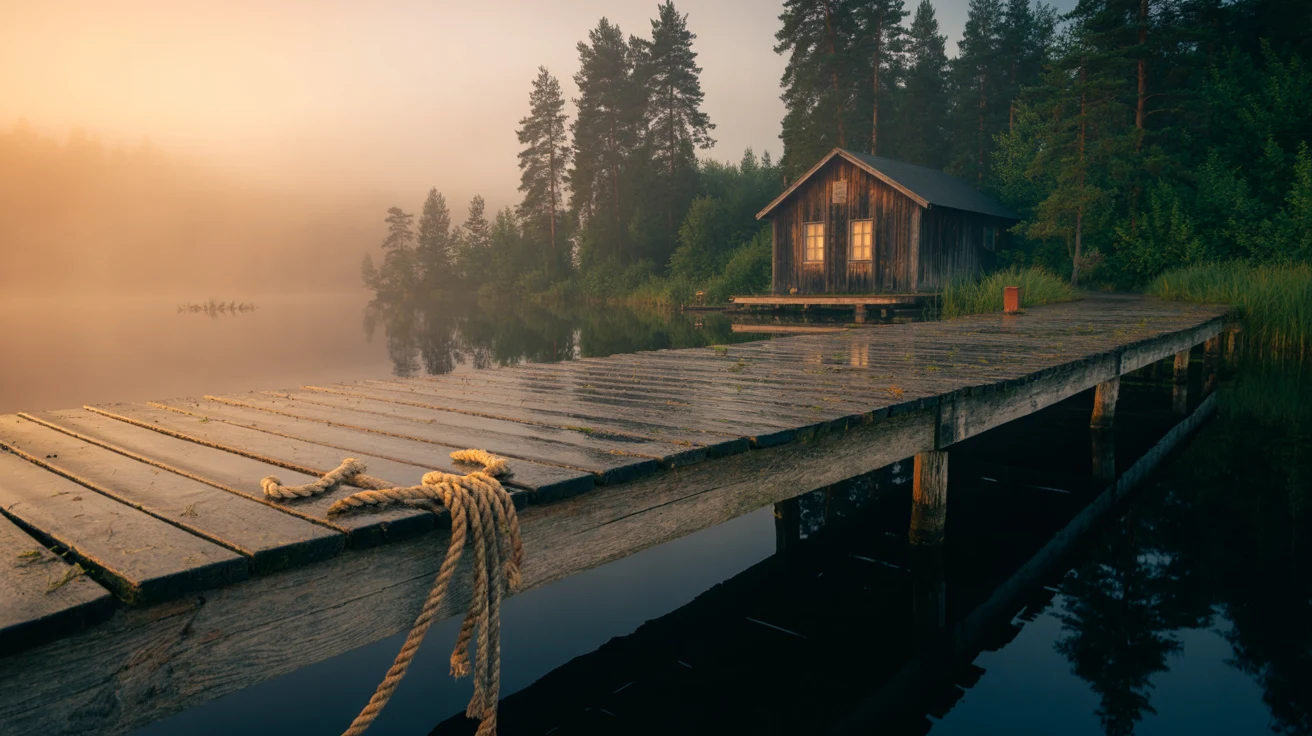
The setting for all of this is the mökki (summer cottage) sauna: a small wood-heated room by the shore, a dock, and a rhythm that repeats itself two or three times an evening. Somebody throws water on the stones, the löyly (the burst of steam that rises when water hits the hot stones) fills the room, and when you’ve had enough you walk out, get in the water, and come back. Nobody times it. Nobody announces it.
The season peaks at Midsummer, when the country empties into the countryside and the juhannussauna (Midsummer sauna) runs half the night in daylight that never quite ends. That’s the version tourists picture, and it’s the one weekend of the year when the water temperature genuinely is beside the point.
The dangerous part is the first ten seconds
This is the section that exists because of the numbers. The Finnish Swimming Teaching and Lifesaving Federation reports 69 drownings in Finland between 1 January and 31 August 2026, against 77 in the same period of 2025 – preliminary figures compiled from media and authority reports, with official mortality statistics following about a year later. Of those, 18 happened while swimming.
The mechanism to understand is cold shock. A 2016 narrative review in Physiology by Bierens, Lunetta, Tipton and Warner describes cold shock as a distinct physiological trigger that can precede collapse and drowning on immersion – separate from hypothermia, which develops much more slowly. The risk is not that the lake slowly cools you down. The risk is the involuntary gasp and the loss of breathing control in the first moments after entry, before your body has settled.
Entering while still overheated from the sauna is the sharp end of it. The Finnish Sauna Society states plainly that swimming after the sauna contracts the skin’s blood vessels and makes blood pressure rise quickly and relatively high. A healthy person usually copes well. For someone with heart failure or another heart condition, the same rise can be dangerous, potentially causing weakness in the heart or serious arrhythmia. If that describes you, talk to your doctor before treating cold water as a routine.
Alcohol is the other consistent factor, and the Society is blunt about it: those who die in the sauna are typically inebriated, in as many as half of cases according to studies it cites. The recommendation not to bathe drunk is not a social nicety. It is a medical finding wearing polite clothes.
One terminology note, because the internet is full of it. Medical sources including the StatPearls chapter on drowning state that terms like “dry drowning,” “wet drowning,” and “near-drowning” are no longer accepted in practice; the modern classification distinguishes fatal from nonfatal drowning. The useful thing to know isn’t a scary label for something that happens hours later. It’s that the moment of entry is the moment that goes wrong.
Where to try it without owning a cottage
Finland’s public saunas make this accessible without a family shoreline. Prices below are the venues’ own current rates.
| Venue | Water | Price | Notes |
|---|---|---|---|
| Kuusijärvi, Vantaa | Lake beach | Smoke sauna €16 ($18) adult, €8 ($9) reduced; electric sauna €7.50 / €5.00 ($9/$6) | Sauna time limited to 2 hours per visit; 4-month seasonal pass €140 ($160) adult / €85 ($97) reduced. Electric saunas were closed for renovation at the time of research, with reopening estimated for October 2026; smoke saunas and lake access were operating. |
| Löyly, Helsinki | Sea | €29 ($33) for two hours, each extra hour €12 ($14) | Includes towel, seat liner, shampoo and shower gel. Sea access year-round, though whether you can actually swim depends on conditions. |
| Allas Sea Pool, Helsinki | Sea water pools | €19 ($22) adult weekday, €24 ($27) weekend; €14 / €17 ($16/$19) reduced with proof of status | Three hours of access. Sea water pools at 15°C alongside a heated pool at 27°C. |
| Sompasauna, Helsinki | Waterfront | Free | Community-run, no staff – visitors heat the sauna themselves. Donations and association membership welcomed. |
Sompasauna deserves its own sentence. There is no reception, no ticket, and no attendant. The fire is whoever got there first, and the quality of your session depends entirely on that stranger’s judgment about firewood.
Kuusijärvi is the closest thing to the cottage experience inside a capital-region bus ride: a real smoke sauna, a real lake, and a two-hour cap that turns out to be roughly how long anyone wants to keep doing this anyway.
Winter is a different discipline
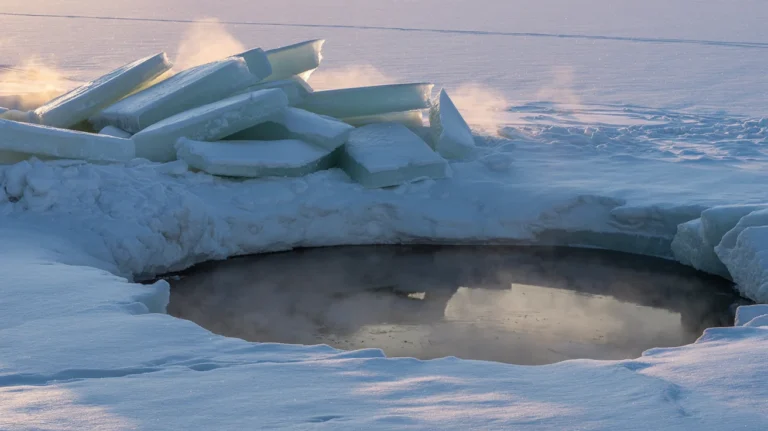
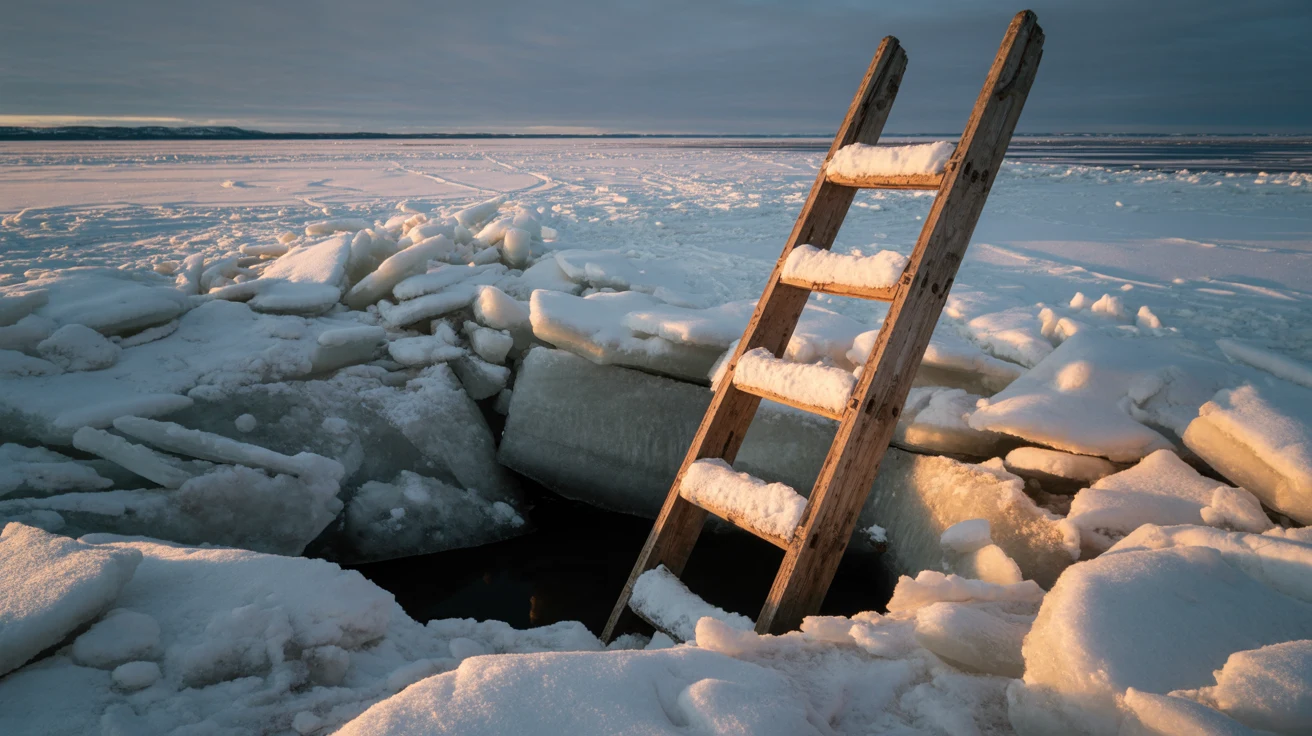
Cutting a hole in the ice and getting into it is avanto (ice hole) swimming – the same lake, a much shorter dip, and its own set of rules about acclimatization, supervision and exit routes that deserve their own treatment.
Common questions
How cold is a Finnish lake in summer?
Colder than the photographs suggest. Vesi.fi measured surface temperatures of roughly 16-19°C in southern Finland and 13-15°C in the north on 21 August 2026, with Kilpisjärvi in far northwestern Lapland at about 11°C. Those are single-day readings, not averages – surface water swings substantially with weather and season.
Is it safe to swim in a lake right after a sauna?
For most healthy people, yes, but the entry is the risky part. The Finnish Sauna Society notes that swimming after the sauna contracts the skin’s blood vessels and pushes blood pressure up quickly and relatively high, which can be dangerous for people with heart failure or other heart conditions. Enter under control rather than jumping, and never do it after drinking.
Why is alcohol such a big deal with sauna and swimming?
Because it shows up in the outcomes. The Finnish Sauna Society reports that people who die in the sauna are typically inebriated, in as many as half of cases according to studies it cites. Combining alcohol with heat, cold water and a drop-off from a dock removes several safety margins at once.
How long should you stay in the water?
There’s no fixed rule at a Finnish cottage – people get in, cool off, and get out well before they’re uncomfortable, often within a minute or two in cold water. Come out while you still have full control of your breathing and hands rather than pushing for a target time.
Do Finns swim naked after the sauna?
At a private cottage sauna with family or friends, usually yes – there’s nobody else on the shore. At public saunas and city swimming spots, swimwear is normal in shared and mixed areas, so pack a suit if you’re heading to a facility rather than a friend’s dock.