Ice Hole Swimming (Avanto): The Finnish Way
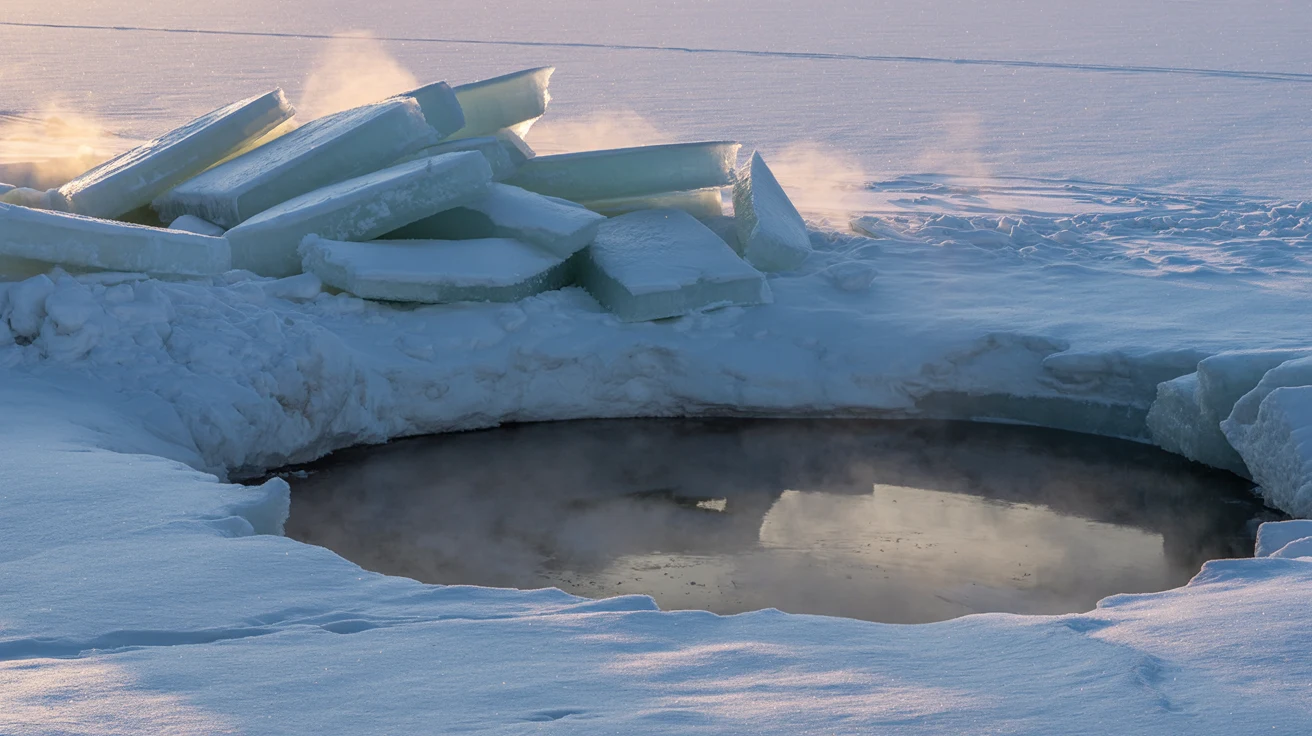
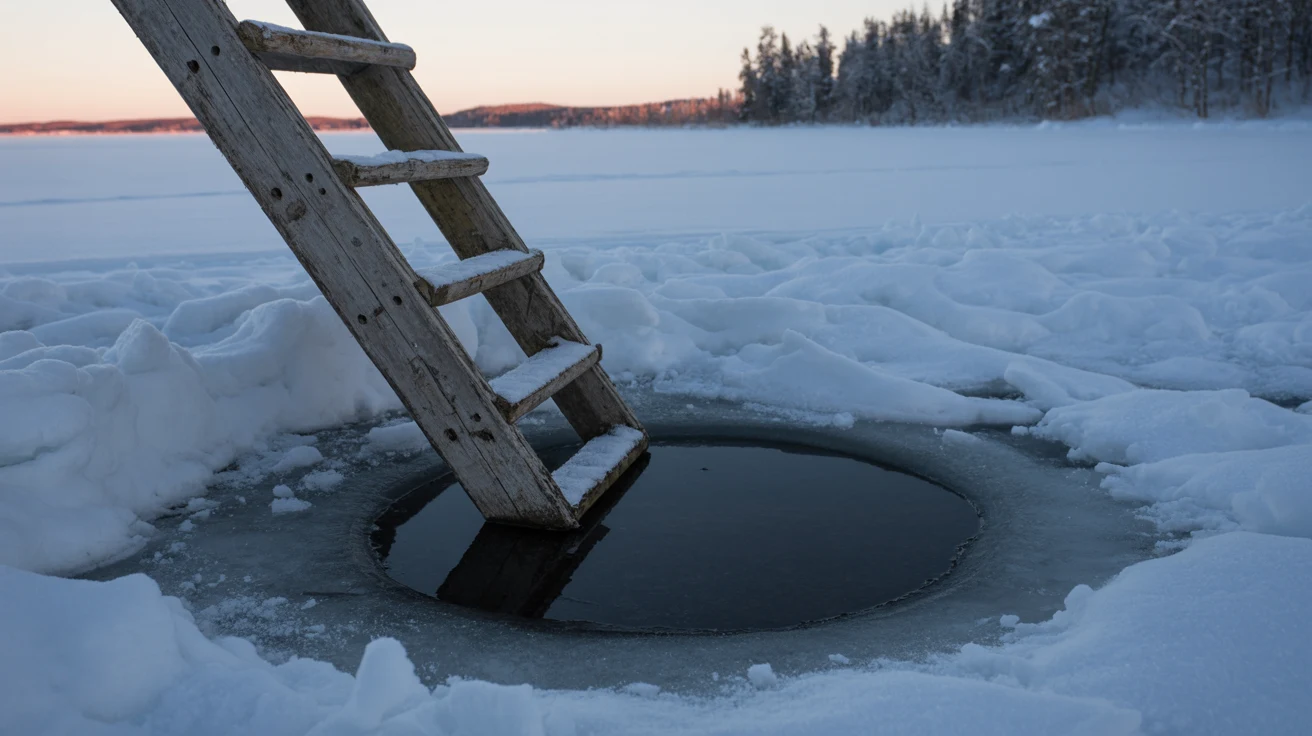
The original cold plunge costs nothing. Someone cuts a hole through the lake ice, drops a ladder into it, and that is the entire installation: no chiller, no filtration pump, no phone app tracking your sessions. Finland has been running this system for centuries, and it still works.
What surprises most visitors is not the cold. It is how unglamorous and specific the Finnish rules around it are. Never go alone. Use a maintained, lit hole with a ladder and a handrail. No alcohol. Not while sick. The stoic-Finn stereotype falls apart the moment you read the actual national guidance, which reads like a checklist written by someone who has pulled people out of the water.
The original cold plunge
An avanto is a hole cut through lake or sea ice, and swimming in one is a winter habit rather than a stunt. Suomen Latu, the national outdoor recreation federation and the closest thing Finland has to an official voice on the activity, defines winter swimming as a cold-water hobby built around calmness, listening to your body, and being outdoors. That framing matters. It is not presented as a performance or an endurance test.
This is the honest counterpoint to the home cold plunge market. A chiller-equipped tub is a way of manufacturing, at considerable expense, a thing that northern countries get free every winter. The trade-off is availability: the ice hole exists for a few months a year, at a specific location, maintained by someone else. Not everyone lives next to one.
A figure of roughly 120,000 regular Finnish winter swimmers circulates widely, but I could only trace it back to secondary sources citing news reports that are no longer reachable. Treat it as often-repeated rather than confirmed. Some indoor pool facilities also offer chilled cold pools that approximate the sensation without any ice at all.
Straight from the sauna
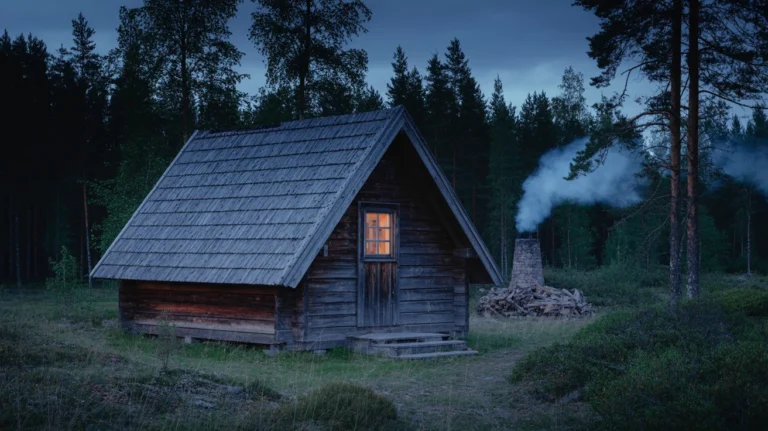
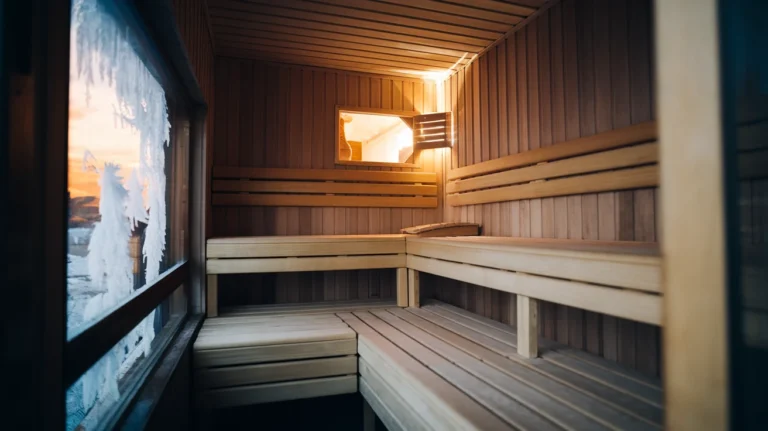
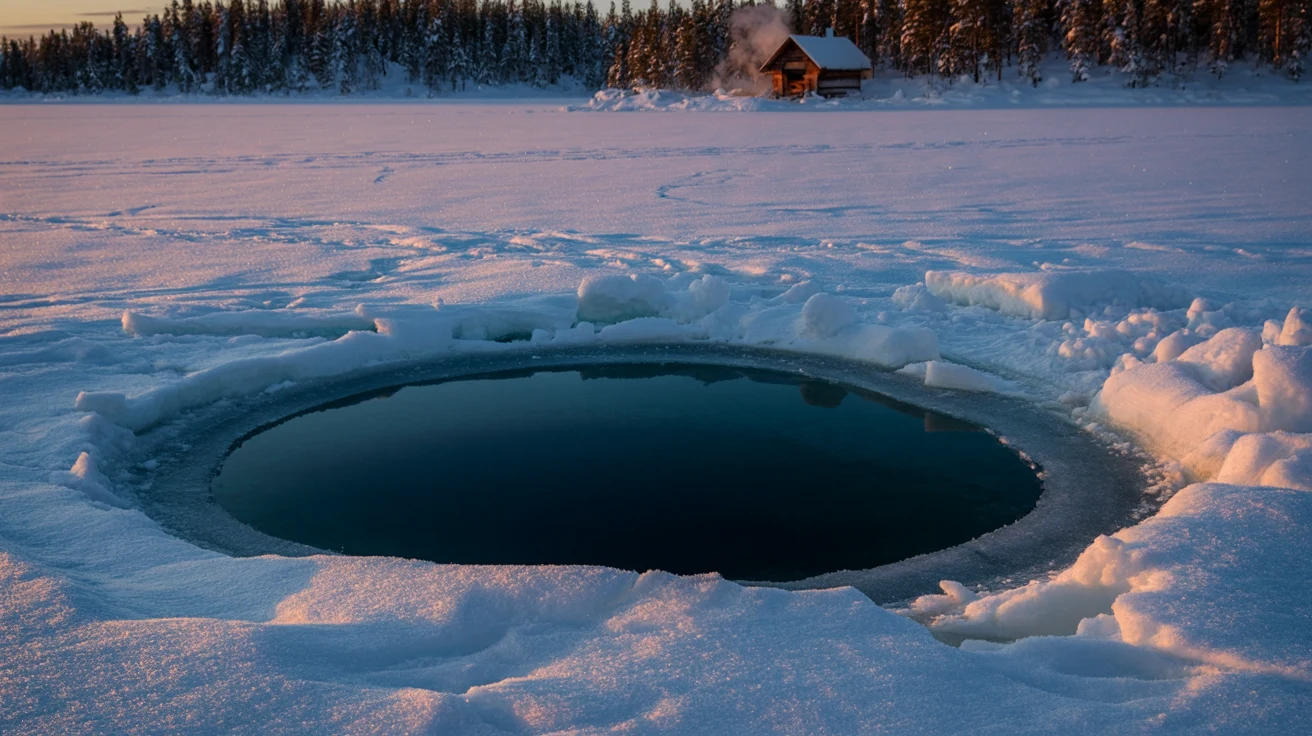
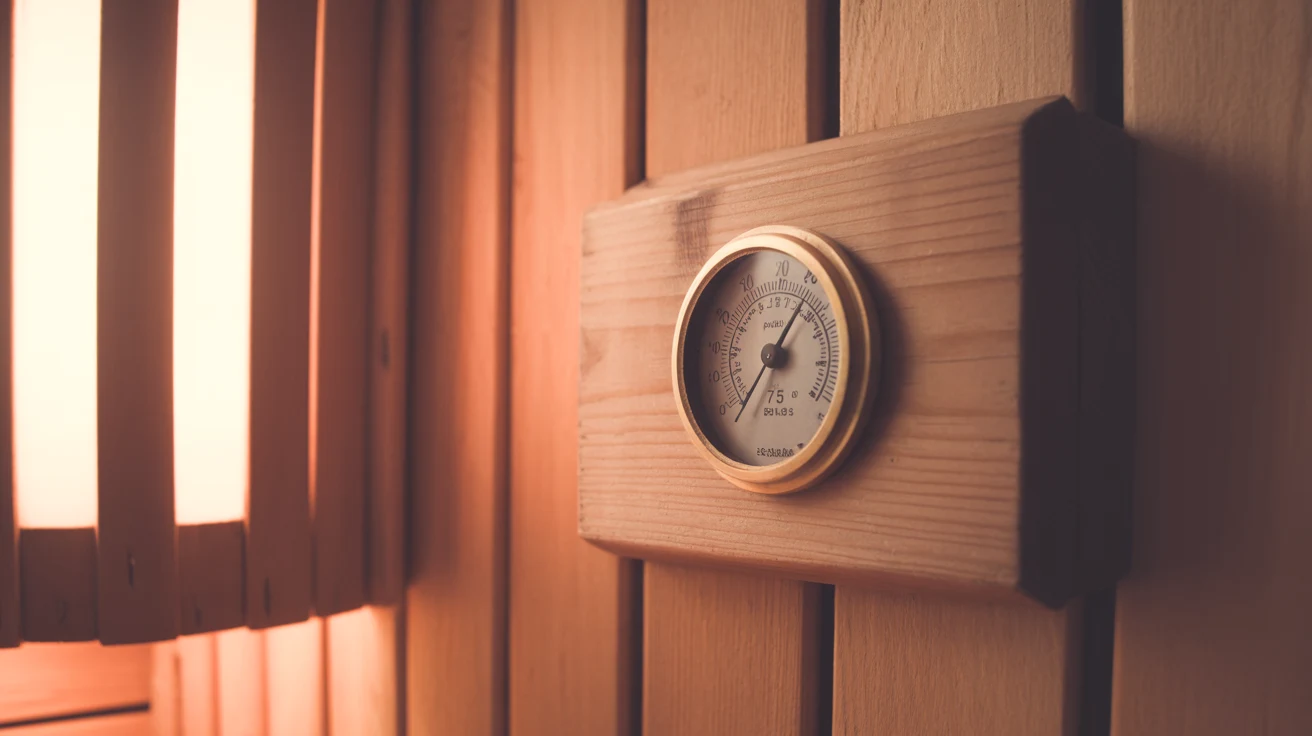
The ice hole is traditionally an accessory to the sauna, not a stand-alone swim. You cool off in the water between rounds or after the last one, then go back into the heat. Stripped of that context it becomes a much harsher activity, which is why the ice hole and the sauna building tend to sit within a few steps of each other in Finnish sauna culture.
Time in the water is brief and led by the swimmer. Suomen Latu’s advice to beginners is to start with short dips and extend gradually according to your own comfort, with the emphasis on regular practice rather than any single long session. There is no official duration, and anyone quoting you an exact number of seconds is quoting a habit, not a rule.
The entry technique is specific: get in calmly, keep your breathing steady, do not jump, and do not put your head under. Cold water triggers an involuntary gasp reflex, and a gasp with your face submerged is the scenario every safety rule in this article exists to prevent. One Finnish swimmer profiled by finland.fi described her own winter cadence as two to four times a month, usually a quick dip, booked with friends around a sauna slot.
The safety rules that actually matter
Finland’s approach to wild swimming is, on paper, largely administrative. The hole is marked. The site is lit. The ladder is there because someone put it there and someone else checks it. Operators of maintained winter swimming sites are expected to provide lighting, safety equipment, a clearly marked hole, handholds, and maintained access routes, and there is a formal ice-safety course run by the Finnish Swimming Teaching and Lifesaving Federation for people who want the training rather than the folklore.
The rules for swimmers themselves are short. Never go alone. Do not go in while ill or under the influence of alcohol. Move slowly around the hole, because the access route and the steps down to the water get slippery and freeze over. If you are unsure whether winter swimming suits you, ask a doctor before you try it rather than after.
What cold water does to your heart
The most useful evidence review here is a 2022 systematic review in the International Journal of Circumpolar Health, which screened 728 papers and included 104 in its final analysis. It describes the initial cold-shock response as a sympathetic reaction: a fast heart rate, respiratory gasping, uncontrollable hyperventilation, peripheral vasoconstriction, and a spike in blood pressure. Its authors propose that the conflict between this response and the body’s other autonomic reflexes may be a significant contributor to the elevated incidence of cardiac arrhythmias observed in healthy people during cold-water immersion.
Blood pressure findings are more nuanced. The same review reports that blood pressure rose significantly during a person’s first cold-water immersion but returned to normal ranges after a cold-acclimation programme. In one cited study of winter swimmers, blood pressure rose when subjects were undressed in cold air, and neither the immersion nor the swimming itself added a further increase on top of that. Elite competitive cold-water swimmers showed a significant rise in a cardiac stress marker two hours after competition, though the review describes the clinical significance of that rise as unclear.
The review deliberately excluded research on people with diabetes, Raynaud’s disease, cardiovascular disease, and homozygous sickle cell disease, treating them as an already recognised risk group rather than folding them into general findings. It also notes that hypothermia remains one of the leading causes of death among older people. If you have a heart or circulatory condition, or you are elderly, the honest answer is to talk to your doctor first and not to start with an ice hole. The same caution applies to the whole hot-to-cold sequence covered in the sauna and cold plunge protocol: combining a hot sauna with cold water puts real strain on the cardiovascular system.
The long-term evidence is genuinely mixed
The optimistic side comes from a Finnish study by Huttunen and colleagues, published in 2004, which followed winter swimmers and a control group through a four-month season using mood and symptom questionnaires. Over those four months, tension, fatigue, memory complaints and negative mood scores fell significantly in the swimmers, vigour scores were significantly higher than controls, and every swimmer in the group who had rheumatism, fibromyalgia or asthma reported that winter swimming relieved their pain. Worth noting: at the start of the study, the swimmer group had roughly 50% more physician-diagnosed illnesses than the controls. This was self-reported questionnaire data from a self-selected group, not a clinical trial.
The cautionary side is harder to wave away. A Chinese study followed roughly 900 winter-swimming club members over 30 years and reported a 10% higher mortality rate from cardiac and cerebral infarction than the general statistical average, published in the International Journal of Cardiology and covered in Finland by Yle. Professor Hannu Rintamäki of the Finnish Institute of Occupational Health called the finding notable given the size of the dataset, but pointed out that the swimmers in that cohort spent 5 to 10 minutes in near-freezing water per session, a far longer exposure than a typical Finnish dip. His recommendation was that Finland fund its own long-term research rather than change current practice on the strength of one foreign cohort.
So: a small Finnish study finding improved well-being, and the only long-term cohort of its kind finding higher cardiac and cerebral mortality at much heavier exposures. That is where the evidence sits. Anyone selling you cold water as a proven treatment is skipping half of it.
Where to try it in Finland
If you want a supervised, ticketed version rather than a wild hole in a lake, Helsinki and the surrounding region have maintained options. Tampere lists winter swimming places among its municipal sports facilities, and most Finnish cities of any size do the same, so the local council’s sports listing is usually a better starting point than a search engine.
| Venue | What it is | Pricing |
|---|---|---|
| Allas Sea Pool, Helsinki | Cold sea-water pool alongside warm pools and saunas, in the middle of the city. Maintained and supervised rather than an ice-cut hole. | Adult €19 ($22) weekdays, €24 ($27) weekends (3-hour ticket); €14/€17 ($16/$19) reduced; €11/€14 ($13/$16) ages 3-12; free under 3. 10-ticket pass €158 ($180) adult, monthly pass €88 ($100) adult |
| Kuusijärvi, Vantaa | Lakeside recreation area with a winter swimming season running from 1 September, two smoke saunas opened in summer 2025 (one fully accessible), electric saunas in the main building, and trails straight into Sipoonkorpi National Park | Contact Vantaa-info for current sauna and season-pass pricing |
| Municipal winter swimming sites | Maintained holes with lighting, ladders and changing facilities, often run by a local club | Varies; check the city’s sports facility listing |
The seasonal pass model at places like Kuusijärvi tells you something about how Finns use these sites: daily access to warm changing rooms is the thing people pay for, because the water itself was always going to be free. For finding organised local activity, Suomen Latu is the practical entry point. I could not verify a single nationwide directory of local clubs, so expect to go through the federation or your municipality rather than one tidy list.
Ice swimming outside Finland
Swedish winter swimming, like the Finnish version, is tied closely to the Swedish bastu tradition. Russia has a documented winter-swimming heritage going back to 1525 that regained popularity after the fall of the Soviet Union, and Orthodox believers traditionally submerge three times in an ice hole at Epiphany on 19 January to honour the Trinity. An estimated 30,000 people bathed in Moscow’s ice holes at Epiphany in 2010, and by 2020 national participation was put at roughly 2 million. Year-round Russian ice swimmers organise into clubs whose members are nicknamed walruses.
The American version is a different animal. The Coney Island Polar Bear Club, founded in 1903, is described as the country’s oldest ice-swimming club and runs weekly winter swims from November to April plus the New Year’s Day plunge. Vancouver’s club has been going since 1920, Boston’s L Street Brownies since 1904. The largest US event, the Maryland State Police plunge at Sandy Point State Park, drew roughly 12,000 participants in 2008. In Finland the ice hole is a Tuesday. In the United States it is a fundraiser with a sponsor banner and a registration fee.
Competitive ice swimming has two international governing bodies, the International Ice Swimming Association and the International Winter Swimming Association, both of which require water below 5°C (41°F) for a swim to count as ice swimming and ban neoprene wetsuits in that category.
Common questions
What is ice hole swimming (avanto)?
It is swimming in a hole cut through lake or sea ice, usually as a cooling break between or after sauna rounds. Finland’s national outdoor recreation federation describes it as a cold-water hobby centred on calmness, body awareness and being outdoors, not as an endurance challenge.
How long do Finns stay in the ice hole?
Briefly, and the swimmer decides. There is no official duration: the national guidance for beginners is to start with short dips and extend gradually according to your own comfort, with regular practice mattering more than the length of any single session.
Is winter swimming safe for your heart?
Cold-water immersion triggers a cold-shock response involving a fast heart rate, gasping, hyperventilation and a spike in blood pressure, and a 2022 systematic review links this to an elevated incidence of cardiac arrhythmias even in healthy people. If you have a cardiovascular or circulatory condition, diabetes, or you are elderly, talk to a doctor before trying it. Never go in while ill or after drinking.
Do you have to do it straight from the sauna?
No, but that is the traditional sequence, and the sauna makes the whole thing considerably more pleasant. People also swim without a sauna, in which case warming up afterwards in a heated changing room matters even more.
What are the basic safety rules?
Never swim alone. Use a maintained site with lighting, a clearly marked hole, handholds and a ladder. Enter calmly, keep your breathing steady, do not jump in and do not submerge your head. Move carefully on the access route and steps, which ice over. Afterwards, warm up at a moderate pace and drink something warm.
Where can I try it in Finland?
Allas Sea Pool in central Helsinki offers cold sea-water pools with saunas on a ticketed basis, with adult admission from €19 ($22) on weekdays. Kuusijärvi in Vantaa runs a winter swimming season from 1 September alongside smoke and electric saunas; contact Vantaa-info for current pricing. Most Finnish cities list maintained winter swimming sites among their municipal sports facilities.