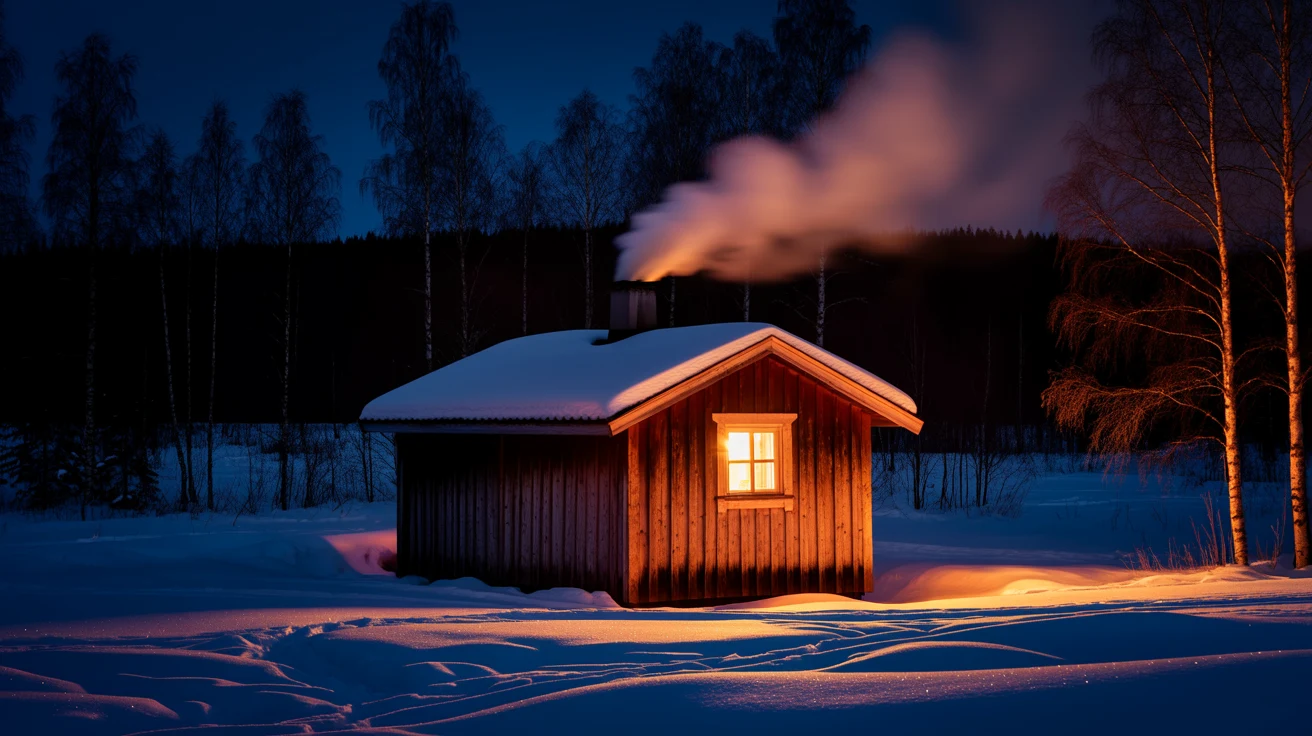
Sauna in Winter: Snow, Steam, and the Cold-Season Ritual
Some links on this page are affiliate links. If you buy through them, I earn a small commission at no extra cost to you. As an Amazon Associate I earn from qualifying purchases.
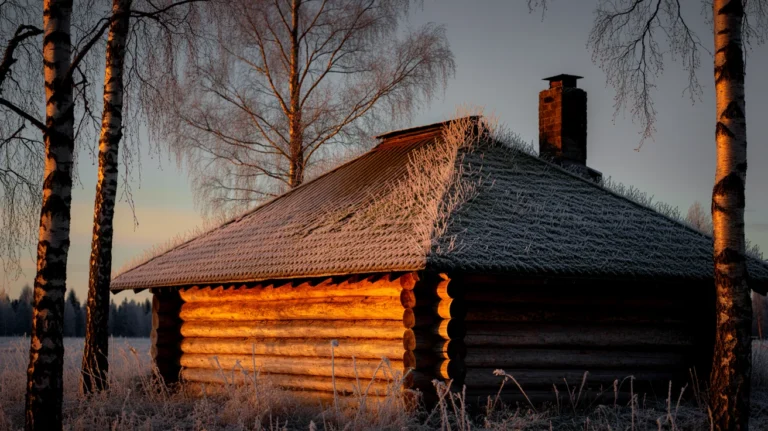
Winter is when the sauna makes the most sense. In hard frost the contrast between the bench and the outside air is so extreme that the whole ritual snaps into focus: you understand, in a way you never do in July, why Finns built these things. Hot steam against freezing air is the entire point, and the sauna becomes the one warm room in a frozen world.
The colder it is outside, the better the löyly (the burst of steam when you throw water on the stones) feels. This is where converts get made. Someone who shrugged at the idea of sitting in a hot wooden room in summer will step outside into the snow after a winter session, feel the steam still rising off their skin, and immediately want to go back in. Winter sauna sells itself.
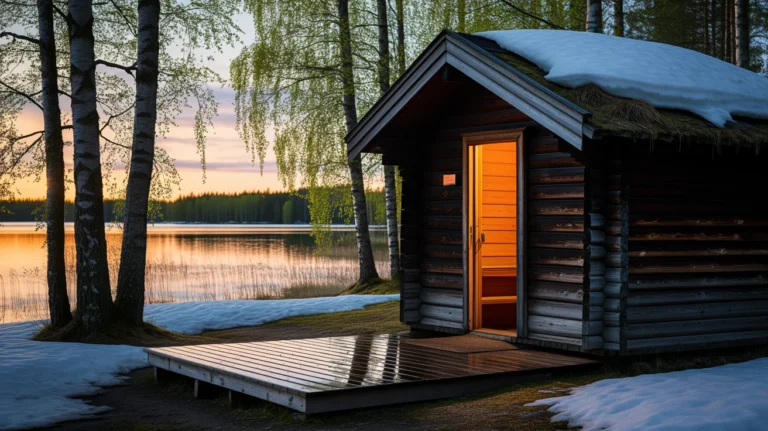
The winter atmosphere: a warm refuge in a frozen landscape
A sauna in winter is a different sensory experience from a sauna in any other season. Snow muffles sound. The window fogs and then freezes at the edges. When you open the door to step out, cold air pours across the floor and the steam already in the room turns visible, curling toward the exit. You’re aware of the heat because you can see the boundary where it ends.
Keep the bench in the usual Finnish range, 80-90°C (176-194°F). You don’t need it hotter in winter. The perceived intensity comes from the contrast when you step outside, not from cranking the heater. If anything, a slightly gentler bench temperature pairs better with harsh cold, because you’ll be doing more warm-to-cold cycles and you want room to keep going.
Snow-rolling: the cold contrast without an ice hole
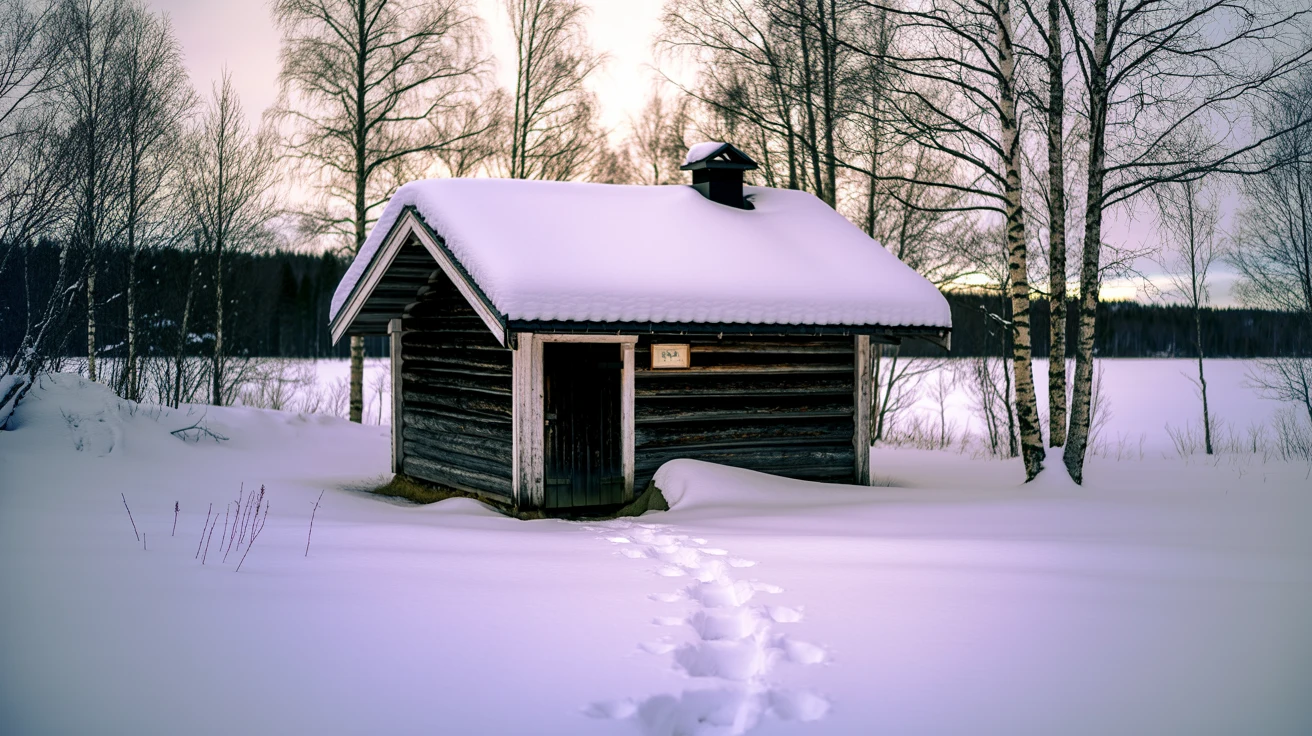
The signature move of the winter sauna is rolling in the snow. You come out of the heat, drop into a fresh drift, and let the snow do what an ice bath would do, minus the logistics. Finns really do this. You don’t have to, but it’s the most accessible way into Finnish winter contrast, and it’s far less committing than cutting a hole in a frozen lake.
Snow-rolling works because loose snow is mostly air. It cools your skin fast at the surface without the deep, breath-stealing shock of full immersion. That makes it the beginner-friendly entry point. You get the contrast hit, the gasp, the tingling flush of blood returning to the skin, without needing to have psychologically prepared for a plunge. Snow angels are the same idea with less commitment: lie back, spread out, and let the cold press against as much of you as you can stand.
Fresh, soft snow is ideal. Crusted or icy snow scrapes rather than cools, and packed snow near a path can hide gravel or ice underneath. Pick clean powder away from the walked route, and check what’s under it before you throw yourself down.
The warm-cold-warm sequence in winter
The structure is the same as any contrast session: heat, cool, warm back up, repeat. What changes in winter is the pacing. The cold source is far more aggressive, so your cold exposure gets shorter, and your warm-up phases get longer and more deliberate.
Cold exposure in contrast bathing is usually a matter of seconds to a couple of minutes, and in deep winter you stay at the shorter end of that. A snow roll might last ten or twenty seconds. If you’re stepping into Finnish ice-hole swimming, the cut hole in the ice known as an avanto, the dip is measured in seconds, not laps. The mechanism behind why this cycle feels so good, and why you shouldn’t overdo the cold, belongs to the full contrast protocol, not this page.
Warming back up is where winter demands respect. After the cold, you return to the bench, not to a cold changing room. Give yourself a full, unhurried warm-up before the next round, and a proper warm-up at the end before you get dressed and head indoors. Rushing the final warm-up is how a pleasant winter session turns into an hour of shivering afterward. If you’d rather cool off in open water than snow, lake swimming after sauna works the same way once the ice is gone.
Footing, skin, and undressing in the cold
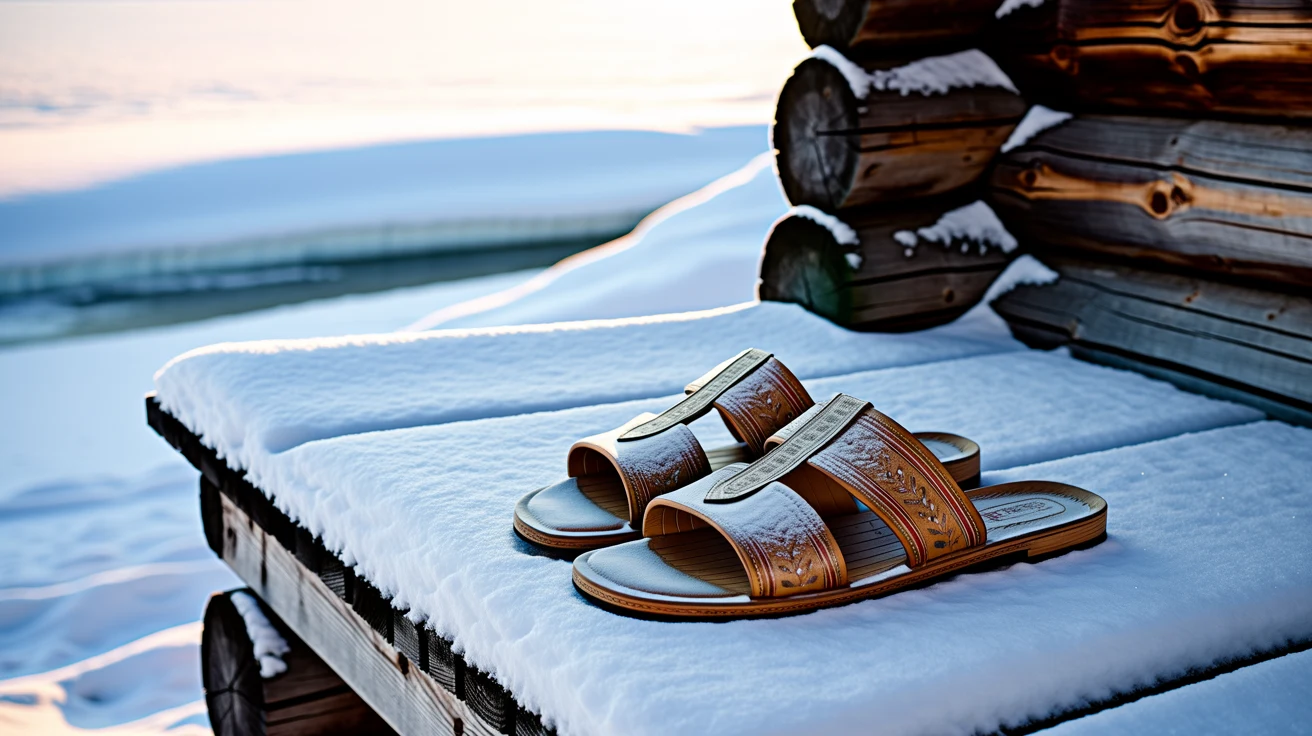
The genuine hazard of winter sauna isn’t the cold water, it’s the walk to it. Ice between the sauna door and the snowbank is where people fall, and falling on ice while barefoot and overheated is a bad combination. Clear and sand the path, or keep sandals by the door for the crossing. Bare feet on packed snow are fine; bare feet on a sheet of ice are not.
Your skin takes a beating from the swing between hot dry air and freezing wind. Faces and hands chap fastest. A simple unscented moisturizer after your session helps. Wind exposure matters more than the temperature reading, so a bit of shelter for the cold-plunge spot goes a long way.
Undressing in the cold is a skill you acquire quickly. The trick is to undress inside the warm anteroom or the sauna itself, make the cold crossing already bare, and get back into the heat before you cool down. Standing around half-dressed in the wind, deciding whether to commit, is the worst of both worlds. Move with purpose.
Warm-up times in the cold, and how to shorten them
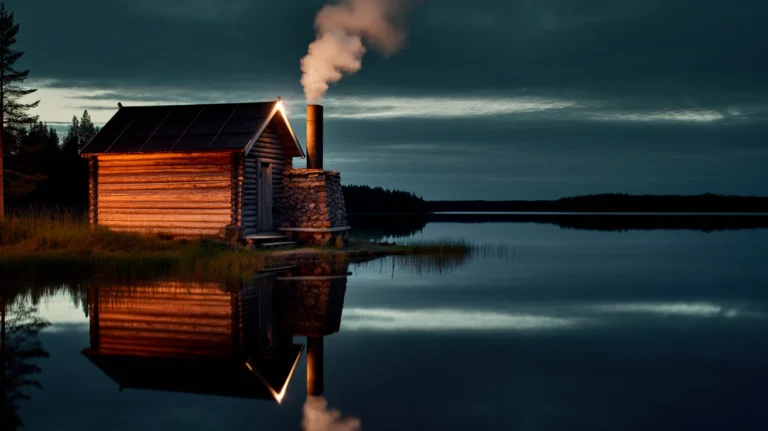
A typical home sauna heats in 30 to 45 minutes with wood and 20 to 40 minutes with electric in normal conditions. A frozen cabin’s benches, walls and stones soak up the heat first, so in hard frost it takes noticeably longer. An electric heater gives the same output whatever the weather, while a cold firebox and flue draw poorly until the chimney warms. Start earlier, keep the door shut, and close the vents until the room is up to heat.
A heater that is marginal for the room in summer becomes underpowered in frost; sauna heater sizing does the arithmetic.
Building for the cold, and the rest of the year
If winter is when you sauna hardest, it’s worth thinking about whether your setup is built for it, from insulation to how the heater copes with a frozen cabin. That’s a buying and building question rather than a ritual one, and it has its own home in the guide to the best saunas for cold climates. Winter also isn’t the only season worth planning around; the contrast simply peaks here. The full arc of how a sauna changes across the year, from midsummer to deep frost, is a story in itself.
Common questions
Is it safe to roll in the snow after a sauna?
For healthy adults, brief snow-rolling is a normal part of the Finnish winter ritual and is generally well tolerated. Keep it short, seconds rather than minutes, and warm back up properly afterward. Anyone with heart or circulation conditions should treat sudden cold exposure with caution and check with a doctor first.
Why does sauna feel better in winter?
The perceived intensity of a sauna comes from the contrast between the hot room and the cold outside. In winter that gap is at its widest, so the steam feels more vivid and the cool-down more dramatic. The heater doesn’t work any harder; the freezing air outside does the rest.
How cold should the outside be for a proper winter sauna?
There’s no minimum. Any temperature below freezing gives you a strong contrast. Deeper cold is thrilling but demands shorter cold dips and more careful warm-ups.
Do I need an ice hole to enjoy winter contrast bathing?
No. Rolling in fresh snow gives you most of the contrast effect with far less setup and far less shock, which makes it the easiest way to start. An ice hole is the deeper, more committing version for when you want the full cold immersion.
How do I warm up after a cold plunge in winter?
Return to the warm sauna bench rather than a cold changing room, and give yourself an unhurried warm-up before dressing. The final warm-up of the session matters most, since getting dressed and going indoors while still cold is what leaves you shivering for the next hour.
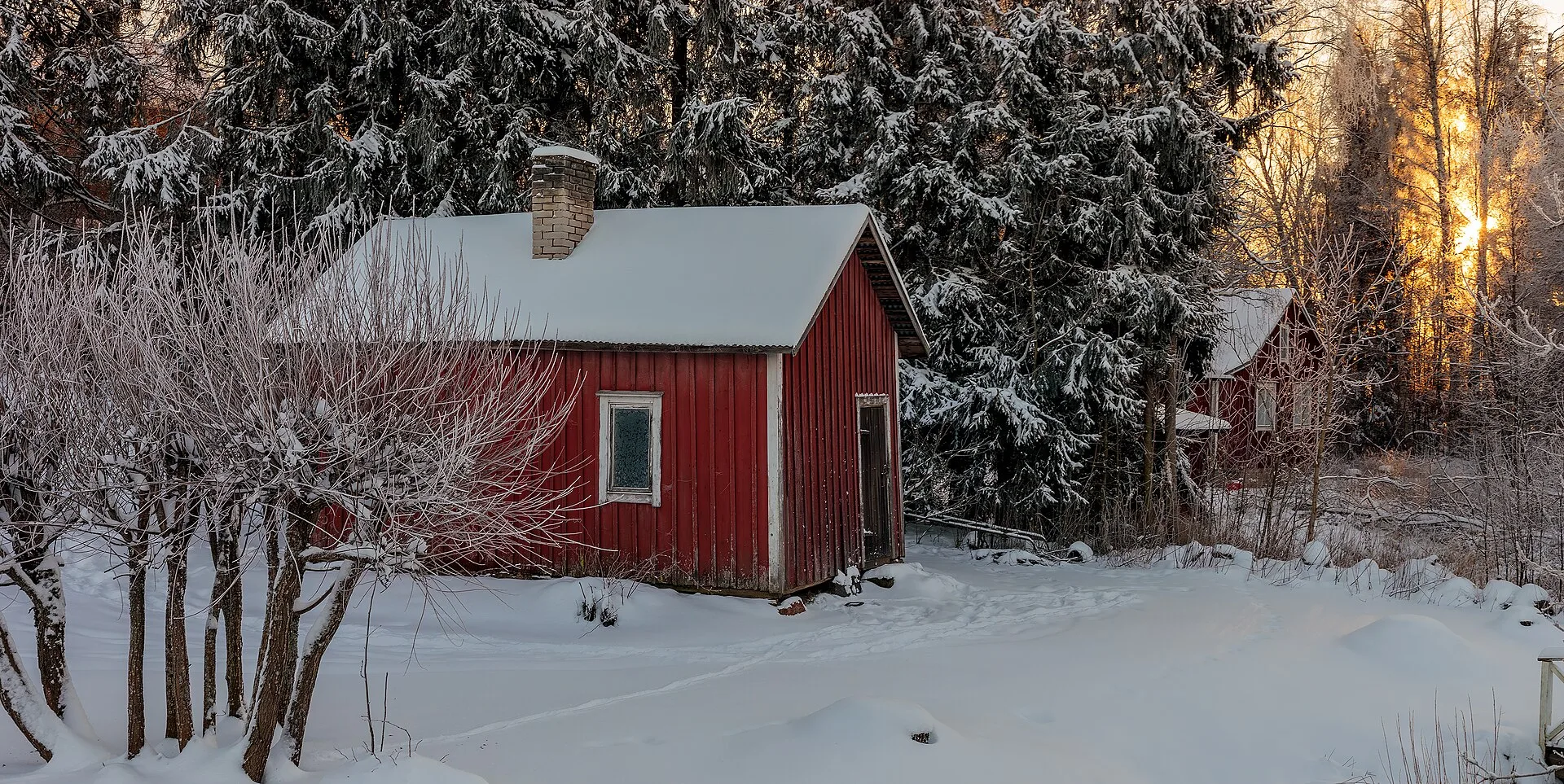
Winter sauna photo: Ximonic (Simo Räsänen), CC BY-SA 4.0, via Wikimedia Commons