Finnish Sauna Sayings and Proverbs, Translated and Explained
The most-quoted Finnish sauna saying in English – that in the sauna you should behave as you would in church – is real. The version you have read probably isn’t the version anyone wrote down. Folklore collectors recorded it in dialect, village by village, in spellings that look like typos to a modern Finn. The tidy standard-Finnish line that circulates online is a later cleanup, quoted almost everywhere without a source attached.
That gap between what got collected and what gets repeated runs through this whole subject. Several sayings that appear in English sauna writing as “old Finnish proverbs” cannot be traced to any Finnish source at all. Below are the ones that can be, quoted once each in the form they were recorded, with a literal translation – followed by the ones that don’t check out.
The sauna proverbs that can actually be sourced
These seven come from a compilation of archive entries, each credited to the folklore archive of the Finnish Literature Society and tagged with the village where a collector heard it. The spellings are dialect, not standard Finnish.
| Finnish, as recorded | Literal translation | What it means | Recorded in |
|---|---|---|---|
| Saunas täytty olla ku kirkos. | In the sauna one must behave as in church. | Quiet, orderly conduct – no shouting, no coarse talk. | Kisko |
| Sauna köyhän apteeki. | The sauna is the poor man’s pharmacy. | Heat as the remedy available to people who could not buy medicine. | Teuva |
| Jos ei sauna ja viina ja terva auta, nin se tauti on kuolemaksi. | If sauna and liquor and tar don’t help, then the illness will be fatal. | The three household remedies were the last line of defence. | Hyvinkää |
| Kenen selkä kupisee, se saunan etsii. | Whoever’s back is aching seeks out the sauna. | Discomfort sends you in – the sauna as a practical fix, not leisure. | Suistamo |
| Vanha sauna, hyvä löyly. | Old sauna, good löyly (the burst of steam thrown onto hot stones). | A well-used, well-seasoned sauna bathes better than a new one. | Varkaus |
| Saunaton talo ja akaton huusholli varmimmin ympäri menee. | A house without a sauna and a household without a wife most surely falls apart. | The sauna ranked as basic household infrastructure, not a luxury. | Sortavala |
| Joka ite ei saunassa käy, sen piätä ei pestä. | He who does not go to the sauna himself, his head will not be washed. | Self-reliance: your own upkeep is your own job. | Sulkava |
Behaving as in church: the one everyone quotes
This is the best-attested saying and the one that made the jump into English. It gets misread constantly as a religious claim. It isn’t. The comparison is to the conduct a church demands – you lower your voice, you don’t argue, you don’t perform, and nobody outranks anybody once they’re inside. UNESCO’s listing describes the traditional sauna in similar terms, as a place people treated as a “church of nature” where they cleansed body and mind together.
In practice that translates directly into modern sauna etiquette: talk if there’s talk, otherwise sit still. The standard-Finnish form, saunassa ollaan kuin kirkossa, is the one you’ll see reproduced in English writing, usually labelled “an old Finnish saying” with no citation behind it. The label happens to be accurate – but it got there by repetition rather than by anyone checking.
The sauna as medicine, in a country with no pharmacy
Three of the sourced sayings are about health, and they are the least sentimental things in the collection. The pharmacy line is a statement about money: heat cost firewood and nothing else. The liquor-and-tar formula names the full home medicine cabinet of a rural household – sauna heat, spirits, and pine tar – and then says what happens when none of them work. It does not claim the three cure anything. It says that if they don’t, the matter is settled.
The aching-back saying makes the same point from the other side: people went to the sauna because something hurt. Whether heat does anything measurable for illness is a modern research question with its own carefully qualified answers, and a proverb from a Finnish village is not evidence either way. Read these as economic history – what people had, and what they did with it.
Equality: a real theme, but not a real proverb
Every English article on this subject sooner or later quotes “all are equal in the sauna” as a Finnish proverb. I could not find a traditional Finnish wording for it in any source. What I could find is the idea itself, stated in modern Finnish voices – one contributor to This is Finland puts it as a place where there are no titles or status, just people sharing the same experience.
The equality theme is genuine and it is everywhere in Finnish sauna culture. It is also structurally supported: with roughly 3.3 million saunas serving 5.5 million people, there was never a version of this where the sauna belonged to one social class. But “the sauna is the great equalizer” is a modern formulation of an old habit, not a line some collector heard in a farmhouse in 1890. Quote it as an observation, not as folklore.
Where these sayings come from
Finland ran one of Europe’s most thorough folk-collection efforts, and sauna proverbs came in alongside everything else people said about daily life – including the beliefs about the sauna elf that governed how you were supposed to treat the building itself. The archive attributions in the table above are village-level and specific, which is what makes them trustworthy as a set.
One honest caveat about provenance: I reached these entries through a secondary compilation that credits the folklore archive for each one, not through the archive’s own catalogue. The attributions are village-level, consistent and look sound – but they are second-hand, and no single collection volume or collector is named behind them.
The sayings that don’t check out
Three lines circulate widely in English sauna writing with no Finnish source behind them:
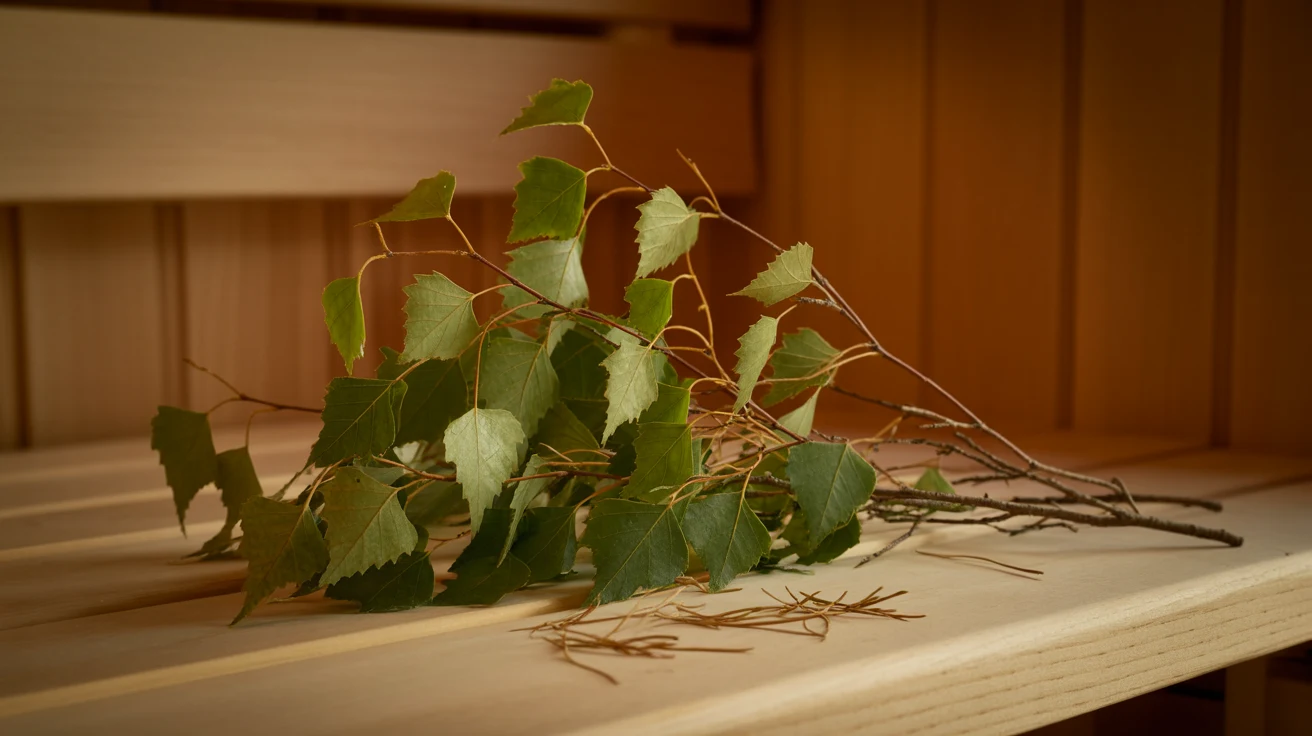
- “A sauna without a birch whisk is like food without salt.” No Finnish wording found. The whisk (vasta in eastern Finland, vihta in the west) is genuinely central to bathing, so the sentiment fits – but the proverb doesn’t turn up.
- “Build the sauna first, then the house.” A real historical practice on many homesteads, but I found no proverb saying it. The sourced saying about the sauna-less house makes the same argument in a documented form.
- “All are equal in the sauna.” Real idea, modern phrasing, no traditional source.
None of these are lies exactly. They are plausible summaries that acquired quotation marks somewhere along the way and then got attributed to a nation. If you want a term-by-term reference for the vocabulary in them, the sauna glossary handles that separately.
How Finns actually use them
Sparingly, and mostly at one remove. Nobody stands in a changing room dispensing proverbs. Where these lines live is on wooden plaques, on the wall of a rented cottage sauna, on gift-shop shelves, and in the middle of speeches – weddings, retirements, milestone birthdays, the sort of occasion where a Finn needs one sentence that everyone in the room already agrees with. The church line does most of that work. A Finn who owns the plaque almost certainly received it as a gift.
The half-joking tone matters. Quoting the pharmacy saying in 2026 is not a medical opinion, it’s a nod at how recently that was the only option. Since UNESCO added Finnish sauna culture to its intangible heritage list in December 2020, the sayings show up more in official contexts too – which is exactly the environment where a proverb goes slightly stiff.
Using one without sounding like a brochure
Quote it in English. Attempting the recorded dialect form will get you a conversation about dialect, not a nod of recognition. Say “there’s an old saying that in the sauna you behave as in church” and you’ve said something a Finn will accept; say saunas täytty olla ku kirkos and you’ve said something a Finn will want to correct.
Attribute loosely and honestly – “an old saying,” not “as the Finns say.” One is a fact, the other is a tour guide. And use the proverb to explain your own behavior, not theirs: it works as a reason you’ve gone quiet, and lands badly as instruction aimed at the person next to you. The Finnish Sauna Society guidance on conduct says the same thing without the folklore.
FAQ
What is the most famous Finnish sauna saying?
The best-known and best-attested one holds that in the sauna, you behave as you would in church. It was collected in dialect from the village of Kisko and is credited to the Finnish Literature Society’s folklore archive. It is also the saying most often reproduced in English writing about sauna, usually without a citation.
What does “saunassa ollaan kuin kirkossa” mean?
Literally, “in the sauna one behaves as in church.” It is about conduct rather than religion: quiet voices, no coarse talk, no showing off, and no social ranking inside the room. This standard-Finnish wording is a modernized version of the dialect form that folklore collectors actually recorded.
Do Finns really say the sauna is the poor man’s pharmacy?
The saying is documented in the folklore archive, recorded in the village of Teuva. It reflects a period when sauna heat was the free remedy available to households that could not afford medicine. Finns today use it half-jokingly rather than as a claim about what sauna heat does.
Is “a sauna without a birch whisk is like food without salt” a genuine proverb?
I could not trace it to any Finnish source. The birch whisk is genuinely central to traditional bathing, so the sentiment is unobjectionable, but the line appears to circulate only in English. Treat it as a modern summary rather than folklore.
Do Finns quote sauna proverbs in conversation?
Rarely. The sayings survive mainly on wooden signs, in gift shops, and in speeches at weddings and retirements, where one widely agreed sentence is useful. Inside an actual sauna, silence does the same job better.