Korean Body Scrub: What Happens at a Seshin, Step by Step
Some links on this page are affiliate links. If you buy through them, I earn a small commission at no extra cost to you. As an Amazon Associate I earn from qualifying purchases.
A Korean body scrub, seshin (세신), the full-body exfoliation done with a coarse viscose mitt after a long hot soak, is performed nude in the gender-separated bath area, by an attendant of the same gender, on a waterproof table in the wet room. It runs about 25 to 40 minutes, costs $55 to $110 at US Korean spas before admission and gratuity, and ends with gray rolls of dead skin on the table that almost nobody is emotionally prepared for the first time.
It is not a massage and it is not gentle. The scrubber works section by section with firm pressure, flips you, does the other side, rinses you with warm water, and moves on to the next guest. What it delivers is a specific physical result (skin that feels newly sanded) and a cultural experience that has been standard in Korean bathhouses since the 1960s. Whether your skin should be on the receiving end of it is a separate question, and one worth answering before you book.
What a seshin is, and what to call it
Seshin means the scrub itself. The professional who performs it is a seshinsa (세신사), or more formally a mogyok gwallisa (목욕관리사), literally a bath manager; colloquially, and less politely, the job is called ttaemiri (때밀이). The root word matters more than the job title: ttae (때) means grime or dirt, and specifically the dead skin that lifts off when you exfoliate. That is what those gray rolls are, and it’s why the vocabulary is so blunt. Korean has a dedicated everyday word for the stuff; English does not.
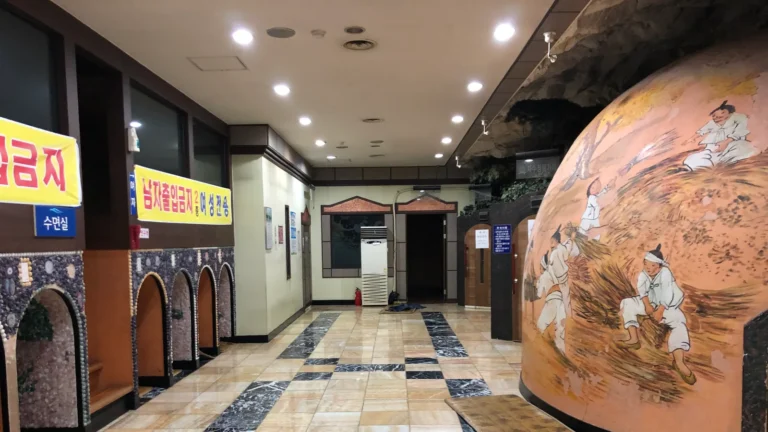
The practice lives inside the public bathhouse (mogyoktang) and inside the jjimjilbang, the larger sauna complex with heated rooms and a co-ed lounge. The scrub, though, never happens in the co-ed part. It happens in the wet bathing area, which is separated by gender, which is why women are scrubbed by women and men by men. Records cited by the Korea JoongAng Daily show Koreans scrubbing grime off long before the Joseon Dynasty, but the paid profession is modern: it grew out of the public bathhouse boom of the 1960s and 70s.
What actually happens, step by step
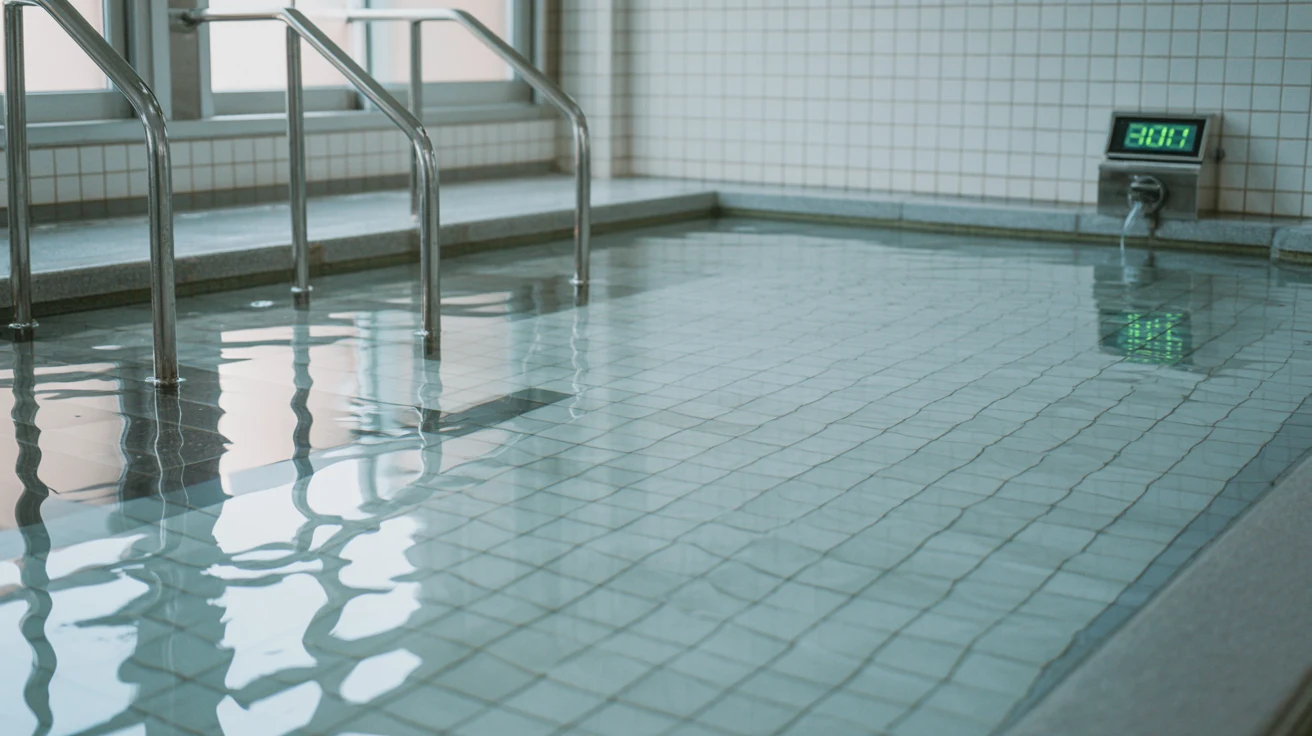
You check in, undress completely, shower, and then get in the hot tub or the steam room. This part is not a warm-up and it is not optional. It is the mechanism. Korea.net’s own explainer on bathhouse culture puts it plainly: you soak first so the dead skin comes off more easily during the scrub. Venues enforce it with specific numbers: 10 to 15 minutes at Olympic Spa in Los Angeles, 15 minutes at The SPA Club in Manhattan, 15 to 30 minutes at SoJo Spa Club in New Jersey, a minimum of 30 minutes at Spa World in Centreville, Virginia.
When your number is called you lie face down on a plastic-covered table in the wet room. The scrubber works in sections (back, arms, legs, stomach, neck, feet) with a mitt sewn from Italy-towel fabric, rinsing the table and the mitt as she goes. Crystal Spa in Los Angeles describes the same four stages every venue follows: soak and warm up, scrub section by section with firm pressure, rinse with warm water, then seal the skin with oil or a wrap if you booked one. Olympus Spa near Seattle distinguishes its tiers by passes: the basic scrub covers the body twice, the premium three times.
For half an hour you are handled roughly like laundry: turned, scrubbed, rinsed, turned again. Finishes and add-ons cost extra almost everywhere: a milk rinse, a cucumber treatment, an oil massage, a shampoo and scalp massage, a facial mask. The closest relative outside Korea is the Moroccan hammam scrub, which runs on the same logic (steam first, abrade second) with a different mitt and a different room.
The Italy towel came from Busan in 1967
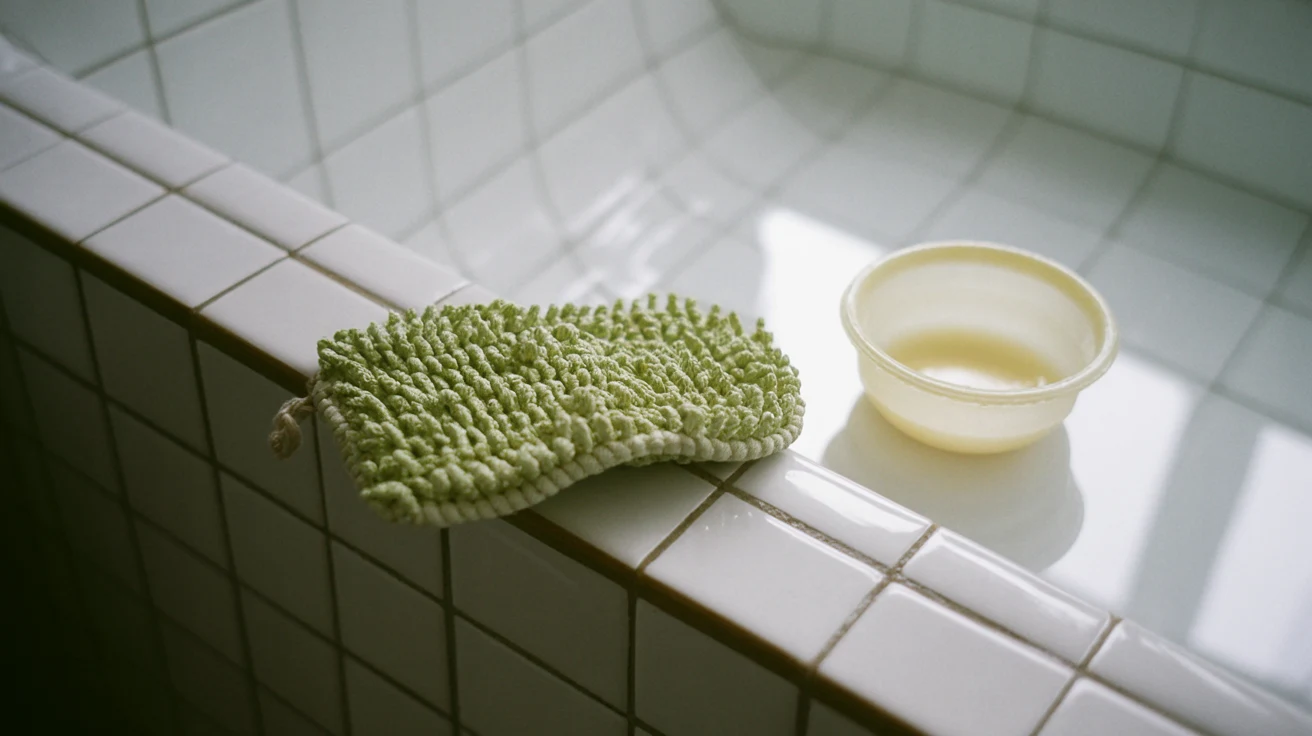
The mitt is called an Italy towel (이태리타월) because of the fabric, not the country’s bathing habits. According to the Korea Times, Hanil Textile in Busan imported a type of Italian fabric in 1967, found it unusably coarse for its intended purpose, and repurposed it as an exfoliating cloth. The individual inventor is disputed. The company’s founder is usually credited, though a rival claim has circulated for decades, so the safe attribution is the firm and the city. Italians, for their part, have no idea the product exists.
Construction is simple: two squares of rough viscose rayon (some versions use nylon or sisal blends) sewn into a hand mitt. Color often signals coarseness, with green as the standard grade, pink softer and blue rougher, though grading varies by maker. Busan gave bathhouses one more piece of hardware too: the back-scrubbing machine, an Italy towel mounted on a rotating plate, invented by Son Jeong-gi in 1981. Early models had electrical problems and the machines never really spread beyond Busan.
The bathhouse is shrinking; the scrub is moving
Korea had 9,868 public bathhouses in 1999 and roughly 3,000 by 2022, with 730 of them closing between 2020 and 2022 alone. Seoul went from 146 bathhouses in 1960 to 1,768 in 1985 and is now under 400. Busan, home of the Italy towel, peaked around 1,500 in 1996 and is estimated at about 500 today. Indoor plumbing and home water heaters did what they did everywhere: moved bathing out of the neighborhood and into the apartment.
Seshin itself didn’t die with the buildings. It relocated. One-on-one scrub boutiques with private rooms have grown into a category of their own, and they are heavily driven by tourism. The JoongAng Daily reports that the Seoul boutique Sulis puts international clients at 70 to 80 percent of its business, and another, Heum, has seen up to nine in ten foreign customers in some months. The neighborhood bathhouse corner is where the tradition lives; the boutique is where the marketing budget is.
Who should skip it, and who should go gentle
The American Academy of Dermatology‘s advice on physical exfoliation isn’t written about Korean scrubs, but it’s the relevant evidence. The AAD says mechanical exfoliation may be too irritating for dry, sensitive or acne-prone skin; that people with darker skin tones, or anyone who develops dark spots after burns, bug bites or acne, should avoid aggressive exfoliation; that you should never exfoliate open cuts, wounds or sunburned skin; and that prescription retinoids, retinol and benzoyl peroxide make skin more sensitive, so exfoliating while using them can worsen dryness and breakouts. More aggressive methods should be used less often, and skin should be moisturized right after.
If you have psoriasis, raise it with a dermatologist first. The AAD notes that skin injury (a cut, scrape, sunburn or scratch) can trigger a flare roughly 10 to 14 days later, and a vigorous full-body scrub is exactly the kind of friction worth clearing in advance. Venue rules add their own exclusions: Crystal Spa tells guests to skip the scrub with sunburn, open cuts, rashes or a recent tattoo in the area, and SoJo warns that pregnant guests may not be appropriate candidates and asks you to disclose medical conditions and allergies before booking.
Afterward, some redness or itching is ordinary: The SPA Club in New York tells customers it’s a common reaction that typically fades within a few days. On frequency, there is no dermatology guidance for full-body scrubs, only what the venues themselves suggest: Crystal Spa recommends every three to four weeks and warns that going too often leaves skin irritated, while Olympus Spa’s FAQ says monthly.
What a Korean body scrub costs in the US
A basic scrub runs about $55 to $110 for 25 to 40 minutes. The catch is that at most venues the scrub is a service on top of a day pass, and several add a mandatory 20 percent gratuity to the service price. Prices below were checked on each venue’s own site in September 2026.
| Venue | Service | Length | Price | Admission |
|---|---|---|---|---|
| Aroma Spa & Sports, Los Angeles | Korean Body Scrub | 30 min | $55 | $20 extra if services under $120 |
| Crystal Spa, Los Angeles | Traditional seshin scrub | 35 min | $60 | $20 extra |
| Wi Spa, Los Angeles | Buff | 25 min | $65 | $40 extra if services under $160 |
| Beverly Hot Springs, Los Angeles | Body Scrub | 30 min | $80 | Included |
| Century Day & Night Spa, Los Angeles | Body Scrub | 30 min | $85 | Included |
| The SPA Club, Manhattan (Koreatown) | Basic K-Scrub | 40 min | $100 | Extra (50% off with over 1 hour of services); 20% service fee |
| Spa Castle, Queens NY | Spa Castle K Scrub | 40 min | $95 | Extra ($85 to $110); mandatory 20% gratuity |
| SoJo Spa Club, Edgewater NJ | Basic Korean Body Scrub | 30 min | $75 | Extra; 20% gratuity added |
| King Spa, Niles IL (Chicago) | Classic Body Scrub | 40 min women / 30 min men | $110 / $100 | Extra ($75 day pass) |
| Spa World, Centreville VA | Body Scrub | 25 min | $90 | Extra ($45); gratuity included |
| Olympus Spa, Lynnwood WA (women only) | Korean Body Scrub | 40 min | $110 | Extra ($58 day pass) |
| Jeju Sauna, Duluth GA (Atlanta) | Basic Body Shampoo (scrub) | Not stated | $60 | Extra ($40 adults) |
Gratuity policy is where the real variation hides. Spa World includes it in the service price. Spa Castle, SoJo and The SPA Club add 20 percent automatically. Olympus Spa excludes it entirely and takes tips in cash only. Between admission and tip, the total can run to about double the listed scrub price, which is worth knowing before you’re standing at the counter in a robe. Korean spas in Los Angeles are the notable exception, with two of the city’s best-known venues bundling admission into the treatment price.
What it costs in Korea
At a neighborhood bathhouse, a scrub in the corner of the wet room typically runs 20,000 to 40,000 won ($15–30), and one Korean business outlet put the public bathhouse range at 20,000 to 30,000 won ($15–22) in 2023. The private boutiques charge several times that: a basic 50 to 60 minute course at a one-person scrub shop was reported at 50,000 to 80,000 won ($37–59), climbing past 100,000 won ($74) with add-ons, and one boutique’s basic package (bath, scrub, milk body care, facial and hair treatment) was listed at 83,000 won ($61) in 2025. I’d avoid fixed dollar conversions on any of these; the won-dollar rate moves enough that a figure quoted last year is already wrong.
Doing it yourself at home
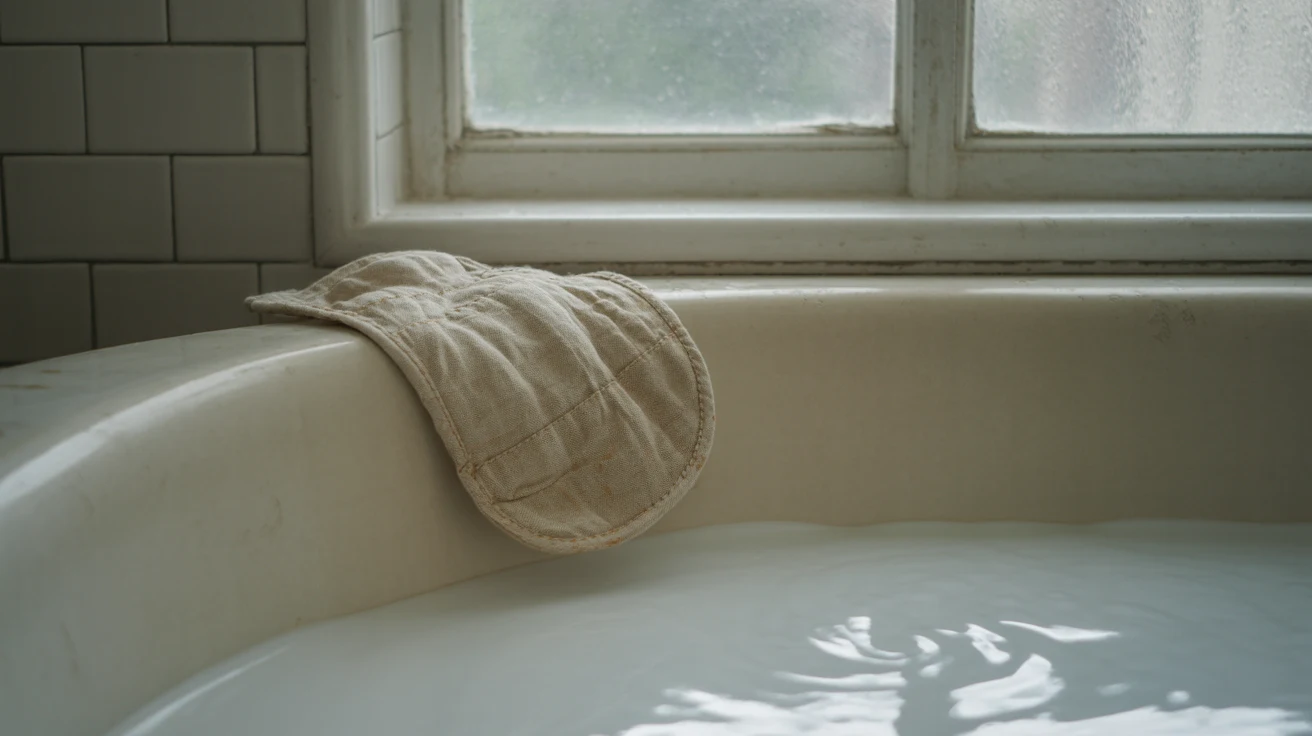
The Italy towel is a normal household item in Korea, not just bathhouse equipment, and the home method is the spa method minus the table. Soak in a hot bath or take a long hot shower first so the skin softens, then work over the damp skin with a damp mitt. The AAD’s general guidance for at-home physical exfoliation is light pressure and moisturizer immediately after, which is the part most first-time mitt owners skip.
The obvious limitation is your own back, which is presumably how Busan ended up inventing a machine for it.
Common questions
What happens during a Korean body scrub?
You shower, then soak in hot water or sit in a steam room for 10 to 30 minutes depending on the venue’s rule, which softens the skin. You then lie on a waterproof table in the wet bathing area while an attendant scrubs you section by section (back, arms, legs, stomach, neck, feet) with a coarse exfoliating mitt, rinses you with warm water, and applies oil, a milk rinse or a wrap if you booked one. The whole thing takes about 25 to 40 minutes.
Do you have to be naked for a Korean body scrub?
At traditional Korean spas, yes. The scrub takes place in the gender-separated bathing area where swimsuits aren’t worn: The SPA Club in New York states that all its services require nudity, and Wi Spa in Los Angeles prohibits bathing suits in its segregated spa areas entirely. A few US venues are more flexible: SoJo Spa Club in New Jersey allows bikini bottoms at its semi-private scrub stations.
How much is a Korean body scrub in the US?
A basic scrub costs roughly $55 to $110 for 25 to 40 minutes at Korean spas in Los Angeles, New York, New Jersey, Chicago, Virginia, Seattle and Atlanta. At most venues, spa admission of $20 to $75 is charged on top, and Spa Castle, SoJo and The SPA Club add a 20 percent service gratuity automatically. Only a couple of venues, such as Century Day & Night Spa and Beverly Hot Springs in Los Angeles, include admission in the treatment price.
How often should you get a Korean body scrub?
There’s no dermatology guidance on frequency for full-body scrubs, so the only numbers available are the spas’ own recommendations: Crystal Spa suggests every three to four weeks and warns that going too often leaves skin irritated, while Olympus Spa’s FAQ says monthly. The American Academy of Dermatology’s general position on physical exfoliation is that more aggressive methods should be used less often, and that over-exfoliating causes redness and irritation. If your skin is dry, sensitive or acne-prone, ask a board-certified dermatologist rather than a booking page.
Why is it called an Italy towel?
Because of where the fabric came from, not the treatment. The Korea Times reports that the Busan firm Hanil Textile imported an Italian viscose fabric in 1967, found it too rough for its intended use, and turned it into a skin-scrubbing cloth. The mitt is entirely Korean in origin and use (it is unknown in Italy), and by the late 1960s the green version had become synonymous with Korean bathhouses.