Russian Banya: The Tradition Explained
A Russian banya runs cooler than a Finnish sauna and far wetter, and someone will beat you with a bundle of oak leaves. That last part isn’t a threat, it’s the main event. The banya is a high-humidity steam bath built around communal heat, and the whisking that Finns treat as a gentle ritual, Russians treat as a full-body workout administered by a friend.
If you know the Finnish sauna, the banya feels like a close cousin who took the same idea in a different direction: lower temperatures, thicker steam, and a whisk used with real intent. Here’s how the tradition actually works, room by room, and what separates it from the sauna cultures around the world it’s most often confused with.
What a banya actually is
The banya is a wet-heat bathing tradition, usually wood-fired, where steam is generated by throwing water on a hot stove and the air is kept humid enough to feel heavy. It’s a social institution as much as a bathing one, the place where Russians have historically washed, relaxed, argued, and reconciled. In villages it was often the cleanest, warmest building on the property, and children were sometimes born there for exactly that reason.
Structurally the banya sits firmly in the wet sauna family. The defining experience is the steam cloud, thick and rolling, rather than the dry radiant burn of a high-temperature Finnish room. You sweat because the air is saturated, not because it’s scorching.
The three-room structure
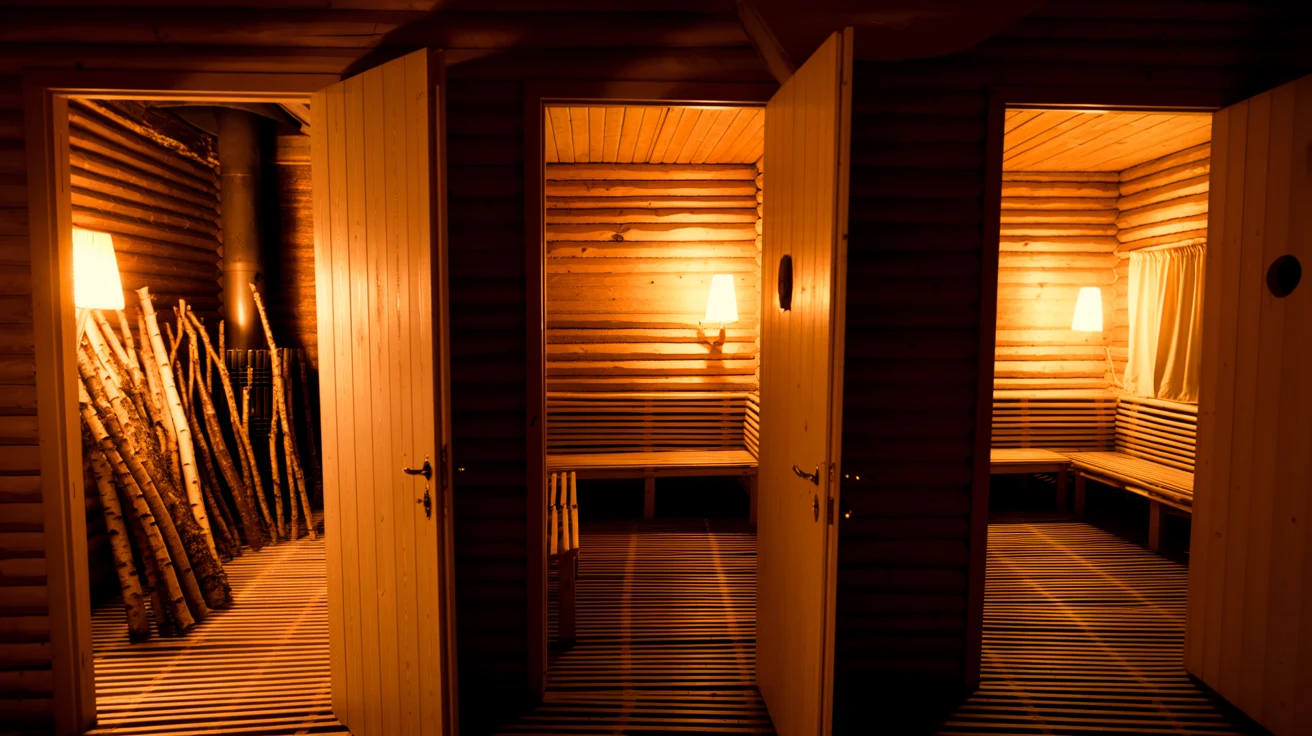
Built as three connected spaces, a proper banya gives each room its own job. You move through them in sequence, and the layout is the tradition, not a luxury add-on.
| Room | Role | What happens there |
|---|---|---|
| Predbannik | Entry and changing room | Undress, cool down between rounds, rest, eat, talk. The social hub. |
| Mylnaya | Washing room | Soap, rinse, and scrub. Historically where actual bathing happened. |
| Parilka | Steam room | The hot core, where the stove, the steam, and the whisking live. |
The entry room does the cultural heavy lifting. It’s where people spend the time between steam rounds, and where the tea, the food, and sometimes the beer come out. The steam room itself is for short, intense bursts; you don’t linger there the way you might in a dry sauna.
The venik: the oak whisk with intent
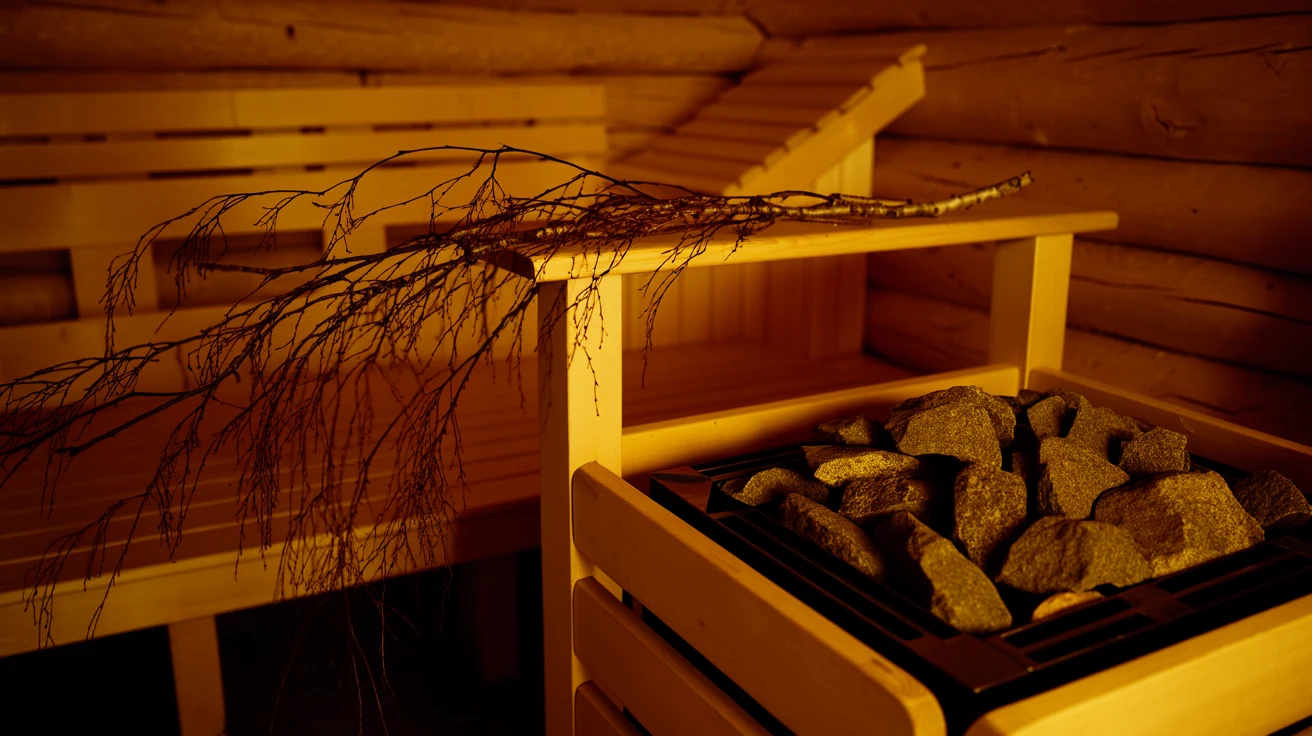
The venik (a leafy whisk of oak, birch, or eucalyptus branches, translating roughly to “besom”) is the tool that defines the banya for outsiders. Oak is the classic choice for its broad, sturdy leaves; birch is common too, and eucalyptus shows up for its scent and its bite.
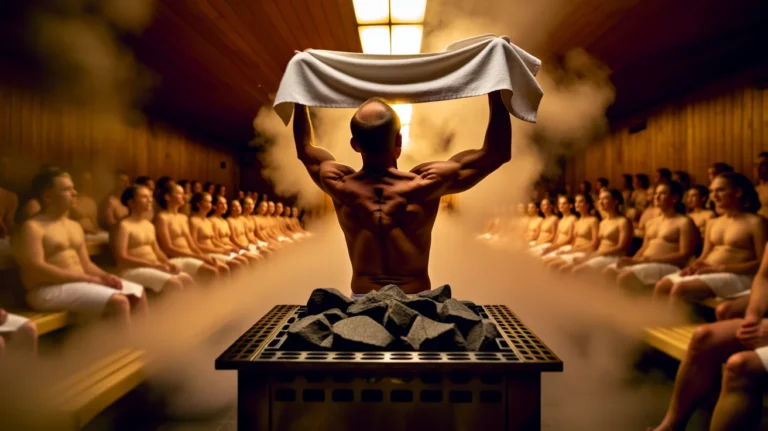
Here’s where the banya and the Finnish tradition genuinely diverge. In Finland the birch whisk is used to gently swat and stroke the skin, more aromatic pat than percussion. In the banya, the whisk is worked hard. Someone skilled with the whisk, or a friend doing it for you, uses it to fan waves of hot air down onto the body, then slaps, brushes, and presses the leaves against the skin in a rhythmic, near-athletic sequence. It boosts circulation and pushes heat into the muscles, and yes, it can leave you pink.
The person wielding it is often experienced enough that the whisking becomes a service, something done to you while you lie on the bench. Being on the receiving end of a good session is closer to a vigorous massage than to anything you’d call a light touch.
How the banya differs from a Finnish sauna
The two traditions share a common ancestor and look similar from the doorway, but the numbers and the feel pull apart once you’re inside. The banya runs cooler and much wetter, which is why it can feel just as intense at a lower temperature. Humidity carries heat to your skin far more efficiently than dry air.
| Russian banya | Finnish sauna | |
|---|---|---|
| Temperature | 60-80°C (140-176°F) | 70-100°C (158-212°F) |
| Humidity | High, roughly 40-60% | Lower, often 10-20% |
| Steam feel | Thick, rolling clouds | Sharp bursts of löyly |
| Whisk use | Vigorous, worked hard | Gentle, aromatic |
That burst of steam off the stones, called löyly in Finnish (the wave of humidity when water hits hot rock), is central to both traditions. The difference is what happens to the air afterward. In a Finnish room the humidity spikes and fades quickly.
In a banya the goal is to build and hold a dense, wet atmosphere, so the steam is generated more deliberately and the room stays heavy. Lower temperature, higher humidity, longer-lasting cloud. For a fuller picture of the whole family, the banya’s relatives stretch from Estonia to Japan, each with its own version of the same trade-offs. You can read more about the tradition’s history via documented banya culture.
The communal side
The banya is not a solo activity by default. Public banyas have operated in Russian cities for centuries, and going to the banya with friends, family, or business associates is a standard part of the culture. Deals get discussed there. Grudges get aired there. The heat and the shared discomfort strip away some of the usual formality, which is precisely the point.
Whisking someone else is part of this social fabric. Offering to work the whisk for a friend, or being offered the same, is an act of hospitality, not an oddity. The banya rewards people who show up, stay a while, and take turns.
Banya etiquette
The rules are practical, built around comfort, heat management, and not annoying the people sharing the room. Most of them transfer cleanly from any sauna tradition, with a few banya-specific additions.
- Wash before you enter the steam room, and rinse the sweat off between rounds.
- Wear a felt banya hat in the steam room. It protects your head and hair from the heat, and going bareheaded marks you as a beginner.
- Ask before adjusting the steam. Throwing water on the stove changes the room for everyone, so it’s a group decision.
- Bring or borrow a whisk, and offer to whisk others if you know how. Don’t grab someone else’s whisk without asking.
- Keep your rounds short. Ten to fifteen minutes in the heat, then out to cool down, rest, and rehydrate.
- Sit or lie on a towel, never bare skin on the wood.
The felt hat trips up newcomers most. In a dry Finnish sauna you can go bareheaded without much thought. In the wetter, heat-loaded banya, an unprotected head cooks faster than the rest of you, and the hat is standard equipment rather than a costume.
FAQ
What’s the difference between a banya and a Finnish sauna?
A Russian banya runs cooler, around 60-80°C, with much higher humidity of roughly 40-60%, producing thick steam clouds. A Finnish sauna runs hotter, up to 100°C, with lower humidity and sharper steam bursts. The banya also uses its leaf whisk far more aggressively than the gentle Finnish version.
What is a venik in a banya?
A venik is a leafy whisk made of oak, birch, or eucalyptus branches used in the steam room. In the banya it’s worked hard: the bather fans hot air onto the skin and slaps and presses the leaves against the body to boost circulation. It’s closer to a vigorous massage than a light aromatic touch.
How hot is a Russian banya?
A banya typically runs 60-80°C (140-176°F), cooler than a Finnish sauna. Because humidity is high, around 40-60%, the moist air carries heat to your skin efficiently, so it feels just as intense as a hotter but drier room.
Do you get hit with the whisk in a banya?
Yes, and it’s a normal, welcome part of the experience. A skilled bather uses the whisk to fan heat onto you and to slap and brush your skin in a rhythmic sequence. It’s done to increase circulation and push heat into the muscles, not to hurt you.
Why do people wear felt hats in a banya?
The felt hat protects your head and hair from the intense, humid heat, which cooks an unprotected head faster than the rest of the body. In banya culture it’s standard equipment, and going bareheaded marks you as a beginner.