What Is Loyly? The Soul of Real Finnish Sauna
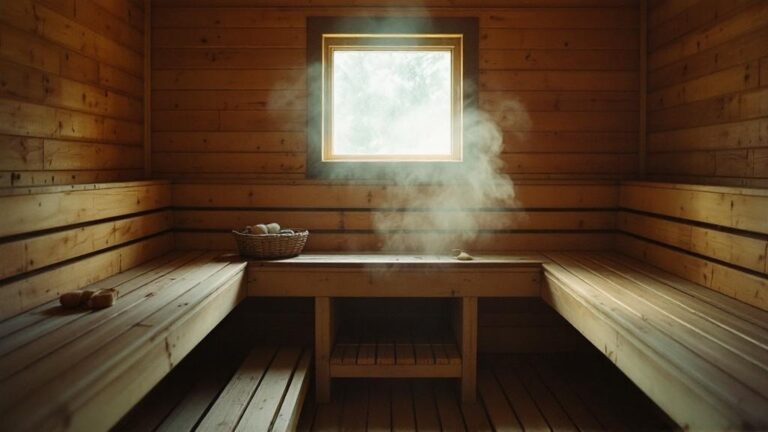
Löyly is the steam that erupts when you throw water on hot sauna stones. But calling it “steam” is like calling the ocean “water” – technically correct, completely insufficient. Löyly is simultaneously a substance, an action, a sensation, and – if you trace the word back far enough – a spirit. It’s the single thing that separates a real sauna from a hot room, and there’s no English word that captures it.
The Finnish language has one word for all of this. English needs an entire paragraph. That tells you something about where each culture’s priorities lie.
What Löyly Actually Means
Löyly (pronounced roughly LURR-loo, with the first vowel like the German “ö”) operates on at least three levels simultaneously. First, it’s the physical vapor – the burst of wet heat that rises from stones when water hits them. Second, it describes the overall heat environment of the sauna – Finns will say a sauna has “good löyly” or “bad löyly” the way you’d describe a restaurant’s atmosphere. Third, in the plural form löylyt, it means the sauna session itself – “taking löyly” is taking a sauna bath.
No English translation works because English insists on separating these concepts. Steam is a substance. Heat is a measurement. A session is an event. Finnish bundles them into one word because in a sauna, they’re one experience.
The Spirit Behind the Steam
The etymology of löyly is where things get genuinely interesting. The word descends from Proto-Finno-Ugric *lewle, which literally means “spirit” or “soul.” It shares this root with the Hungarian word lélek (soul, ghost), the Northern Sami lievla, and the Udmurt лул (lul). In obsolete Finnish, löyly was actually a synonym for henki – spirit.
This isn’t just linguistic trivia. For pre-Christian Finns, the löyly rising from the stones was alive – a presence called löylynhenki, the spirit of the löyly. The sauna was a sacred space, and the steam carried something beyond water vapor. The Finnish Sauna Society still honors this concept today with their Löylynhenki-palkinto (Spirit of Löyly Award), given to individuals who have contributed to Finnish sauna culture.
Modern Finns don’t typically pray to the löyly spirit before throwing water. But the reverence for the sauna persists – Finnish sauna culture was inscribed on the UNESCO Intangible Cultural Heritage List in 2020, and saunas exist everywhere from lakeside cottages to the Finnish Parliament House to 1,400 meters underground in the Pyhäsalmi Mine.
How to Throw Good Löyly
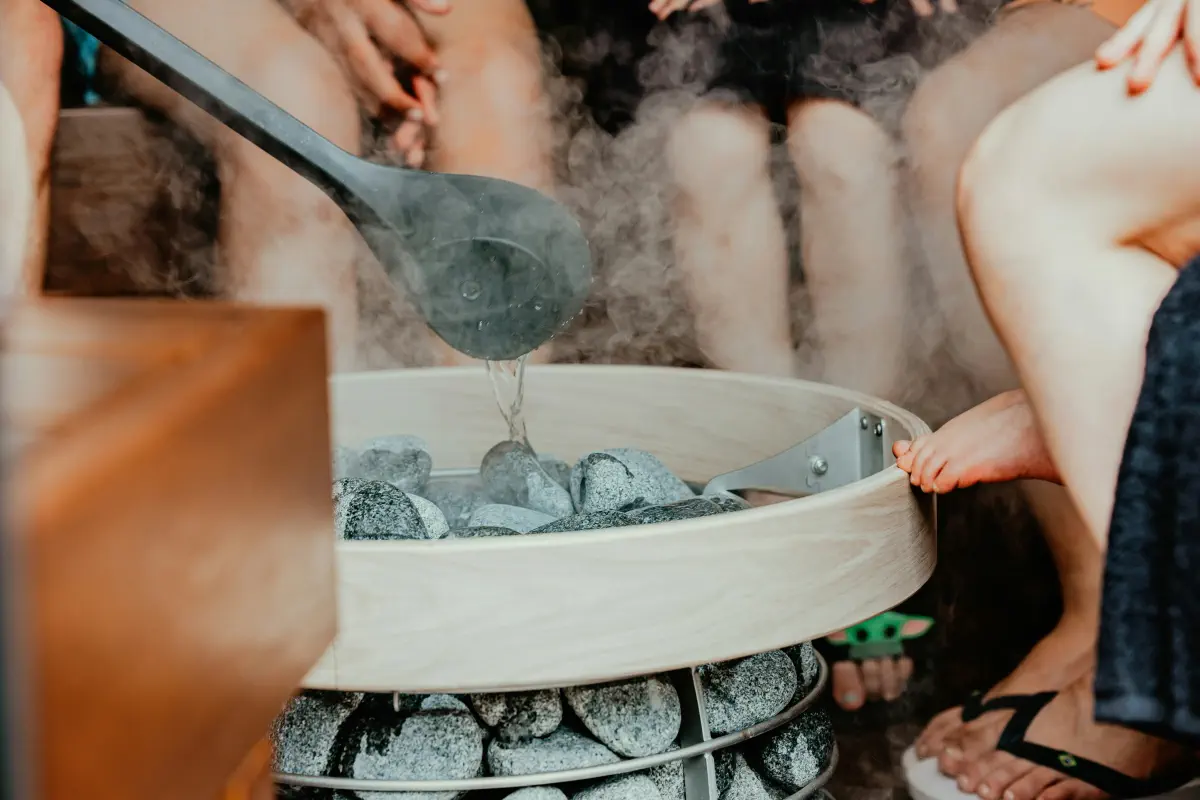
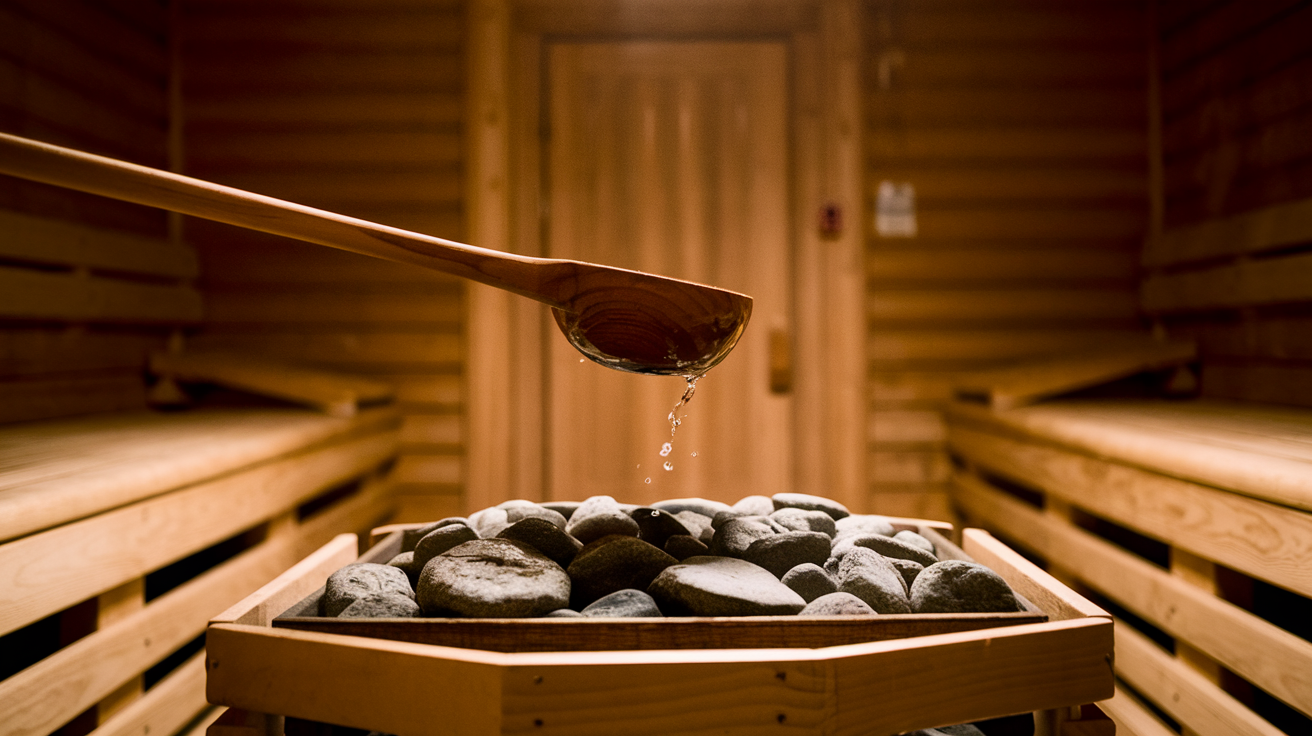
Good löyly isn’t about volume – it’s about timing, temperature, and restraint. The standard Finnish idiom uses the word “vähän” (a little) when asking someone to throw water, and that instinct is correct. Small ladlefuls, thrown every few minutes, produce better löyly than dumping a full bucket at once.
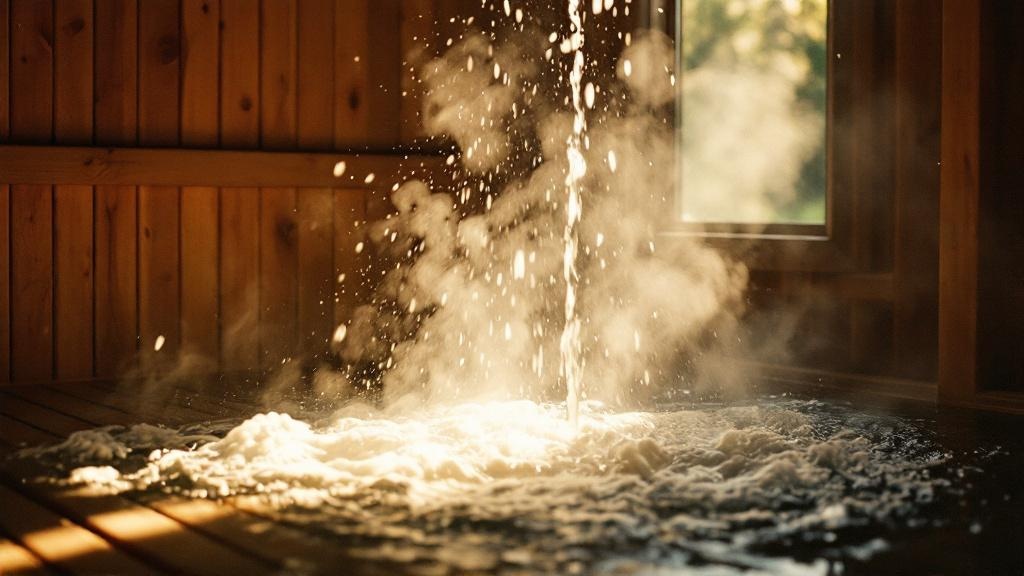
Here’s why: when you throw a small amount of water on stones that are genuinely hot, the water vaporizes almost instantly. It flashes into fine, invisible steam that disperses evenly through the room, raising the perceived temperature without creating a harsh, scalding cloud. Throw too much at once and the water pools on cooler lower stones, producing heavy, wet steam that drops fast and feels aggressive rather than enveloping.
The rhythm matters as much as the quantity. Experienced sauna-goers throw a small ladleful, let the löyly build and settle through the room, wait a few minutes, then throw again. Each round builds on the last. It’s more like conducting than cooking – you’re shaping the heat over time.
What Makes Löyly Good or Bad
The Finnish broadcasting company YLE put it simply in a 2011 segment: “Hyvä löyly syntyy kivistä” – good löyly comes from the stones. Everything starts there.
The Stones
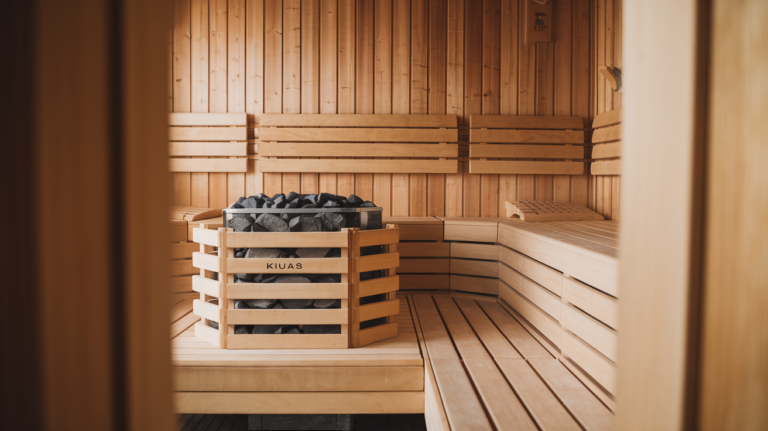
Sauna stones need to hold enormous amounts of heat and release it evenly when water hits them. Dense, heat-retentive stones like olivine diabase or peridotite absorb energy from the heater over hours and then deliver it as smooth, consistent löyly. Cheap, porous stones lose heat quickly, crack under thermal stress, and produce weak, sputtering steam. When your stones are spent, the löyly dies no matter how much water you throw.
Stone arrangement matters too. Gaps between stones allow water to reach deeper into the pile, where temperatures are highest. Stones packed too tightly force water to pool on the surface, where it sizzles without fully vaporizing.
The Water
Clean water produces clean löyly. Mineral-heavy or chlorinated water can leave deposits on stones and add a chemical edge to the steam. Many Finnish households use well water or lake water. If your tap water tastes fine to drink, it’ll work fine for löyly. If it smells like a swimming pool, consider using filtered water instead.
The Temperature
Stones need to be genuinely hot – not warm, not “getting there.” Stones typically need to reach at least 250°C (480°F) for water to flash to steam on contact. At that temperature, a ladleful of water disappears with a sharp hiss the instant it touches the surface. If you hear prolonged sizzling and see the water visibly bubbling, the stones aren’t hot enough yet. Give the heater more time. Patience before the first throw is the difference between transcendent löyly and a lukewarm disappointment.
| Factor | Good Löyly | Bad Löyly |
|---|---|---|
| Water amount | Small ladlefuls, frequent throws | Large amounts dumped at once |
| Stone quality | Dense, heat-retentive stones (olivine, peridotite) | Porous, cracked, or depleted stones |
| Stone temp | 250°C+ (480°F+) – water flashes instantly | Water sizzles and pools visibly |
| Water quality | Clean, mineral-balanced water | Chlorinated or mineral-heavy water |
| Timing | Every 2-5 minutes, building gradually | Constant throwing or long gaps |
How Löyly Changes What You Feel
The air temperature in a sauna might be 80°C (176°F) with or without löyly. But throw water on the stones and the room suddenly feels significantly hotter. Nothing changed on the thermometer – everything changed on your skin.
The physics are . Humid air transfers heat to your body far more efficiently than dry air. Dry heat lets your sweat evaporate freely, which cools you. Löyly floods the air with moisture, slowing evaporation and sending a wave of heat directly into your skin. It’s why the same sauna temperature can feel gentle or intense depending on who’s been throwing water.
This is also why löyly is a social negotiation. In a shared sauna, the person on the top bench controls the room. One ladleful too many and the people on the lower bench are fine while the person on top is counting seconds to the door. Good sauna etiquette means reading the room – literally.
Löyly Versus “Steam” in Other Traditions
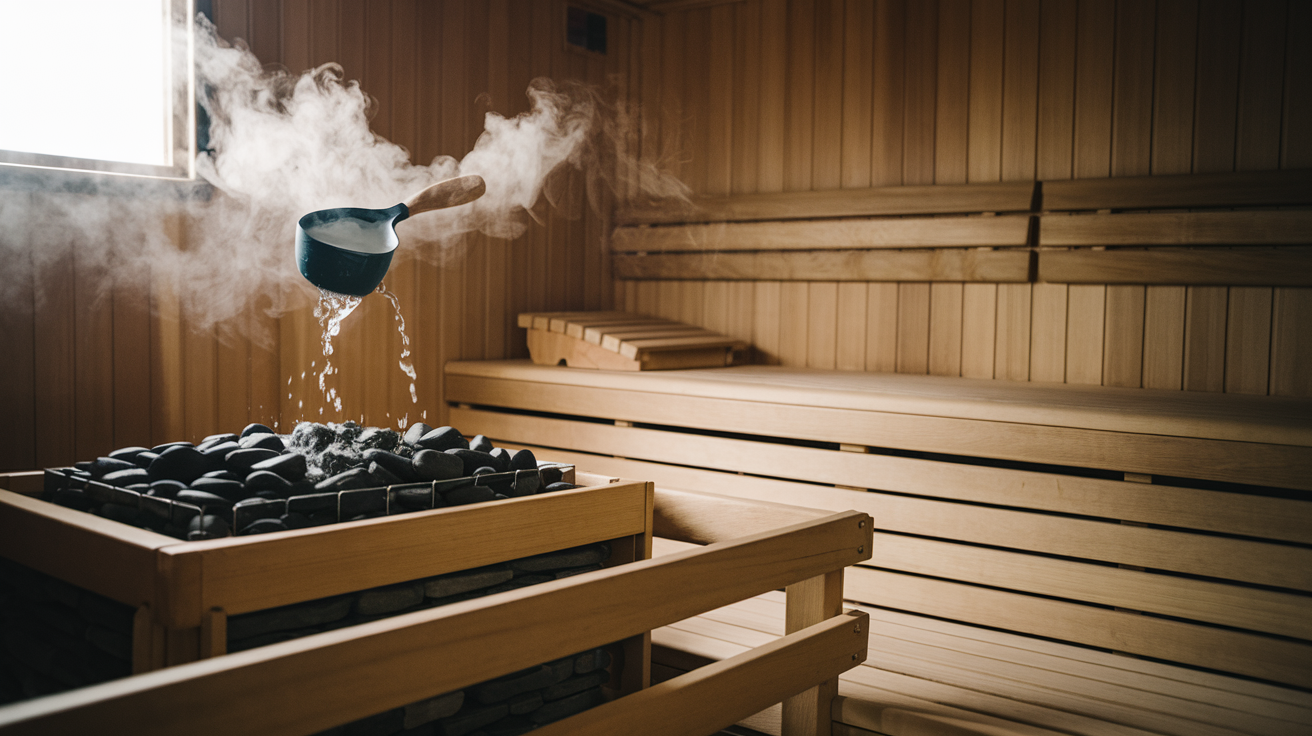
Löyly is not the same as the steam in a steam room, which pumps continuous moisture from a generator. Steam room humidity sits near 100% at relatively low temperatures (40-50°C). Löyly is episodic, voluntary, and social – someone decides to throw, the room reacts, it settles, someone decides again. You control the intensity in real time.
The German Aufguss tradition comes closest to löyly in spirit, though it formalizes the process – a trained Aufgussmeister choreographs the water throws and uses towels to circulate the steam. In Finland, anyone can throw löyly. It’s democratic. The newest person in the sauna and the most experienced share the same stones and the same ladle.
Why Löyly Matters
A sauna without löyly is a hot room. It might be warm, you might sweat, you might even enjoy it. But you won’t experience the thing that has kept Finnish sauna culture alive for thousands of years – the pulse of steam, the wave of heat on your face, the moment when the air itself changes character because someone decided to throw a ladleful of water on ancient stones.
Löyly is what makes you close your eyes. It’s what makes the conversation pause for a moment. It’s why Finns have never needed a more specific word – when you feel it, you know exactly what it is.