Temazcal: Mexico’s Ancient Sweat Bath Explained
A temazcal is a steam bath: a small, low building where water thrown on heated volcanic stones fills a sealed chamber with steam. It is Mesoamerican, it is old, and it is still in use: as a household bath, as a midwife’s tool, and, increasingly, as an evening activity sold to visitors on the Riviera Maya. Those three things are not the same thing, and the gap between them is the most interesting part of the story.
Two facts matter more than any of the symbolism: the ceremony most visitors attend is a modern blend of traditions, and the documented cause of death in temazcal accidents is usually carbon monoxide, not heat. Both are covered below.
The Spanish word comes from Nahuatl temazcalli, and the second element is uncontroversial: calli means house. The first element is where sources part ways. Frances Karttunen’s analytical dictionary, quoted in the Online Nahuatl Dictionary, cross-references it to a verb meaning “to bathe,” giving roughly “bathing house.” Arqueología Mexicana glosses it as vapor, giving “steam bath house.” Take either; avoid the confident “sweat house” breakdowns you will see on tour listings.
The Maya had their own names. Colonial dictionaries record zumpulché, defined in one as a bath for women after childbirth and for the sick. Living languages keep their own words: chuj in Mam, tuj in K’iche’, pus in Tzeltal. “Temazcal” won out in Spanish, which is why it won out in English.
What the archaeology actually shows
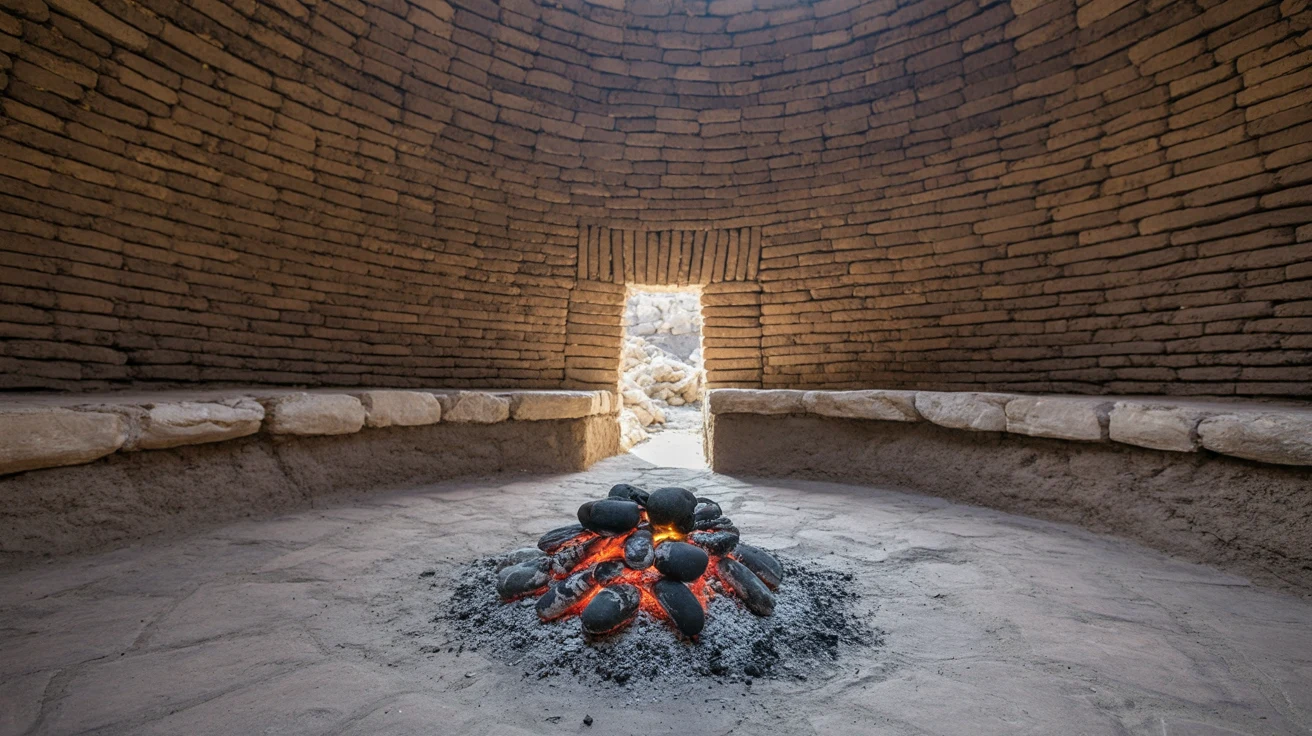
Penn Museum excavators reported eight sweat baths in the site core at Piedras Negras in 1935, a building type never before recorded in the region: small masonry chambers with a single low doorway you stoop or crawl through, approached by a sunken passage that doubled as drainage, with benches inside for bathers to lie on and a hearth lined with potsherds set within the chamber itself. Structure P-7 is the best preserved and was later reconstructed by Mark Child. Not all of them were grand. A rural bath about a 20-minute walk from the site core measured roughly 1.4 by 1.9 meters inside, with room for two or three people and no proper firebox at all, just burned rock near the back wall.
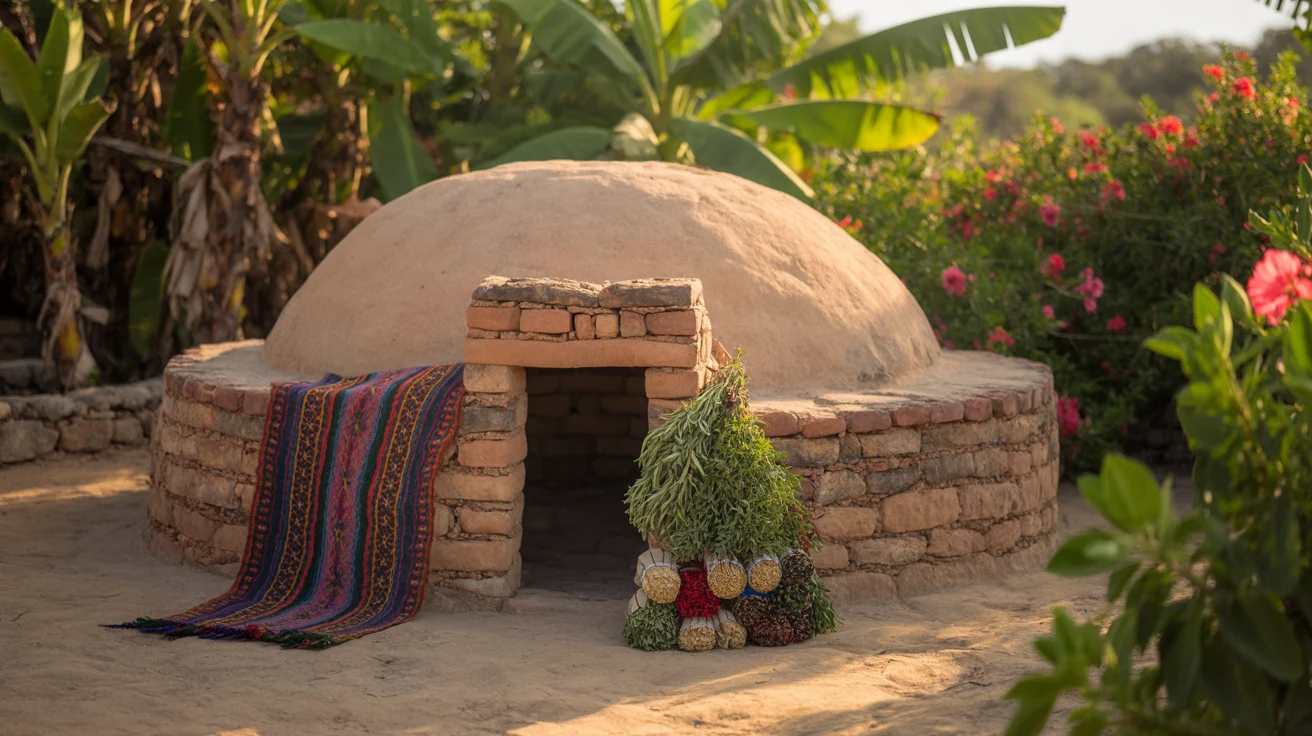
The clearest picture of a village bath comes from Joya de Cerén in El Salvador, a farming community buried by the Loma Caldera eruption and occupied around the AD 590s to 660s. Structure 9 is a domed earthen temazcal about 3.4 meters square inside, enough seating for around a dozen people, with a central firebox built of volcanic stones set in clay and an entrance only 45 centimeters wide. The whole dome sat under a protective thatch roof. Payson Sheets and Robert Mahoney’s study of a full-scale replica notes what lowland Maya sweat baths had in common: low ceilings to concentrate and hold heat and moisture, vent holes to clear smoke before use, benches, and drainage.
Shapes varied more than the tourist dome suggests. Roofs could be gabled, flat or domed; floor plans rectangular, square or circular; some chambers held up to thirty people. Heating split two ways: hot stones or pottery fragments inside the room, or an external furnace that heated a shared wall, with steam raised by throwing water against it from inside. Archaeologists read the building as a model of the earth’s interior and a threshold toward the underworld, which fits the way sweat baths cluster near ball courts in ceremonial centers.
What it was for
Sixteenth-century chroniclers (Sahagún, Durán, and later Clavijero in the eighteenth century) describe four overlapping uses: washing, postpartum care, religious ritual, and treatment of illness understood through the hot-cold framework of Mesoamerican medicine. Colonial writers recorded it being used for skin rashes, venomous bites, bone pain, chest complaints and cough, and to bring in a wet nurse’s milk. These are historical beliefs, recorded by outsiders, not medical findings.
The strongest thread is childbirth. Among the Maya, pregnant women used sweat baths before delivery and often gave birth in them, attended by a midwife, usually a postmenopausal woman, who managed the food, drink, herbal preparations and ceremony. The heaviest use came after the birth, and the umbilical cord and afterbirth were frequently buried beneath the bath. In community practice documented by Renée de la Torre and Cristina Gutiérrez Zúñiga, midwives brought women in after delivery so that steam and massage would “close” the uterus.
Plants were part of it. Academic sources on community practice name rosemary, basil, rue and assorted flowers in the herbal water; Puebla’s health ministry describes the steam as raised with “agua de hierbas medicinales” without naming species. Bathers also fanned the steam over themselves with bundles of leafy twigs, and in Clavijero’s account the midwife rubs the mother down with a brush of leaves. Anyone who has used a birch whisk in a Finnish sauna will recognize the gesture, though there is no historical link between the two.
The colonial crackdown
A royal decree dated 14 August 1688 ordered the baths “extinguished” on account of their bad consequences. Two years later the viceroy, the Conde de Galve, chose regulation over abolition: Mexico City was capped at twelve licensed baths, six for men and six for women. Agustín Ortiz Butrón’s study of thirteen licensing cases from the national archive, dated 1687 to 1717, shows what the objection had become. The licenses forbade men and women bathing together on pain of losing the license, and an order of the Galve period threatened 200 lashes for unlicensed use. Later decrees in 1697 and 1710 repeated the same twelve-bath, sex-segregated arrangement.
By the seventeenth century the complaint was moral rather than theological. Authorities had stopped trying to stamp out the ritual and started policing who could be in the room at once, while the bath itself was accepted, by Spaniards as well as Indigenous residents, as ordinary hygiene and medicine. The empire had gone from banning a heathen rite to running a licensing office for it. Of those thirteen licenses, only the earliest went to an Indigenous woman; the rest went to Spaniards operating the baths commercially.
Suppression pushed the practice smaller rather than killing it. Large public baths were discouraged, which encouraged small private ones behind family houses, the form still common in Indigenous communities today: either a low vault of leaf litter covered with woven mats or a semicircular adobe bath house in the household yard. Researchers also note the traditional bath is becoming less present in Indigenous villages as younger people turn to allopathic medicine.
The ceremony travelers book
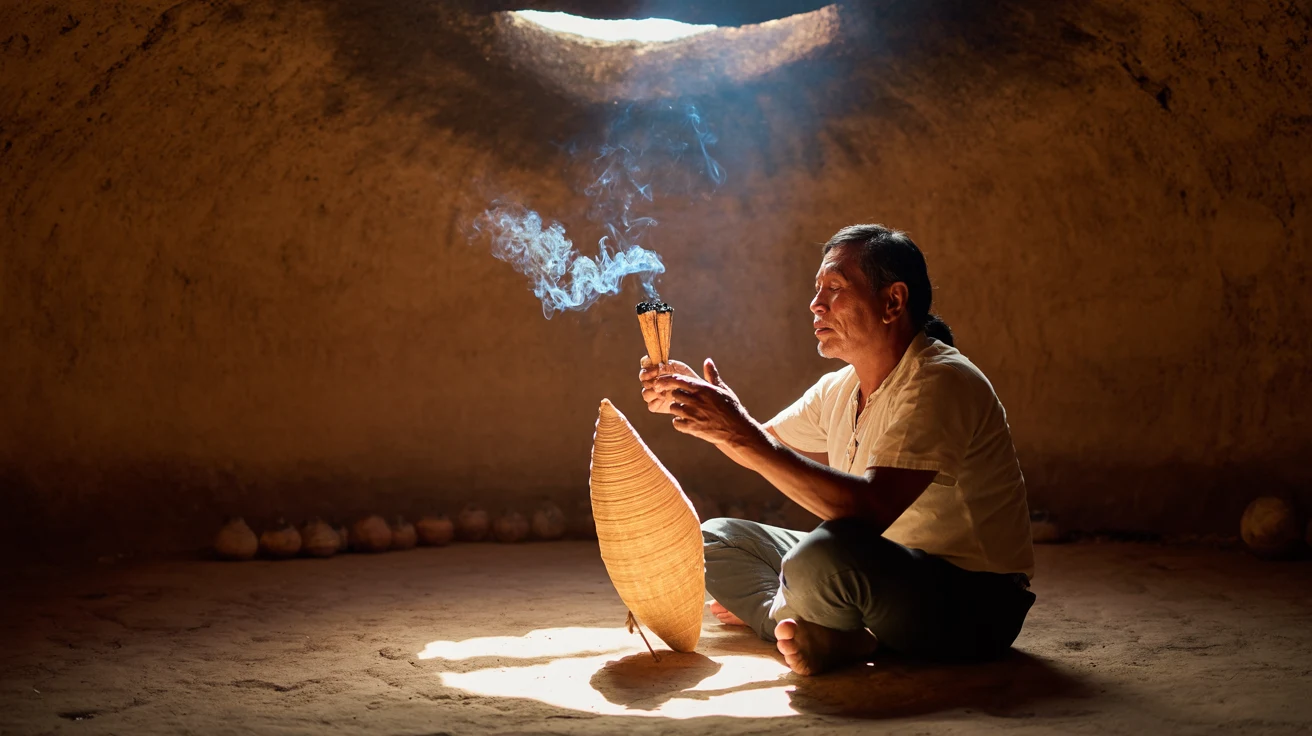
Most visitors meet the temazcal in its “four doors” form: four stages, each marked by opening the chamber to bring in more hot stones, with symbolic content attached to each, the first stage recalling the fetus, the second childhood, led by a guide with drumming, songs, incense smoke and a conch shell blown to the four directions.
De la Torre and Gutiérrez Zúñiga describe this as a transculturalized ritual: the bath lifted out of its original contexts and circulated through three networks, the Mexicanidad movement, New Age holistic-health circuits, and the Camino Rojo, which draws directly on Lakota ceremony, including the songs. The four-door format and the drum come substantially from the North American sweat lodge, a distinct tradition with its own rules and its own communities. The same researchers document the bath sold as a wellness product at a five-star hotel spa in Nuevo Vallarta.
None of that makes a modern ceremony fake. It does mean the thing you are attending is a recent blend of traditions rather than an unbroken line back to Piedras Negras, and that the central figure in the older sources is a midwife or healer, not a ceremonial leader. Operators who can tell you which tradition their leader trained in are worth more than operators who say “ancient Mayan.”
For what a ceremony involves on the day, how to choose an operator and what one costs in Tulum and Oaxaca, see our temazcal ceremony guide.
Who should skip it, and the real hazard
The Secretaría de Salud del Estado de Puebla advises a maximum of 20 minutes inside, 15 to 30 minutes of rest before entering, and 40 minutes to two hours of recovery afterward, with continuous supervision and non-cold drinks for rehydration. It lists as excluded: pregnant women, children under six, anyone who has been drinking, uncontrolled blood pressure or diabetes, claustrophobia, frequent migraines, and heart or respiratory conditions. That list overlaps closely with the standard sauna contraindications, with claustrophobia carrying more weight here because the chamber is small, dark and sealed. Xcaret’s own attraction page sets a minimum age of 12 and advises against entry for people with hypertension, diabetes, asthma, heart problems or low blood pressure.
There is a real tension around childbirth. Traditional practice brought women in soon after delivery; the Puebla guidance says wait 40 days after a vaginal birth and 80 to 90 days after a caesarean. Both positions are on the record, and the health ministry’s is the one to follow.
The accidents are the reason to be specific. In September 2025, two siblings aged 10 and 11 died in a family temazcal in San Miguel Canoa, Puebla, with their mother hospitalized in serious condition; authorities’ first hypothesis was carbon monoxide poisoning from combustion in an unventilated space.
In May 2018, two women died in a commercial temazcal in Aguascalientes after several hours inside, with the state prosecutor’s preliminary cause combining asphyxia from steam, dry heat with dehydration, and carbon monoxide. Coverage in Oaxaca reported a 2017 death attributed to carbon monoxide asphyxia at a traditional medicine center. Carbon monoxide is colorless and odorless. You will not smell the thing that hurts you.
Temazcal and sauna: what’s actually different
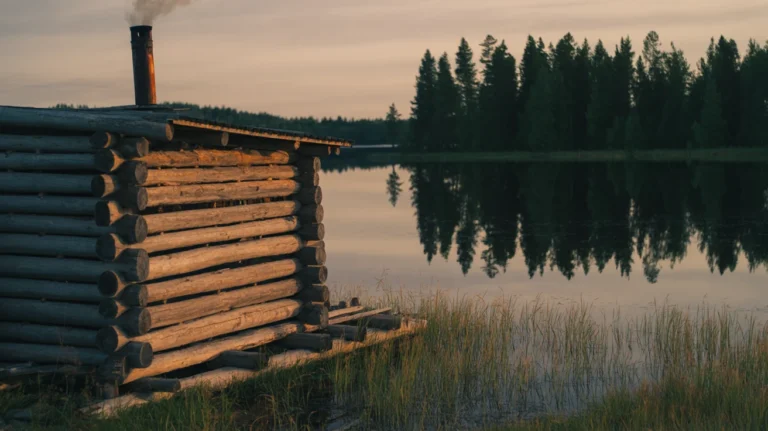
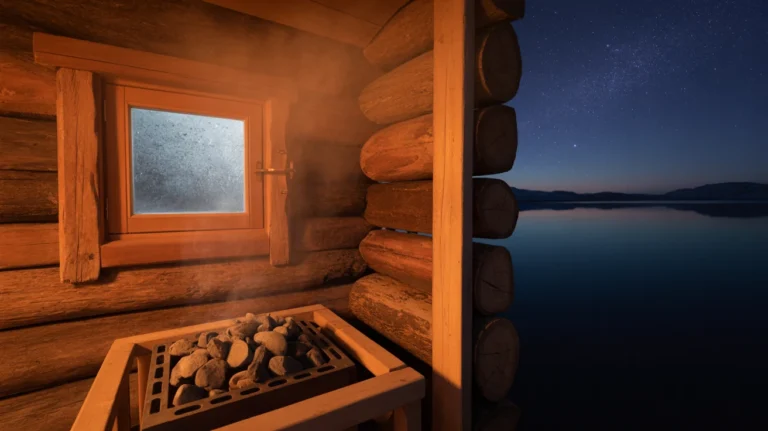
Both are stone-and-water baths, and they land in the same family as the rest of the world’s bathing traditions, but the architecture points in opposite directions. A temazcal is a steam bath by design: low ceilings built to concentrate and hold moisture, an entrance low enough to make you stoop or crawl, bathers seated or lying low on benches. A Finnish sauna sends you upward, to a bench high enough that your head sits in the hottest air, with humidity rising and falling as you throw water.
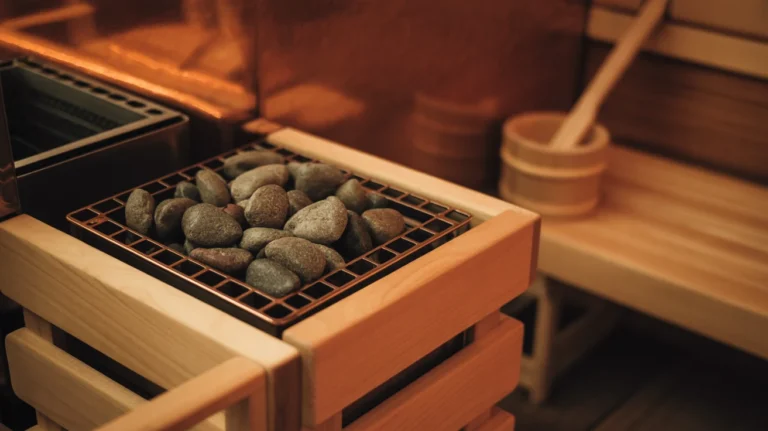
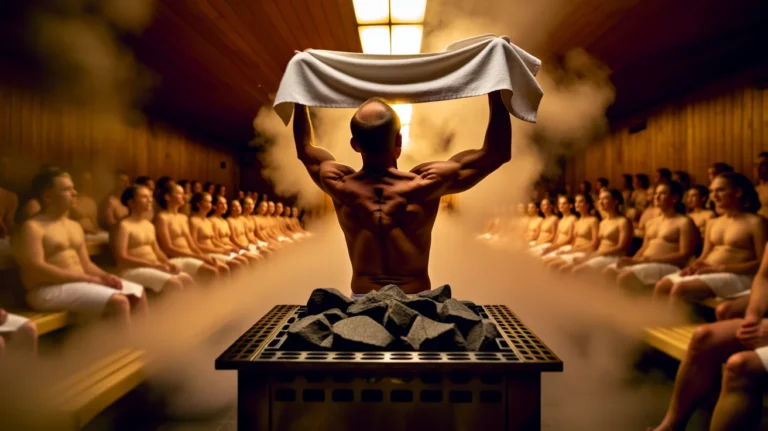
The gesture of raising steam is shared. In a Finnish sauna that burst is löyly, the wave of steam that comes off the stones when you ladle water on, and the whole room is built around producing it repeatedly. In a temazcal the steam is raised in stages, on hot stones inside the chamber or against a wall heated from outside, with herbal water and leafy branches to move it around. No credible measurement of temazcal temperature or humidity exists in the literature, so treat any number you see on a spa page as marketing.
The bigger difference is social. A Finnish sauna is a room you use; a temazcal is a session someone leads you through. You do not set the pace, you do not control the door, and leaving early means interrupting a ceremony. If that sounds uncomfortable, it is worth knowing before you crawl in rather than after.
Common questions
What is a temazcal?
A temazcal is the Mesoamerican steam bath: a small, low building of stone, adobe or earth where water is thrown on heated volcanic stones, or against a wall heated by an external firebox, to fill the chamber with steam. The name comes from Nahuatl, with “house” as the clear second element. Archaeological examples have been found at Maya sites across Mexico, Guatemala, Belize and El Salvador.
Is the tourist temazcal ceremony traditional?
The common tourist format has four stages, called doors, each marked by opening the chamber to bring in more hot stones, with incense smoke, drumming, songs and herbal water raised into steam. A guide leads the session. Researchers describe this format as a modern blend that draws on both Mexican and Lakota ceremony rather than a continuation of the older household and midwife practice.
Who should not do a temazcal?
Puebla’s state health ministry excludes pregnant women, children under six, anyone who has been drinking alcohol, and people with uncontrolled blood pressure or diabetes, claustrophobia, frequent migraines, or heart and respiratory conditions. It advises waiting 40 days after a vaginal birth and 80 to 90 days after a caesarean. If you have a chronic condition, ask your doctor first, because a sealed, hot, dark chamber you cannot leave on your own initiative is a poor place to discover a limit.
Is a temazcal the same as a sweat lodge?
No. The temazcal is a Mesoamerican tradition with permanent buildings of masonry, adobe or packed earth, some with built-in fireboxes, long used for washing, childbirth and healing. The North American sweat lodge is a separate Indigenous tradition with its own structures, protocols and communities. Many ceremonies sold to visitors in Mexico today mix elements of the two, which researchers document openly, but they remain distinct traditions.
Is a temazcal dangerous?
The recurring hazard in reported incidents is carbon monoxide in a closed, poorly ventilated chamber rather than heat alone. Fatal cases in Puebla in 2025 and Aguascalientes in 2018 were attributed by authorities in part to carbon monoxide, and the gas has no color or smell. How the chamber is heated and ventilated, and how long a session runs, matter more than the heat itself.