Cabin Sauna: The Finnish Mokki Tradition
Finland has roughly 508,000 summer cottages for 5.5 million people, and nearly every one of them comes with a sauna at the water’s edge. That pairing is so automatic that when a Finn buys a lakeside cottage, the sauna isn’t a feature they weigh against others. It’s assumed, like a roof.
A cabin sauna isn’t a product you buy. It’s a way of using a sauna: a separate wood-fired building at the shoreline, heated in the late afternoon, followed by a plunge into cold lake water. You can replicate the hardware anywhere. The lifestyle is harder to ship.
What a cabin sauna actually is
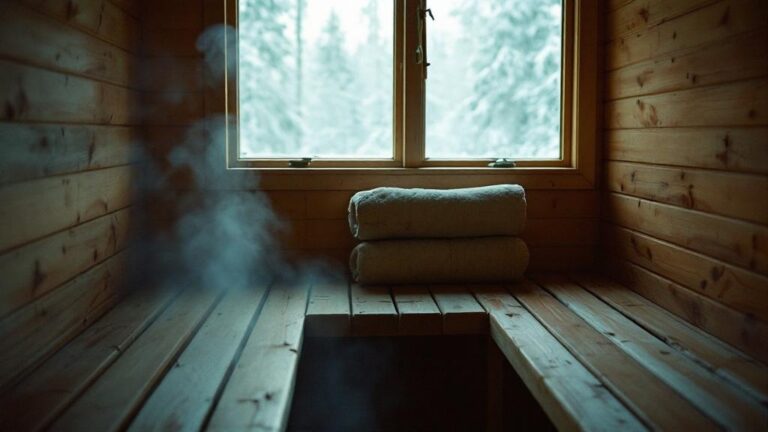
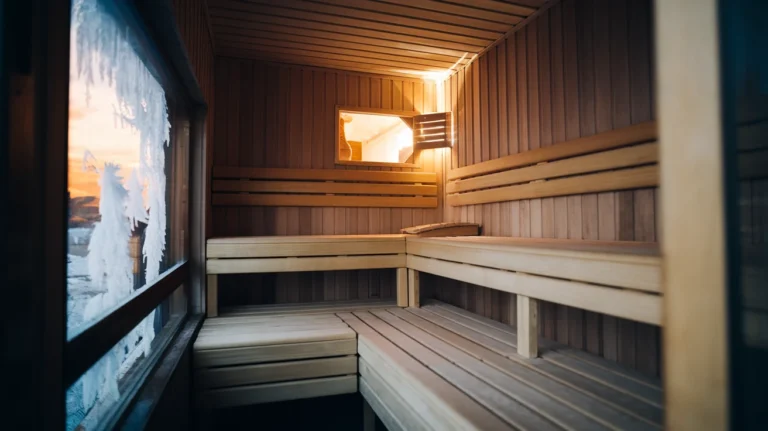
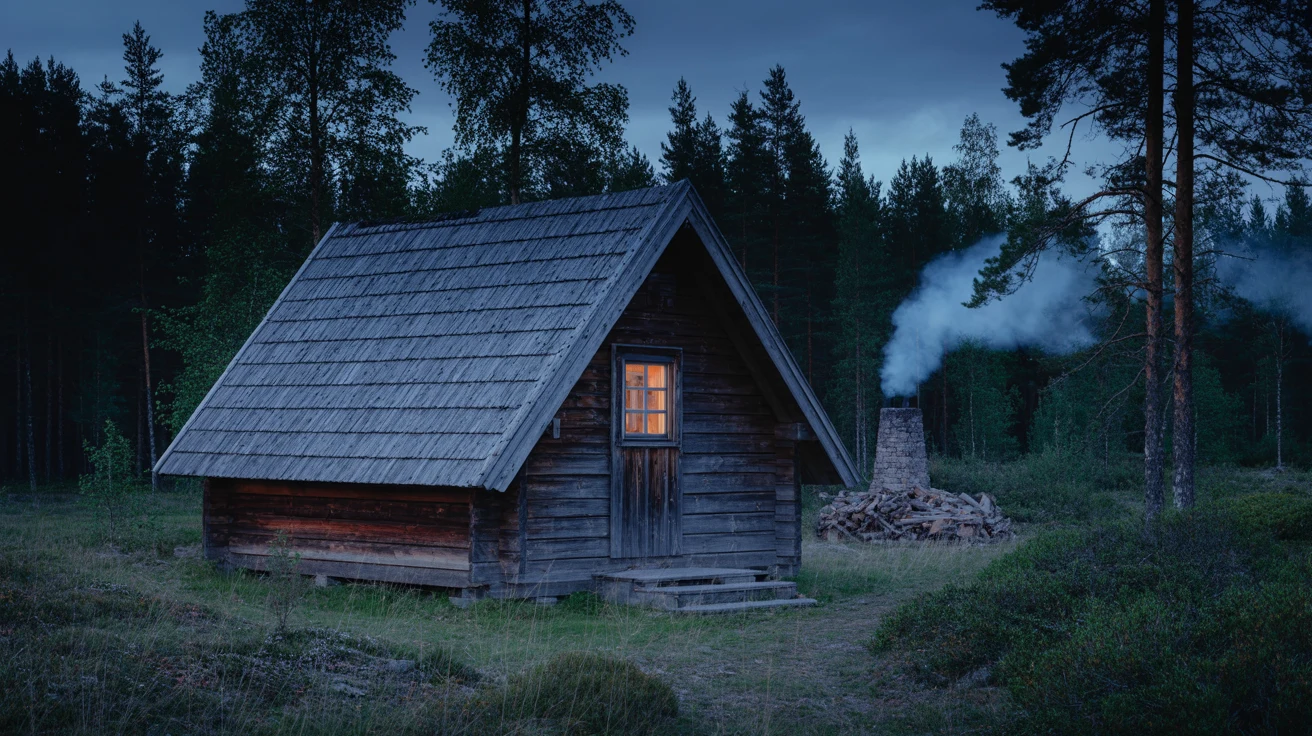
The Finnish word is mökki (a summer cottage, usually lakeside), and the cabin sauna is its near-inseparable companion. A traditional cottage sauna is a small, standalone log or timber structure built as close to the waterline as regulations allow, typically 5 to 15 meters from the shore. The point of that placement is immediacy: you step out of the hot room and into the lake in seconds, not minutes. It’s one of several sauna types, but arguably the one the whole tradition grew from.
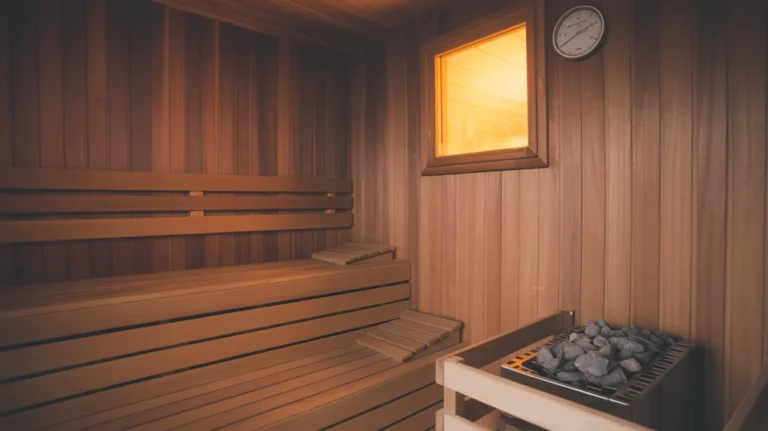
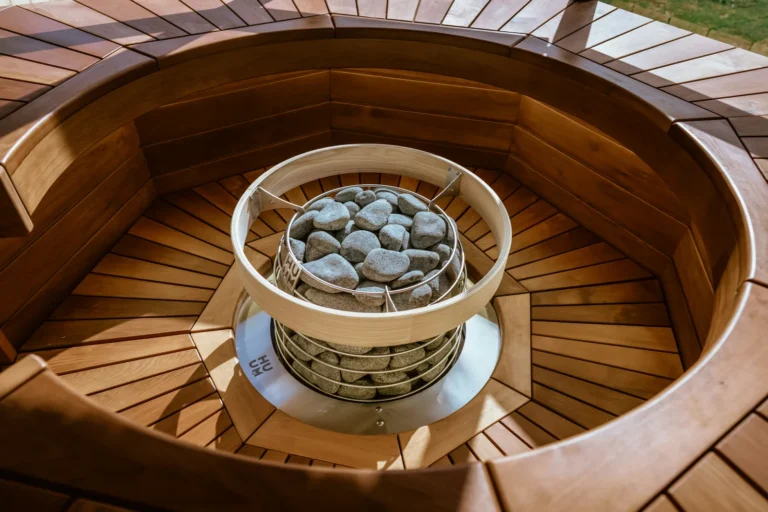
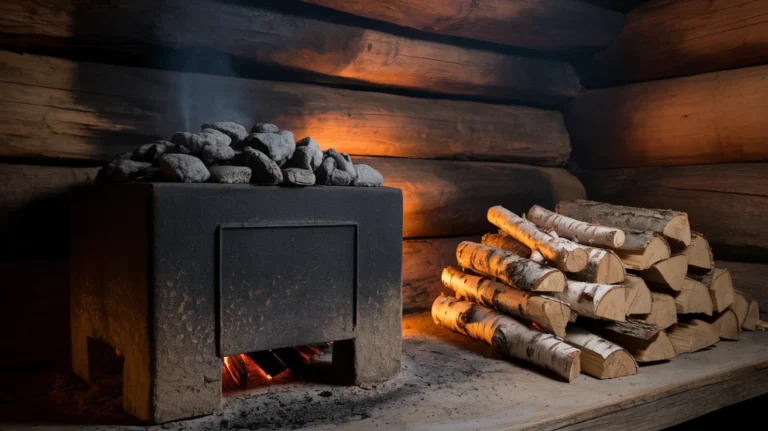
The heater is almost always a wood-fired kiuas (sauna stove), which heats the room through a stone mass sitting on top of the firebox. Electric heaters are a city thing, associated with apartment saunas rather than the cottage. At the cabin, the wood-fired setup isn’t nostalgia. It’s the practical choice, for reasons that become obvious the moment you look at where these buildings sit.
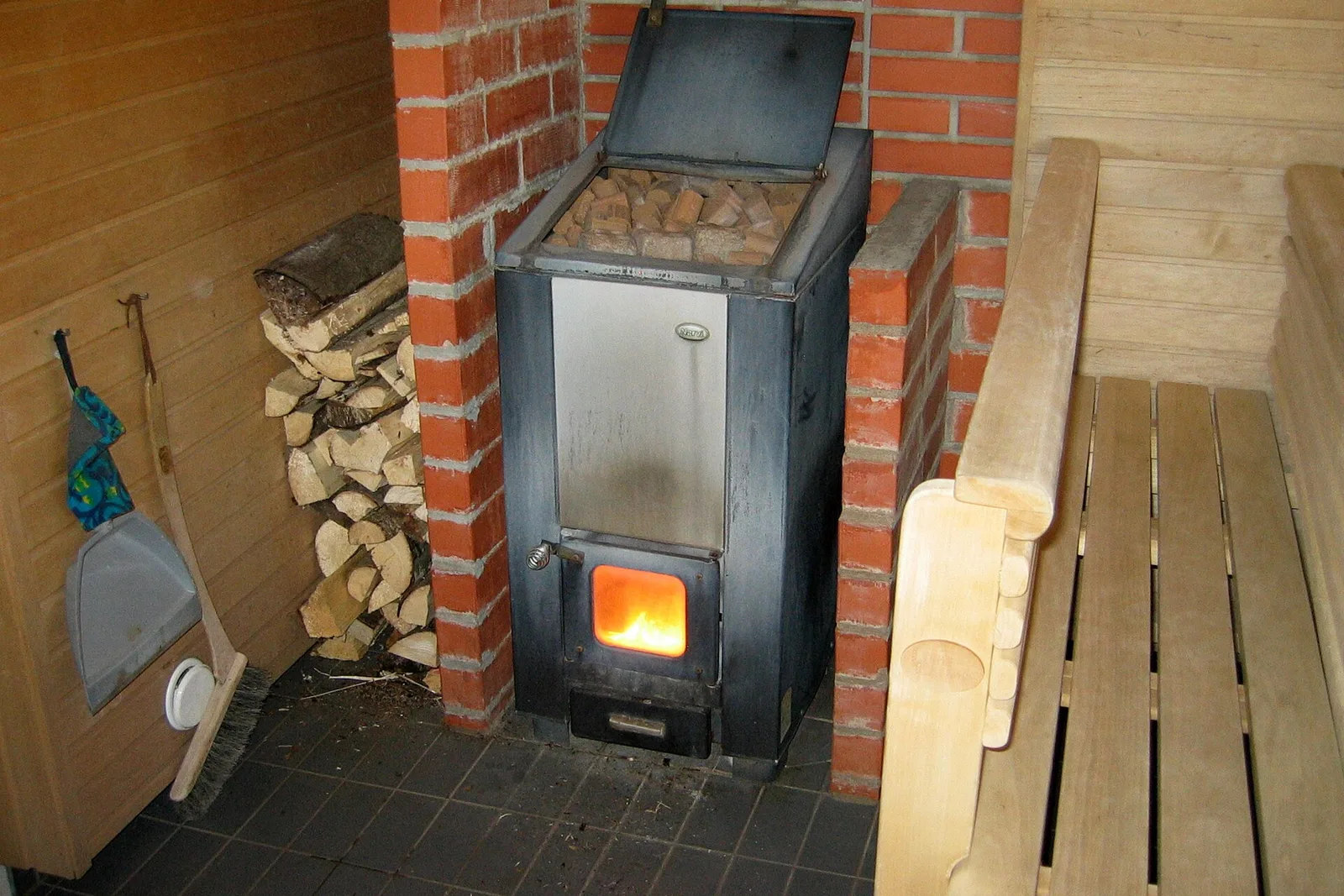
Photo: Riisipuuro, CC BY-SA 3.0, via Wikimedia Commons
Why it’s wood-fired and off-grid
Older Finnish cottages often have minimal electricity or none at all. A wood-fired stove needs no power supply, which is exactly why it survived as the standard. Water comes from the lake by bucket, or from a hand-pump well. Lighting was candles and oil lamps; a modern cottage might have solar panels or a small generator, but the sauna itself asks for nothing but firewood and a match.
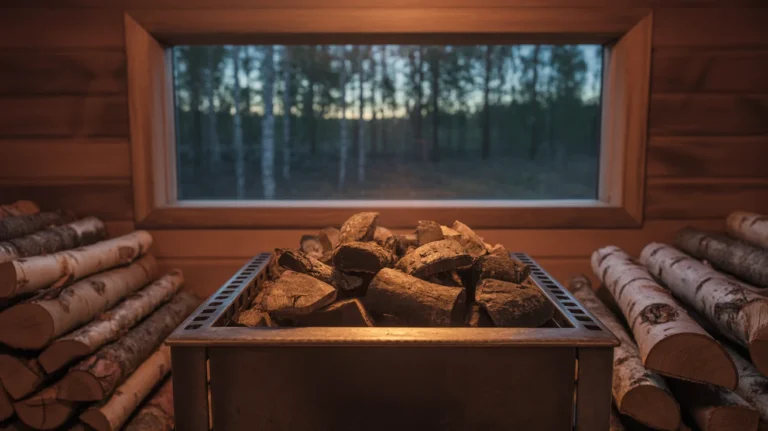
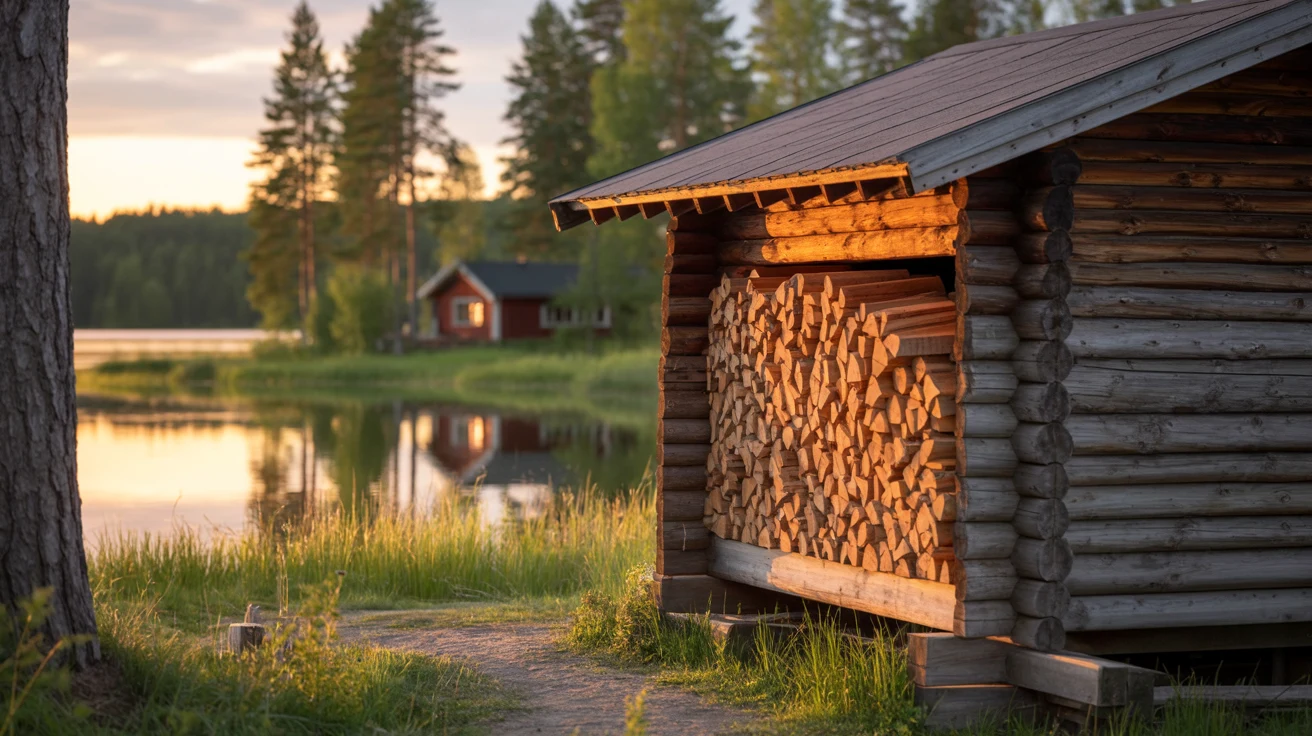
Birch is the traditional fuel because it burns hot and clean with an aromatic smoke, though pine and spruce are common alternatives. A full heat-up from cold takes longer than most people expect: 1.5 to 3 hours depending on the stove’s stone mass and how cold the building starts. This is not a heater you flick on twenty minutes before you want to bathe. Heating it is part of the afternoon.
The lake is not optional
The heat-and-cool sequence is the whole point. A sauna round runs 10 to 20 minutes, then you exit and immerse in the lake. In summer that’s a swim; in winter it’s a plunge through an avanto (hole cut in the frozen surface). The building’s closeness to the water is what makes this work as ritual instead of chore.
Lake water does double duty. It cools you between rounds, and it’s also ladled straight onto the hot stones to make löyly (the burst of steam that separates a real sauna from a hot box). A bucket and ladle are standard equipment, and the same lake feeds both. Throw more water for more löyly; throw too much and you’ll clear the room fast.
Inside, many bathers use a vasta (a whisk of fresh leafy birch branches, called a vihta in western Finland), soaked in warm water and used to lightly beat the skin and stir circulation. The birch whisk, the steam, the sound of water and birdsong through the wall: Finnish accounts treat all of it as one inseparable environment, not a set of amenities you could itemize.
The daily rhythm at the cottage
Cottage stays are long. Finnish summer holidays legally run through July, and many people take two to four consecutive weeks off, much of it at the water. Within that stretch, the day organizes itself around the sauna. Swimming, fishing, foraging, and boating fill the daylight; the afternoon turns to firewood and heating the stove. If you want to understand sauna in Finnish everyday life, the cottage summer is where it shows most clearly.
At the cottage the sauna is heated once or twice a day, usually in the late afternoon or early evening before the meal, which is a sharp contrast to the once- or twice-a-week rhythm of city life. Lighting the stove is a small ceremony, often the job of the host or the eldest family member. It’s communal by nature: family and guests bathe together, and Finnish culture is only half joking when it says decisions, arguments, and reconciliations all happen in the sauna.
Culture, not equipment
This is the part that doesn’t fit in a catalog. With 508,000 cottages spread across a country of 5.5 million, the private lakeside sauna isn’t an elite luxury. It’s broadly distributed and deeply ordinary, and it’s also the reason the tradition survived. Finland’s traditional urban public saunas nearly vanished after the 1950s; the cottage sauna carried the practice through unbroken.
That continuity is why sauna bathing was inscribed on UNESCO’s Representative List of Intangible Cultural Heritage on 17 December 2020, the first Finnish tradition to receive the designation. The nomination, led by the Finnish Sauna Society, frames the private sauna as the primary site where the culture is learned and transmitted. The cottage, in other words, is officially recognized as where the real thing lives. The most authentic Finnish sauna experience isn’t in a hotel or a public bath. It’s at somebody’s cottage, and you generally have to be invited.
The American lake cabin version
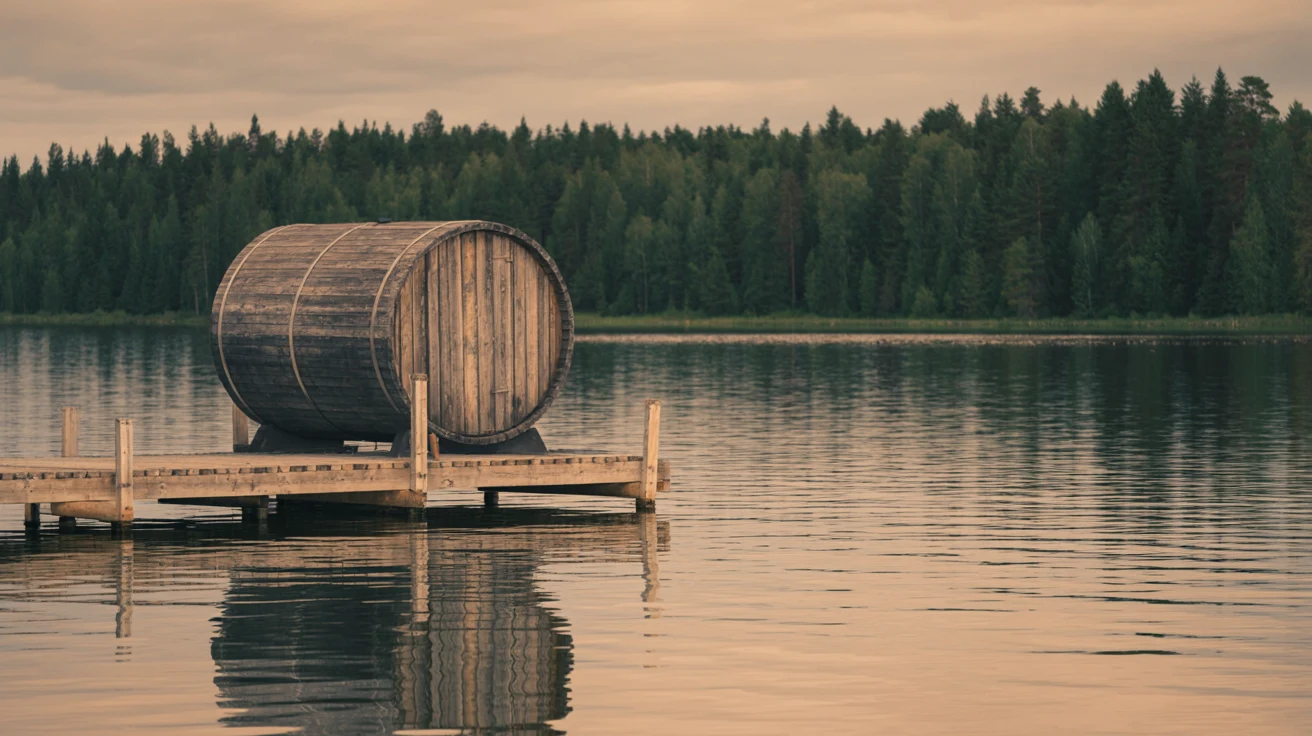
The closest parallel abroad is the Upper Midwest, where “going up to the cabin” carries much the same weight as heading to the cottage. This is no accident: Minnesota, Wisconsin, and Michigan absorbed large Finnish and Scandinavian immigrant populations, and the sauna came with them. Lake cabin owners there often set up a wood-fired barrel sauna or a prefab cabin kit near the dock, deliberately recreating the heat-then-plunge sequence.
The differences are real, though. American cabin saunas lean more often on electric or propane heat, are more likely to be attached to or inside the main cabin rather than a separate outbuilding, and treat the cold plunge more loosely, sometimes swapping a pool or cold tub for actual lake access. It’s a growing category, with manufacturers offering prefabricated cabin kits built for wooded and lakeside lots. In Finland the standalone shoreline sauna is the default. In America it’s an upgrade you choose. That gap tells you most of what separates the equipment from the tradition.
If you want the hardware without the whole cultural apparatus, a wood-fired outdoor sauna is the honest starting point, and there’s a healthy market of outdoor cabin saunas built for exactly this. Just know that the building is the easy part. The lake, the two-week holiday, and the afternoon spent tending a fire are the rest of it.
FAQ
What is a Finnish cottage (mokki) sauna?
It’s a small, standalone wood-fired sauna built at the edge of a lake beside a Finnish summer cottage, close enough to the water that bathers can step straight from the hot room into the lake to cool off. It’s the core setting of authentic Finnish sauna culture, not a piece of equipment but a way of using one.
Are cabin saunas wood-fired or electric?
Traditional cottage saunas are almost always wood-fired, because older Finnish cottages often have little or no electricity and a wood stove needs no power supply. Electric heaters are associated with urban apartment saunas rather than the cottage tradition. American lake cabin saunas more often use electric or propane heat.
How long does it take to heat a wood-fired cabin sauna?
A full heat-up from cold takes roughly 1.5 to 3 hours, depending on the stove’s stone mass and how cold the building is to start. This is why heating the sauna is treated as part of the afternoon rather than a quick step before bathing.
How close to the lake are cottage saunas built?
Typically 5 to 15 meters from the shore, as close to the waterline as local regulations allow. The point is immediacy: the transition from hot room to cold water should take seconds, which is considered integral to the authentic experience.
Why is the cottage sauna considered the most authentic Finnish sauna?
Sauna culture is passed down privately within families at the cottage, and the private lakeside sauna carried the tradition through the decades when Finland’s public urban saunas nearly disappeared. The UNESCO heritage nomination identifies the private sauna as the primary site where the culture is learned and transmitted.