Types of Saunas: Complete Guide to Every Style
There are really only two questions that matter when you sort out sauna types: does it heat the air or heat your body, and can you throw water on the stones? Everything else – barrel versus rectangular, indoor versus outdoor, wood versus electric – is a variation on those two axes. Get them straight and the whole category stops being confusing.
This guide surveys every style you’re likely to encounter, from the 3,000-year-old smoke sauna to the far-infrared blanket you fold into a duffel bag. I’ll tell you what each one actually is, where it sits on the heat-and-humidity map, and roughly what it costs – then point you to the deeper guides where the real buying decisions get made.
The two things that separate every sauna type
Traditional saunas heat the air. A heater loaded with stones warms a well-insulated room to 70–90°C (158–194°F), and you sit in that hot, dry air until you sweat. Infrared cabins skip the air entirely – panels emit radiation that warms your body directly while the room stays around 50–60°C (120–140°F). Steam rooms do a third thing: saturate a cooler room with wet steam to near-100% humidity.
The second axis is löyly (the burst of steam you get by ladling water onto hot stones). This is the defining feature of a real Finnish sauna, and it’s why the Finnish Sauna Society draws a hard line: no stones, no water, no sauna. That definition matters because it decides which of these types count as saunas at all – and it’s the source of the field’s longest-running argument.
Keep those two axes in mind and the rest of this guide is just placing each style on the grid.
Traditional Finnish: the original
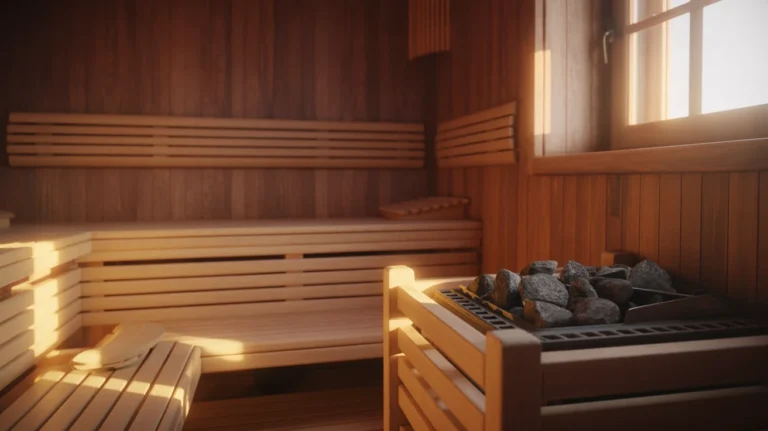
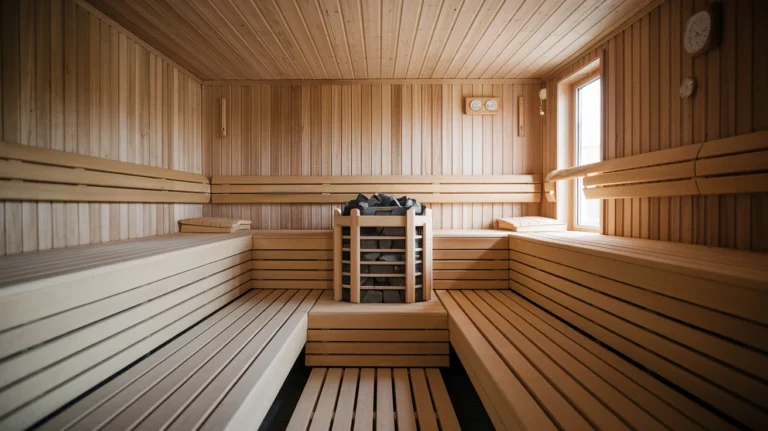
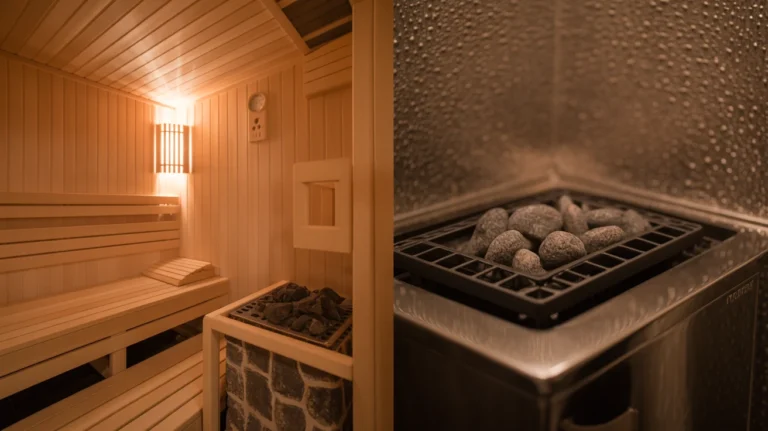
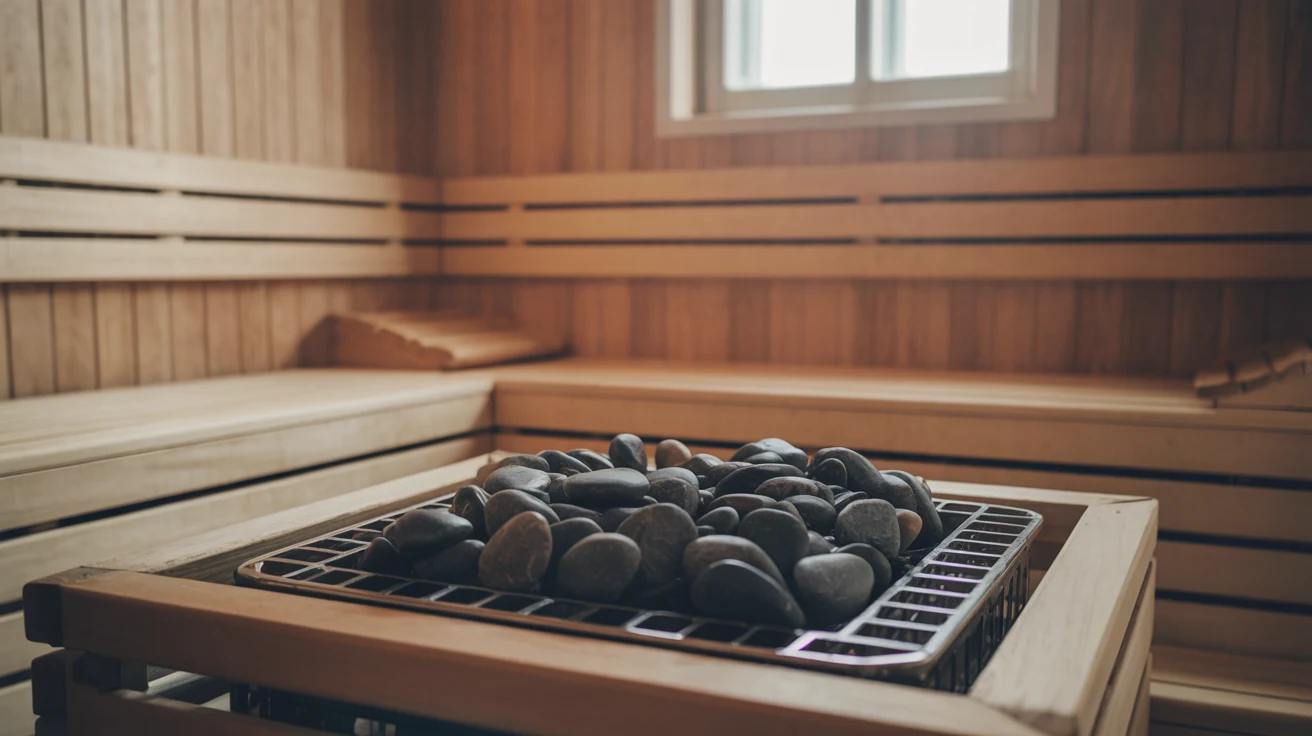
This is the reference standard everything else gets measured against. A kiuas (sauna heater) loaded with stones brings the room to 70–90°C at low humidity – 10–20% baseline – and you throw water on the stones for intermittent löyly. The steam spikes humidity to around 50% for a few seconds, then it settles back down. That rhythm of dry heat punctuated by steam bursts is the whole experience.
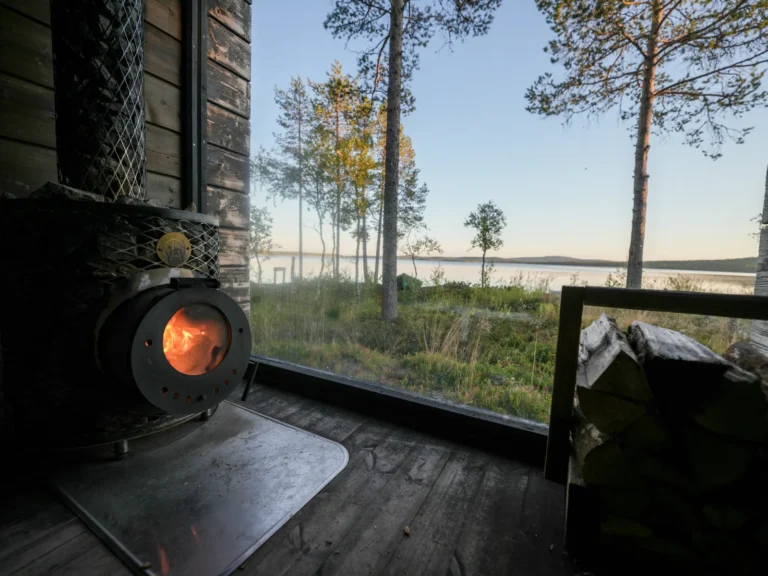
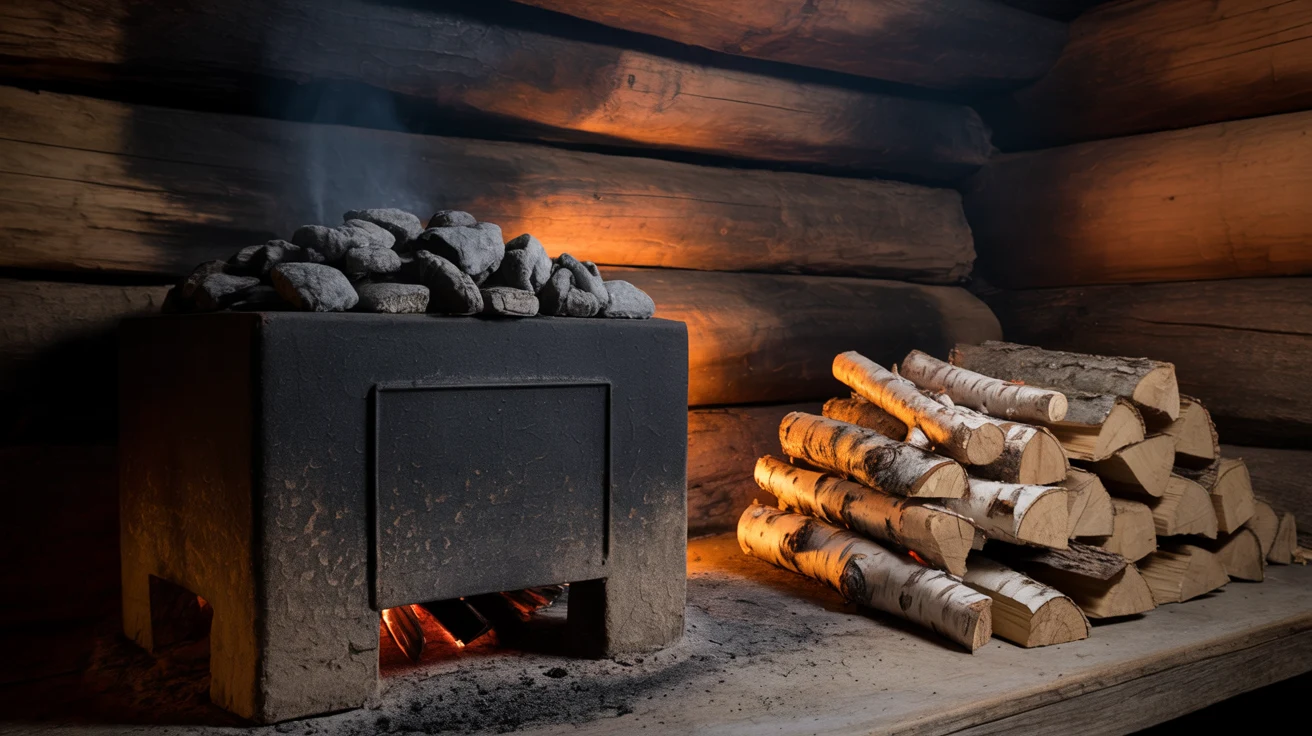
There are two flavors, split by heat source. Electric heaters plug into 240V wiring (in North America), heat up in 30–40 minutes, and hold temperature effortlessly on a timer – the default for indoor and urban installs. Wood-fired heaters burn firewood and vent through a chimney, reaching temperature in about 30–45 minutes for a typical continuous-fire stove; heat-storing stone-mass types take longer. Wood gives you the smell and the ritual; electric gives you convenience.
Both cost real money to install because both need infrastructure – 240V circuit or a code-compliant chimney, plus ventilation and proper insulation. Expect $3,000–$10,000+ installed for electric and $5,000–$20,000+ for wood-fired. The upside is that this is the type with the deepest health research behind it and the best resale value.
Infrared: the contested one
Infrared cabins warm your body with electromagnetic radiation from panels rather than heating the surrounding air. The room sits at 50–60°C – much cooler than traditional – with whatever ambient humidity the room already has. Roughly 20% of the output warms the air; the rest goes straight into you. They heat up in 15–30 minutes and draw far less power than a traditional electric heater, typically 1.5–2.5 kW against 4–9 kW.
There are three spectrum flavors. Far-infrared (FIR) is the default – when a unit is labeled “infrared sauna,” this is almost always what you’re getting, and it’s what most peer-reviewed studies examine. Near-infrared (NIR) is shallow-penetrating, LED-based, and often marketed for skin benefits with the thinnest evidence behind it. Mid-infrared sits between the two and usually shows up bundled into “full spectrum” units. The deeper you go into NIR and MIR claims, the more the sources shift from clinical literature to manufacturer copy.
Whether infrared “counts” as a sauna is genuinely debated. It produces no löyly, so by the Finnish Sauna Society’s definition it isn’t one. The health research is also thinner – the Mayo Clinic notes that studies have looked at infrared for blood pressure, heart failure, and other conditions but that “larger and more-exact studies are needed to prove these results.” The full physiology of infrared heat is worth understanding before you decide it’s for you, and the philosophical fight over whether it’s a real sauna deserves its own look.
Steam room: not actually a sauna
A steam room is a fully enclosed, tiled space filled with wet steam from a generator, running at 40–50°C (104–122°F) with near-100% humidity. It’s a genuinely useful hydrotherapy environment – gentle on people who can’t tolerate dry heat, and easier on the respiratory passages – but it isn’t a sauna. No stones, no löyly, and a completely different physiological stimulus.
The construction is different too. Steam rooms need waterproofing, drainage, and tile or glass surfaces because wood interiors would rot under constant saturation. That 100% humidity also means mold and mildew are a permanent maintenance concern. If you’re weighing the two environments against each other, the practical differences in steam heat versus dry heat go well beyond temperature.
Smoke sauna: the oldest form
The savusauna (smoke sauna) is the ancestor of every type on this list – a chimneyless room where a fire heats a large stone mass over several hours while smoke fills the space. Before you bathe, the fire dies out and the smoke is vented; the Finnish Sauna Society recommends allowing at least an hour for the embers to go out and the smoke to escape. What’s left is soft, radiant heat from the smoke-blackened walls, kept lower than usual – 60–80°C (140–176°F) – because the walls themselves are doing so much of the work.
This is widely considered the gold standard of sauna experiences, and UNESCO added Finnish sauna bathing to its Intangible Cultural Heritage list on 17 December 2020 with this model at the center. It’s also the most demanding: 3–8+ hours of heating, real fire-safety skill, and constant cleanup of soot and charcoal deposits. Rare outside Finland and expensive to build authentically. The full story of the smoke sauna is one of the more rewarding rabbit holes in sauna culture.
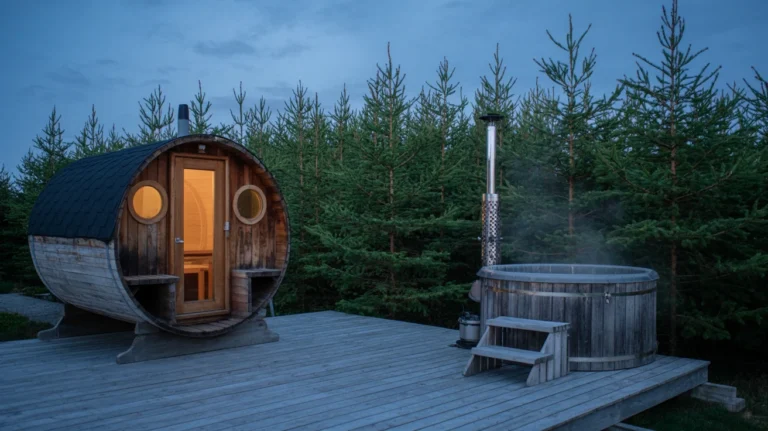
Barrel sauna: the outdoor workhorse
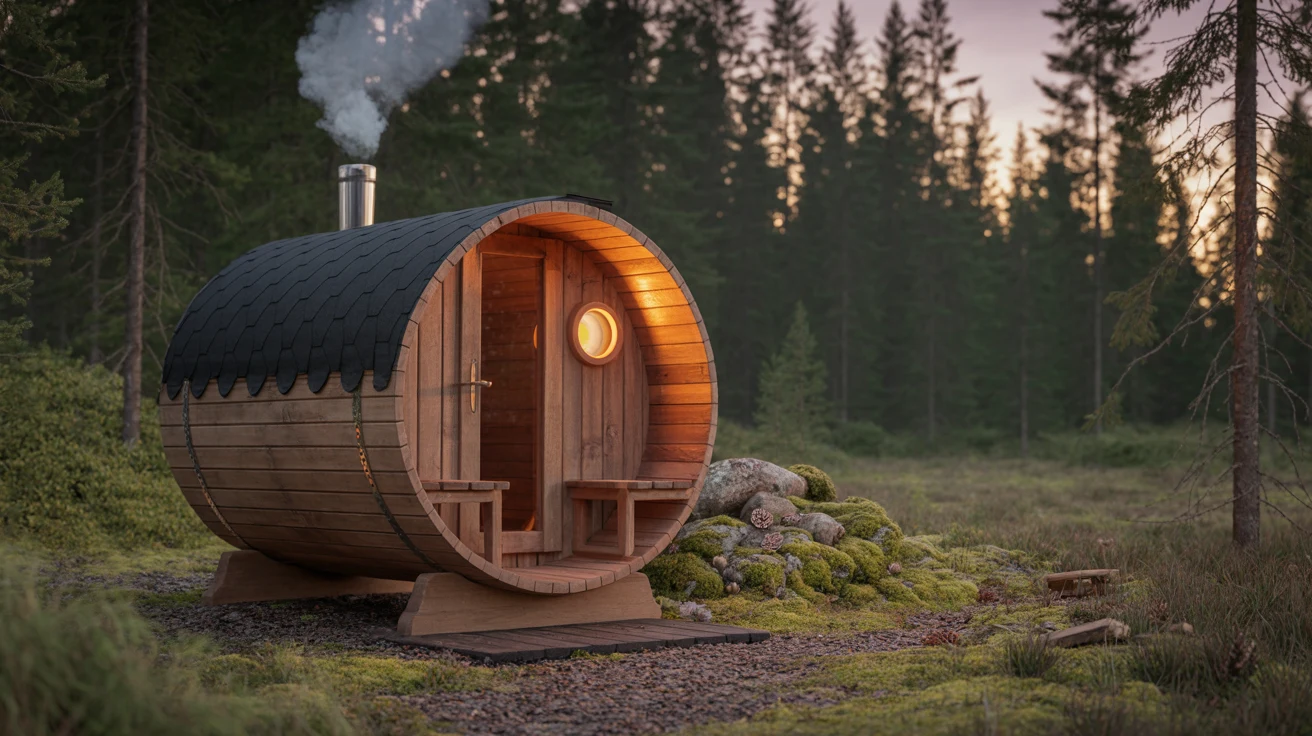
A barrel sauna is a cylindrical cabin built from cedar, pine, or hemlock staves. The curved shape isn’t just for looks – it eliminates the dead-corner air a rectangular room carries, so a barrel heats faster and holds heat more efficiently than a box of the same volume. Fitted with a löyly-capable heater, it’s a fully authentic traditional sauna, just in a rounder package, running the same 70–90°C.
Residential sizes run from a 4 ft × 6 ft two-person up to an 8 ft × 8 ft six-person, with 4′ × 6′, 5′ × 7′, and 6′ × 8′ the common retail dimensions. Most sit outdoors on a gravel pad, deck, or slab with no permanent foundation. Unit-only pricing runs $2,000–$4,000 entry-level, $4,000–$8,000 mid-range with cedar and a heater, and $8,000–$15,000+ for large premium builds – with installation adding $500–$3,000+ on top.
The trade-off is layout: curved walls limit your bench options and make indoor integration awkward. Companies like Almost Heaven Saunas sell these as kits you assemble on site. Choosing among the specific models is a longer conversation – the barrel sauna buying guide handles the picks and the sizing math.
Portable and tent saunas: the cheap way in
Portable saunas split into two camps. Tent-style units are fabric enclosures where you sit with your head poking out the top, heated by a small electric steam wand or compact infrared unit – cheap, foldable, and running 45–65°C. Portable wood-fired cabins are more substantial: folding or panel walls around a small wood stove, capable of reaching 70–90°C and popular for ice fishing and backcountry trips.
Tent units are the lowest-cost entry to the whole category – $100–$300 for a basic steam tent, $300–$600 for better-insulated models – while a portable wood-stove cabin runs $800–$2,500+. Setup takes 10–20 minutes and nothing needs wiring. The catch is that fabric walls leak heat fast, the head-out design leaves your face cold, and most tent models can’t do löyly at all. It’s a real heat experience, but a compromised one. The portable sauna guide covers which models actually hold their heat.
Sauna blankets: personal, portable, and not a sauna
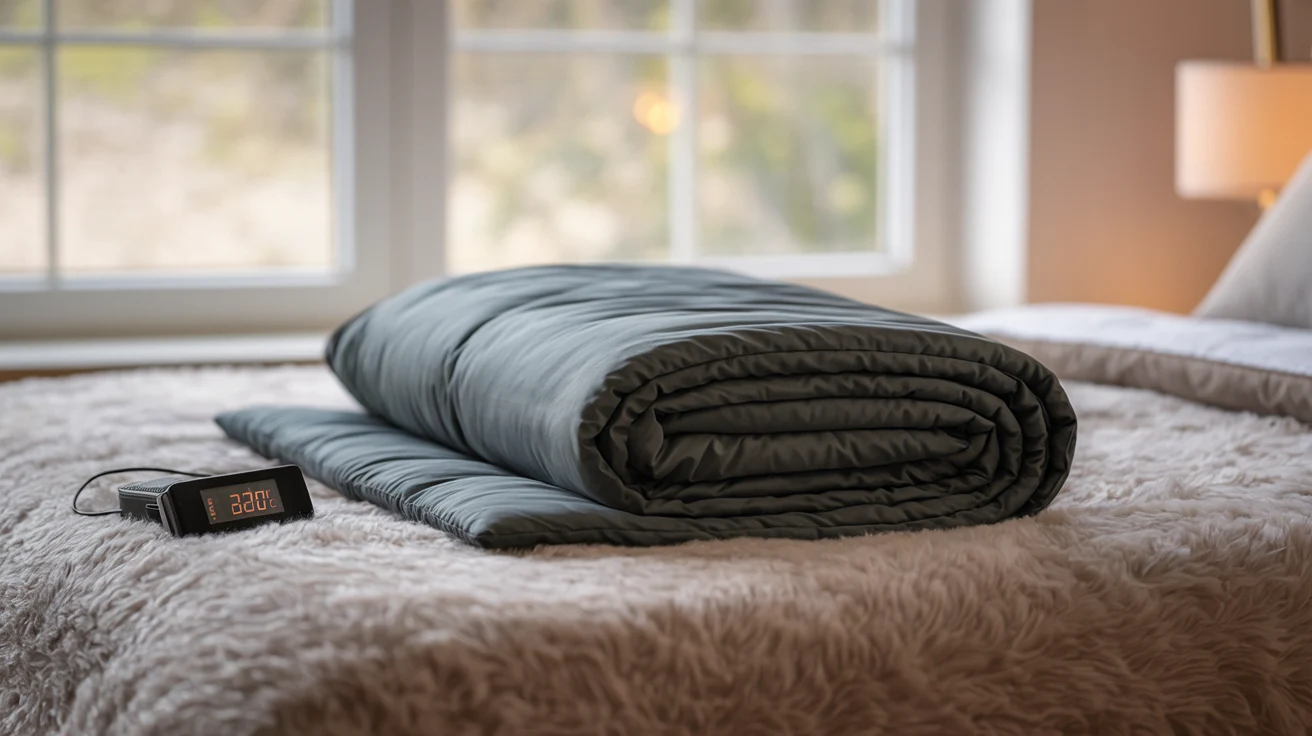
A sauna blanket wraps your body in a waterproof shell with far-infrared heating elements inside. You lie in it and heat builds around you the way it does in an infrared cabin – adjustable, roughly 35–65°C, though the wrap makes the effective temperature feel higher. There’s no room, no social element, and no löyly, so calling it a sauna is generous.
What it has going for it is price and footprint: $100–$200 for entry-level models, $200–$500 for better ones, and it stores in a bag. The HigherDOSE V4 is the most-reviewed name in the category. The downsides are a very thin evidence base – FIR blanket-specific studies are minimal – and the hygiene reality of sweating into a zippered wrap. As a recovery tool for an apartment, it’s fine; as a sauna, it isn’t. The sauna blanket guide gets into whether it’s worth it for your situation.
Outdoor wood-fired: the archetype
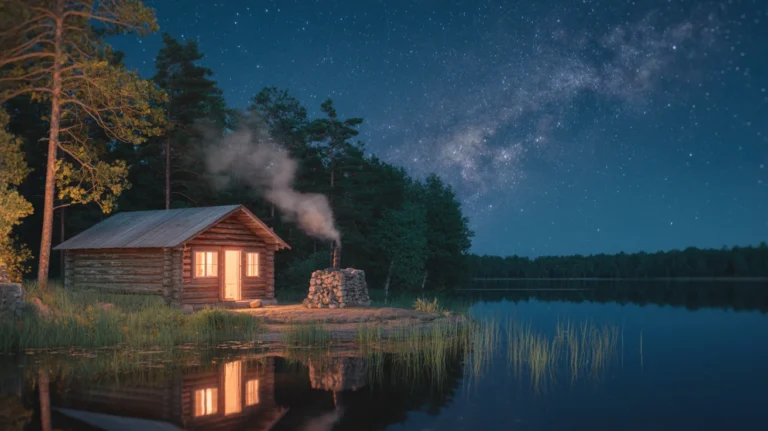
The standalone outdoor wood-fired cabin is where all of this started – the Finnish cottage sauna by a lake. Functionally it’s a traditional Finnish sauna: wood-fired kiuas, chimney, 70–90°C, full löyly. Architecturally it’s its own thing, a detached building rather than a room inside your house, which means no impact on your home’s humidity and usually far better cold-plunge access right outside the door.
Heat-up runs about 30–45 minutes for a typical continuous-fire stove, longer for heat-storing stone-mass stoves or deep-cold winter starts. Pricing spans a wide range: $3,000–$8,000 for a DIY kit, $8,000–$20,000+ pre-assembled, and $15,000–$40,000+ for a full turnkey install with site prep and foundation. You’ll almost certainly need a permit, and the chimney has to meet local fire code. Your neighbors will have opinions about the smoke. Build it anyway – the outdoor sauna deep dive walks through siting and construction.
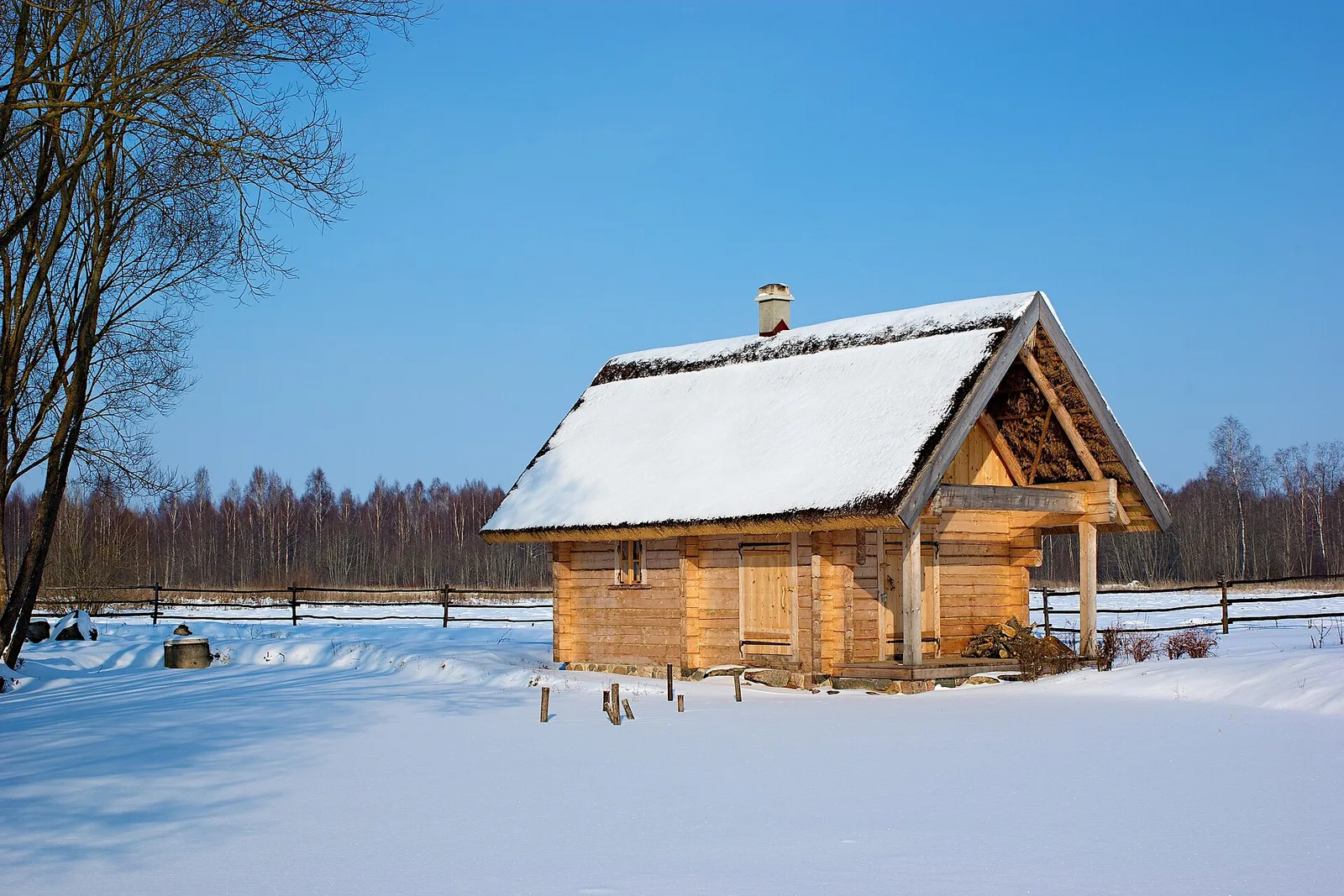
Photo: Tiago Fioreze, CC BY-SA 3.0, via Wikimedia Commons
Every sauna type compared
Here’s the whole field on one grid. Costs are indicative ranges – heat and humidity figures are the more reliable numbers to plan around.
| Type | Temp | Humidity | Heat-up | Cost (USD) | Real sauna? |
|---|---|---|---|---|---|
| Traditional (Electric) | 70–90°C | Low; löyly to ~50% | 30–40 min | $3,000–$10,000+ installed | Yes |
| Traditional (Wood-Fired) | 70–90°C | Low; löyly to ~50% | 30–45 min | $5,000–$20,000+ installed | Yes |
| Smoke Sauna | 60–80°C | Moderate; smoke-inflected | 3–8+ hours | $10,000–$40,000+ custom | Yes – oldest form |
| Infrared (FIR) | 50–60°C | Ambient (no steam) | 15–30 min | $1,500–$7,000+ unit-only | Contested – no löyly |
| Steam Room | 40–50°C | ~100% | 10–20 min | $2,000–$6,000+ installed | No |
| Barrel (Outdoor) | 70–90°C | Low (heater-dependent) | 30–60 min (elec); 60–90 (wood) | $2,000–$15,000 unit-only | Yes, if löyly-capable |
| Portable/Tent | 45–65°C | Variable | 10–20 min | $100–$600 (tent type) | No (tent); borderline (cabin) |
| Sauna Blanket (FIR) | 35–65°C | Ambient | 5–10 min | $100–$700 | No – personal wrap |
Read that top to bottom and a pattern emerges: the more authentic and effective the heat, the more infrastructure and money it demands. The bottom of the table is where accessibility lives; the top is where the tradition lives.
Which type is right for you
If you want the real thing and have the space and budget, a traditional sauna – electric indoors, wood-fired outdoors – is the answer, and it’s the type with the strongest health evidence behind it. If you’re heat-sensitive or working with a small footprint and modest electrical draw, infrared is the sensible compromise, provided you accept it’s a different experience rather than a cheaper version of the same one. If you want to try heat bathing for the price of a nice dinner, a portable tent or a blanket gets you started with zero installation.
The one decision that trips up the most people is infrared versus traditional, because it’s not about temperature – it’s about what you’re trying to get out of the heat. That’s the fork worth resolving before you spend anything.
FAQ
What types of saunas are there?
The main types are traditional Finnish (split into electric-heated and wood-fired), smoke saunas, infrared cabins, steam rooms, barrel saunas, portable tent saunas, and personal infrared blankets. Traditional Finnish, smoke, and properly equipped barrel saunas are considered authentic saunas; infrared, steam rooms, and blankets are distinct heat environments that are often grouped in but don’t meet the classic definition.
What’s the difference between the main sauna types?
The two biggest differences are how the heat is delivered and whether steam is involved. Traditional saunas heat the air to 70–90°C at low humidity and let you throw water on stones for steam bursts; infrared cabins warm your body directly at a cooler 50–60°C with no steam; steam rooms run cooler still, around 40–50°C, at near-100% humidity. Cost and heat-up time also vary widely, from five-minute blankets to smoke saunas that take hours to prepare.
Which sauna type is best?
For most people wanting the full experience and health benefits, a traditional Finnish sauna is best – it has the deepest research behind it and lets you control the steam. Infrared suits heat-sensitive users and small spaces, while portable units and blankets are best for tight budgets and apartments. There’s no single winner; the right choice depends on your space, budget, and whether authentic steam heat matters to you.
Is an infrared sauna a real sauna?
This is genuinely debated. By the Finnish Sauna Society’s definition, a sauna requires the ability to throw water on heated stones for steam, which infrared cabins cannot do – so by that standard they aren’t saunas. They’re still an effective heat therapy, but most health research studies traditional saunas rather than infrared, so the two aren’t interchangeable in terms of proven benefits.
How long does each sauna type take to heat up?
Sauna blankets are ready in 5–10 minutes and infrared cabins in 15–30 minutes. Traditional electric saunas take 30–40 minutes and typical wood-fired stoves 30–45 minutes, while heat-storing stone-mass stoves take longer. Smoke saunas are in a class of their own, requiring 3–8 or more hours of heating before they’re ready to use.