Sauna Glossary: All the Terms Explained
The word “sauna” is one of the few Finnish words that made it into global use, and it has been around since roughly 7000 BC, when the earliest Finnish saunas were pits dug into hillsides and used as winter dwellings. Since then, sauna culture has spread across continents and picked up vocabulary from Finnish, German, Russian, and English along the way. This glossary covers every term you are likely to encounter, from the steam rising off hot stones to the mythical elf guarding the room.
Whether you are reading product specs for a new heater, decoding a Finnish sauna menu, or just wondering what your sauna-obsessed friend keeps talking about, this is your reference page. Terms are grouped by language of origin, then listed alphabetically within each section.
Finnish Sauna Terms
Finnish gives us the richest sauna vocabulary, unsurprising given that the Finnish Sauna Society has preserved these traditions for decades, and Finnish sauna culture was inscribed on UNESCO’s Intangible Cultural Heritage list in December 2020. Here are the essential terms, A to Z.
| Term | Pronunciation | Meaning |
|---|---|---|
| Joulusauna | YOH-loo-sow-na | The Christmas sauna, a cherished tradition of bathing on Christmas Eve afternoon before the evening’s dinner and celebrations. One of the two most important sauna sessions of the Finnish year. |
| Juhannussauna | YOO-hahn-noos-sow-na | The Midsummer sauna, taken during Juhannus (Finnish Midsummer, a national holiday in late June). Finns retreat to lakeside cottages, heat the sauna, and swim in the lake between rounds. |
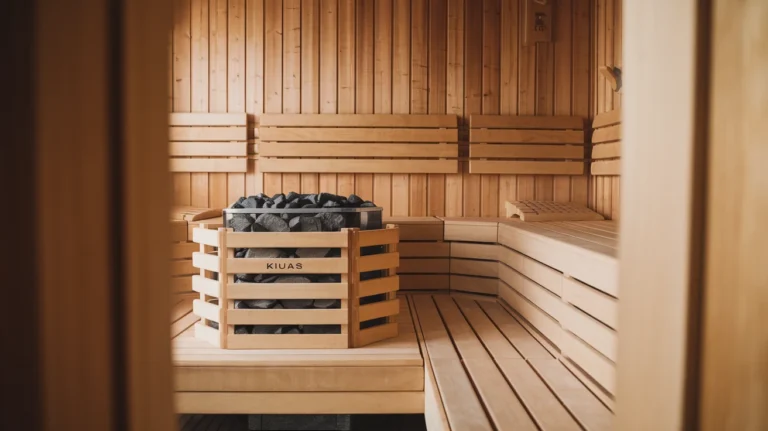
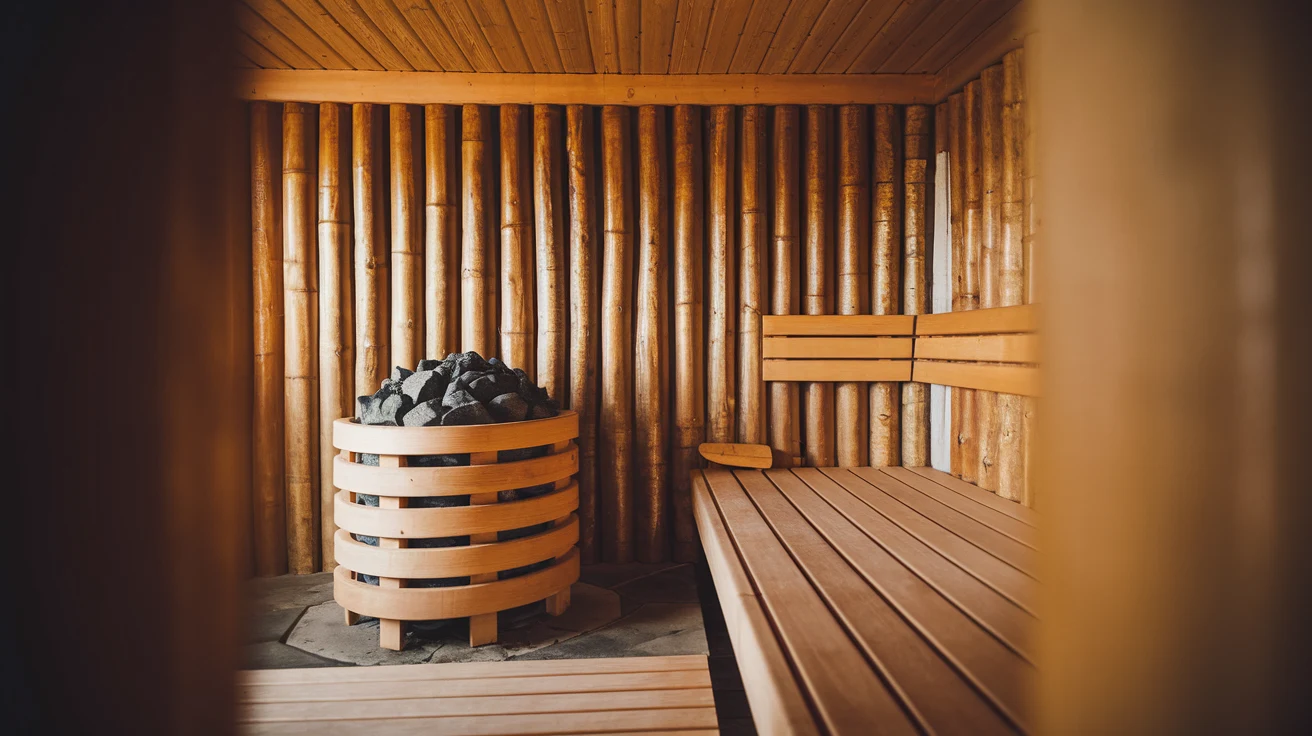
| Kiuas | KEE-oo-ahs | The sauna stove or heater, meaning both the heating element and the pile of stones on top. In a traditional smoke sauna, the kiuas is a massive rock pile heated by wood fire for 6 to 8 hours. Modern versions are electric or wood-fired. |
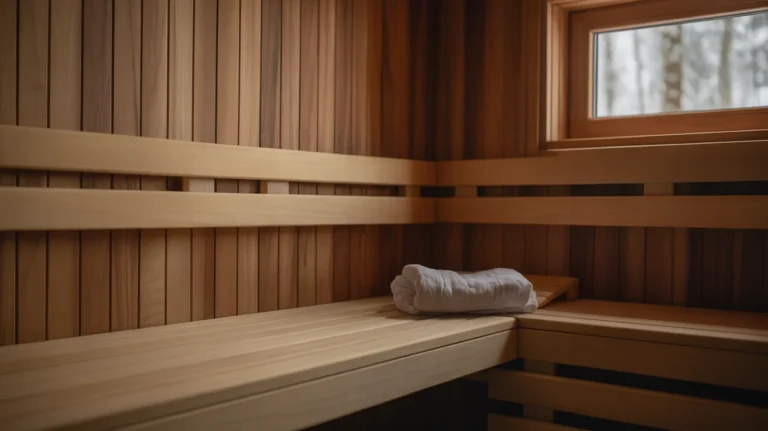
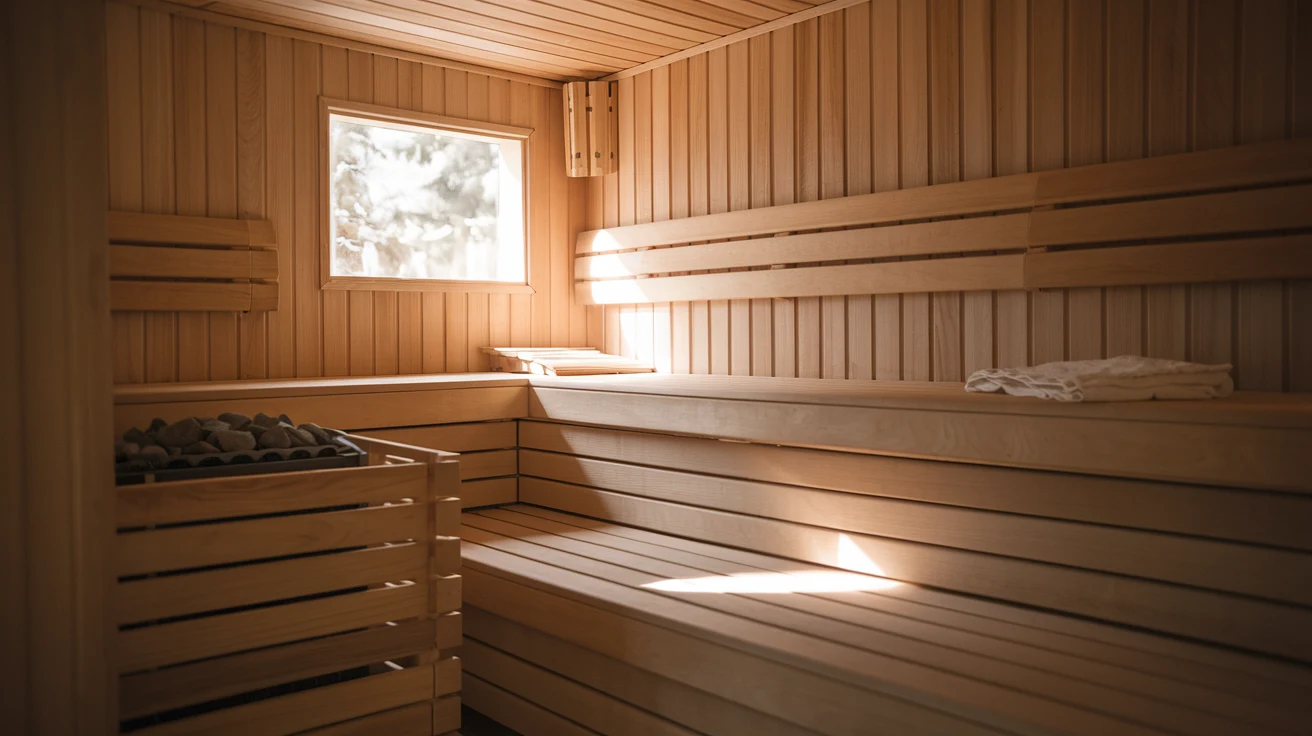
| Lauteet | LOW-teh-et | The sauna benches (plural). Finnish saunas have tiered benches at multiple levels. The top bench (ylälaude) is hottest; the lower bench (alalaude) is cooler. Where you sit determines your experience. |
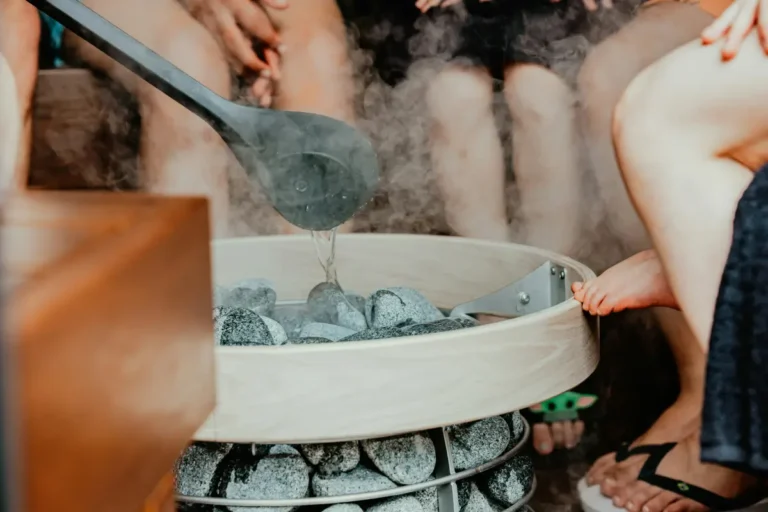
| Löyly | LØY-ly | The steam, and the total heat sensation, created when water is thrown onto hot sauna stones. This is how Finns judge a sauna: not by temperature, but by the quality of its löyly. The word has no direct English translation, and it has a full guide of its own. |
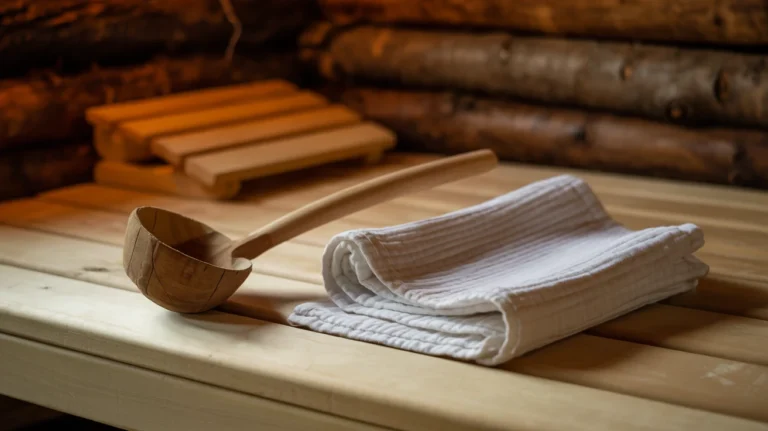
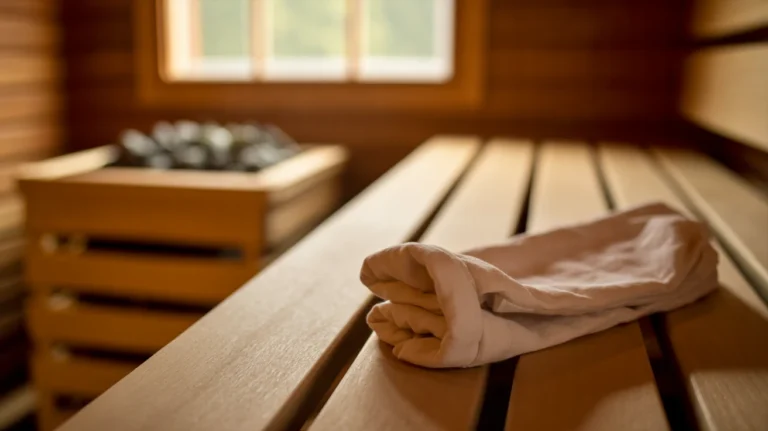
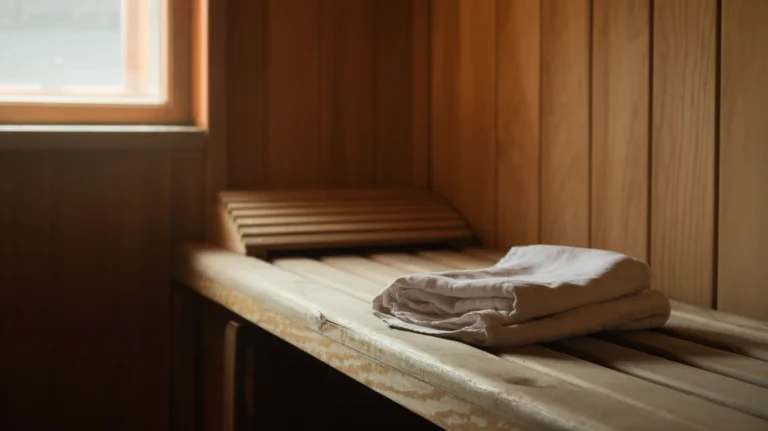
| Pefletti | PEH-flet-tee | A personal sitting towel or cloth placed on the bench before sitting down. Required etiquette in public saunas, where you never sit directly on shared wood. Think of it as your hygiene passport. |
| Saunajuoma | SOW-na-YOO-oh-ma | Sauna drink, whatever you drink during or after your session. Traditionally water or kalja (a low-alcohol Finnish table beer). In modern practice, often a cold beer or soft drink. |
| Saunarauha | SOW-na-ROW-ha | Sauna peace, the expectation of tranquillity and respectful behaviour in the sauna. No loud conversation, no arguments, no disruption. The Finnish Sauna Society names saunarauha as the foundation of all sauna customs. |
| Saunatonttu | SOW-na-TONE-too | The sauna elf, a mythical gnome-like spirit from Finnish folklore believed to inhabit and protect the sauna. Bathers were expected to be quiet and leave the sauna clean out of respect for the tonttu. Custom held that you would leave warm water and a vasta for the tonttu to use after the family finished. |
| Savusauna | SAH-voo-sow-na | Smoke sauna, the oldest type of Finnish sauna. It has no chimney. A massive wood fire heats the stones for 6 to 8 hours, filling the room with smoke. The fire is extinguished, the smoke is let out, and the soot-blackened room offers a prized, gentle löyly unlike any other. More on the smoke sauna here. |
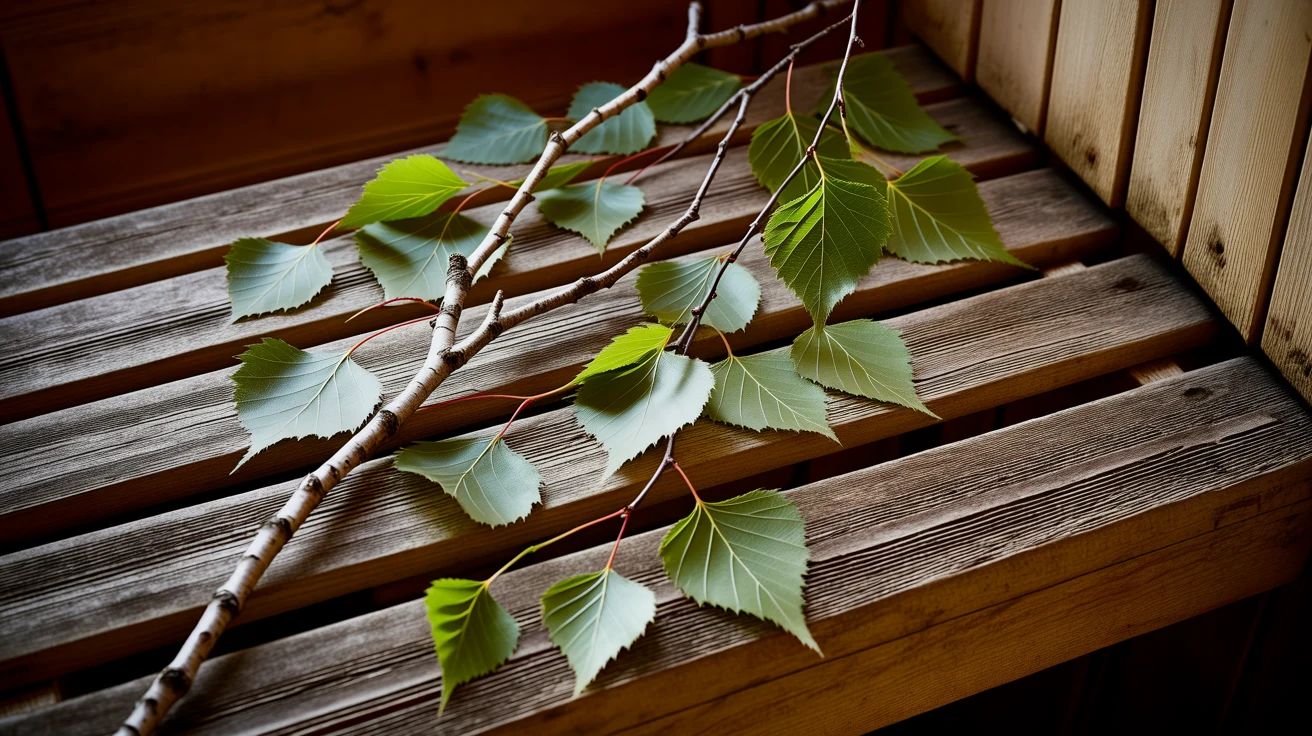
| Vasta | VAHS-ta | A birch whisk used to gently beat the body during sauna, stimulating circulation and releasing birch fragrance. “Vasta” is the eastern Finnish term. Identical object to vihta (see below). |
| Vihta | VIH-ta | The western Finnish word for the same birch whisk that eastern Finns call vasta. Made of fresh birch branches, bundled and used for massage during the sauna session. |
German Sauna Terms
Germany developed its own elaborate sauna culture, centred on ritual, performance, and very large wellness facilities. If you have visited a German spa, or watched videos of towel-waving performances, these are the terms you need.
Aufguss
A ritual steam infusion ceremony. A trained professional pours water, often infused with essential oils, over the hot sauna stones, then uses a large towel to fan and circulate the resulting steam throughout the room in choreographed movements. What started as a practical way to distribute heat has evolved into genuine performance art, complete with international competitions and elaborate routines set to music. An Aufguss session typically lasts 10 to 15 minutes and dramatically intensifies the heat experience.
Saunameister
The trained sauna master who performs the Aufguss. In Germany, this is a recognised profession requiring formal training. The Saunameister controls temperature, humidity, and steam circulation: part thermodynamics technician, part entertainer. The best ones have dedicated followings, and international Aufguss championships draw competitors from around the world.
Saunalandschaft
Literally “sauna landscape”, a large wellness complex containing multiple types of saunas, steam rooms, relaxation areas, and often outdoor bathing spaces, all under one roof (or connected campus). A typical German Saunalandschaft might include a Finnish sauna, a bio-sauna, an infrared cabin, a steam bath, an ice fountain, multiple relaxation rooms, and outdoor areas. These facilities are almost always textile-free, meaning nude bathing is the norm, not the exception.
Russian Sauna Terms
Russian bathing tradition runs as deep as Finnish. The earliest written account comes from the 12th-century Primary Chronicle, which describes Apostle Andrew witnessing Slavic people heating themselves to extreme temperatures and lashing their bodies with young reeds. The vocabulary reflects a culture where the bathhouse has been central to daily life for centuries.
Banya (баня)
The traditional Russian steam bath, typically using a wood-fired stove. A significant part of Russian culture with origins in Kievan Rus’, the banya operates at high heat with generally higher humidity than a Finnish sauna. The word can refer to both a private home steam room and a grand public bathhouse. The most famous public banya is Sanduny (Sandunovskie Bani) in Moscow, operating since 1808.
Venik (веник)
A bundle of leafy branches used for beating and massage during banya sessions, the venik is the Russian equivalent of the Finnish vihta and vasta. While Finnish whisks are almost exclusively birch, Russian veniks come in more varieties: birch, oak, eucalyptus, and even juniper. Oak veniks are sturdier and produce a different fragrance. The beating technique (called “parenie”) is more vigorous in banya culture than in Finnish tradition: the Primary Chronicle’s description of Slavs “lashing their bodies” with reeds is recognisably the same practice.
Parilka (парилка)
The steam room or hot room within a banya, the specific chamber where the stove, stones, and benches are located. Derived from the Russian word “par” (пар), meaning steam. The parilka is the heart of the banya, analogous to the main sauna room in Finnish tradition. Larger public banyas may have multiple parilkas at different temperature levels.
Technical English Terms
These terms show up in product specs, building guides, and health articles. They are the vocabulary of people buying heaters, designing sauna rooms, and debating recovery protocols.
Top Bench / Lower Bench
The tiered seating levels inside a sauna. Because hot air rises, the top bench (closest to the ceiling) is the hottest position, while the lower bench is significantly cooler: the temperature difference between levels can be 10 to 20°C (18 to 36°F). Experienced sauna bathers typically choose the top bench; newcomers, children, or anyone wanting a milder session sit lower. In Finnish, these are ylälaude (upper) and alalaude (lower).
Dry Sauna vs. Wet Sauna
This refers to the humidity level during a session. A “dry” sauna runs at low humidity (roughly 10 to 20%) with high temperatures of 80 to 100°C (176 to 212°F), typical of an electric sauna without water being thrown on the stones. A “wet” sauna has higher humidity created by throwing water (löyly) on the kiuas, which briefly spikes moisture and softens the perceived heat. Traditional Finnish saunas are wet, with water regularly thrown on the stones.
The term “wet” is also sometimes used to describe steam rooms, which operate at near 100% humidity but much lower temperatures, typically 40 to 50°C (104 to 122°F). That comparison muddies the waters, though: a steam room and a Finnish sauna with löyly are very different experiences.
Contrast Therapy
A recovery practice involving alternating between hot (sauna or hot water) and cold (cold plunge, ice bath, cold shower, or lake swim) immersion. In sauna culture, this typically means a sauna session followed by a cold water plunge, then back to the sauna, repeating for multiple rounds. The theory is that hot exposure causes vasodilation (blood vessels expand), cold causes vasoconstriction (blood vessels narrow), and the alternation creates a pumping effect that may support lymphatic drainage and muscle recovery. A 2013 systematic review by Bieuzen, Bleakley, and Costello found that contrast water therapy was superior to passive recovery but showed little difference from cold water immersion alone, suggesting the cold element may be doing most of the work.
Cross-Language Quick Reference
The same concepts show up across sauna cultures under different names. This table maps the equivalent terms so you can translate between traditions at a glance.
| Concept | Finnish | German | Russian | English |
|---|---|---|---|---|
| The stove/heater | Kiuas | Saunaofen | Pech (печь) | Sauna heater/stove |
| Steam/heat sensation | Löyly | Aufguss (the ritual) | Par (пар) | Steam |
| Branch whisk | Vihta / Vasta | none | Venik (веник) | Sauna whisk / bath broom |
| Hot room | Sauna | Sauna / Schwitzkammer | Parilka (парилка) | Sauna room / hot room |
| Benches | Lauteet | Saunaliege | Polok (полок) | Sauna benches |
| Seat cover | Pefletti | Saunatuch | none | Sitting towel / bench towel |
| Sauna peace | Saunarauha | none | none | No direct equivalent |
Notice that “saunarauha” (sauna peace) has no equivalent in German or Russian. Both of those cultures have a more social, sometimes boisterous sauna tradition, and the concept of sacred silence in the hot room is distinctly Finnish.