Infrared Sauna Explained: How It Actually Works
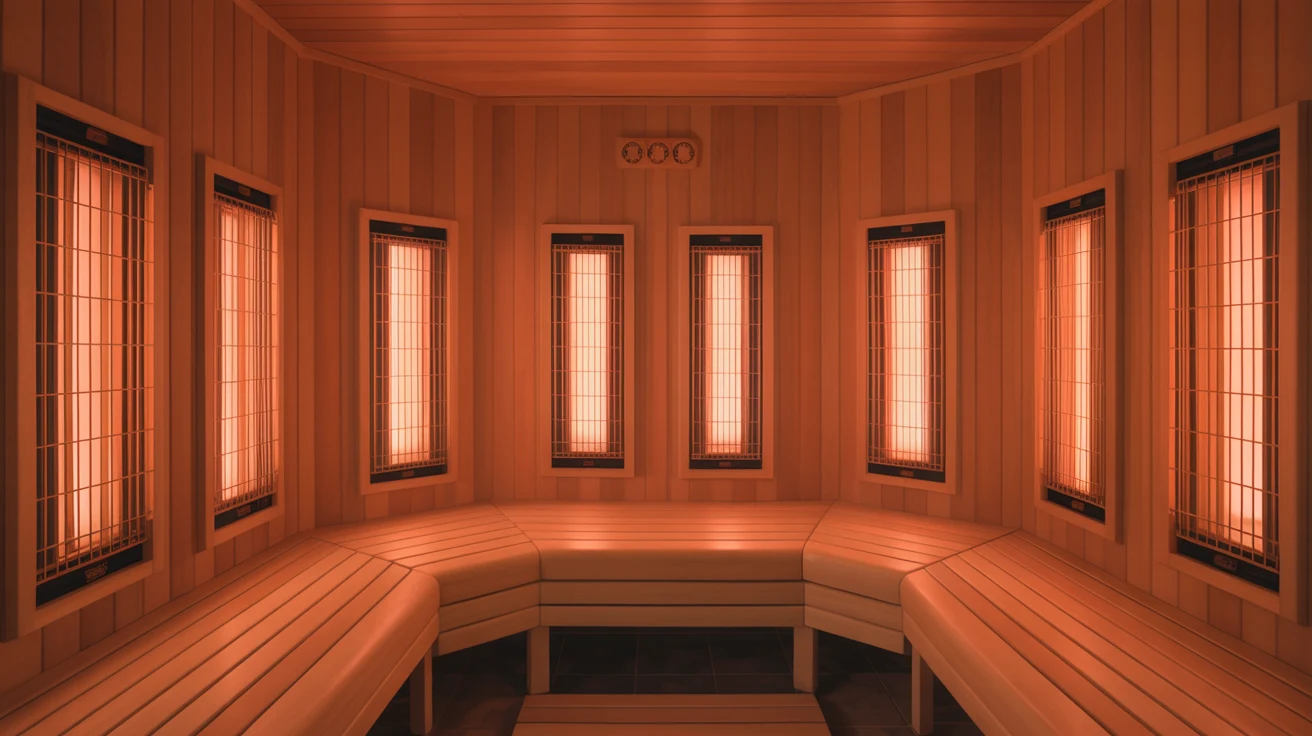
An infrared sauna doesn’t heat the room. It heats you. That’s the entire concept, and it’s why an infrared cabin runs at 50–65°C (122–149°F) while a traditional Finnish sauna needs 70–90°C (158–194°F) to do its job. The panels emit radiant energy that lands on your skin and warms your body directly, the same way the sun warms you on a cool day even when the air is cold.
This makes infrared a genuinely different category – not a knockoff of a Finnish sauna, not a “fake sauna,” but a separate machine built on a different physical principle. Whether that difference matters to you depends on what you want out of a session, but understanding how it works is the first step to deciding.
How infrared saunas actually work
A traditional sauna is a convection system. The heater warms the air (and the stones), the hot air fills the room, and that air transfers heat to your skin. To get you sweating, the air has to be genuinely hot – hence the 70–90°C range and the burst of steam when water hits the stones.
Infrared skips the air. Its panels emit infrared radiation – a band of the electromagnetic spectrum sitting just past visible red light, well below anything ionizing – and that radiation penetrates the surface of your body and raises your temperature directly. According to Healthline’s medically reviewed overview, the cabin air stays much cooler because it isn’t doing the heavy lifting; your body absorbs the radiant energy whether or not the surrounding air is hot.
You’ll see manufacturers claim that roughly 80% of the heat goes into your body and only 20% into the air. Treat that split as marketing – it comes from vendor literature, not independent testing. The underlying physics of radiant versus convective heat transfer is settled science; the precise percentage is not.
Near, mid, and far infrared
Infrared isn’t one thing. The band divides into three regions by wavelength, and sauna marketing leans heavily on the distinctions. The wavelength boundaries below follow standard spectroscopy nomenclature (ISO 20473); the sauna-specific claims are less firmly established.
| Type | Wavelength | Penetration | Role in saunas |
|---|---|---|---|
| Near (NIR) | ~0.76–1.4 µm | Shallowest – closest to visible light | Surface and superficial tissue; delivered via incandescent or LED emitters in some full-spectrum units |
| Mid (MIR) | ~1.4–3 µm | Mid-range; absorbed strongly by water in tissue | Rarely sold standalone; present in full-spectrum units |
| Far (FIR) | ~3–1000 µm (sauna range ~5–20 µm) | Longest wavelength used in saunas | The dominant type in nearly all infrared saunas |
Far infrared does the vast majority of the work in the infrared sauna market. Its appeal to manufacturers is a neat piece of physics: far infrared resonates with water molecules in the body around 9.4 µm, which is close to the wavelength your own body emits at 37°C. That resonance is the basis for the “deep tissue penetration” language you’ll read on product pages. The resonance itself is documented; the clinical significance of it is a separate question that the health-claims discussion handles.
Full spectrum infrared
A “full spectrum” sauna combines near, mid, and far emitters in one cabin instead of running far infrared alone. In practice that usually means carbon or specialty elements for the mid and far bands, plus incandescent or LED emitters bolted in for the near band. The unit may let you cycle between bands or run them together.
Two things worth knowing. First, “full spectrum” is a manufacturer term, not a regulated specification – no independent body certifies that a product actually covers all three bands at meaningful intensity. Second, the extra bands add cost, and whether they add benefit is exactly the kind of claim that deserves scrutiny rather than assumption. I cover what the evidence actually supports separately, because it’s a big enough topic to deserve its own page.
Why the temperature is so much lower
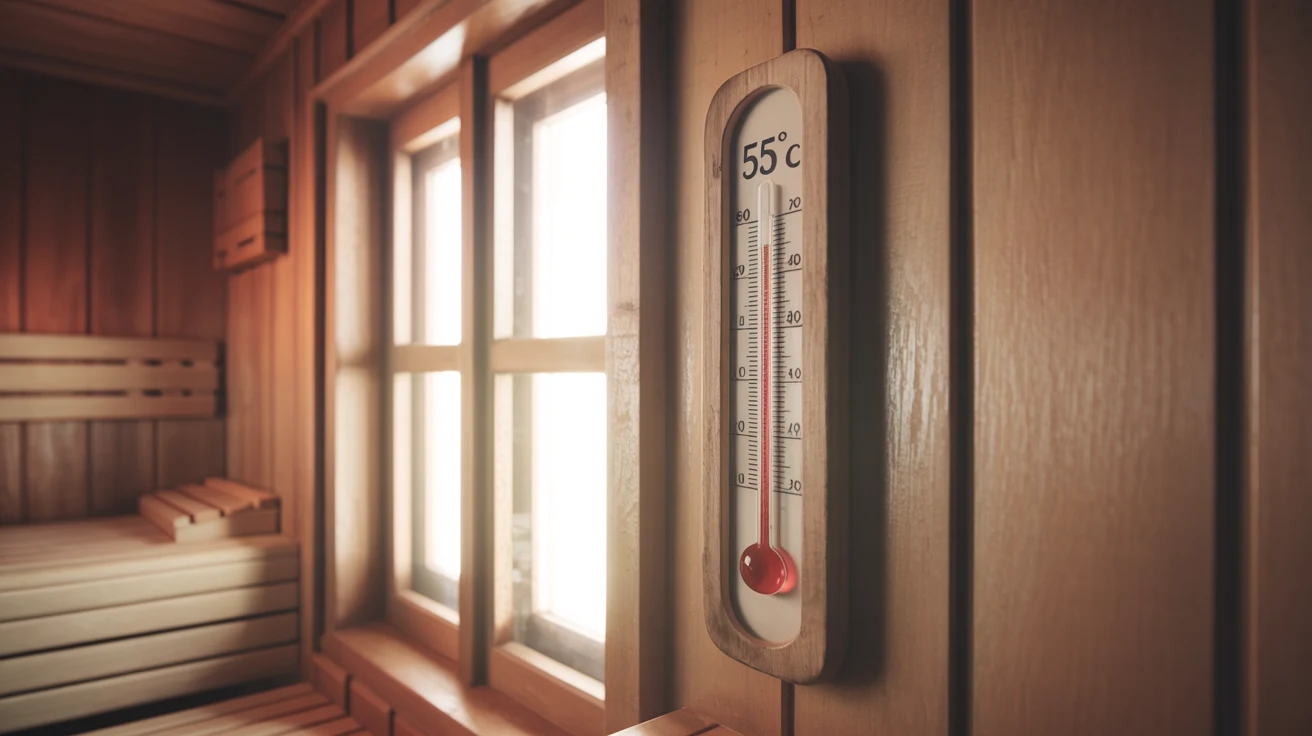
The 50–65°C range surprises people who grew up with traditional saunas. It feels almost mild by comparison. But the lower temperature isn’t a weakness – it’s a direct consequence of the mechanism. Because the panels heat your body by radiation rather than heating the air by convection, the air never needs to reach the temperatures a convection sauna requires to produce the same physiological response: sweating, an elevated heart rate, the whole cardiovascular load.
Your body absorbs radiant energy regardless of the ambient air temperature. So an infrared cabin can keep you sweating at 55°C where a traditional room would need to be 30 degrees hotter. This also explains the longer sessions – 30–45 minutes is typical for infrared, versus the 10–20 minute rounds you’d run in a hot Finnish sauna. Lower intensity, longer exposure.
EMF concerns and low-EMF panels
Infrared panels run on mains electricity, and anything running on mains produces electric and magnetic fields (EMFs). This is where the marketing gets loud, so it’s worth being precise about what’s actually happening.
The EMFs from an infrared heater are extremely low frequency (ELF) non-ionizing radiation – the same category as power lines, computers, and kitchen appliances. That matters, because “non-ionizing” means these fields lack the energy to damage DNA the way ionizing radiation (X-rays, gamma rays) can. The U.S. National Institute of Environmental Health Sciences states that non-ionizing EMF is “generally perceived as harmless to humans,” and that studies on adults show no evidence of a link between EMF exposure and cancers such as leukemia, brain cancer, or breast cancer. NIEHS notes a weak possible association with childhood leukemia from ELF sources in some 1990s studies, but describes that association as weak.
So what does “low-EMF” on a product page actually mean? Less than you’d hope. There is no universal industry standard for the term and no third-party certification body governing it. Measurements vary widely between brands and models, and a manufacturer is free to define “low” however flatters its own product. It is a marketing designation dressed up as a spec sheet. If EMF genuinely concerns you, the answer is a third-party measurement of the specific model, not the phrase printed on the brochure.
Carbon versus ceramic panels
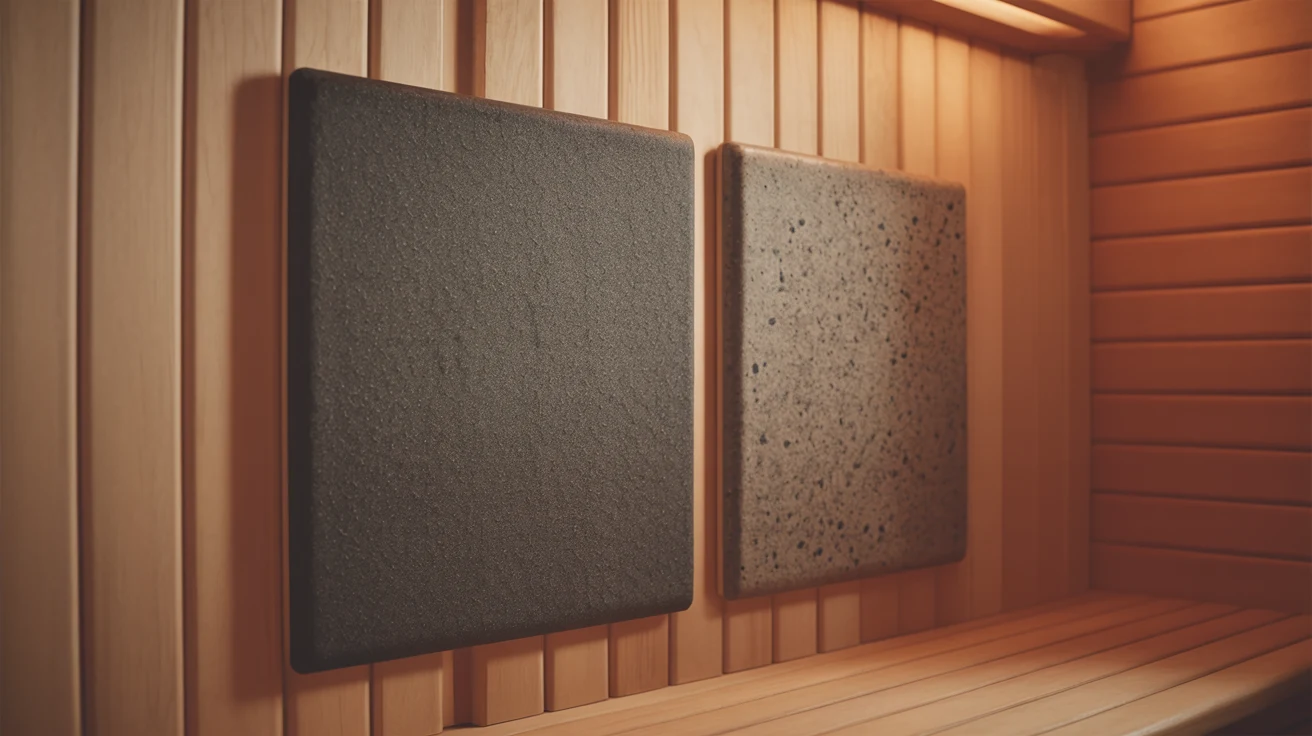
Infrared panels come in two main flavors, and the difference affects heat distribution, comfort, and durability.
| Carbon panels | Ceramic emitters | |
|---|---|---|
| Form | Large flat carbon-fiber panels | Ceramic rods or tubes |
| Surface temp | Lower (broad area, ~100–150°C surface) | Higher, concentrated |
| Heat distribution | Even across the cabin | Intense but prone to hot spots |
| Burn risk | Lower – cooler surface | Higher if you sit too close |
| Durability | Cheaper panels can degrade over time | Rods can crack; long track record otherwise |
Carbon is now the dominant technology in new consumer models. The large flat emitting surface spreads heat evenly across the cabin at a lower surface temperature, which means fewer hot spots and less risk of a contact burn. Ceramic emitters run hotter and concentrate their output – they’re near-ideal far-infrared emitters with a multi-decade track record, but the intensity comes with uneven heat and a higher chance of scorching a shoulder that drifts too close. Some full-spectrum units combine carbon far-infrared panels with added near-infrared emitters, which is why panel type and spectrum claims often get tangled together on spec sheets.
Which specific models get this right is a buying question rather than a physics question. I keep the ranked infrared sauna picks on a separate page so this one can stay about how the technology works.
So is it a real sauna?
It depends entirely on your definition, and this is the fight that never ends. If “sauna” means high heat, steam, and löyly, then infrared isn’t one – it can’t produce steam and it doesn’t try to. If “sauna” means a hot enclosed box that makes you sweat for health and relaxation, then infrared qualifies comfortably.
My view: it’s neither fake nor a substitute. It’s a different category with different strengths, and the honest comparison lives in the full infrared vs traditional breakdown rather than a one-line verdict here. If you want to see where infrared fits among every other option, the overview of sauna types maps the whole landscape.
FAQ
Is an infrared sauna a real sauna?
It depends on your definition. An infrared sauna heats your body directly with radiant panels instead of heating the air, so it can’t produce steam and runs cooler (50–65°C) than a traditional Finnish sauna (70–90°C). If you define a sauna by steam and high heat, infrared isn’t one; if you define it as an enclosed box that makes you sweat, it qualifies. It’s best understood as a separate category, not a copy.
Are infrared saunas safe?
The infrared radiation used in saunas is non-ionizing, meaning it lacks the energy to damage DNA the way X-rays or gamma rays can. The electric and magnetic fields the panels produce fall in the same -low-frequency category as household appliances, which U.S. health authorities describe as generally perceived as harmless. As with any heat therapy, hydrate well, limit session length, and consult a doctor if you have a heart condition or are pregnant.
What does an infrared sauna do?
It raises your core temperature using radiant heat from infrared panels, which produces sweating and an elevated heart rate at lower air temperatures than a traditional sauna. Sessions typically run 30–45 minutes. Specific health benefits are a separate question with its own evidence base – I review that evidence in detail on a dedicated page rather than making claims here.
What is “low-EMF” on an infrared sauna?
It’s a manufacturer marketing term claiming reduced electric and magnetic field output. There’s no universal industry standard or third-party certification behind it, and measurements vary widely between brands. If EMF matters to you, look for an independent measurement of the specific model rather than trusting the label.
What’s the difference between carbon and ceramic infrared panels?
Carbon panels are large flat emitters that run at lower surface temperatures and spread heat evenly across the cabin, with a lower burn risk. Ceramic emitters are rods that run hotter and more concentrated, producing intense far infrared but with hot spots and a higher chance of contact burns. Carbon is the dominant technology in new consumer models.