Wood-Fired Outdoor Sauna: The Authentic Experience
Some links on this page are affiliate links. If you buy through them, I earn a small commission at no extra cost to you. As an Amazon Associate I earn from qualifying purchases.
A wood-fired sauna is the closest most people will ever get to the original Finnish thing: fire, stone, steam, cold water, and no electricity anywhere in the equation. When Finnish sauna culture was inscribed on the UNESCO list of Intangible Cultural Heritage in December 2020, the tradition it honored was built on wood-fired practice – electric heaters only showed up in the last century, as a convenience.
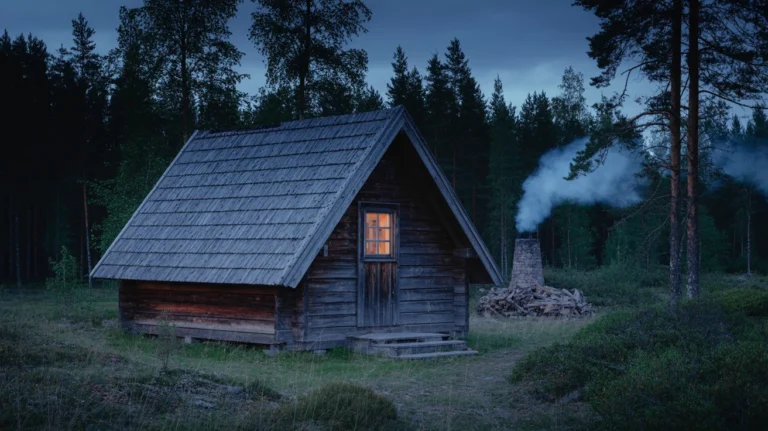
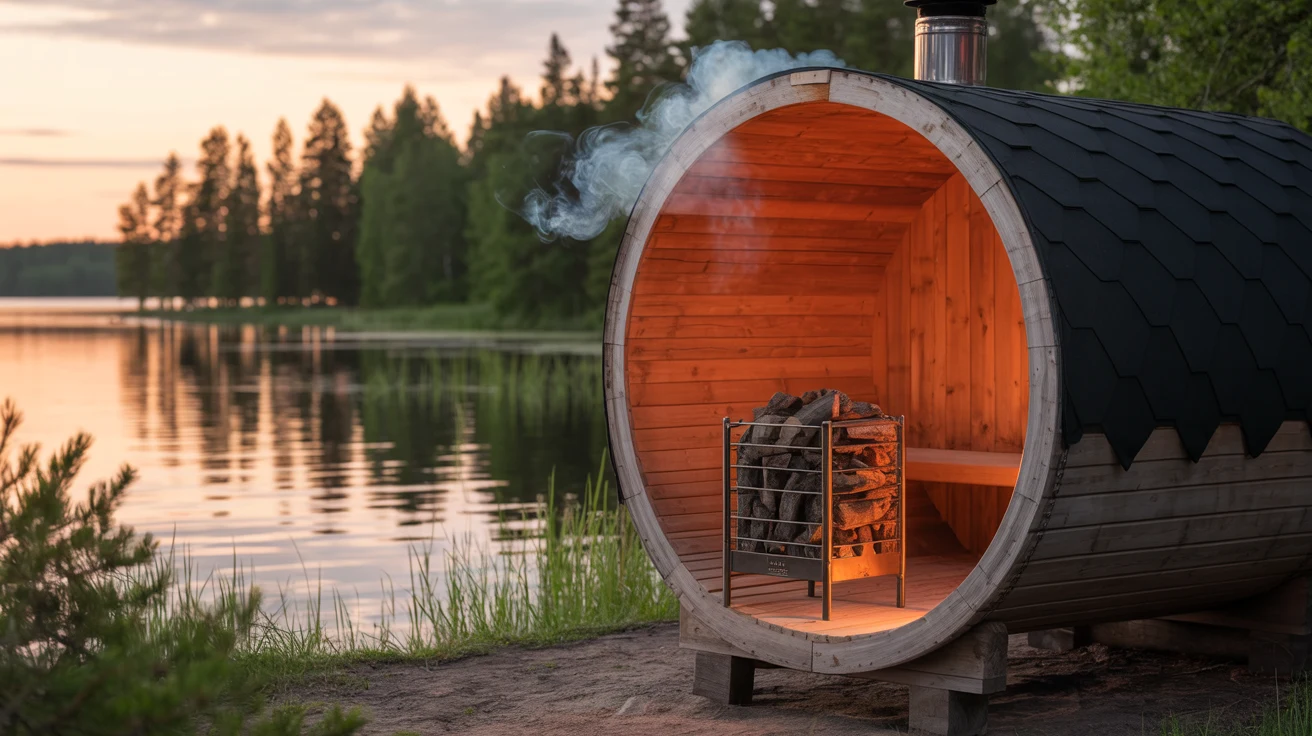
Put that heater outdoors, beside water, with a chimney trailing smoke over a treeline, and you have the archetype. This is the sauna Finns picture when they say the word. Here’s what it takes to build and run one, and why the trade-offs are worth it.
Why wood-fired outdoors is the Finnish ideal
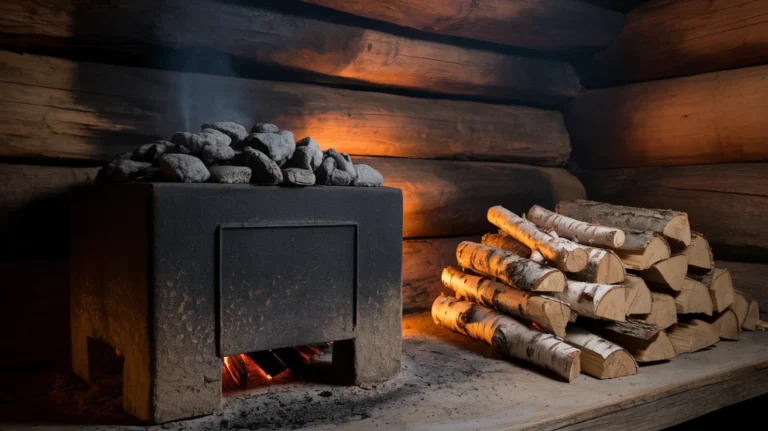
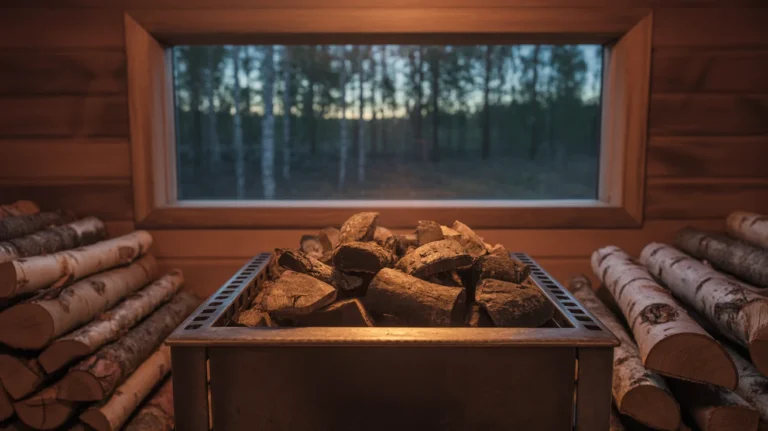
Two things make this the authentic form. First, the heat. A wood-burning kiuas (the Finnish sauna heater) loads thermal energy into its stone mass over a 60–90 minute firing cycle, then releases it slowly. Throw water on those stones and you get a controlled burst of löyly (the steam that separates a real sauna from a hot box) – sustained for hours without the temperature collapsing. Many experienced bathers describe wood-fired heat as softer and more penetrating than an electric heater’s flat, consistent output, with natural humidity swings that feel organic rather than thermostatic.
Second, the ritual and the setting. Traditional Finnish saunas sit outdoors beside lakes, and the whole practice is a loop: heat, then plunge into the water, then repeat. Splitting the wood, laying the kindling, tending the fire over an hour – that’s not overhead to be engineered away. To a Finnish purist it’s the point. The crackle, the smell of burning birch, the smoke over the water: an electric coil in a closet cannot reproduce any of it.
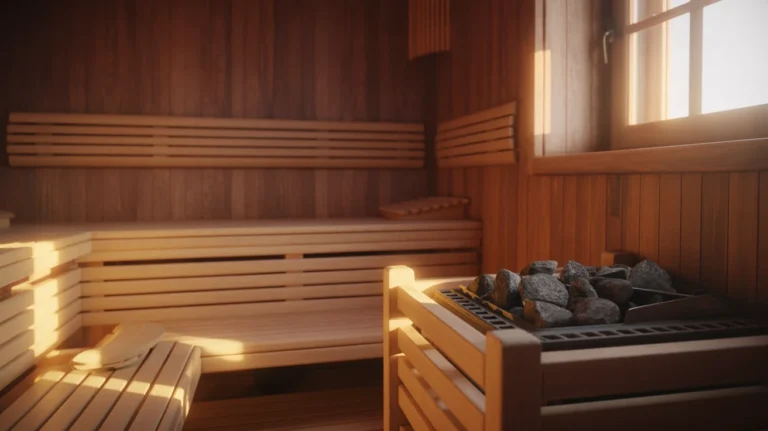
Finnish saunas run around 70–90°C (158–194°F), with roughly 80°C as the sweet spot. A wood-fired outdoor sauna hits that range and holds it, powered by nothing but the fuel you stacked yourself.
Off-grid feasibility
This is where wood-fired quietly wins. A wood-burning sauna requires zero electricity – no panel upgrade, no trenched conduit, no breaker work, no generator. If your property has firewood and a flat spot, you have everything you need. That makes it the definitive choice for remote cabins, homesteads, and cottage-country lots where the nearest 240V feed is a fantasy.
Compare the electric route off-grid. An electric heater draws 6–9 kW per session to reach temperature – a serious load that demands solar panels, batteries, and an inverter, or a generator running the whole time. A wood-fired sauna bypasses all of it. The infrastructure list shrinks to a heatproof foundation pad, a correctly sized chimney, and ash-removal access.
Running costs follow the same logic. A session burning 10–15 kg of seasoned hardwood costs roughly $1.50–$4.00 when wood is bought regionally, and effectively nothing when it’s cut from your own land. Where sustainable wood is available, wood-fired almost always beats electric on running cost once the chimney and pad are paid for.
Site selection
Placement decides both the experience and the fire safety, and the two pull in the same direction: get near water. The Finnish ideal – and the most prized spot in cottage country – is a sauna right on the shoreline, so you step from the heat straight into the lake. Siting within about 50 feet of a water source serves the cooling ritual and gives you water on hand if a fire gets away from you.
The rest is code and drainage. In the United States, common setbacks for an outdoor wood-fired sauna run 15–25 feet from the main residence, 5–10 feet from property lines, and at least 10 feet from wooden fences or other combustible structures – but these vary by municipality, so verify with your local zoning office before you pour anything. US zoning also governs accessory-structure height and lot coverage, and a wood-burning stove almost always triggers building and fire permits, even on a prefab kit.
The site itself needs frost-proof footings to your local frost line, a compacted gravel base for drainage, and no overhead tree cover. Standing water under the structure accelerates rot; branches above a chimney are an obvious hazard. Level ground or a made-level pad is non-negotiable for structural stability.
Smoke management
For a chimney sauna – as opposed to a smoke sauna – smoke management is not about indoor exposure. The chimney keeps combustion gases out of the bathing room entirely. What you’re managing is draft performance and, if you have neighbors, the smoke plume drifting over their yard.
Draft is the whole game. Chimney draw – the upward pull that moves gases out of the flue – depends on chimney height, flue diameter, and whether the pipe runs straight. The ideal is a straight, vertical stovepipe with no unnecessary bends and no gaps at the joints. Twists, leaks, and short chimneys all cut draw and can push smoke back into the room. If a fire keeps sputtering or dying, inspect the chimney for obstructions or leaks before you touch anything else – poor draw is a chimney problem before it’s a fuel problem.
Combustion also needs a steady oxygen supply. A smoky, struggling fire is almost always a ventilation issue first, wood-quality issue second. Best practice is a dedicated air intake for the stove, low on the wall near the firebox, separate from the fresh air feeding bathers. In the US, the NFPA 211 / IRC 3-2-10 rule sets chimney height: at least 3 feet above the roof penetration and at least 2 feet higher than anything within a 10-foot radius. It’s not bureaucratic box-ticking – a short chimney invites downdraft and drops embers on your roof.
Wood storage and supply
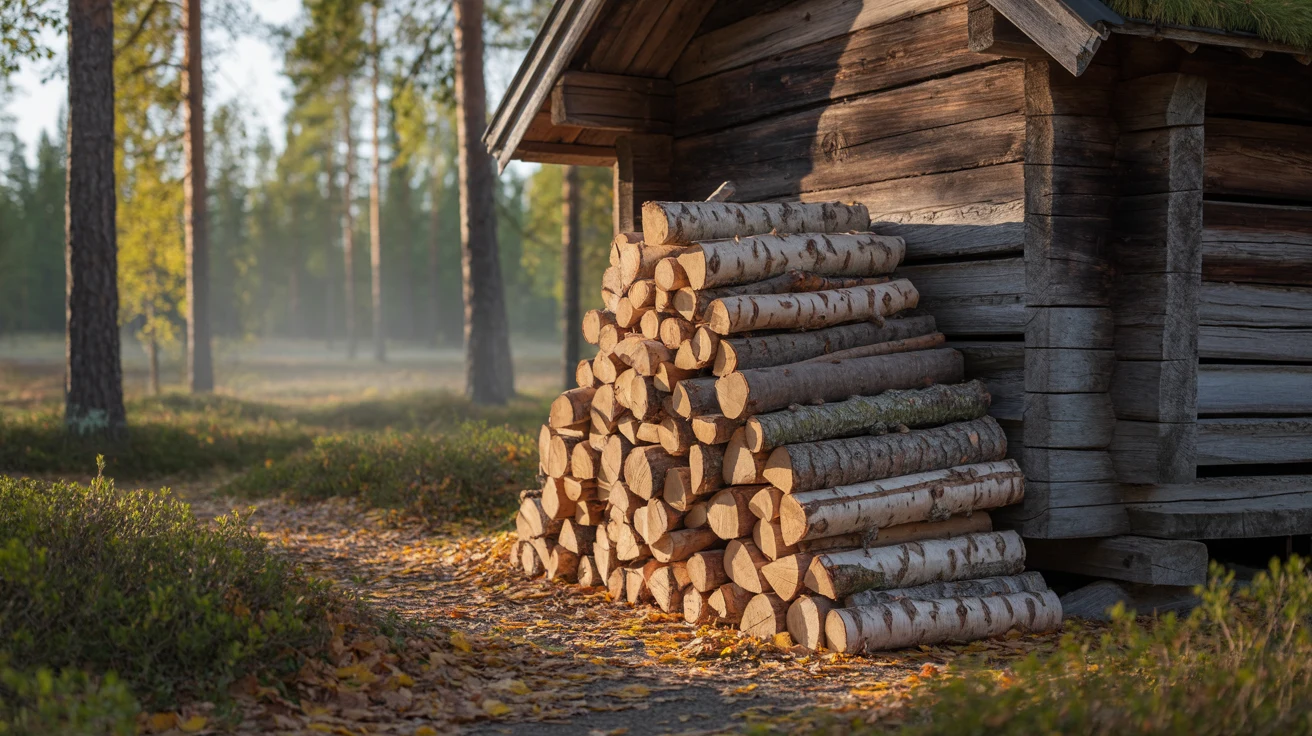
Hardwoods are the correct fuel, full stop. They burn hotter and longer, throw fewer sparks, and produce less creosote than softwoods. Birch (20–22 million BTU per cord) is the traditional Finnish choice and burns hot with a pleasant aroma; oak, ash, maple, and hickory rate similar or higher. Softwoods like pine and spruce burn too fast, smoke more, and gum up your flue with creosote – fine as kindling to establish the fire, wrong as the main load.
Whatever the species, it has to be seasoned. Firewood needs to dry to 20% moisture or below, which means 6–12 months of air-drying for most hardwoods, longer for oak. Wood split in spring and stacked through summer is usually ready by winter. Green or wet wood is the single most common cause of a smoky, feeble fire. Never burn treated wood.
| Metric | Typical figure |
|---|---|
| Wood per session | 10–20 kg (22–44 lbs) seasoned hardwood |
| Sessions per cord | 40–80, depending on sauna size and outside temperature |
| Annual wood, weekly use | ~1.5 cords (bracketed by ~0.5 cord for weekly and 1–2 cords for 2–3× weekly) |
| Cord dimensions | 128 cubic feet – a 4 × 4 × 8-foot stack |
| Annual firewood cost, weekly use | ~$150–$250 (US, purchased and seasoned) |
Store the wood in a covered, ventilated shed or rack, off the ground, with airflow on all sides so it keeps drying. Close to the sauna but not inside it, and – per California fire guidance, which local codes may tighten – at least 3 feet from structures. Stock the season’s supply before the cold sets in; for weekly year-round use, keep at least half a cord on hand at all times.
Year-round use considerations
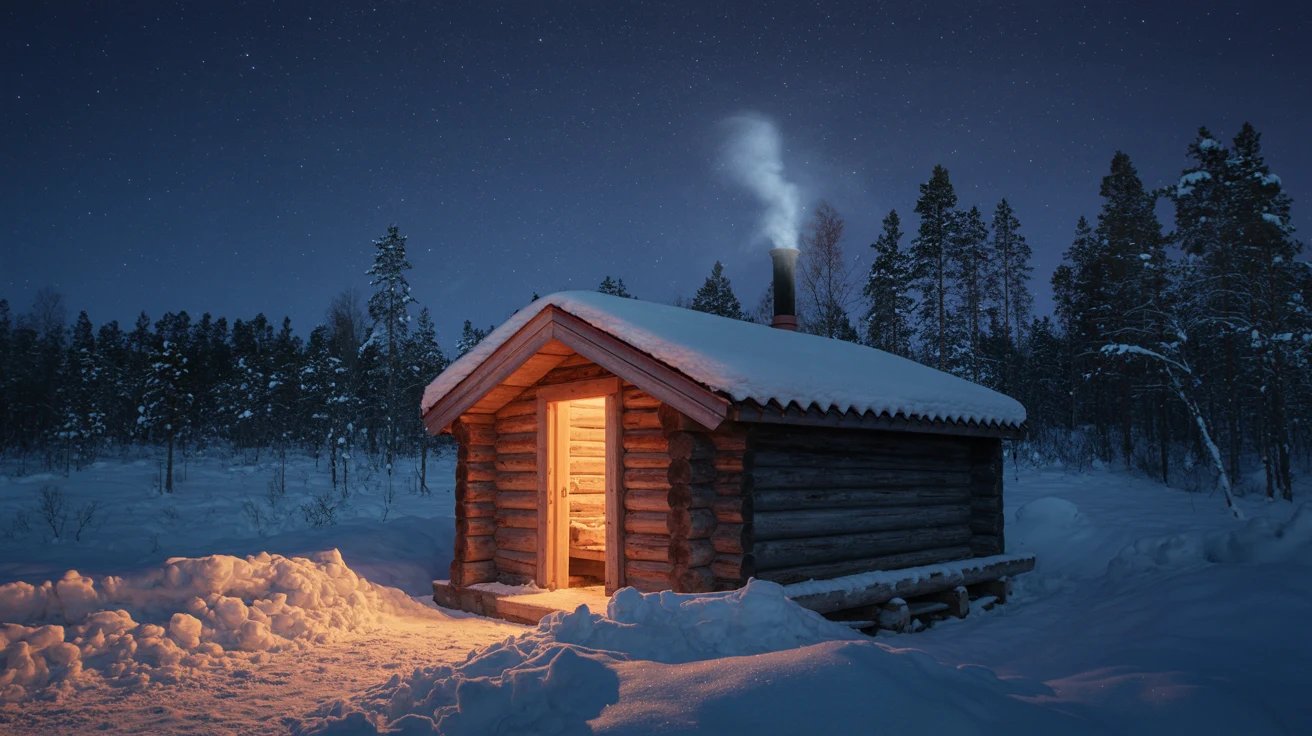
An outdoor wood-fired sauna does not need to hibernate. If anything, winter is when it earns its keep – the contrast between a −20°C night and 80°C steam, followed by a roll in the snow or a plunge through the ice, is the pinnacle of the tradition. Wood stoves produce intense, grid-independent heat that performs the same regardless of ambient temperature; they just need more fuel in deep cold.
Expect longer heat-up times when everything starts from sub-freezing. A summer cycle of 30–45 minutes can stretch to 75–90 minutes in a hard winter, and you’ll feed the fire more. Insulation matters here: R-19 walls and R-26 or better in the ceiling are sensible minimums for a cold climate, with a foil vapor barrier behind the interior cladding to reflect heat back and keep moisture out of the wall assembly. Double-pane glass is essential – single-pane doors bleed heat and fog up. Use dimensionally stable exterior wood like western red cedar or thermowood; untreated pine and MDF-backed panels won’t survive permanent outdoor placement.
Before each winter, inspect the firebox for cracks or warping, check the flue for creosote buildup, and make sure the chimney cap is secure. And here the wood-fired sauna pulls ahead again: it has no electrical feed or plumbing to winterize (unless you’ve plumbed a separate shower or cold plunge), which makes it inherently simpler to run through a deep freeze than an electric model on buried conduit prone to frost heave.
Famous wood-fired outdoor sauna designs
A handful of forms recur, from vernacular archetypes to architect-designed landmarks. Each solves the same problem – fire, stone, steam, water – a little differently. If you’re weighing which form suits your lot, it’s worth understanding how these sauna types differ before committing to one.
| Design | What defines it |
|---|---|
| Classic lakeside shore sauna | The vernacular archetype: a small log or timber cabin on a lake shore, wood-fired heater, low ceiling, two-tier benches, changing room, door onto the dock. Not a product – the Finnish default. |
| Traditional smoke sauna | Chimney-free log structure, heated 3–8 hours with smoke venting before bathing. Blackened, antimicrobial walls. Oldest form; increasingly rare. |
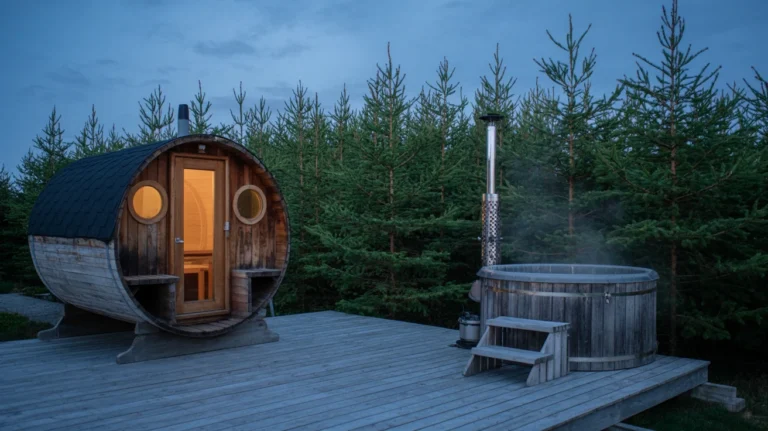
| Barrel sauna | Cylindrical build in thermally modified spruce or cedar, reportedly adapted by Finnish water-tower builders from stave construction. The curve shrinks air volume and speeds heat-up. Seats 2–8. |
| Kota sauna | Conical or hexagonal design rooted in the Sami kota (a traditional Lapland dwelling of bound sticks and hide). Distinctive silhouette, common along Scandinavian trekking routes. |
| Löyly, Helsinki | Avanto Architects, 2016. A public sauna and restaurant clad in over 4,000 heat-treated pine planks on the Helsinki waterfront, with both a wood-burning and a smoke sauna. Nominated for the 2016 Finlandia Prize for Architecture. |
Finland also keeps its history in use. Rajaportti in Tampere, founded in 1906, is the oldest public sauna still operating, still heated by wood the traditional way. In Lapland, the Kuurakaltio smoke sauna sits beside a clear stream, open under both the midnight sun and the northern lights. If you want to see the tradition documented rather than sold, the Finnish Sauna Society – which runs its own wood-fired saunas at Vaskiniemi with roughly a tonne of stones in each heater – is the authoritative source; in North America, the North American Sauna Society plays a similar role.
For a reference point on cost: a well-regarded Canadian-made cabin like the Dundalk Georgian runs around $7,703 on sale ($7,999.99 MSRP) unit-only, before you add a Harvia M3 wood-burning heater with chimney kit at +$1,979. A DIY build lands cheaper – roughly $3,000–$7,000 in materials over about four weekends – while prefab wood-fired kits generally run $9,000–$15,000. None of those figures include the foundation, chimney, delivery, or permits. Which heater goes inside deserves its own decision; I cover the models and trade-offs in the best wood sauna stoves guide and in the best outdoor saunas roundup separately.
FAQ
How long does a wood-fired outdoor sauna take to heat up?
A typical continuous-fire wood heater reaches temperature in about 30–45 minutes, up to around 60 in cold weather. In deep winter, starting from a sub-freezing stove, expect 75–90 minutes. Heat-storing stone-mass stoves and smoke saunas take considerably longer – a smoke sauna needs 3–8 hours.
How much firewood does a sauna session use?
Typically 10–20 kg (22–44 lbs) of seasoned hardwood per session, depending on sauna size, stove efficiency, and outside temperature. A full cord fuels roughly 40–80 sessions. For weekly year-round use, plan on around 1.5 cords a year.
Can a wood-fired sauna run completely off-grid?
Yes – it’s the definitive off-grid sauna. It needs no electricity, no gas line, and no generator. If your property has firewood and a flat, well-drained spot with a proper chimney, that’s everything required. This is the main practical reason remote cabins and homesteads choose wood over electric.
What wood is best for a sauna stove?
Seasoned hardwoods – birch, oak, maple, ash – burn hotter and longer, spark less, and produce less creosote than softwoods. Birch is the traditional Finnish choice. Use softwoods like pine only as kindling to start the fire. Never burn green, wet, or treated wood.
Do I need a permit to build a wood-fired outdoor sauna?
In the United States, almost always. A wood-burning stove and chimney typically trigger building and fire permits, and most jurisdictions treat the sauna as a site-built accessory structure even if it arrives prefabricated. Setbacks, height limits, and lot coverage are set locally, so check with your zoning office before building.
Can I use an outdoor wood sauna in winter?
Yes, and winter is arguably when it’s best – the heat-versus-cold contrast is central to the tradition. Wood stoves perform independently of the grid and simply need more fuel in deep cold. Use double-pane glass, adequate insulation, and inspect the firebox and flue before the season starts.