Sauna vs Hot Tub: Which Is Better for You?
Some links on this page are affiliate links. If you buy through them, I earn a small commission at no extra cost to you. As an Amazon Associate I earn from qualifying purchases.
A hot tub at 40°C (104°F) puts more heat into your body than a sauna at 80°C (176°F). That sounds backwards until you remember that water moves heat about 24 times faster than air, and that underwater you can’t cool yourself by sweating. Water wins the physics. It does not automatically win the decision.
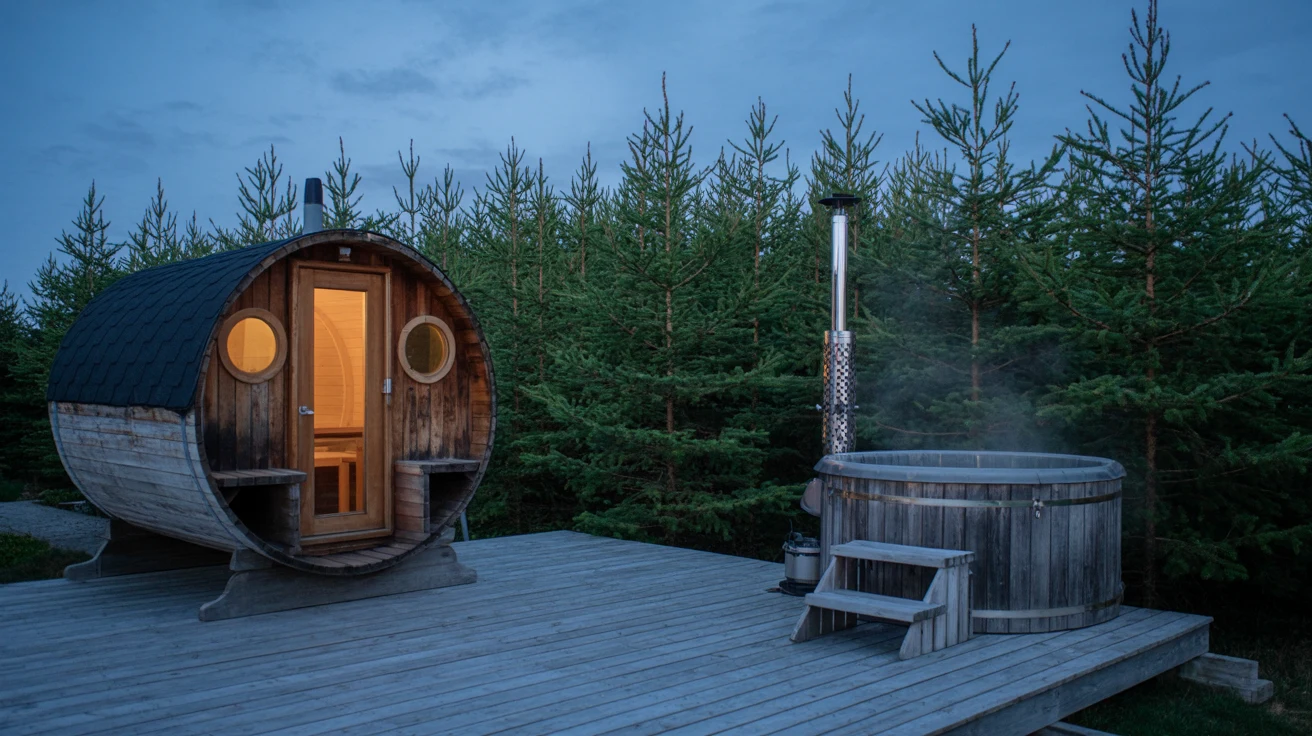
The two things do different jobs. A sauna is dry radiant heat, a social room, and a ritual with steam at the center of it. A hot tub is buoyancy, jets, warm water you can sit in with a drink and a conversation, ready at any hour because it never cools down. Below is what each does to your body, what the research actually shows, what they cost to run, and what each one demands from you every week.
The short answer, by goal
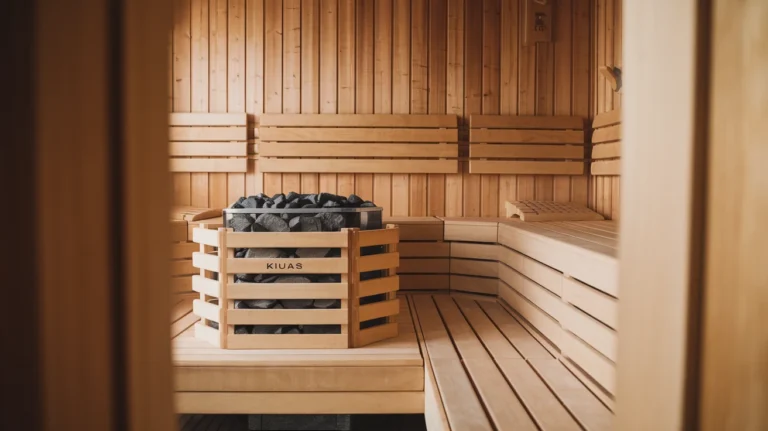
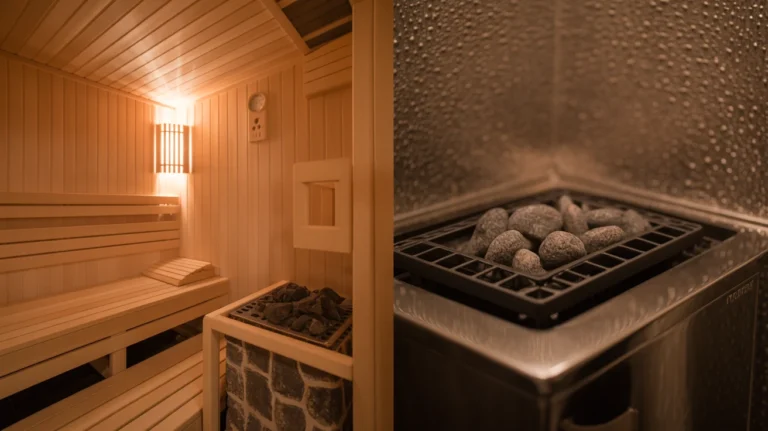
Pick the sauna if you want deep, dry heat, high temperatures, löyly (the burst of steam thrown onto hot stones), and a room that costs nothing when you’re not using it. Pick the hot tub if you want weightlessness for sore joints, an easy shared soak with no heat-up wait, and you don’t mind becoming an amateur water chemist. Traditional sauna here means a hot-air room with a stove and stones, one of several types of sauna, and the one the long-term research is about.
| Traditional sauna | Hot tub | |
|---|---|---|
| Temperature | 70–90°C (158–194°F) air; US residential code caps the heater thermostat at 194°F | Never above 40°C (104°F) per CPSC; 100°F called safe for a healthy adult |
| How heat reaches you | Hot air plus radiant heat from stones; sweat evaporates and cools you | Conduction through water; submerged, sweat can’t evaporate |
| Time to ready | About 30–45 minutes from cold, up to about an hour in cold weather, for electric and wood-fired alike | Already hot; it’s held at temperature around the clock |
| Typical session | 10–20 minutes per round, 2–3 rounds with cool-downs | One continuous soak; no federal agency sets a time limit |
| Energy use | About 7–13 kWh for a two-hour sauna evening | About 6 kW heater on 240 V, cycling 24/7 to fight standby heat loss |
| Upkeep | Sweep, air it out, wash the benches now and then | Test chlorine or bromine and pH, clean filters, drain and refill periodically |
| Hygiene risk | No standing water to treat | Pseudomonas rash, Legionella in the mist |
| Space and base | A dry, insulated room; 240 V circuit for most heaters | Thousands of pounds when filled; needs a level pad or an engineered deck |

Why 40°C water beats 80°C air
Su, Hoekstra and Leicht put the number plainly in their 2023 paper: heat transfer is about 24 times higher in water than in air. Their own trial had 12 young adults spend an hour in 68.9°C dry heat and an hour in 37.5°C water; rectal temperature landed in the same place, around 38.0°C versus 37.9°C, and people found the water more comfortable.
The second mechanism matters just as much. In a sauna your body’s main defense is sweating, and the sweat evaporates off your skin and carries heat away. Sitting in water up to your chest, that escape route is closed. So the same “hotness” you feel at 80°C in air arrives from a bath that a thermometer says is barely above body temperature. If wet heat is what you’re after but chemistry isn’t, a steam room is the third option worth pricing out.
What the 2025 Oregon study actually measured
The University of Oregon study (Atencio, Minson and colleagues, American Journal of Physiology, 2025) is the one behind every “hot tubs beat saunas” headline of the last year. It’s a genuinely useful crossover trial: the same 20 people, 10 of them women, average age 24, completed hot water immersion at 40.5°C for 45 minutes, a traditional sauna at 80°C for three 10-minute rounds, and a far-infrared cabin at 45–65°C for 45 minutes, each at least a week apart.
Core temperature rose 1.1°C in the hot tub, 0.4°C in the traditional sauna and 0.0°C in far-infrared. Cardiac output, how much blood the heart pumps per minute, rose 3.7, 2.3 and 1.6 L/min respectively. Only the hot tub moved immune markers: a small rise in interleukin-6 straight after heating, and more NK cells and CD8+ T cells at 24 hours. That is a change in markers after one session, not evidence that anyone got sick less often.
The limits are worth stating because the press coverage skipped them. Young, healthy, regularly exercising adults. One bout of each. No older adults, no one with heart disease, no long-term outcomes. And the sauna exposure was 30 minutes of heat against the hot tub’s 45; the bigger dose won, which is roughly what you’d expect.
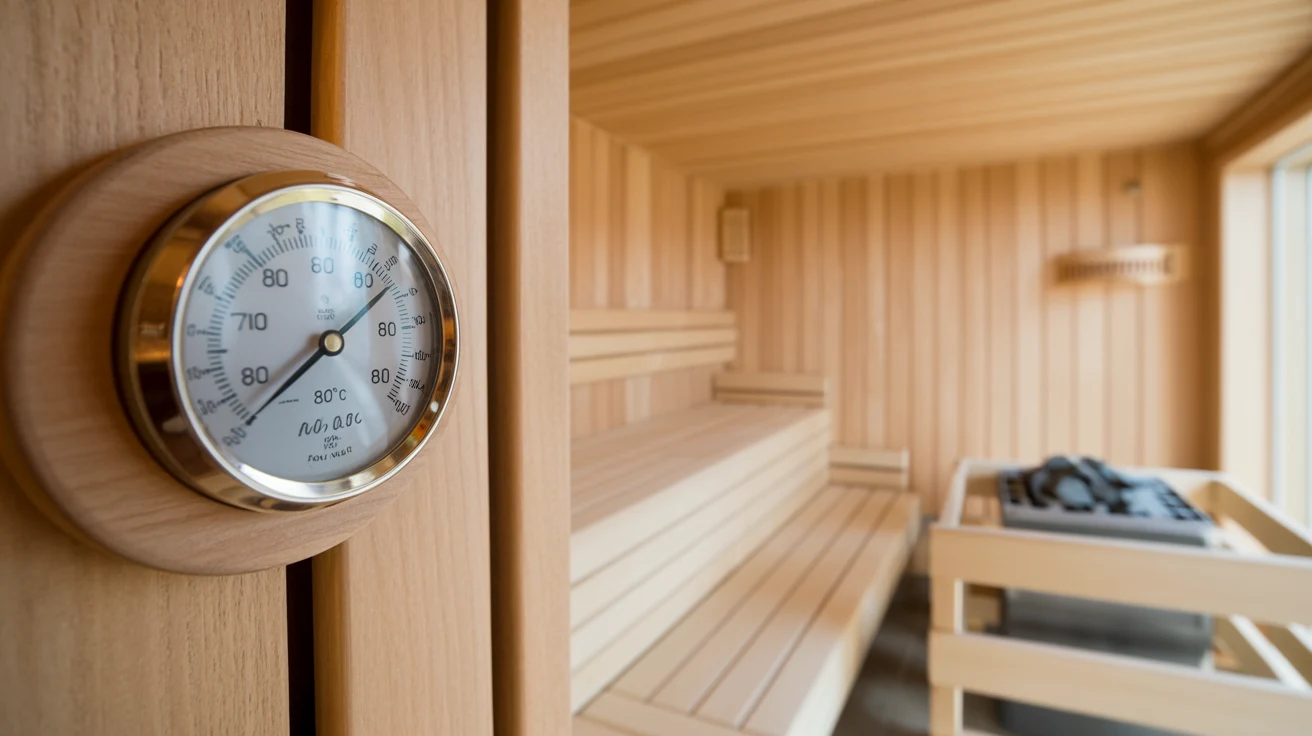
The long-term evidence runs one way
In Laukkanen et al. 2015, 2,315 middle-aged Finnish men were followed for a median of 20.7 years. Men who used a sauna four to seven times a week, compared with once a week, had 50% lower fatal cardiovascular disease, 63% fewer sudden cardiac deaths and 40% lower all-cause mortality. This is an association in an observational cohort, not proof that sauna caused the difference, and the men who sauna most may simply have been healthier to begin with.
Crucially for this comparison, Harvard Health noted that because of the particular properties of Finnish saunas, the findings aren’t applicable to steam baths and hot tubs. The sauna trial evidence beyond that cohort is thin too: a 2018 systematic review found 40 clinical studies of regular dry sauna bathing, only 13 of them randomized and most with fewer than 40 participants.
On the water side, a small randomized trial from the same Oregon lab (Brunt et al., 2016) had about 20 sedentary young adults do eight weeks of 40.5°C baths, four to five times a week, long enough to hold rectal temperature at 38.5°C for an hour. Vascular function, arterial stiffness and blood pressure all improved against a sham. That’s real trial evidence, but the protocol is hotter and far longer than any home soak, and it sits above the CPSC’s temperature ceiling. A large Japanese cohort has also linked daily bathing with lower cardiovascular risk, but that study tracked deep home bathtubs, not jetted backyard spas, and shouldn’t be read across.
What each costs to run
Finland’s energy agency Motiva, reported by Yle, puts a typical household electric heater at 6–9 kW and a two-hour sauna evening at about 7–13 kWh. The US residential average was 18.31 cents per kWh in July 2026, which works out to roughly $1.30–$2.40 for that evening. That’s my arithmetic on two sourced figures, not a metered result, and your state’s rate may be well above or below the average. Heating the room to 100°C instead of 70–80°C adds 20–30% to the bill, per Motiva; another reason not to chase extreme temperatures.
The hot tub’s structure is different. Direct Energy puts 240 V hot tub heaters at about 6,000 W and 120 V plug-in models at about 1,500 W, and relays manufacturer advertising of roughly $1 a day, up to about $50 a month at the high end. Treat the $1 figure as marketing rather than measurement: a tub is held hot 24 hours a day, so the real bill is set by cover condition, insulation and how cold your winters get, not by how often you get in. California has regulated portable spa standby power since 2006 and required an energy label since June 2019, which tells you how much that standby draw varies between models.
The honest summary: a sauna costs nothing on the days you skip it. A hot tub costs the same whether you used it or not.

Upkeep and hygiene
This is the gap people underestimate, and it’s the one that decides the purchase for most households. A sauna needs sweeping, airing out, and an occasional wash of the benches. A hot tub needs water chemistry held inside a target band every week of the year.
The CDC’s targets are free chlorine at least 3 ppm or bromine 4–8 ppm, with pH between 7.0 and 7.8, plus daily scrubbing of biofilm, filter changes, and water replacement on the manufacturer’s schedule. Miss it and you get hot tub rash, an itchy, bumpy Pseudomonas aeruginosa infection around the hair follicles that shows up a few days after a poorly maintained soak. The more serious one is Legionella, which you breathe in from the mist rather than catch from the water; a 2026 CDC report traced two Legionnaires’ cases, one requiring mechanical ventilation, to a private hot tub at a vacation rental. Private tubs are not exempt from the problem.
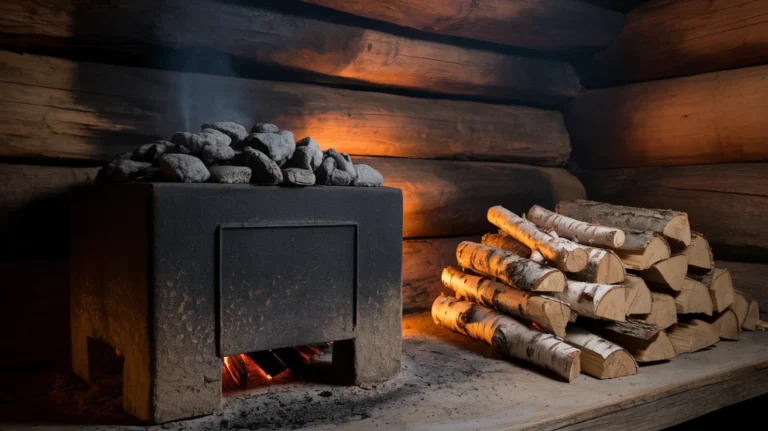
In Finland the sauna is left to cool with the door open and swept out afterwards. In America the hot tub gets a test kit, a logbook, and a shelf of buckets. A sauna has no standing water to treat, which removes the category of risk rather than reducing it, though it isn’t a sterile room either, and bare skin belongs on a towel.
Safety and who should sit out
The CPSC has advised since 1979 that hot tub water should never exceed 104°F (40°C), that 100°F is considered safe for a healthy adult, and that soaking above 102°F can cause fetal damage in the first three months of pregnancy. The same guidance warns that heavy drinking during a soak can cause drowsiness and loss of consciousness; in water, that is a drowning risk in a way it is not in a sauna room.
For the sauna, Dr Wen-Chih Wu of Brown University Health lists the clear sauna contraindications: unstable angina or a heart attack within the last two weeks, low blood pressure, dehydration, fever or an acute infection. His practical limits are 20 minutes or less, and no alcohol before or right after. Anyone with a heart condition, and anyone pregnant, should ask their own doctor rather than a comparison table.

Space, power and installation
Both usually want a dedicated 240 V circuit, so an electrician is in your future either way, though some infrared cabins run on a standard 120 V outlet, and plug-in 120 V spas exist at the cost of much slower heating. Hot tub circuits are GFCI-protected with a disconnect placed away from the tub, and permits are typically required.
Weight is where they diverge hardest. Water runs about 8.34 pounds per gallon, so a 400-gallon tub holds roughly 3,300 pounds of water before you add the shell and the people in it. That goes on a level concrete pad or a deck that an engineer has signed off on, not on whatever boards are already there. A sauna is comparatively light and dry, but it needs correct insulation, a vapor barrier and real ventilation; get those wrong and you’re rebuilding, which is why the sequencing matters when you’re building a home sauna. Check local permit rules before either project; requirements vary by jurisdiction.
Common questions
Is a sauna or hot tub better for you?
It depends which evidence you weigh. A 2025 University of Oregon study found a 45-minute 40.5°C soak raised core temperature and cardiac output more than a 30-minute sauna in 20 young healthy adults, one session each. The long-term data, including a Finnish cohort of 2,315 men followed for two decades, are sauna data, and Harvard Health has said those findings don’t transfer to hot tubs. Neither has been shown to prevent disease, and both are best treated as pleasant heat rather than medicine.
Which is cheaper to run, a sauna or a hot tub?
A sauna, for most households. A two-hour sauna evening uses about 7–13 kWh, which at the July 2026 US average of 18.31 cents per kWh comes to roughly $1.30–$2.40, and only on the days you heat it. A hot tub holds its water hot 24 hours a day, so standby heat loss through the cover and shell drives the bill whether or not you get in.
Should you use a sauna or hot tub first?
If you have both, the sauna generally goes first and the water afterwards, since the water is the place you’d rather linger and it’s easier to cool down from. The practical constraints are the ones that matter more: rinse before getting in the tub, don’t stack long sessions back to back, and stop if you feel lightheaded in either.
Can you use a hot tub or sauna when pregnant?
The CPSC warns that soaking in water above 102°F can cause fetal damage during the first three months of pregnancy, and obstetric guidance advises against saunas and hot tubs early in pregnancy because core temperature rises. This is a question for your own doctor or midwife, not for a website.
Do hot tubs carry infection risks that saunas don’t?
Yes. Hot tubs hold warm standing water, which supports Pseudomonas aeruginosa, the cause of hot tub rash, and Legionella, which you inhale from aerosolized mist. The CDC’s targets are free chlorine of at least 3 ppm or bromine 4–8 ppm with pH 7.0–7.8. A sauna has no water to treat, though bare skin still belongs on a towel.