Sauna Blankets: Real Sauna or Heating Blanket?
Some links on this page are affiliate links. If you buy through them, I earn a small commission at no extra cost to you. As an Amazon Associate I earn from qualifying purchases.
A sauna blanket is an infrared heating blanket with a better marketing budget. You lie inside a padded, sleeping-bag-style envelope lined with far-infrared elements, your head sticks out the top breathing normal room air, and after 30 to 60 minutes you sweat. That’s the honest version. There’s no steam, no hot room, no wooden bench, and no löyly (the burst of steam when you throw water on the stones). Calling it a “sauna” is generous.
That doesn’t make it useless. At $499 to $699, a blanket delivers far-infrared heat for a fraction of what a cabin costs, and for apartment dwellers or renters it may be the only realistic option. But you should buy one knowing exactly what it is and, just as importantly, what it isn’t.
At a glance
- What it is: a padded far-infrared envelope you lie inside, head out, for a 30 to 60 minute sweat.
- What it is not: a sauna. No steam, no heated air to breathe, no bench, no shared session.
- Who it suits: renters, apartments and small spaces, budget buyers testing infrared, post-gym recovery, travel.
Our picks
- Premium pick: HigherDOSE Infrared Sauna Blanket
- Cheaper, travels well: LifePro RejuvaWrap
What a sauna blanket actually is
The device is a multi-layer envelope: a water-resistant outer shell, a far-infrared heating layer using carbon-fiber or ceramic elements, an EMF-shielding layer (charcoal or clay, depending on the brand), and a non-toxic inner liner. You climb in, set a temperature, and the elements emit far-infrared radiation directly onto the skin your body is pressed against.
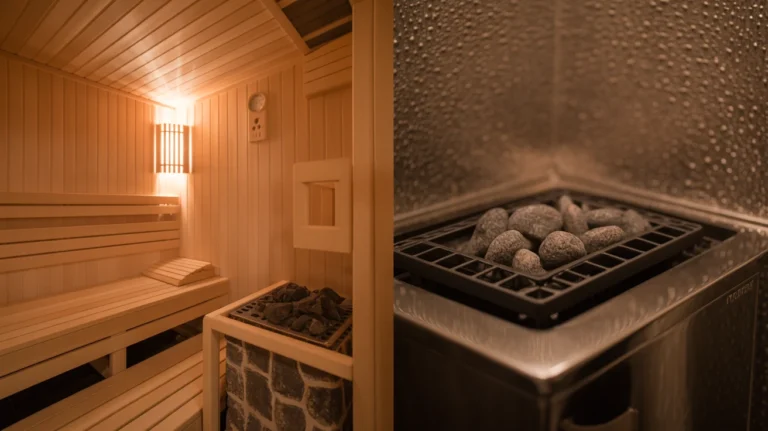
This is a different mechanism from a traditional sauna. A Finnish sauna heats the air to 80–100°C (176–212°F) and your whole body, head included, sits in that heat. An infrared sauna cabin warms both the air and your body with radiant panels held at a distance. A blanket skips the heated-air part almost entirely: the far-infrared acts on the skin in direct contact, and the small air pocket inside warms only incidentally from your own body heat. Your head, meanwhile, stays out in the open.

How it differs from an infrared cabin
People shopping for blankets are usually weighing them against a full infrared cabin, so this is the comparison that matters most. The blanket wins on space, price, and portability. The cabin wins on nearly everything experiential.
| Dimension | Sauna blanket | Infrared cabin |
|---|---|---|
| Head | Outside, breathing room air | Enclosed in the heat |
| Air temperature | Only incidentally warmed | 49–71°C (120–160°F) |
| Capacity | One person, reclined | 1–4 people, seated upright |
| Space needed | Rolls into a bag | 36″×36″ footprint minimum |
| Price | $499–$699 | $3,000–$5,000+ |
| Cleaning | Wipe interior after each sweat | Towel the bench, air it out |
The cleaning line deserves emphasis. You sweat directly into the blanket’s interior, so it needs wiping down after every session or you use a washable insert. HigherDOSE sells a 100% organic cotton insert for exactly this reason. A cabin bench you just towel off. Some people find the blanket maintenance genuinely annoying, and reclined-with-limbs-enclosed doesn’t suit everyone either, especially if you’re even mildly claustrophobic.
The main brands
Three names dominate the category, plus a floor of generic units. Prices below use researched figures where confirmed; prices shift by region, so check the figure on the maker’s own site before you buy.
| Model | Price (USD) | Notable specs | Return / warranty |
|---|---|---|---|
| HigherDOSE Infrared Sauna Blanket | $699 | 5 layers, charcoal EMF + clay layers, FSA/HSA eligible, 4.2/5 on Amazon (273 reviews) | 120-day money-back |
| Sun Home Infrared Sauna Blanket | $499 | 35–75°C (95–167°F), 500W, 0–60 min timer, single heating zone | 30-day money-back, 1-yr warranty |
| LifePro RejuvaWrap | $299–$399 | Carbon-fiber FIR, 9 temp levels, waterproof interior, carry bag, 4.4/5 on Amazon (1,400+ reviews) | Varies by seller |
| Generic / unbranded | $150–$300 | 30–80°C (86–176°F), 60-min timer, wide quality variation | Varies |
The confirmed heat range on the Sun Home is 35–75°C (95–167°F), which lands in the same neighborhood as an infrared cabin, though remember that number describes the surface temperature acting on your skin, not the air you breathe. If you go generic, look specifically for documented non-toxic inner lining and EMF shielding, because the cheap end of this market is where quality varies most.
What the benefits are
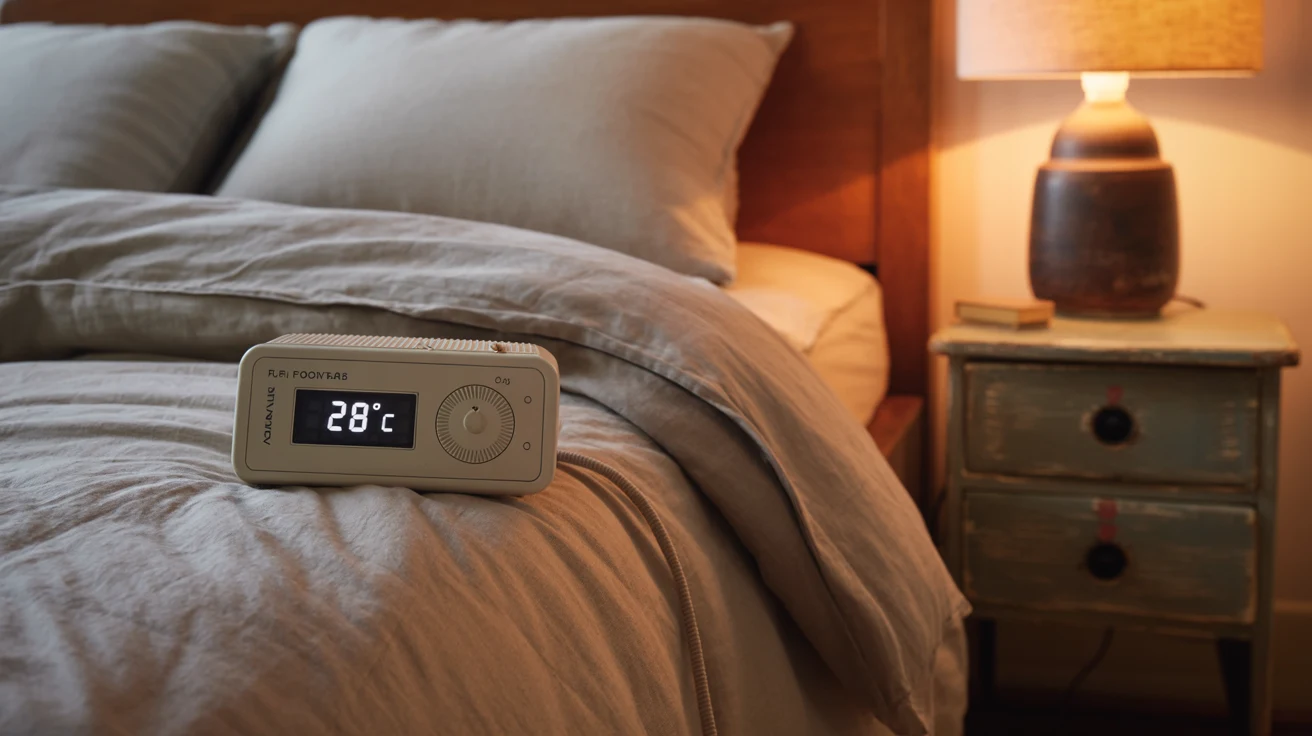
Here’s where you need a skeptic in the room. Health claims for sauna blankets are almost always extrapolated from far-infrared sauna research or general heat-therapy research conducted under different conditions, most of them with the whole body and head inside the heat.
That said, some claims are plausible. The blanket will reliably raise your core temperature and make you sweat, which is well-established for far-infrared technology. Heat therapy for muscle soreness and post-workout recovery has general support in the sports-medicine literature, and heat-induced relaxation is a real, documented response. If you want a warm, sweaty wind-down after the gym, a blanket does that.
The claims to discount are the loud ones. “Detox” through sweat is a marketing overreach: your kidneys and liver do the detoxifying, and meaningful heavy-metal excretion via sweat isn’t established in peer-reviewed work. “Calorie burn equivalent to exercise” is likewise overstated; elevated heart rate under heat burns some extra calories, but nowhere near an aerobic workout.
The cardiovascular claims are the ones to treat most carefully. The landmark findings come from a 2015 JAMA Internal Medicine cohort study of 2,315 Finnish men, which tracked traditional sauna use at 80 to 100°C (176 to 212°F) with the head in the heat. You cannot transplant those results onto a head-out, body-only blanket and expect the same benefit. That work links frequent traditional sauna use to lower cardiovascular mortality; no equivalent association has been shown for blankets.
None of this means a blanket does nothing. It means the honest pitch is “a convenient way to get a relaxing far-infrared sweat at home,” not “a cardiovascular longevity device.” The Finnish Sauna Society would not recognize it as a sauna at all, and they’d be right.
When a blanket is actually the right buy
For all my grumbling, there are situations where a blanket is the correct answer, and not a compromise you should feel bad about.
- Apartments and small spaces. It rolls up and stores under a bed. No dedicated room, no installation, no electrical upgrade: 500W runs off a standard outlet. For a studio, it’s often the only realistic infrared option.
- Renters. Zero property modification, fully portable, comes with you when you move.
- Budget-constrained buyers testing infrared. At $499 for the Sun Home versus $3,000–$10,000+ for a cabin, it’s a low-stakes way to find out whether infrared heat sessions do anything for you personally before committing to a room.
- Post-workout recovery at home. Convenient heat therapy after the gym without leaving the apartment.
- Travel. Units like the LifePro RejuvaWrap ship with a carry bag and work in a hotel room.
Where it’s the wrong buy: if you want the full cardiovascular and thermal load of a real sauna, if you want to share a session with family or friends, if you want to sit up and read, or if heat and enclosure make you uneasy. For any of those, look at a cabin or a traditional build instead. If you’re weighing the whole landscape, my buying guides and the broader range of sauna types lay out the alternatives.

The verdict
A sauna blanket is a legitimate far-infrared heating device sold under a slightly misleading name. Buy one if you’re space- or budget-constrained and want convenient at-home heat and sweat, and go in with realistic expectations about the health claims. Don’t buy one expecting a sauna, because it isn’t one. If the price is right and the honest use case matches yours, the Sun Home at $499 and the HigherDOSE at $699 are the two most credibly specced options, with the RejuvaWrap a cheaper mid-range pick at $299 to $399.
FAQ
Is a sauna blanket a real sauna?
No. A sauna blanket is a far-infrared heating envelope you lie inside with your head outside, breathing room-temperature air. A real sauna heats the whole room and your entire body, including your head, and produces steam. A blanket has no steam, no heated air to breathe, and no communal element, so it’s more accurately described as an infrared heating blanket that makes you sweat.
Do sauna blankets work?
They reliably raise your core body temperature and make you sweat, which is the confirmed mechanism of far-infrared heat. They’re plausibly useful for relaxation and post-workout heat therapy. However, no peer-reviewed studies exist on sauna blankets specifically, and stronger claims like “detox” or “calorie burn equivalent to exercise” are marketing overreach not supported by clinical evidence.
Are sauna blankets worth it?
For renters, apartment dwellers, and budget-conscious buyers, yes, they can be. At $499–$699 a blanket costs roughly 10–20% of a budget infrared cabin, needs no installation, and runs on a standard outlet for $0.06 per session. If you want the full cardiovascular stress of a traditional sauna or a shared experience, it isn’t worth it, and you should look at a cabin instead.
How hot does an infrared sauna blanket get?
Confirmed ranges land around 35–75°C (95–167°F) for the Sun Home model, with generic units often listing up to 80°C (176°F). That surface temperature is comparable to an infrared cabin, but remember it acts on the skin in direct contact rather than heating the air you breathe. Traditional Finnish saunas run considerably hotter at 80–100°C (176–212°F).
Are sauna blankets safe regarding EMF?
The heating elements sit in direct contact with your body, which is why brands add shielding layers of charcoal, clay, or crystal and advertise “low EMF.” No independent third-party EMF test data is published for these models, so ask the maker for shielding test results if that matters to you.