Indoor or Outdoor Sauna: Which Fits Your Home
Some links on this page are affiliate links. If you buy through them, I earn a small commission at no extra cost to you. As an Amazon Associate I earn from qualifying purchases.
The tape measure is out in the basement, or the spare room is looking promising, and then you look out the back window at a corner of the yard. Both could hold a sauna. What usually settles it is not taste but the house: the power you can run, the floor you really have, and which spot you will still walk to on a dark February weeknight.
At a glance
- Cheaper to install: outdoors, $3,000-6,000, against $3,000-9,000 indoors.
- What usually decides it: a spare 240V circuit and a drainable floor indoors; a level base and a permit outdoors.
- Don’t relocate one: an indoor-rated sauna placed outside voids most warranties.
Which way your house already points
Start from the space and the panel you already have. Find your row, then read the guide that covers that build in detail.
| Your situation | Goes | Read next |
|---|---|---|
| Apartment or condo | Indoor | apartment sauna |
| Basement, floor drain nearby | Indoor | basement sauna |
| Spare room, closet or attached garage | Indoor | garage conversion |
| Small yard, one or two bathers | Outdoor | sauna for two |
| Big yard, family and guests | Outdoor | sauna for four |
Which one will you actually use?
Neither spot guarantees it. In Seattle, Skip and Sandy Borland spent a year renovating their basement, adding a bathroom and a sauna, and Sandy still told Houzz: “We wish we used the sauna more often.”
Their neighbors in the same Magnolia neighborhood went the other way. Steven Mempa’s basement “wasn’t conducive to installing a sauna,” so he and Juliet Schwalbach put theirs in the backyard, and they use it several times a week.
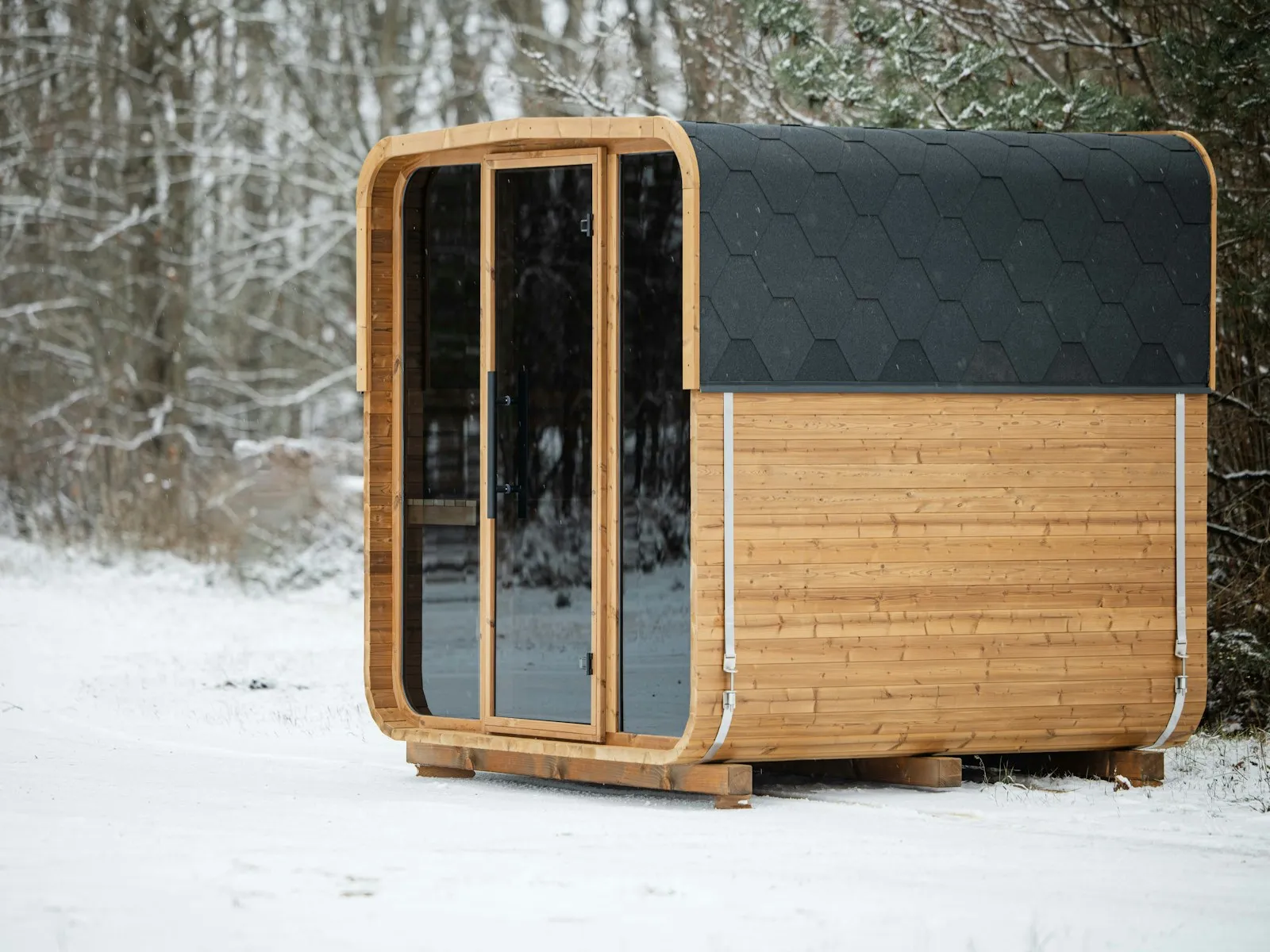
Others land on both sides. In Wyoming, a forum member who posts as TMats put a two-person infrared cabin in the downstairs storage room, and he and his wife use it at least four times a week. Scott and Amy Dawson, a suburban couple, walk out to a barrel at the back of the yard and wrote that they were using it “almost daily.”
Short sessions after work favor a room a few steps away. Long evenings with friends, or a cold plunge between rounds, favor a separate building.
What each spot asks of you
| Indoor | Outdoor | |
|---|---|---|
| Size | Limited by the room you give it | Any footprint and shape the yard allows |
| Power | Short circuit run from the panel | Same circuit, longer and pricier run |
| Moisture | Must be vented, and the surrounding structure protected | Steam leaves the building |
| Base | Existing floor | Concrete pad 3-4 inches (8 to 10 cm) thick, gravel 4-6 inches (10 to 15 cm) deep, or an existing deck |
| Permits (US) | Electrical permit typical | Often a building permit as well |
Either way, a typical family-size electric cabin wants its own 240V, 30-amp circuit for its 6kW heater, plus a separate circuit for the lights. Running it is a licensed electrician’s job, and Almost Heaven’s prep guide says so flatly: price the distance from your panel before you price the sauna.
Indoors: a short wire, a drain and a vent
Inside, the wire is usually the easy part, because the panel is close. TMats had an electrician run the dedicated line, then spent three days clearing the storage room before the sauna arrived.
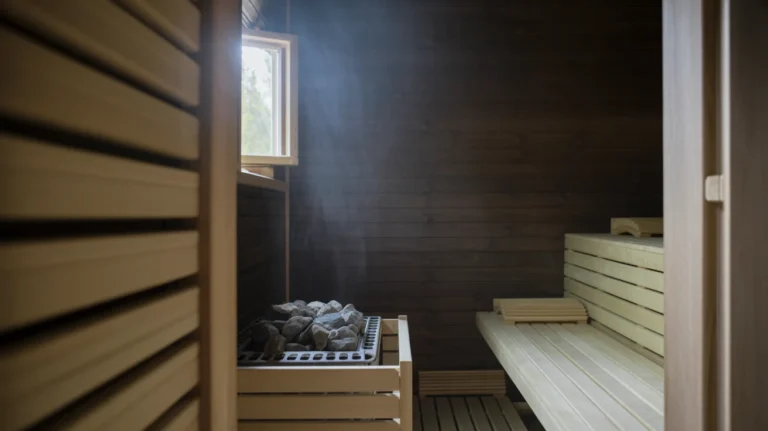
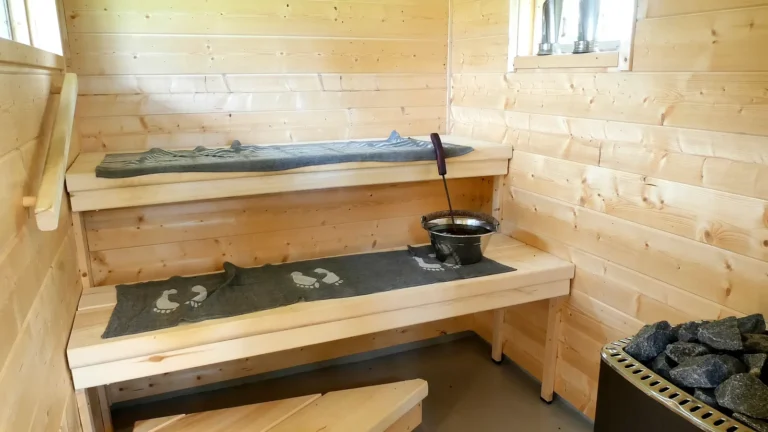
Water and steam are the real work. On the Grassroots Motorsports forum, Wayslow describes the sauna in his basement, built beside and under the stairs: cedar-lined, with a raised cedar floor on skids over ceramic tile, so spilled water runs to the floor drain instead of pooling on the wood.
He would move it if he could. He would have preferred it “closer to the rear of the house,” so he could go straight out the back door to the pool. If you cool off outdoors, put an indoor sauna near the door you will use.
Outdoors: a pad, a trench and a path
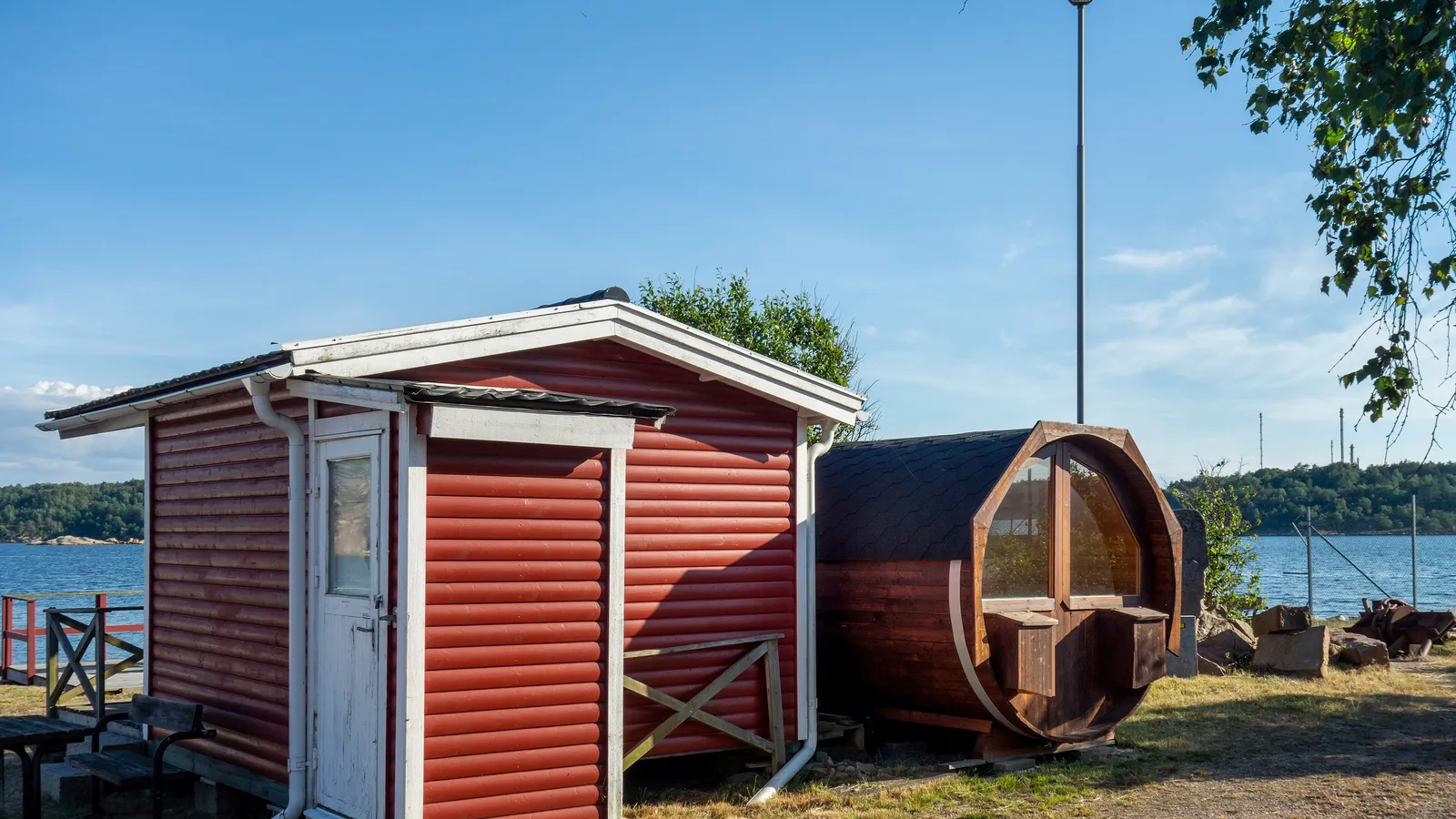
The Dawsons’ barrel sits about 100 feet (30 m) from their electrical box. A local crew spent several weekends running conduit, building a level pad and laying a stepping-stone path from the house, with rain delays, because their backyard “can be a swamp” after heavy rain.
Plan the path as carefully as the pad: you walk it wet, in a towel, in January. A spot near the back door also shortens the circuit run, which is priced by the foot.
Will your winter, or your summer, decide it?
Cold winters are an outdoor build’s real test, and they are an insulation and foundation problem more than a heater problem. Tahoe Sauna Company’s cold-climate checklist calls for R-21 or better walls, an R-30 or better ceiling, a sealed continuous vapor barrier and a foundation below the frost line.
The roof counts too: pitched 8:12 or steeper, with snow-load design for your region, often 75 psf or more.
Built that way, the cold barely shows. A Minnesota builder who blogs as JulianBlogMN has used his own wood-fired outdoor sauna at -20°F (-29°C), actual temperature rather than wind chill. In those conditions it reaches 160°F (71°C) in about 1.5 hours, and the roof has had no ice dams.
Humid summers cut the other way. In the Southeast, the Gulf Coast, much of the East and the Pacific Northwest, the outside air is already wet, so a sauna dries out slowly and mold gets a foothold. Both options need a mechanical exhaust fan run after each session and a deliberate drying routine; passive vents alone only work in dry air.
In Seattle, Mempa and Schwalbach’s challenge with their outdoor sauna is keeping the inside temperature high enough for typical use. Check the heater size against your room before you buy.
Can an indoor sauna go outside?
No, and the warranty paperwork is unusually blunt about it. SunRay says indoor saunas are for indoor use only. Sunlighten honors an outdoor placement only if you buy its waterproof cover and use the plastic sheet. Plunge voids its infrared warranty outdoors unless the cabin sits on a covered patio and carries Plunge’s own approved roof attachment, and even then water damage stays excluded.
None of the big indoor infrared brands sell an outdoor-rated line. Makers like Almost Heaven and SaunaLife instead build barrel and cabin saunas rated for exposure from the first panel, so the fix is buying the right one, not moving the wrong one.
What each one costs all in
Third-party cost guides, checked in November 2026, put indoor installs higher. Bob Vila gives $3,000-9,000 for an in-home sauna against $3,000-6,000 outdoors, and puts the gap down to venting and to protecting the surrounding structure from heat and moisture.
Fixr gives $3,000-6,000 overall with a $4,500 national average. These are aggregated averages, not quotes.
What they don’t price is your site. Outdoors adds the pad or gravel base and the circuit run across the yard, as the Dawsons found; indoors adds carpentry, vapor barrier and venting work inside a finished room. Either can swing the total by thousands.
How Finns do it
All three arrangements are normal in Finland. There are about three million saunas in the country, and most are private, built into detached houses, row houses, and flats small enough that the sauna is a design feat.
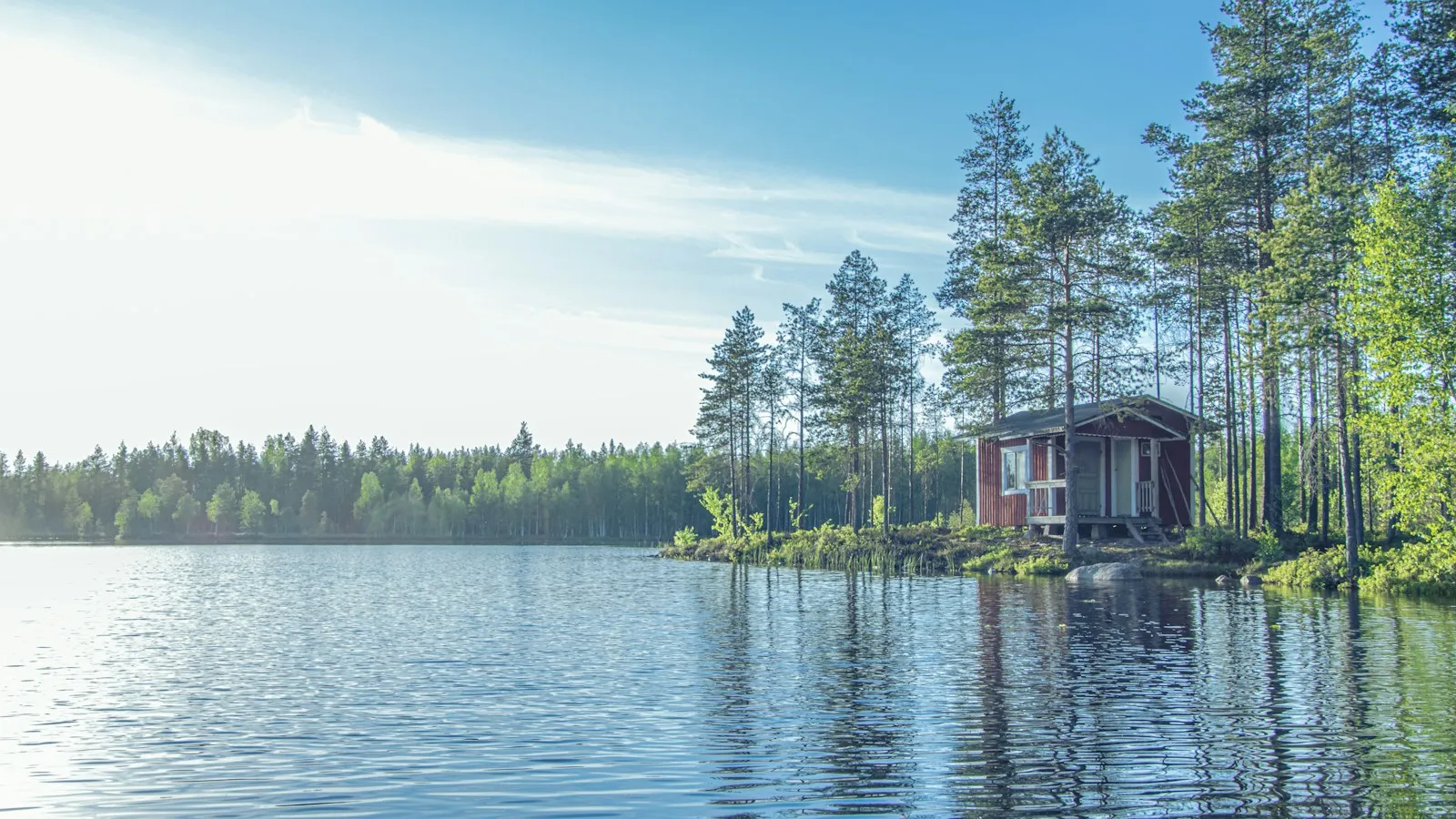
Detached houses have their own sauna as a rule. Apartment blocks have a shared sauna that residents book by the hour, and new blocks are still built with one; some flats also have a small sauna of their own. At a summer place, the sauna is usually its own small building near the water, ordered from the same supplier as the mökki (cottage) and often allowed closer to the shoreline than the cottage itself.
So nobody in the north would tell you an indoor sauna is a compromise. Most of Finland bathes in one.
FAQ
Should I build my sauna indoors or outdoors?
Go by how you will use it and what the house already offers. Short sessions after work favor a room a few steps away, close to the panel, ideally with a floor drain. Long social evenings, a bigger room or a cold plunge outside favor a separate building in the yard, as near the back door as your lot allows.
Do I need a permit for an outdoor sauna?
Usually, yes, for the electrical work at minimum. Many cities exempt small detached accessory structures from a building permit under a size threshold adopted from the residential code, 200 square feet (19 m²) in some jurisdictions. Thresholds and zoning setbacks vary, so ask your local building department first.
Can you put an indoor sauna outside?
Not without losing coverage. SunRay bars it outright, Sunlighten requires its own waterproof cover, and Plunge requires a covered patio plus an approved roof attachment while still excluding water damage. If you want the sauna outdoors, buy a cabin or barrel built for exposure.
Does an outdoor sauna work in cold winters?
It works well when it’s built for the climate: R-21 walls, R-30 ceiling, a sealed vapor barrier, a foundation below the frost line, a steep roof and snow-load design for your area. In a Minnesota winter, check the kit’s wall insulation and its heater size before the price.
Is an outdoor sauna worth it?
If you have the yard, it buys you a bigger room, any shape you like, and no steam inside your house. It costs you a base, a longer electrical run and a walk in bad weather. Keep it near the back door and the walk stops mattering.
Top photo: W.carter, CC BY-SA 4.0, via Wikimedia Commons. Article photos: Auroom Wellness on Unsplash; Juho Luomala on Unsplash.