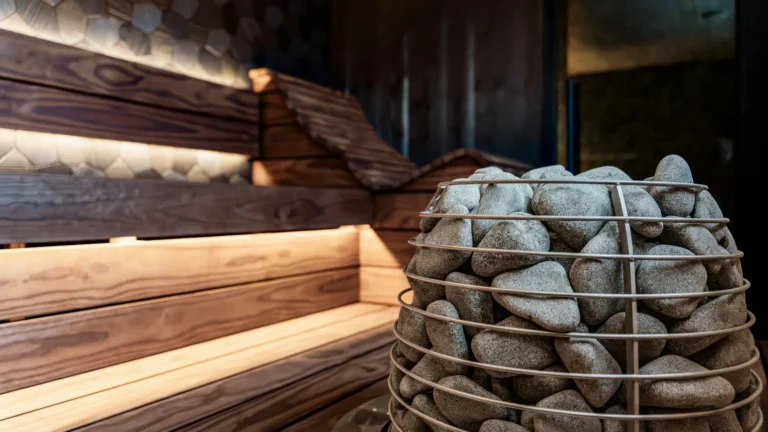

Harvia Sauna Heaters: Which Model Fits Your Sauna
Some links on this page are affiliate links. If you buy through them, I earn a small commission at no extra cost to you. As an Amazon Associate I earn from qualifying purchases.
Dealer sites throw a dozen Harvia names at you, KIP, Vega, Cilindro, Spirit, Virta, and almost none of them explain what separates one from the next. Room volume cuts the list to two or three. After that you are choosing between a cheap heater with a dial on it and a heavy stone bed with softer steam.
At a glance
- Cheapest full-size Harvia: the KIP, $954 to $1,054 for 4.5 to 8 kW, heater only.
- Most stones: the Cilindro, 200 lb (91 kg) at 6 to 9 kW, $1,519 for the 8 kW.
- Power: its own 240V circuit, 30 amps up to 6 kW and 40 amps for 8 kW, never on a GFCI breaker.
My picks
- Small room, lowest price: Harvia Vega Compact
- Standard home sauna on a budget: Harvia KIP 6 kW
- Softest steam: Harvia Cilindro
- Wood-fired: Harvia M3
Which Harvia fits your room
Work out your room’s cubic feet first, because volume does most of the picking for you; the sauna heater sizing guide has the arithmetic. Then the only real questions left are how much stone you want and whether you want the controls on the heater or on the wall outside it.
| What you want | Model | Room volume | Stones |
|---|---|---|---|
| Smallest room, lowest price | Vega Compact 1.9 kW | 70-106 ft³ (2 to 3 m³) | 29 lb (13.2 kg) |
| Cheapest full-size heater | KIP 4.5-8 kW | 106-424 ft³ (3 to 12 m³) | 44 lb (20 kg) |
| Controls on the heater, slim body | The Wall 6-8 kW | 177-423 ft³ (5 to 12 m³) | 44 lb (20 kg) |
| Most stones, softest steam | Cilindro 6-10.5 kW | up to 431 ft³ (12 m³) (8 kW) | 200 lb (91 kg) (6-9 kW) |
| Wall control, WiFi option | Spirit 6-9 kW | 177-494 ft³ (5 to 14 m³) | 110 lb (50 kg) |
| Floor-standing, large room | Virta 6-11 kW | 177-636 ft³ (5 to 18 m³) | 110-154 lb (50 to 70 kg) |
| Wood-burning | M3 | 211-459 ft³ (6 to 13 m³) | wood-fired |
If two models fit your room, the stone weight in the last column is the tiebreaker: more stone heats up slower and gives softer steam.
Who Harvia is, and is it a good brand
It started small. Tapani Harvia built his first wood-burning heaters in 1950 for family and friends, and only started selling them in the mid-1950s. The company moved to Muurame in Central Finland in the early 1970s and still builds there, and these days it puts its own share of the world sauna heater market at clearly over 20%, with €198.9 million ($227 million) in sales in 2025 and buyers in roughly 100 countries. Harvia, as one of the more famous brands, and the most famous in Finland, is famous for a reason. This is the Finnish go-to brand.
One thing to watch: the US range is not the Finnish range. US models carry different model codes and are built for American power, so a spec sheet you find on a European page may describe a heater your dealer has never shipped.
How the models differ
Vega Compact. The closet-sized-sauna heater. The 1.9 kW version has its timer and thermostat built in and runs $915, and it is the one Harvia that can live on household 120V, which makes it the heater for a cramped conversion. A 3.5 kW 240V version exists too.
KIP. The workhorse: 4.5, 6 and 8 kW, 44 lb (20 kg) of stones behind a guard, $954 to $1,054. Watch the suffix. B-series models have manual switches built in; W-series models need a separate Harvia Xenio CX170 control at $1,035. One letter in the model code is the difference between a heater you can switch on and a heater that needs a four-figure accessory.
The Wall. A slim 6 or 8 kW heater with lit switches on the heater itself, so there is no control panel to buy and nothing to mount outside. It hugs the wall, left or right, which matters in a room where every inch of bench counts.
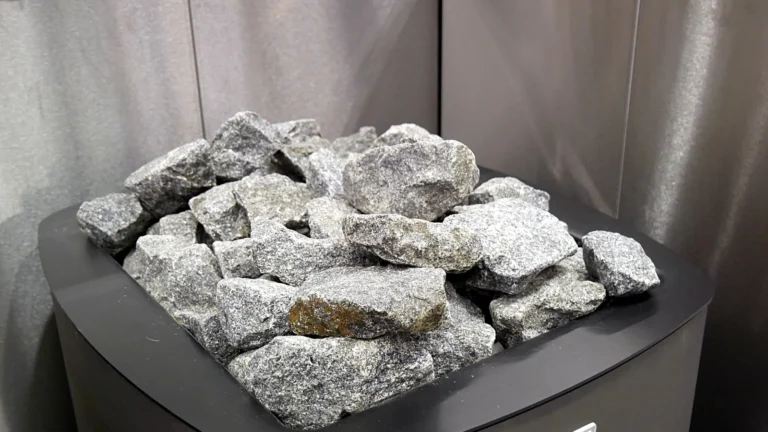
Cilindro. The tower full of rocks. The 8 kW Cilindro Half (PC80) carries 200 lb (91 kg) of stones, more than four KIPs’ worth, with the switches built in, at $1,519. The line runs from 6 to 10.5 kW. That stone mass is the whole reason people buy it: the heat comes off the stones slowly and the steam lands soft.
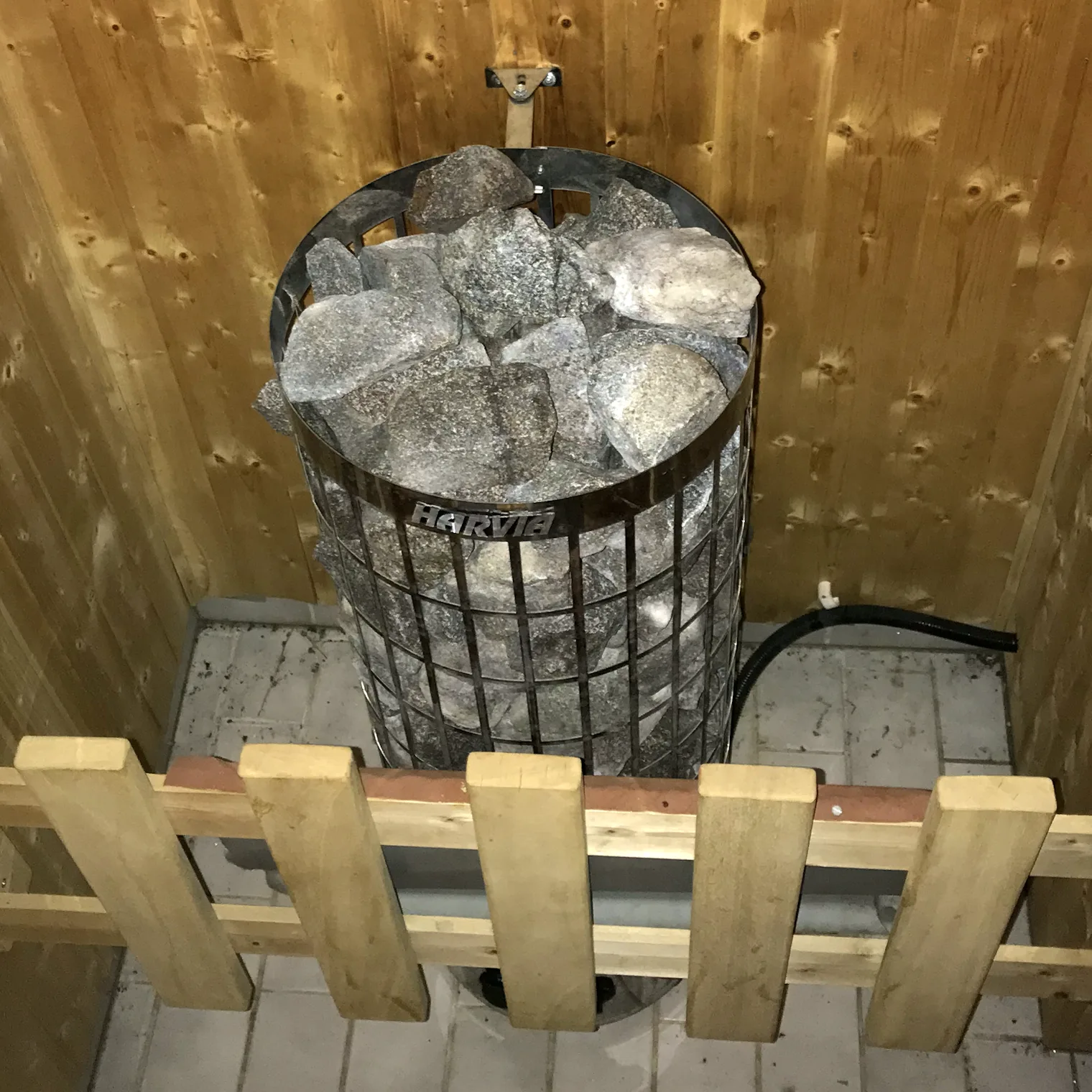
Spirit. Six to 9 kW, with 110 lb (50 kg) of stones on the 8 kW, which is four of Harvia’s own stone boxes. It runs from a separate Xenio control, and the FC versions add WiFi so you can start the sauna from the kitchen.
Virta and Virta Combi. The big floor-standing heater for the big room, 6 to 11 kW with 110 to 154 lb (50 to 70 kg) of stones and the control always on the wall. The Combi adds a steamer; on the regular Virta, Harvia credits the large stone load for soft, abundant steam, what Finns call löyly.
The wood stoves
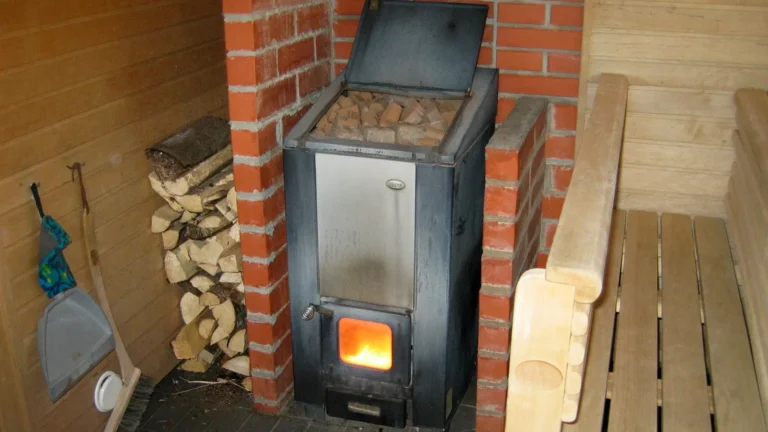
Three Harvia stoves show up on US dealer pages. The M3 covers 211 to 459 ft³ (6 to 13 m³) and starts at $969, which makes it the usual choice for a small backyard or barrel room. The Pro 20 handles 283 to 706 ft³ (8 to 20 m³) with 40 kg of stones. The Legend series goes bigger still, up to 989 ft³ (28 m³) in its largest size. Chimney, clearances and permits are a separate project, covered in the wood-burning sauna stoves guide.
What power it needs
Every full-size Harvia wants its own 240V circuit, and the size of the heater decides how big that circuit is. Here is what Harvia’s US KIP installation manual and its matching install guide call for:
| Heater | Circuit |
|---|---|
| 4.5 or 6 kW | 30 amps, 240V |
| 8 kW | 40 amps, 240V |
| 1.9 kW Vega Compact | Household 120V at 15.9 amps, the only one that can |
Wire size, breaker type and the longer-run rules are in the manual, and they are your electrician’s to read; the 120V Vega Compact has its own page.
Do not put a Harvia on a GFCI breaker: nuisance tripping follows, and Harvia voids the warranty on internal components if you do. Wiring at these currents is a licensed electrician’s job, and the install guide says the same.
How long it takes to heat
Allow at least 30 minutes, says Harvia’s KIP manual, and treat that as the floor rather than the average: a cold or poorly insulated room can take the full hour, with room volume and insulation deciding where you land. The first run is its own ritual: heat on maximum for half an hour to an hour, check the temperature, then dial back to the setting you actually want.
Harvia or HUUM
On published figures this is a cost and control question, not a quality one. A 6 kW KIP is $1,010 as a heater, with or without the external control. A 6 kW HUUM DROP is $1,506 and ships with neither a controller nor stones: the UKU control runs $1,062 to $1,987 and the stone package $320, so a running HUUM DROP starts near $2,900 against $1,010 for the KIP.
Stone mass goes the other way in places, with the 9 kW DROP set including 55 kg (121 lb) against 200 lb (91 kg) in the Cilindro. Harvia builds in Finland, HUUM in Estonia.
Neither is the better brand on any source I can point to, which is roughly where I land too: HUUM, for example, just produces very stylish products. If you are still at the brand stage, start with how to choose a sauna heater instead.
Where to buy, and the warranty
For a home sauna, Harvia’s November 2025 warranty terms give electric heaters and control units two years, and a third year if you register the heater.
The catch is who you buy from. The warranty covers the first owner of a heater bought new from Harvia or an authorized Harvia dealer, so a bargain from an unknown marketplace seller can quietly come without one. Check the dealer on Harvia’s own locator before you pay. US warranty service runs through Harvia US Inc. in Holland, Michigan. Prices on this page are retailer list prices checked in November 2026.
FAQ
Is Harvia a good sauna heater brand?
It is the largest name in the category: Harvia puts its own share of the global sauna heater and component market at clearly over 20%, and it has been building in Muurame, Finland, since the early 1970s. It runs a US arm in Holland, Michigan, and an authorized dealer network you can check on its own locator, which also decides whether your warranty stands.
What are the electrical requirements for a Harvia heater?
In the US, its own 240V circuit for most models: 30 amps for the 4.5 and 6 kW, 40 amps for the 8 kW. Never a GFCI breaker, and a licensed electrician does the work.
How long does a Harvia sauna heater take to heat up?
Harvia’s KIP manual says allow at least 30 minutes. On the first run it tells you to heat for half an hour to an hour at maximum, then dial back to the setting you want.
Is HUUM or Harvia better?
No published source makes one better. Harvia is cheaper to get running, especially the models with controls built into the heater; HUUM is the more design-led product and always needs a separately priced controller and stones.
Hero photo: Santeri Viinamäki, CC BY-SA 4.0, via Wikimedia Commons. Second photo: Taylor_49, CC BY-SA 4.0, via Wikimedia Commons