Sauna Backrests and Headrests: Are They Worth It?
Some links on this page are affiliate links. If you buy through them, I earn a small commission at no extra cost to you. As an Amazon Associate I earn from qualifying purchases.
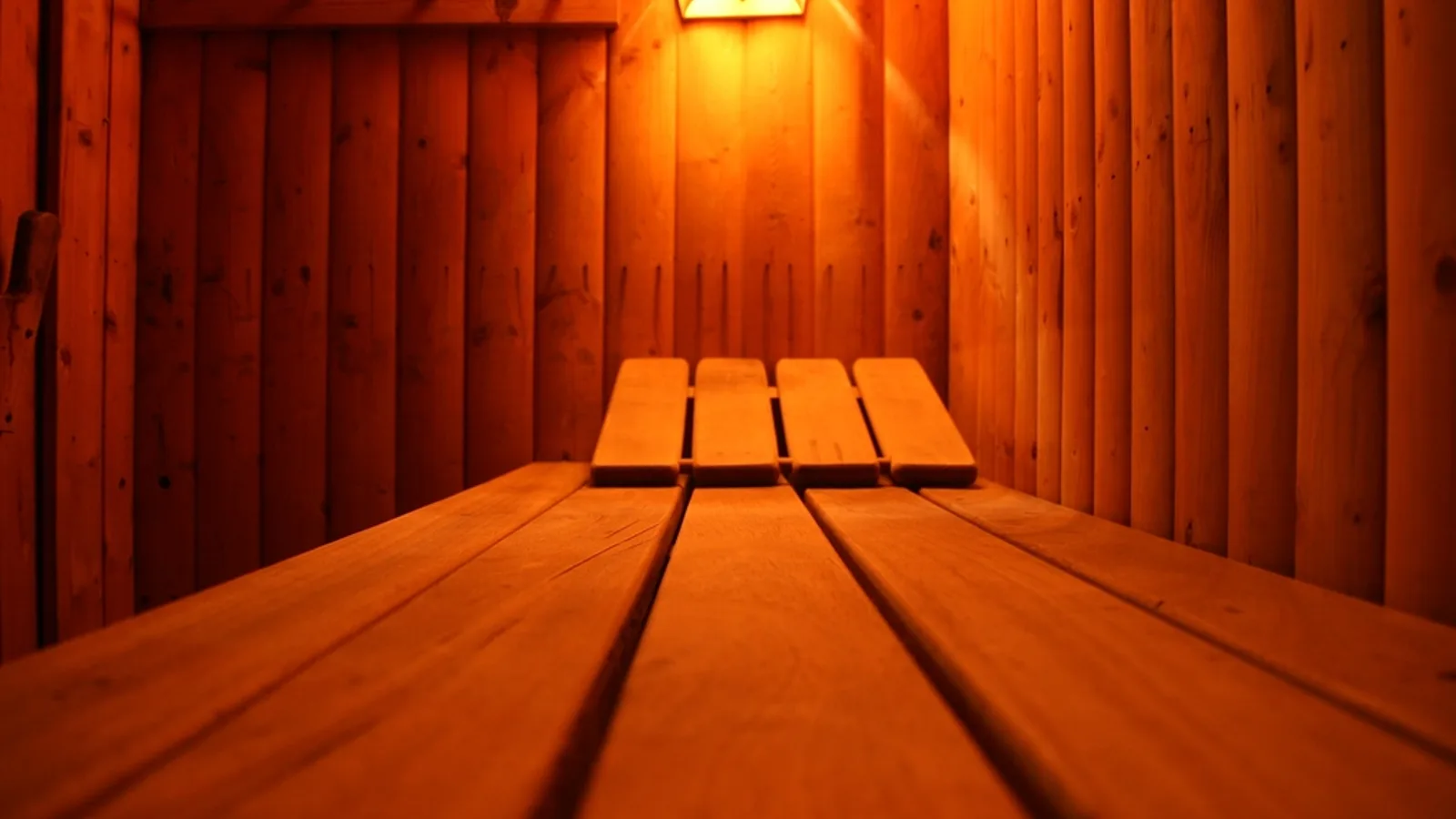
Leaning back on a bare sauna wall never lasts long. The boards are vertical, so there is nothing to settle into, and at shoulder height your back sits higher in a room where heat stacks upward. That is the whole case for a backrest. A headrest is a different product, for a different position.
My picks
- Cheapest way to try one: Dynamic Saunas hemlock S-shape, 2-pack
- Cedar room, matching wood: HSE red cedar S-shape backrest
- Lying down on a long bench: bamboo sauna headrest
Backrest, headrest, or neither?
A backrest gives your back a sloped surface a few inches off the wall. If you sit upright through 10 to 20 minute rounds, it is the accessory that most changes how the room feels to sit in. A headrest or wooden pillow supports the head only, so it is for the person whose top bench is long enough to stretch out on, which in practice means a four-person room or bigger.
Neither is necessary, and neither is expensive. I personally wouldn’t probably notice if neither of them wasn’t in the sauna, but on the other hand I do like using them as a bit of a sauna luxury.
The three things people mean by “backrest”
Shops sell three different objects under overlapping names.
| Type | What it’s for | Typical size |
|---|---|---|
| Fixed board on the wall | A permanent lean along the whole upper bench | Harvia’s alder back rest runs 2.2 m (7 ft) wide and 225 mm (9 in) tall |
| Loose S-shaped backrest | One seat at a time, moved or stored under the bench | Almost Heaven’s cedar unit is 19 3/8 x 12 in (49 x 30 cm); the Dynamic Saunas hemlock pair is rated to 275 lb (125 kg) each |
| Headrest or pillow (bamboo headrest) | Head support when lying flat | Rento’s linen Kenno pillow, 20 x 8.5 in (51 x 22 cm) |
Which wood
You want low density, no sticky resin, and a clear face with no knots where skin lands. The usual species are light: aspen at 26 lb/ft³ (415 kg/m³), basswood at the same weight and with knots uncommon, obeche (sold as abachi) at 23.8 lb/ft³ (380 kg/m³), and western red cedar at 23 lb/ft³ (370 kg/m³), per the Wood Database. A commenter there, a user named Ed, rates obeche above cedar and pine for sauna seating because it feels cool to the skin even in a hot room. Cedar is the only one of the four rated durable against rot, which matters if the piece stays damp, and the cedar S-shapes are the ones that match a cedar interior. Skip varnished or lacquered wood and skip resinous softwood.
Fixed or loose
Fixing is a build job. In Harvia’s interior installation guide, the backrest is screwed to the wall after the bench supports and surrounds are in, to a fixing dimension of about 220 mm, inside a wall assembly that already has its own ventilation gap behind the panelling. If the walls are up and wired, you are drilling blind between studs, the heater guard and the lighting. A loose unit needs no hardware at all, which is why I would pick one for an infrared cabin, a rental, or any sauna that is not mine. Harvia does sell a screw-on infrared model with rollers, and that one has to clear the heating panels.
Where it goes
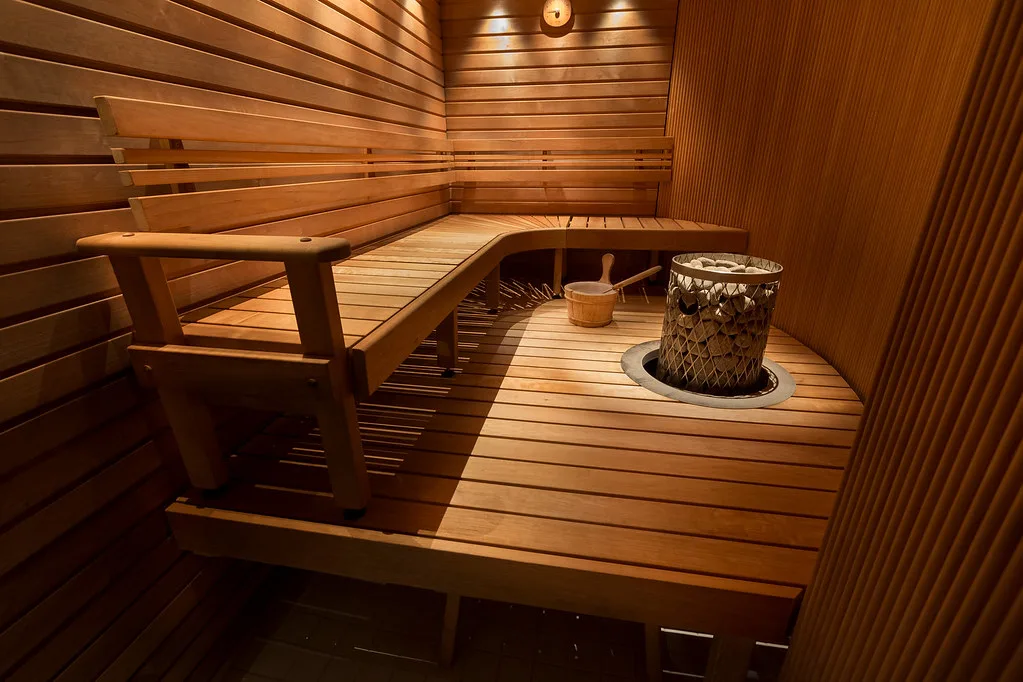
A Finnish design standard for sauna interiors, quoted by the builder Kevyt Remppa, puts the backrest on the upper bench at 10-15 degrees out from the wall, 18-20 in (450-500 mm) above the seating surface. US retailers land on 15 degrees too. Fifteen degrees sounds fussy until you have leaned on a vertical board for twelve minutes. Work it out alongside your bench height, since the seat sets the reference.
Fabric and bamboo pillows
Rento’s Kenno pillow is a linen-covered cushion with quick-dry wadding, which is what makes it usable in the heat rather than a wet lump. A bamboo headrest is a rigid hollow block of woven slats instead, so there is nothing to launder and nothing to dry out. Washing instructions vary by brand, so check the label on a fabric one before it meets a sauna towel in the machine.
Making one
The design is simple enough to copy: slats running across two curved ribs, which is all an S-shape is. Use clear, light, knot-free stock, ideally the same species as your benches, and leave it unfinished. Sink the stainless fasteners below the surface or hide them behind the ribs, so no metal head sits where a bare back lands.
FAQ
Will a sauna backrest fit any bench?
Loose S-shapes are around 19 to 20 inches (48 to 51 cm) wide and sit on the bench, so they fit almost anything. Fixed boards are sized to the wall instead: Harvia’s alder version is 2.2 m (7 ft) long, which is a whole bench wall.
Can you use a backrest in an infrared sauna?
Yes, and it is the setting where a loose one makes most sense, since nothing gets screwed into the cabin. Harvia also makes a screw-on infrared backrest with self-adjusting rollers; whoever installs it has to keep the screws clear of the heating panels.
Is a backrest worth it in a small two-person sauna?
If you sit upright on the top bench, yes, and a loose one more so than a fixed board. Small cabins have little free wall to drill into, and you can lift the backrest out when two people need the full bench.
Hero photo: rawpixel, CC0, via rawpixel. Second photo: Hotel Arthur Helsinki, CC BY 2.0, via Flickr